Gray hair under candlelight or in bright brunch-window light shows the same problems fast: frizzy ends, a flat crown, and curls gone stiff from too much spray. Picking a soft style for Feb. 14 comes down to your hair’s density and how much heat and time you’ll give it that day.
Fine hair does best with length at the jaw or longer layers that keep movement, while coarse hair usually needs weight removed so the shape sits close instead of wide.
These ten styles run from pixie to mid-back, and each one lists the part, the tools, and the wording to bring to your stylist. You’ll see which ones suit fine, medium, or coarse gray, what tends to go wrong, and how to adjust before the evening. February also means dry indoor air, hats, and static, so several tips focus on keeping the style intact between the car and the table.
1. Shoulder-Length Waves With Curtain Bangs
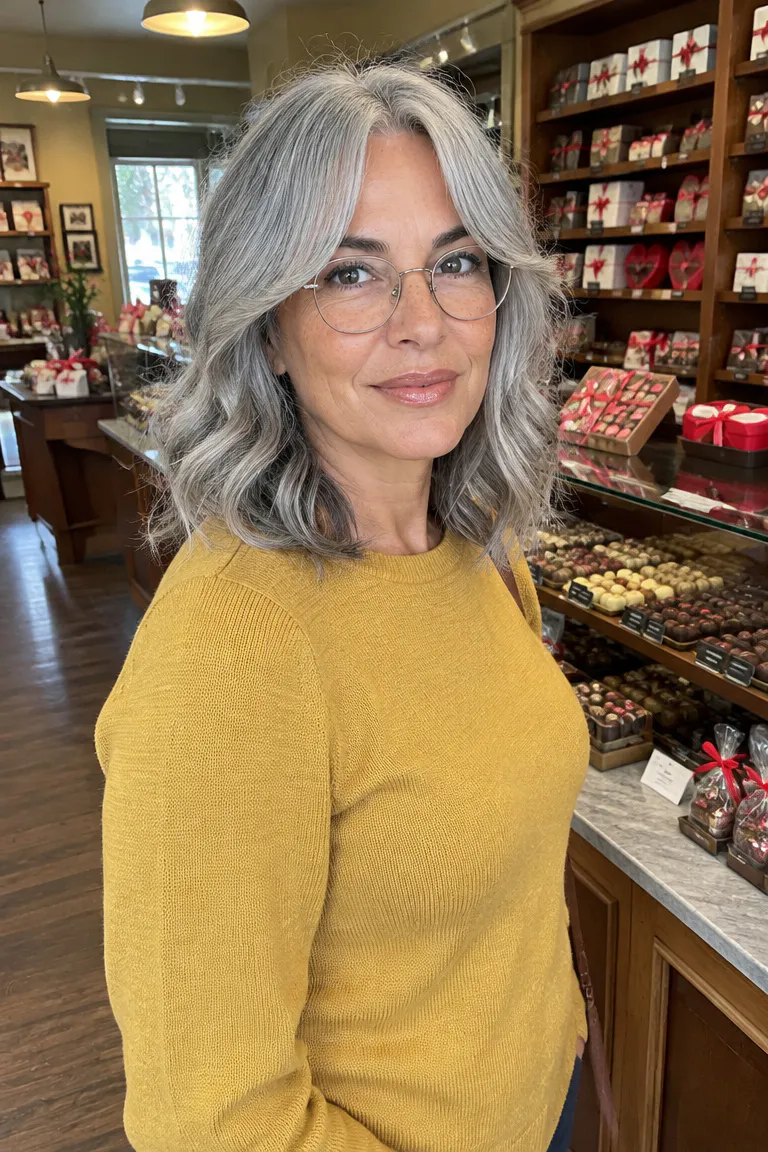
This is a shoulder-length cut with long curtain bangs parted in the center, so the front splits and sweeps outward into the sides instead of lying flat across the forehead. Ask for the bangs to begin around the cheekbone and blend into the side lengths, plus a few soft layers through the ends so the gray doesn’t sit heavy.
To style it, spray heat protectant on dry hair and wrap sections around a large-barrel iron, turning the bangs away from your face. If you’d rather skip heat, sleep in two or three loose braids on slightly damp hair and pull them apart with your fingers in the morning.
Medium density is the easiest match. Fine hair can wear it too, as long as the layers stay long, since short ones thin out the ends. Bangs cut too short or too blunt are the main risk because they look stiff on wiry gray.
Ask your stylist: Have the bangs cut dry, and start them long. Dry cutting shows how wiry strands actually fall, and shortening later is easy.
2. Textured Lob With Loose Bends
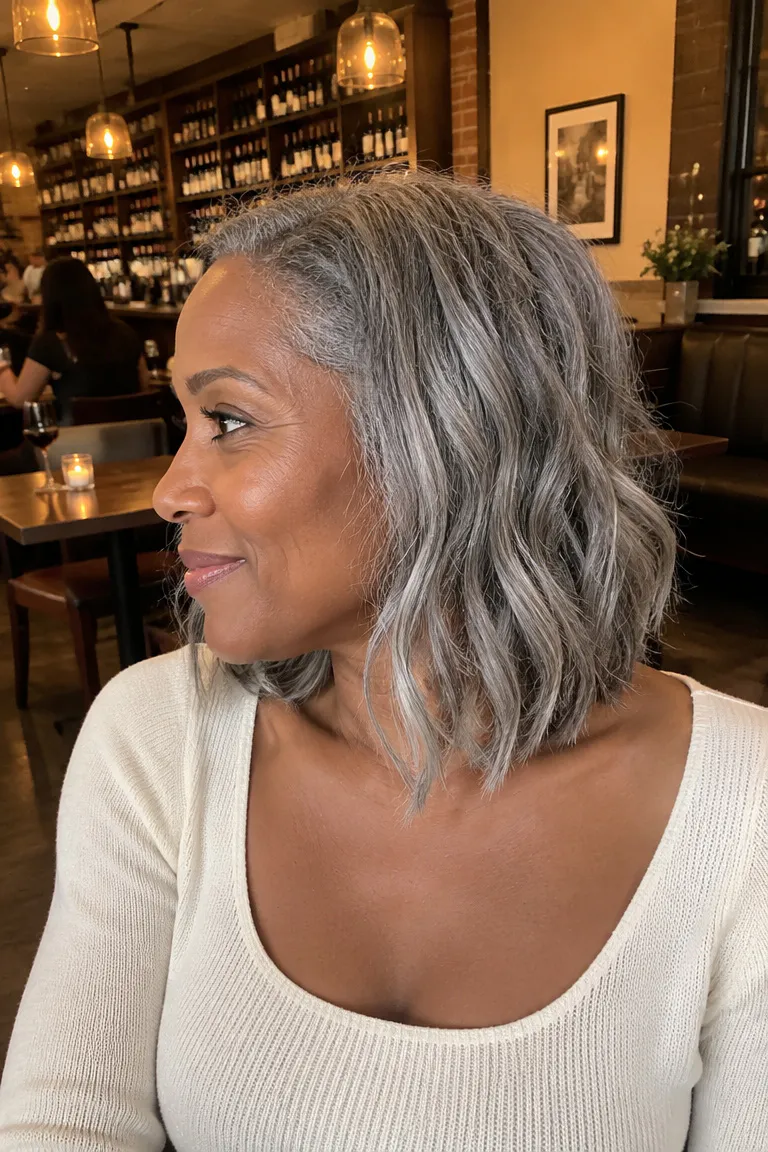
Cut this lob to graze the collarbone, with ends that are slightly uneven and textured so they separate instead of forming one solid line. The finish is a loose bend: turn a flat iron or wand away from your face on random sections, then break the shape up with your fingers rather than a brush.
Heat can contribute to yellowing on gray, so keep the routine light. Use a heat protectant, set the tool to a medium temperature, and make one pass per section. Bend some pieces away from the face, bend others the opposite way, and leave a few nearly straight.
Fine-to-medium hair that needs body gets the most from this shape. A blunt-cut lob suits thick hair only if the ends are thinned, or it will puff out at the bottom. Bends that match in size and direction read as a curled bob, so skip sections on purpose.
3. Jaw-Length Silver Waves
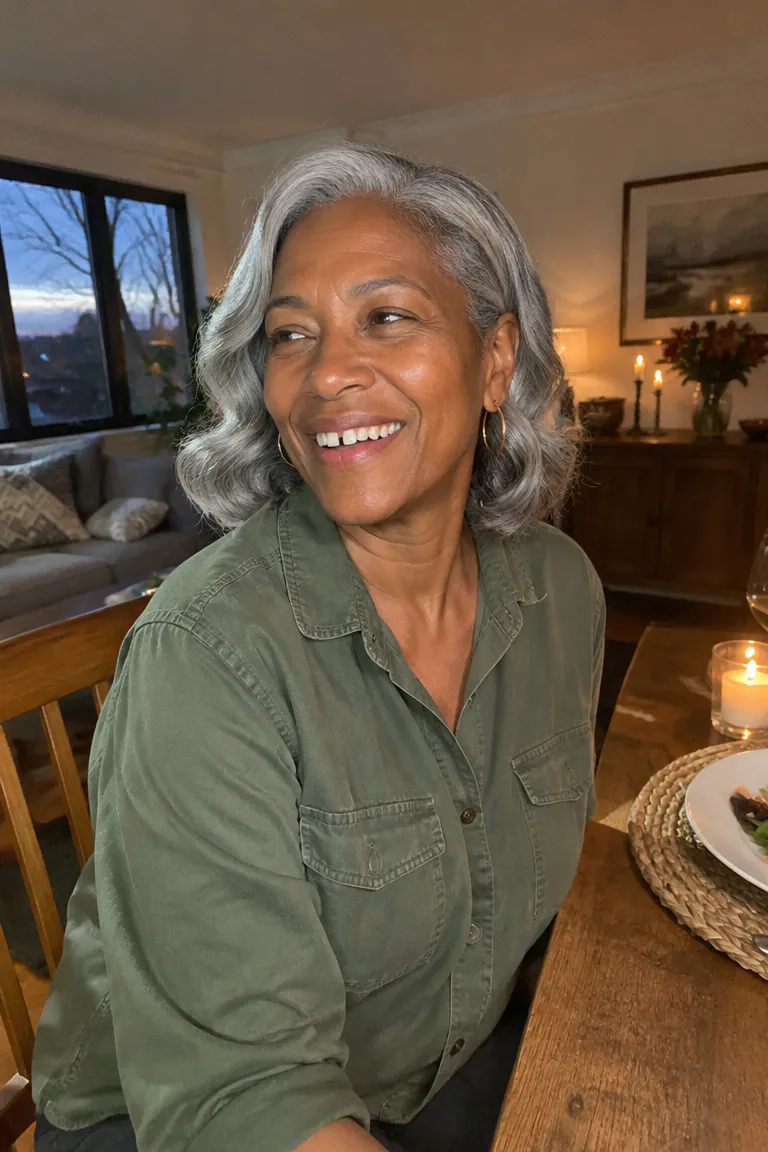
A jaw-length cut with soft S-shaped waves can be set with a medium wand or with pin curls: pin damp hair in flat curls, let it dry completely, then loosen with your fingers. Short length shows split ends and frizz quickly because there’s no extra hair to hide them, so timing the trim matters more here than with longer styles.
- Book as soon as you choose the cut, since salon calendars tend to fill up before Feb. 14.
- Schedule the trim about a week or two ahead, so the line has settled but still looks fresh.
- Add a gloss only if your stylist recommends one for your color; the style doesn’t need it.
Wavy or coarse gray that already bends takes this shape easily. Fine hair may need a light mousse through the roots and mid-lengths for hold. If the waves sit wide at the jawline, ask for weight to be removed at the ends so they curve in rather than flare out.
4. Wavy Bob With Side Part
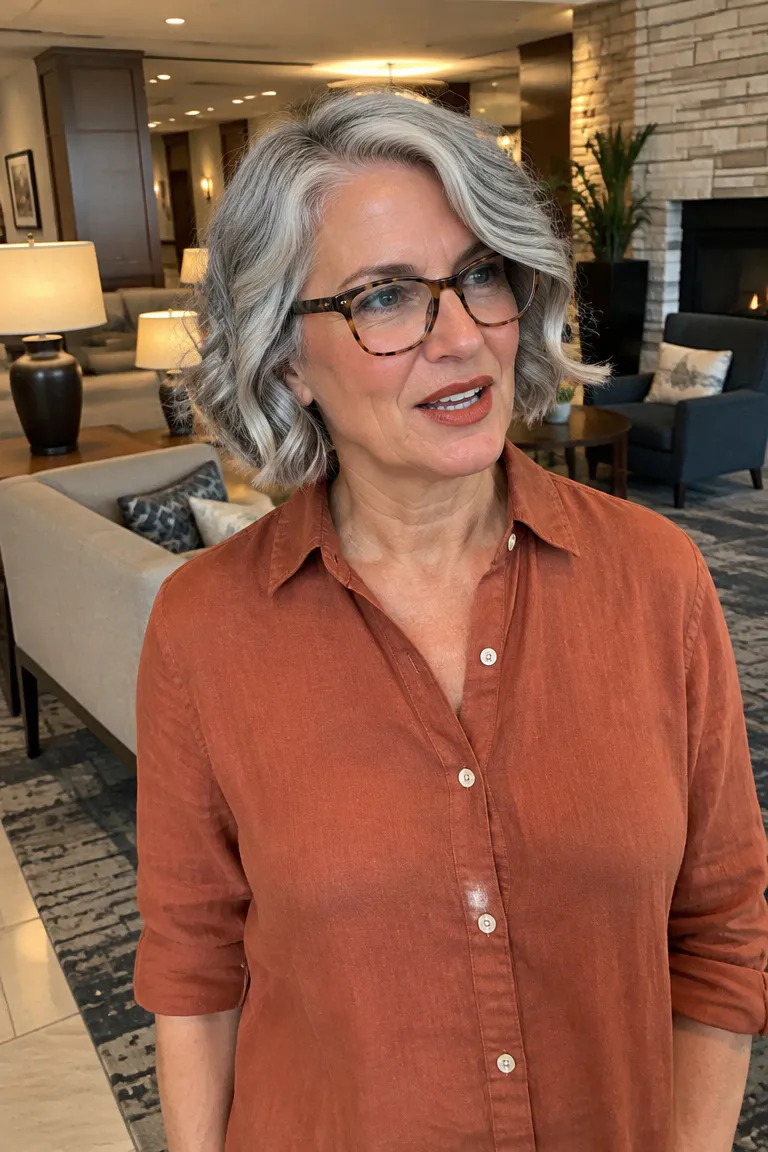
Part placement decides how this bob reads. A chin-to-lower-jaw cut with waves and slight graduation at the back works with either option below, but each one does something different.
| Part | Where it sits | What it does |
|---|---|---|
| Deep side part | Above the end of your eyebrow | Adds lift at the crown; softens a wider forehead or stronger jaw |
| Shallow side part | Just off center | Gentler on rounder faces; keeps the shape balanced and less dramatic |
Ask the stylist to cut the part in while your hair is dry, so the fall matches how you’ll actually wear it. Medium density suits this bob, fine hair gets visible fullness from the deep part, and thick coarse hair needs internal layers to keep the sides from swelling.
A scarf or hat can flip the part to the other side. Re-part with your fingertips instead of a comb, which flattens the waves and leaves a sharp line.
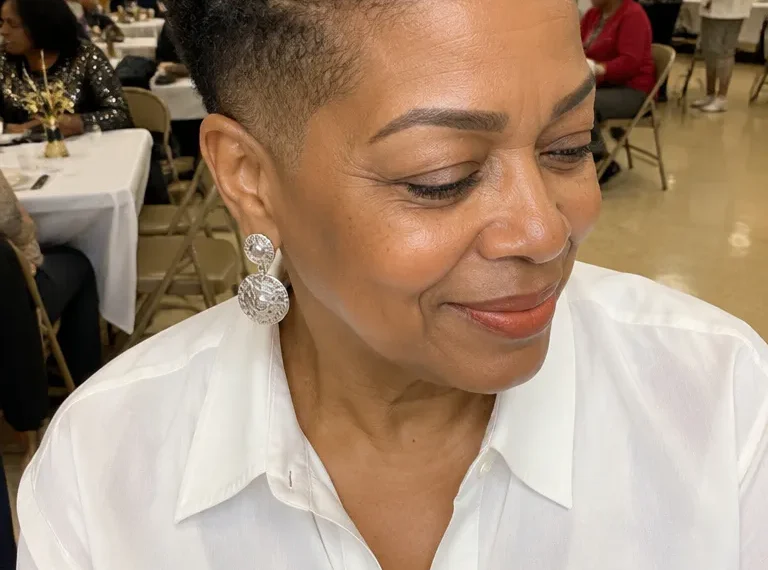
5. Soft Pixie With Brushed-Forward Bangs

This pixie keeps the top long enough to brush forward, with wispy bangs falling slightly to one side and sides tapered softly rather than faded hard. Product decides whether it looks finished or crunchy. Work a dime-sized amount of light-hold cream through the hairline and front with your fingertips to smooth wiry strands without a greasy look.
Skip stiff hairspray and heavy wax, since both can coat silver, dull it, and make the bangs clump into pieces.
Fine hair gets lift from the longer top, and coarse gray handles the cut well when the top stays a little longer so it has weight to lie down. Cowlicks at the front are the main risk, so have the stylist check the growth direction before cutting the bangs. If you want more shapes to compare, these soft pixie cuts for fine hair show different lengths and fringes.
Maintenance tip: Short cuts lose their shape fast. Ask for a trim cadence at the appointment, and book the last cut close enough to Feb. 14 that the nape and sides are still crisp.
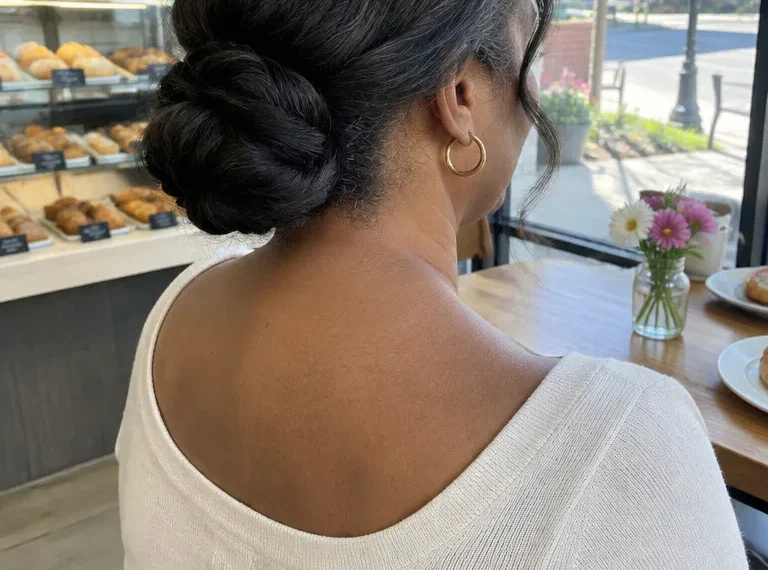
6. Low Loose Twist
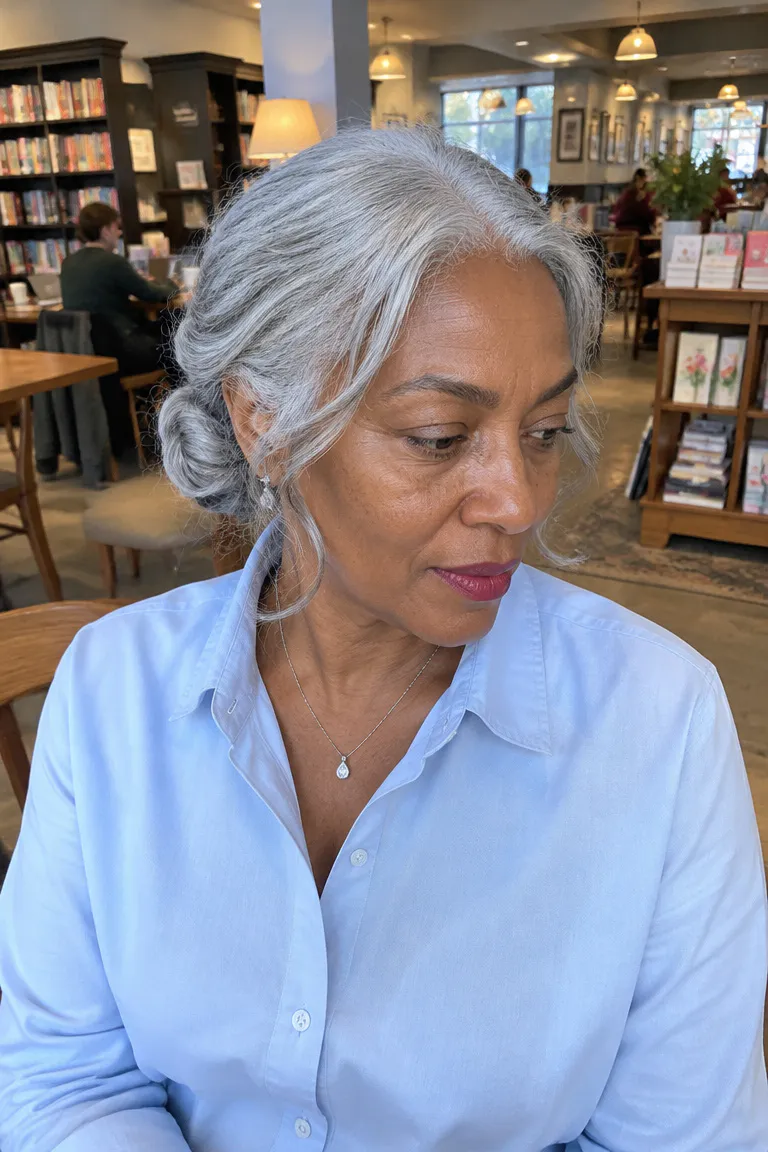
A low twist or loose chignon sits at the nape, held with a few U-shaped pins, with strands left out around the face. Nothing pulls at the hairline, which makes it a comfortable choice for a long dinner.
- Work a dry texture spray or a light cream through dry hair.
- Gather the hair low at the nape and twist the whole length.
- Wrap the twist into a loose coil against the head.
- Pin it with U-shaped pins, angled toward the scalp, crossing pairs so they lock.
- Tug the outer edge to loosen it, and pull a few strands free by the face.
You need at least collarbone length, and fine hair holds better with pins than with bands. The twist slides down when pins point sideways, so keep them angled in and crossed.
Comfort check: Keep tension low at the hairline and temples. Use a soft elastic or none at all, and if your edges feel pulled partway through the evening, take one pin out and loosen the coil.
7. Half-Up With a Clip
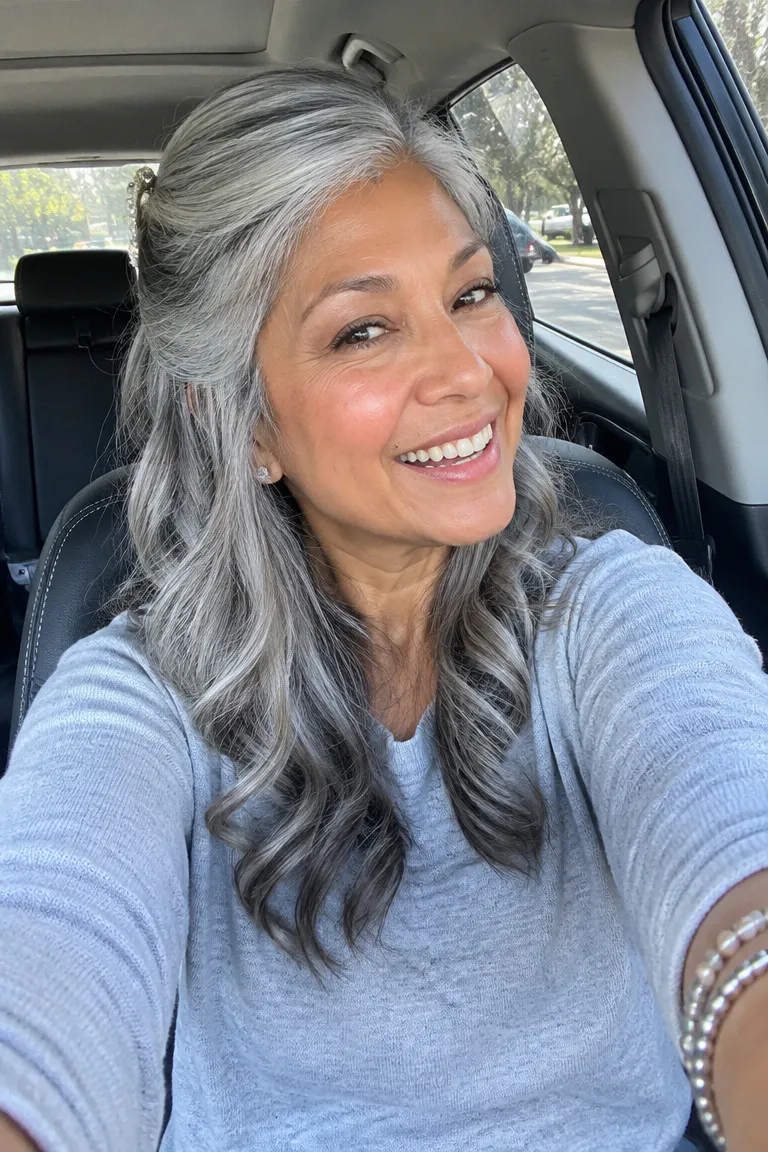
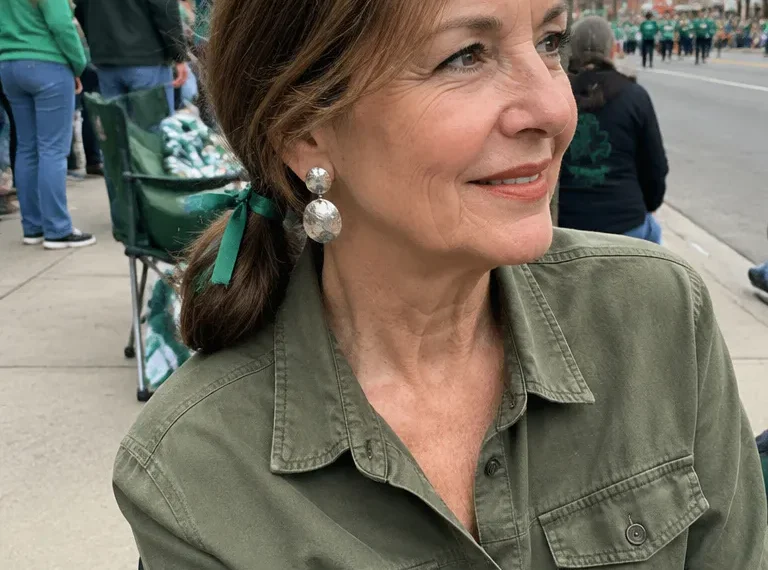
Take a top section back from the temples and fasten it at the back of the head with a soft-hold barrette or a small bow, leaving the rest down in loose waves. Test the accessory before the day, because fine or slippery gray hair can slide out of a smooth clip. Choose one with teeth, or sew a thin strip of velvet ribbon inside a smooth barrette for grip.
Put it in, shake your head, and bend over. If it shifts, switch to a different clip.
This works on shoulder-length hair and longer. Pull the section back loosely, because a tight one tugs at the temples and flattens the waves behind it.
For a second-day refresh, run through these three steps:
- Apply dry shampoo or texture spray at the roots, wait a minute, then massage it in.
- Re-bend the face-framing pieces with a wand, one pass each.
- Position the clip over any flat spot at the crown.
8. Long Waves With Face-Framing Layers
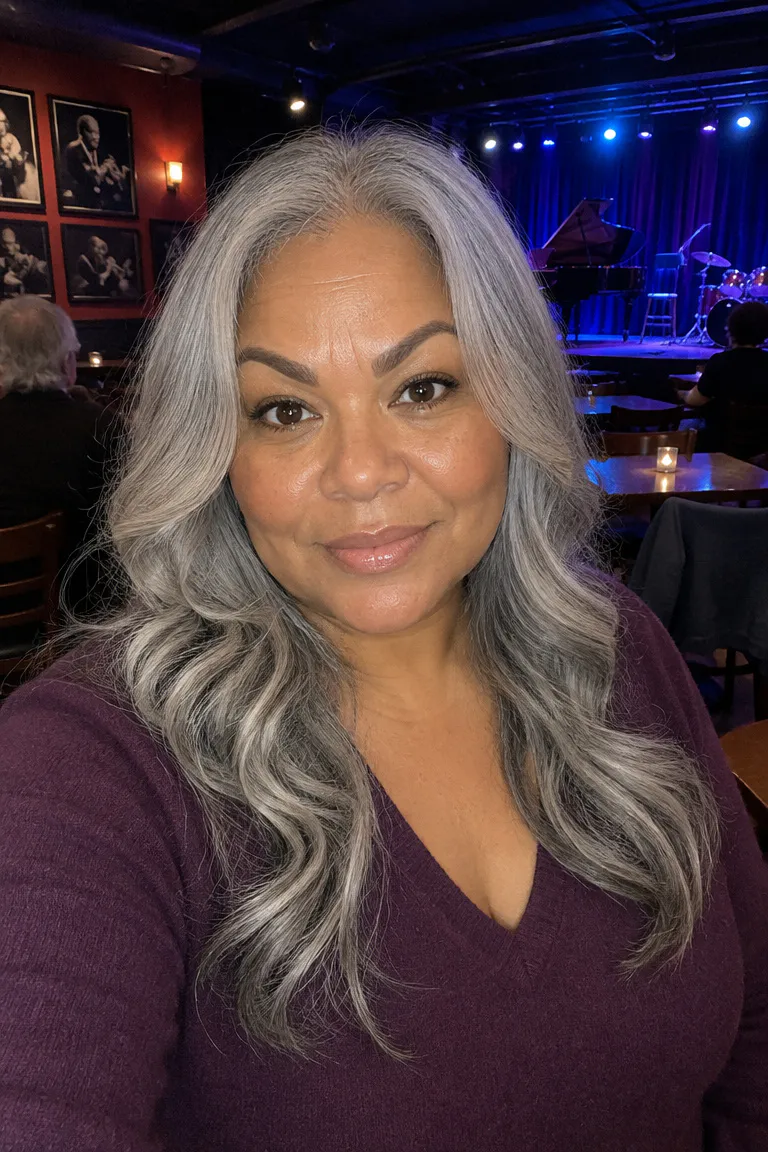
Long gray needs more upkeep than styling. Ask for a mid-back cut with long, soft layers starting at the chin and a few shorter face-framing pieces, then wave it loosely. The ends are the oldest hair on your head, so they tend to look dry or frayed first, and a trim plus a hydrating conditioner will do more for the look than the wave itself.
Air-dry with a leave-in conditioner through the mid-lengths and ends, then use a wand on the front pieces only to limit heat. If you want a longer cut that takes little daily effort, these low-maintenance long styles for thin fine hair are worth comparing.
You need enough density for layers to move, and thin ends look better with a blunt perimeter. Layers cut too short are the main risk because they make the ends look stringy, so ask that none start above the chin.
9. Soft Curls on a Chin-Length Cut

A chin-length cut with rounded, loose curls can be set with a diffuser, rollers, or a wand. Finish with a leave-in or curl cream rather than stiff spray, which turns curls crunchy and dulls gray.
Winter adds a problem: dry indoor air and hats cause static and flatten curls. Carry a small leave-in, rub a drop between your palms, and press it lightly over the surface to settle flyaways.
- Natural curl or wave: needs the least work, so a diffuser and cream are usually enough.
- Coarse gray: add moisture before shaping, or the curls will frizz instead of form.
- Fine hair: use a lighter hand with cream so the curls don’t go limp.
Tight, small curls look dated on this length. Choose a larger roller or barrel and brush out the ends so the shape stays loose and rounded.
10. Sleek-but-Soft Bob
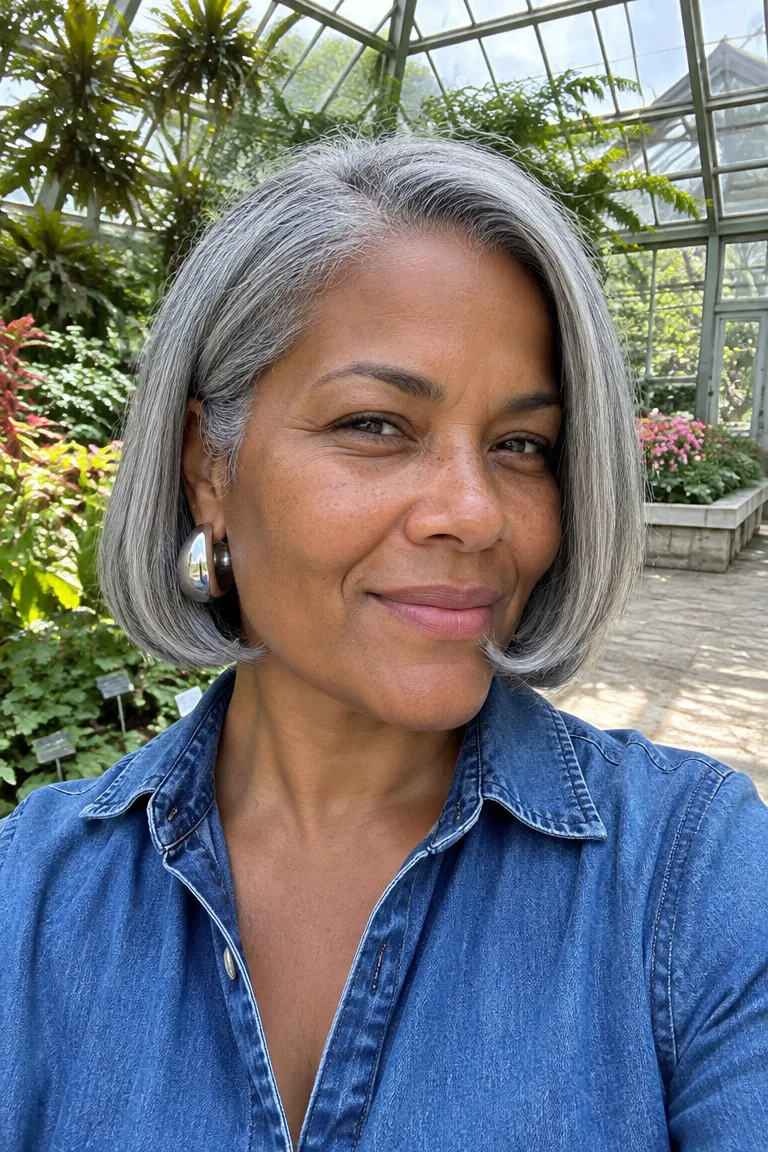
For readers who prefer straight hair, this is a chin-length or just-below bob with the ends bent slightly under, blown out with a round brush. Smooth, moisturized strands reflect light better, so use a hydrating conditioner and finish with a few drops of lightweight smoothing product.
Purple shampoo advice ranges from once a week to only when yellowing appears, so follow the label or your stylist. Skip it right before a date, since overuse can leave a violet tint.
The cut is best on fine-to-medium hair, and thick coarse hair may need a smoothing treatment from a stylist to lie flat. Ends that look flat or blunt are the main risk. If your fine hair falls limp in a smooth style, these short bob cuts that add fullness to thin hair show shapes to bring to the salon.
Ask your stylist: Ask for soft, slightly internal edges, so the ends curve under without a hard line.
Before You Book Your Appointment
Bring a photo of the style, the side you part on, and the one fit note that matches your hair, and book the trim a week or two before Feb. 14. Pack a small leave-in, a few U-shaped pins, and a toothed clip for touch-ups before dinner or brunch.