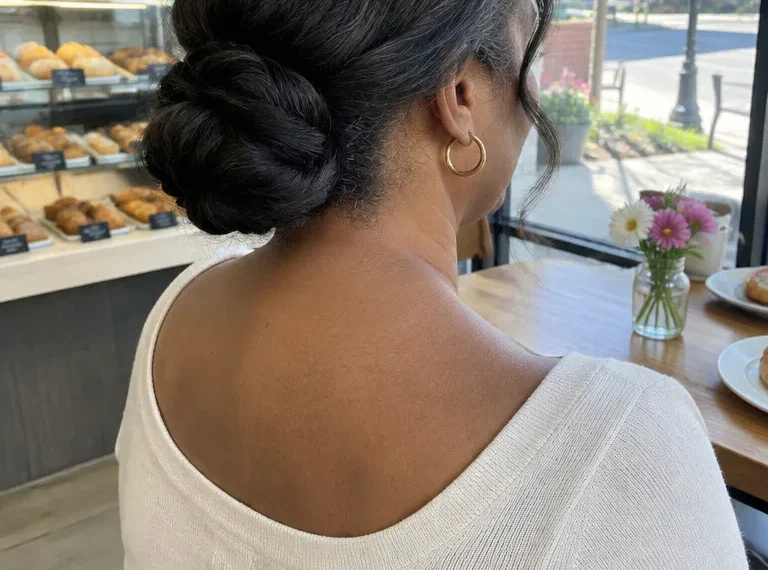
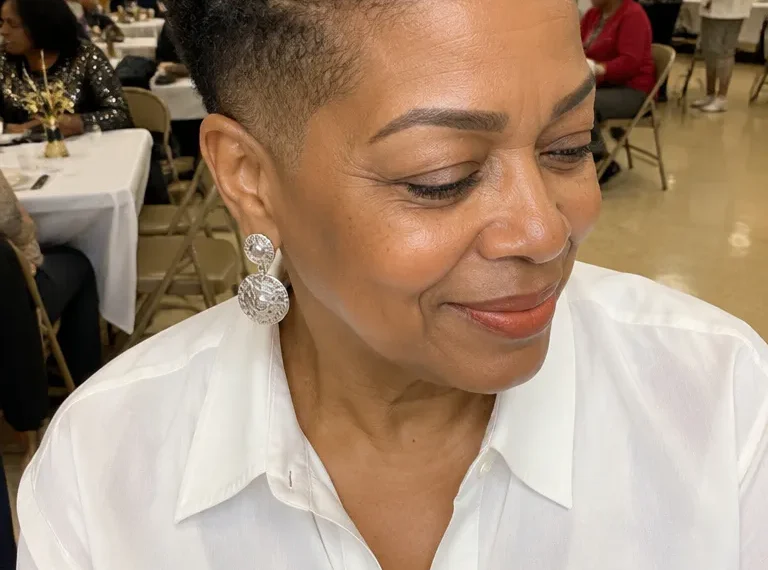
A gray wig looks like a costume for three reasons: one flat shade, plastic shine, and a front edge denser than any real hairline. Fix those three and the cut matters less than you’d expect. A pixie, a bob, and a curly crop can all look natural when the color has depth, the finish is matte, and the hairline sits where yours does.
Below are 15 styles across pixies, bobs, curls, and waves, with notes on face shape, density, glasses, cap construction, and upkeep. Use one rule on every pick: carry the shade to a window, hold it next to your eyebrows and temples, and skip any wig that looks like a single flat color in daylight.
1. Soft Textured Gray Pixie
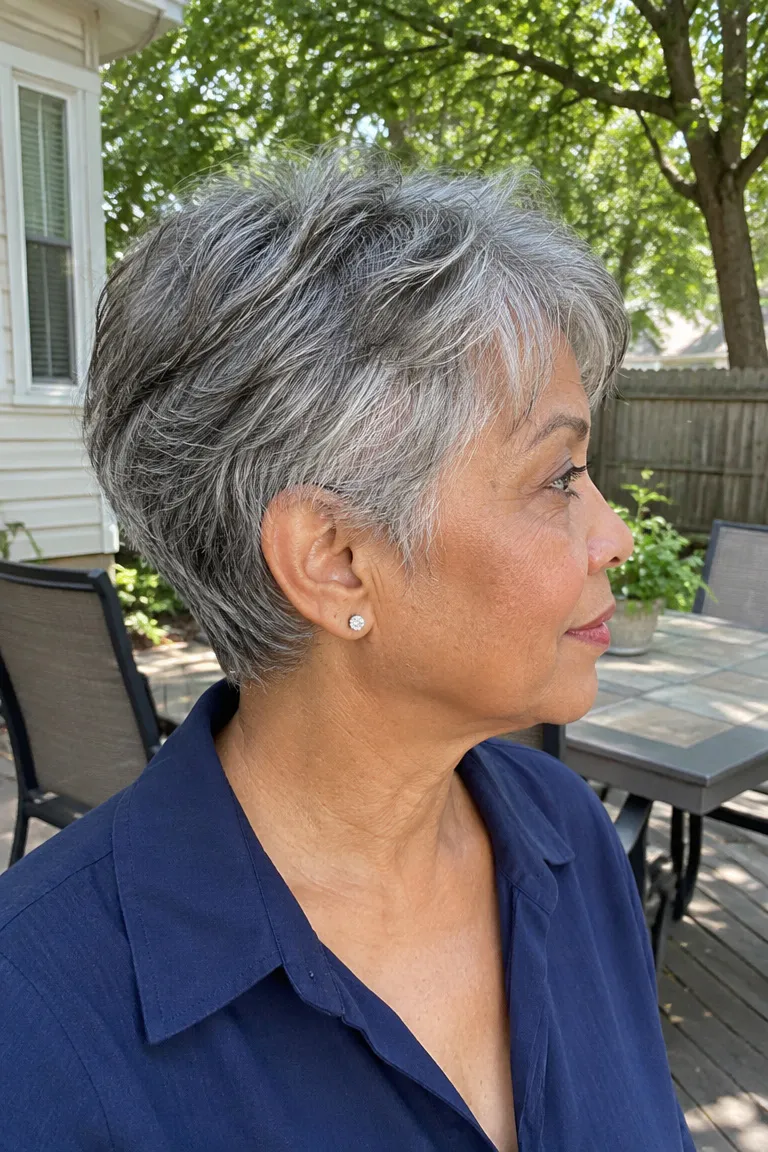
Short cuts give you less hair to match against your own, so small differences in density and shine are harder to spot. That’s general guidance, not a rule, since a longer wig on a well-made cap can look just as natural. A pixie is simply the lowest-effort place to start.
The texture on top does the real work. Choppy, uneven layers break up the helmet look of a pixie cut in one smooth length, and a few wispy pieces over the forehead soften the front. Look for a blend of light and mid gray so the top has some shadow in it.
It suits fine to medium density, oval or heart-shaped faces, and glasses wearers, because the sides sit close to the head and clear the temple arms. To see how layering changes the shape on fine hair, browse these soft pixie cuts for fine hair.
- Check the nape. It should taper, not stop in a hard straight line.
- Ask a stylist to snip a few pieces along the front edge so the fringe looks lived-in rather than cut with one pass.
2. Rooted Light Gray Pixie
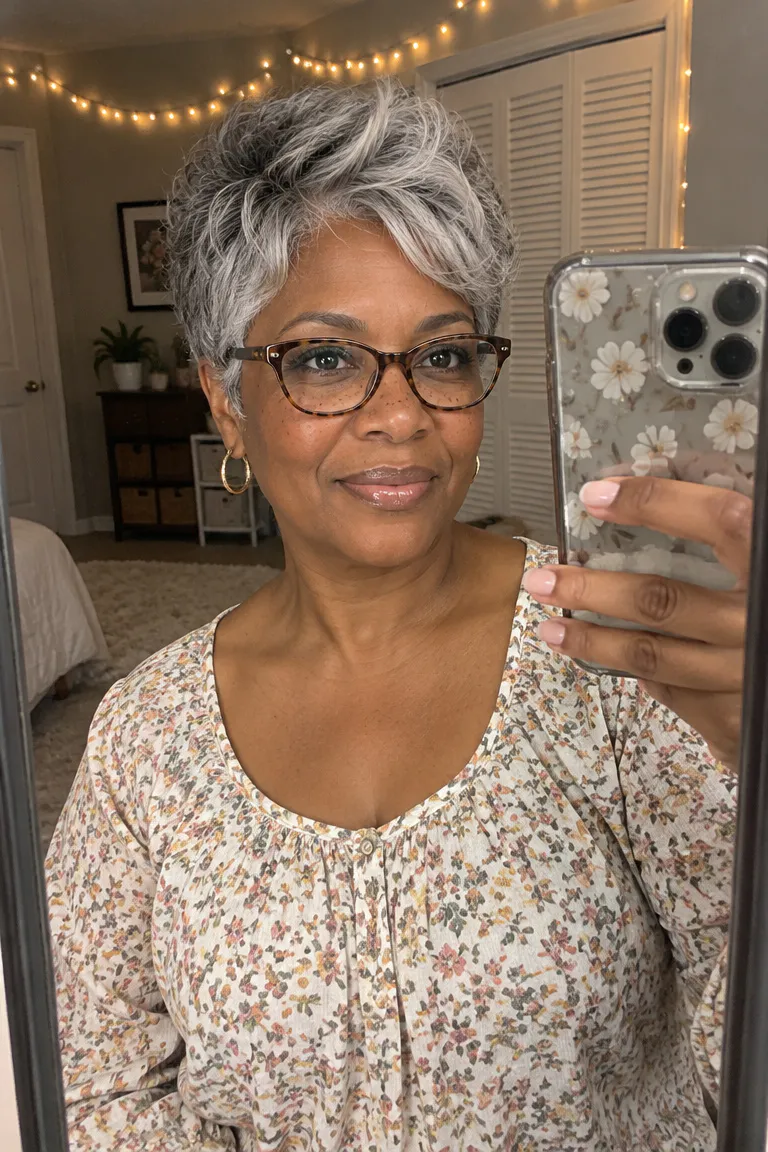
This wig’s whole job is the root zone. A darker charcoal area that fades up into pale silver copies how gray grows in real hair, and it avoids the single flat shade that makes a wig look like a prop.
Look for a tousled, lifted finish at the crown. A little disorder reads as real hair, while a tidy cap of set curls doesn’t. It works well on fine hair that lacks natural dimension, because the shading does some of the work density would otherwise do.
Run a quality check on the photos before you buy. The root shade should blend softly, not sit as a hard stripe, and if you can see a clear line at the part or crown online, it will look worse in person.
Quick tip: Lighter synthetic shades can look glossy under bright store lighting. A light dusting of dry shampoo, worked in with your fingers, tones the shine down.
3. Salt-and-Pepper Classic Pixie

Real gray rarely arrives as one tone, which is why mixed dark and light strands read as natural. Some retailers cite salt-and-pepper as the most believable blend, and it suits women who still have some pigment left and want the wig to sit beside their own hair.
- Carry the wig or a swatch to a window or outside. Product pages often add brightness or a blue cast.
- Hold it against your temples and eyebrows, where your own color is easiest to read.
- Choose the blend whose darkest strands sit close to your darkest ones. If your hair is mostly white, a lighter mix will match better.
Keep the cut neat. A side part, short tapered sides, and soft layering across the top give a polished, everyday finish that holds up when you’re running errands as well as at a family dinner.
4. Chin-Length Gray Bob

A jaw-grazing bob adds width at the lower face. That helps long or oval faces, which gain some fullness at the jaw, and it’s less ideal if you want to minimize jaw width.
One seller advises that a bob of roughly 8 inches tends to clear glasses and temples. That’s one retailer’s opinion, so test the length against your own frames before relying on it.
A blunt edge needs a clean, matte finish. Shiny blunt synthetic ends are one of the quickest routes to a plastic look, so choose a low-shine fiber in medium gray with subtle lighter streaks.
The tradeoff is upkeep of the shape. A bob is easy to wear, with nothing to curl or set, but it needs a trim whenever the ends start to flare or fray.
5. Layered Bob With Face Framing

Longer pieces angled past the cheekbones soften a round or square jawline, while shorter layers at the crown add lift to fine hair. The front pieces do the most work, so they’re the part to customize.
Take the wig to a stylist and ask for the front pieces to be trimmed to land at your cheekbone or chin. If you’re collecting references for that appointment, these short bob cuts for thin hair show how layer placement changes fullness.
Run two checks before you commit. Front pieces shouldn’t tuck under your frames or catch on the lens, and heavy layers on a low-density cap can look sparse at the ends. Choose medium density with feathered layers if the cap is on the lighter side.
6. Curly Gray Bob

Loose curls hide a wig’s edges and add natural body, which suits women whose own hair is wavy or curly and who want a match. Synthetic curls hold their pattern with little styling, while human hair curls may need product to stay defined.
Care is gentle. Finger-style the curls or use a wide-tooth comb, and never brush them dry, since that pulls the pattern into frizz. Pick a blend with natural variation in tone so the curls don’t read as one metallic mass.
The tradeoff is width. Curls add volume at the sides, so check how they sit next to your glasses and ears. If the sides feel bulky, ask a stylist for a light trim or choose a lighter-density curl.
7. Wavy Cut With Side Bangs

Side-swept bangs cover the front edge, which makes this the pick for first-time buyers whose lace or hairline still feels obvious. It suits higher foreheads and anyone who wants a soft face frame without a full fringe.
The hairline should sit at or near your natural one. If the lace shows, cutting it in an irregular zigzag instead of a straight line softens the edge.
Fit check: Bangs that sit too thick or too low read as costume. Ask a stylist to thin them and trim so they sweep across the forehead and end near the brow.
Loose S-shaped waves ending at the jaw keep the whole shape light, so the bangs stay the focus.
8. Silver Bob With Lowlights

Darker lowlights threaded under silver make the color look layered, so it doesn’t read as one plastic sheet. A flat metallic silver tends to read as costume because nothing in it casts a shadow.
Very light shades can look glossy, especially in synthetic fiber. Choose a matte finish from the start, and use a light dusting of dry shampoo to cut any remaining shine.
This one suits women whose own hair has mixed tones and who want visible depth. In the photos, look at the underlayers. The lowlights should show when the hair moves, not form a dark panel at the nape, and a sleek chin-length shape lets the color carry the dimension.
9. Shoulder-Length Blowout Waves

A salt-and-pepper wave grazing the shoulders gives a fuller look for women who don’t want short hair. It needs restraint, though, because too much length or volume is a common reason wigs look fake.
- Keep the ends tapered rather than blunt, so they look like hair that’s been worn in.
- Keep crown height modest, with light lift instead of a tall dome.
- Match heat to the fiber. Human hair can be heat-styled, while heat-friendly synthetic needs the brand’s stated low temperature.
Comfort is the tradeoff. Hair resting on your neck and shoulders is warmer than a short style, which you’ll notice at a patio lunch or in a warm restaurant booth. If you run hot, choose a breathable cap and keep a clip handy to lift the back.
10. Pearl Ash-Gray Shade
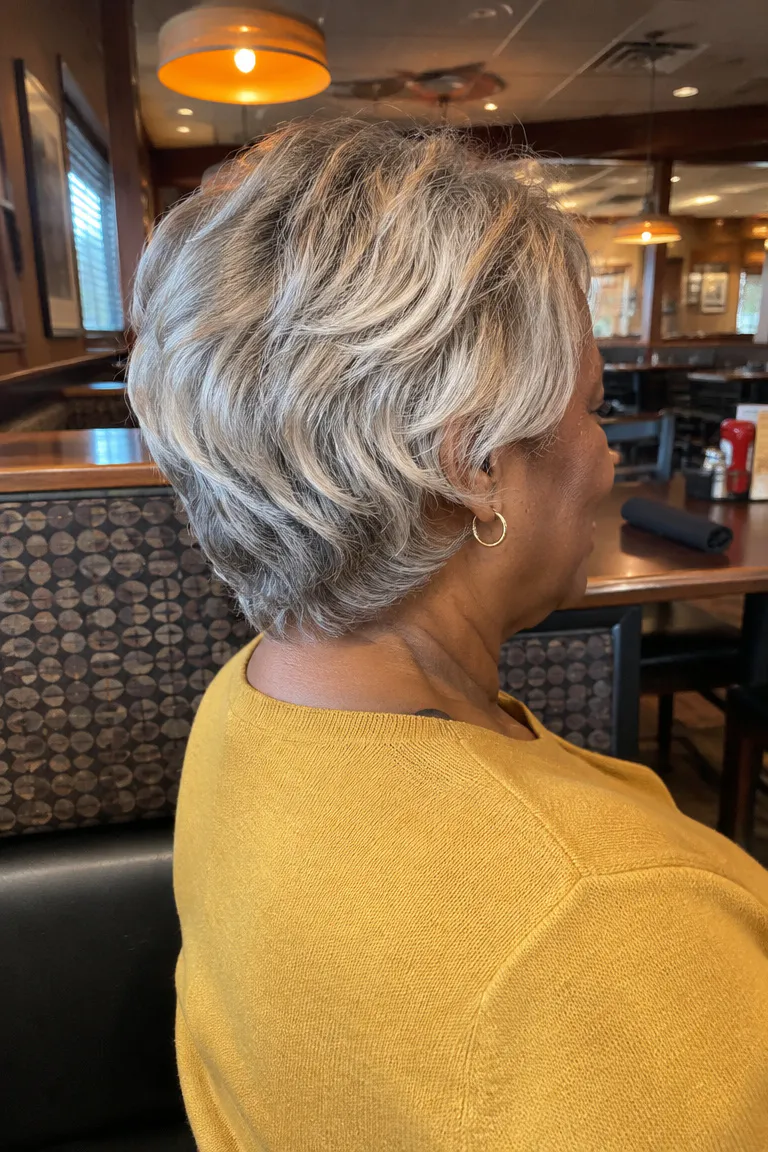
One retailer says pearl gray is softer and warmer, and suits warm or neutral skin tones. That’s a seller claim, not a rule, so test it on your own face. Cool, icy silver can look stark on some skin.
- Hold a wig photo or swatch next to your face in daylight, near a window.
- Compare it to your skin, your jewelry (gold or silver), and your eyebrow color.
- Order from a seller with a clear return policy, since screens shift color.
Lace can look ashy against skin. Tint it, or touch up along the part with a concealer that matches your skin tone.
11. Tight-Curl Gray Wig

Short jerry-curl or tight-curl styles are for women with coily or textured hair who want the wig to match their own texture instead of smooth straight silver. Tight curls hide the cap and hairline well and keep their shape with little daily styling.
Check the curl size near the hairline. It should match your natural pattern so the blend looks consistent where your hair meets the wig.
Care comes down to moisture, gentle detangling, and a satin scarf or bonnet at night to limit frizz. If you’d rather skip a cap altogether, compare crochet braid styles that blend gray before deciding.
12. Monofilament Part for Thin Crowns
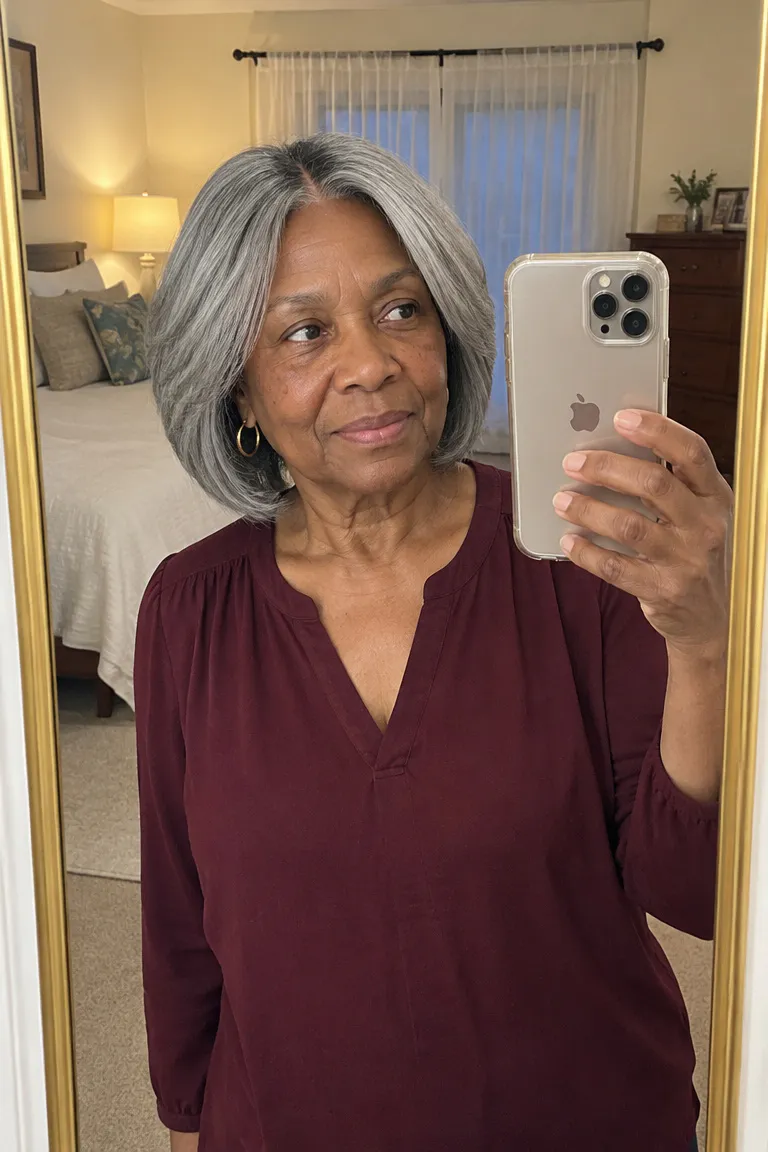
A monofilament or hand-tied top makes the part look like it grows from the scalp. That matters most for women with thinner density at the crown who wear a visible part.
General thinning is different from full hair loss, and a topper or partial piece may suit some readers better than a full wig. A stylist or doctor can help you sort out which. No wig treats hair loss; it covers, it doesn’t treat.
Choose a part width that matches your own, and avoid heavy density, which makes the top look too full against your face.
Salon note: Zoom in on the part in close-up photos. Strands should look like they emerge from the base, with color slightly darker right at the part.
13. Brown-Gray Blend for Transitioning
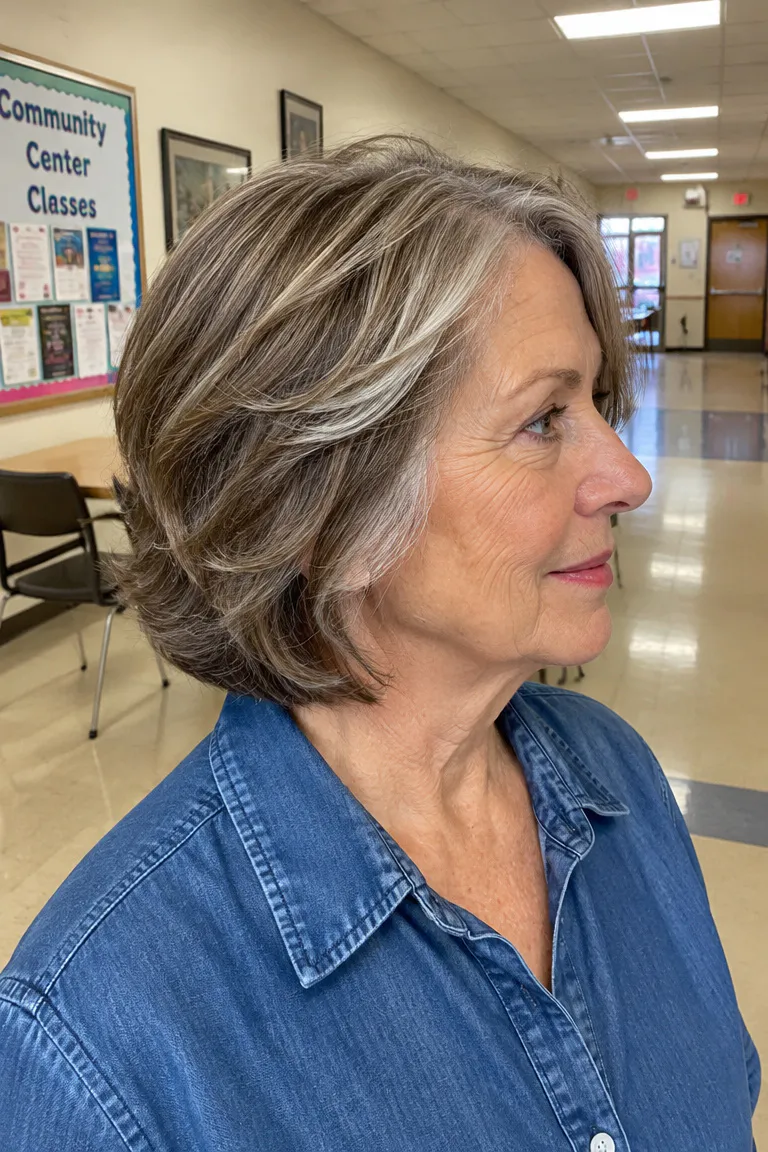
This blend is for women moving from dyed hair toward gray. A brown base with gray woven through makes the change less abrupt and matches roots that are growing in. It also helps if a full silver wig looks too different from your current color.
Pick a base shade close to your dyed hair, and make sure the gray is woven in strand by strand, not stripped across in a band. Check the shade in daylight, since dye often looks warmer under bathroom lighting.
The cut can stay classic, such as a soft bob or layered crop at chin length. As your own roots fill in, you can move to a lighter blend.
14. Glueless Wear-and-Go Cap

A glueless cap secures with adjustable straps, velcro or comb closures, and often velvet-lined ear tabs for comfort. With no adhesive, there’s no residue and it goes on and off in a minute.
- Measure your head and compare it to that brand’s own size chart, because cap sizing varies.
- Don’t over-tighten the straps. Pressure points show up as headaches and marks near the ears.
- Glasses: put the wig on first, then check that the temple arms sit above the ear tabs.
- Wear a thin nylon liner or wig cap so the wig sits smoothly over your own hair.
If the wig shifts when you turn your head, tighten one notch at a time instead of cranking a single strap.
15. Heat-Friendly Synthetic Bob

Synthetic wigs usually cost less and hold their style, while human hair has more natural movement and costs more. Prices vary widely by seller. Some sellers say synthetic lasts about 4-6 months with daily wear, an unverified claim best treated as a rough guess.
| Type | Heat styling | Cost tendency | Tradeoff |
|---|---|---|---|
| Heat-friendly synthetic | Only at the brand’s stated temperature | Lower | Fiber can still be damaged if you go hotter |
| Standard synthetic | No heat tools | Lower | Holds its set shape, but heat can melt it |
| Human hair | Can be heat-styled | Higher | Needs more product and styling time |
The cheapest tier is the most likely to look costume-like, so check cap construction and color dimension before price. Read the return policy first, since a wig that looks wrong in your own lighting is only a fair buy if you can send it back.
Before You Order
Pick two shades and one cut, then check each against your eyebrows in daylight before you order. Confirm your cap measurement against that brand’s size chart and read the return policy before you pay.