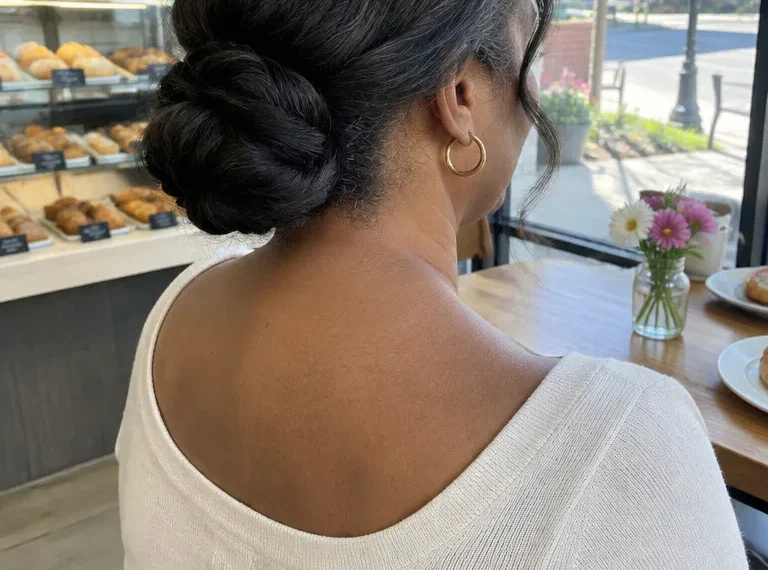
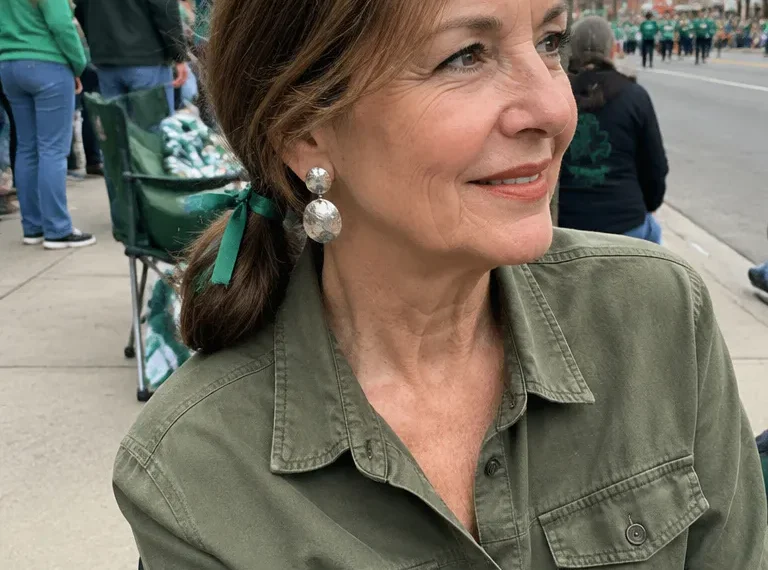
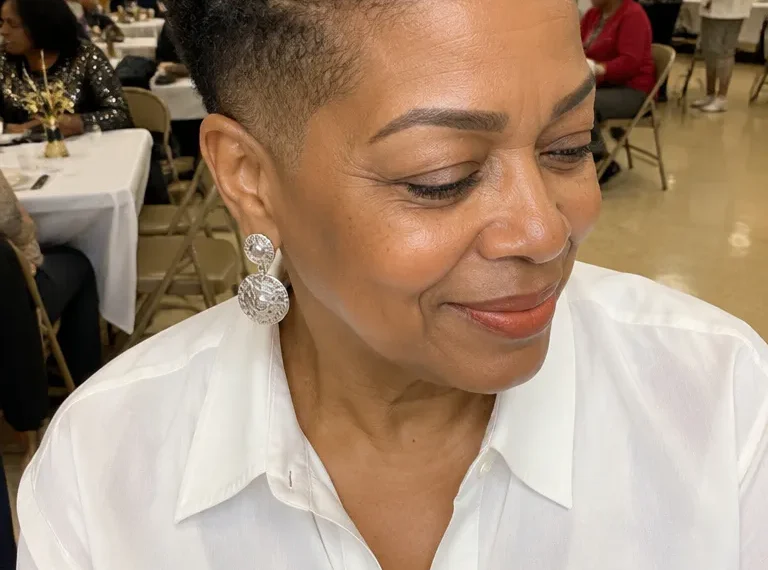
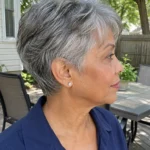
A short cut on gray coils comes down to three measurements: where the taper starts, how much length stays on top, and whether the front hairline is soft or lined. Get those wrong and a good cut can leave thin temples exposed or leave the sides wider than the top. Here’s a quick check before you pick: if your temples are thin, keep the front unlined, and if the sides of your hair feel bulky, ask for the taper to start higher.
The fourteen cuts below are ordered by hair density and by where your gray sits, so you can go straight to the one that matches your hair. Each one lists the taper height, the top length, how the hairline is handled, what upkeep to expect, and a line you can say or show in the chair. Everything here is cut and natural texture only, with no wigs, braids, or dye.
1. Soft Hairline Taper
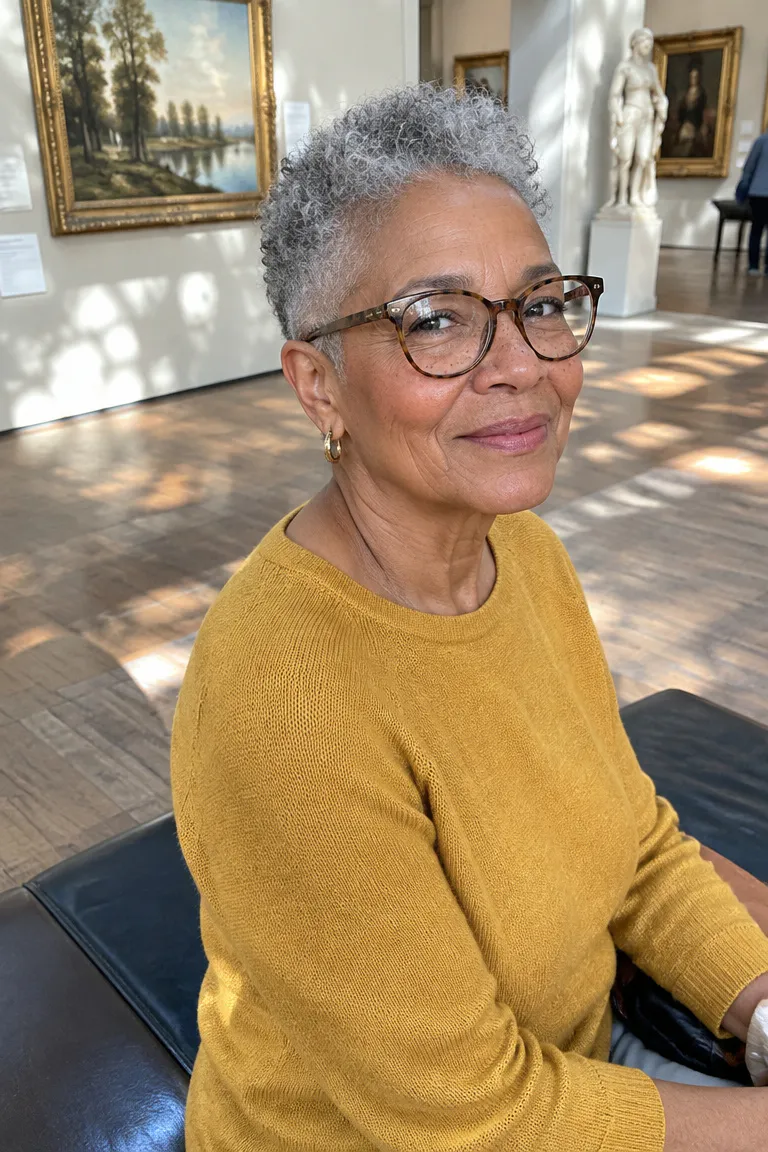
The list runs from the most fragile hair to the densest: fine and fragile first, then medium, then cuts built around where your gray sits, then thick coils, with a couple of styling-heavy options at the end. This cut starts the list because it asks the least of the hairline. The sides and nape are tapered short, about an inch of soft coils stays on top, and the front is left unlined and feathered.
A hard edge-up draws a crisp line, and on thin temples it also shows every gap along that line. Skipping it also means less razor work on tender skin near the forehead. The front will grow out gradually instead of looking untidy after two weeks.
One safety note: if your crown is thinning, patchy, itchy, burning, or tender, see a dermatologist before choosing a very short or tight top. A haircut won’t cause or fix any of those things, but a professional can tell you what’s going on first.
Ask your stylist: "No hard line at the temples, please." Add that you want the front feathered by hand or with scissors, not lined with a trimmer.
2. Fine Hair, Extra Top Length

With fine or thinning gray coils, cropping the top close shows more scalp than most people expect. Keeping about an inch and a half to two inches on top lets the coils overlap and cover, while the sides and nape stay tapered short. That makes this cut about coverage and length, not the hairline.
Winter is when the extra length helps most. Cold, dry air can leave gray hair parched and the scalp flaky, and a bit more length gives you something to moisturize and something that covers the skin underneath.
The trade-off is that longer fine coils can turn wiry and stick out if they’re left dry. Work in a light cream or leave-in each morning, and avoid heavy butters that weigh fine strands flat. Ask the stylist to shape the top while it’s moisturized, not dry, since dry coils spring up and make the cut look longer than it will sit day to day.
3. Low Taper Around the Ears

Here the shortest areas are limited to the nape and the space around the ears. The sides blend up gently into a rounded top of about an inch and a half, so the contrast between short and long is low. You get a softer shape with less skin showing than a high taper.
Low contrast also grows out more gracefully. When the difference between taper and top is small, the new growth blends in instead of creating a visible step, which can stretch the time between appointments.
How long you can wait depends on your growth and the cut itself, so ask your stylist how often to come back. Rates and timing vary by salon, so ask that at booking, too. If you want to compare taper heights and booking intervals side by side, short tapered cuts for gray coily hair with booking notes covers the same territory with other shapes.
4. Close-Cropped Coils

This is the lowest-effort option, and the only entry here with no length on top. The coils are cut to under half an inch all over, with a clean nape and neat sideburns. It also works well as a big chop, because there’s no growing-out stage to manage.
The routine is a wash, a light moisturizer on damp or dry hair, and nothing else. You don’t need styling products, and the only upkeep is a regular trim to keep the nape and sideburns clean.
Since the scalp shows, sun and cold both reach it directly, so plan for a hat in winter and sun protection outdoors. A very close cut can also irritate sensitive skin or bumps, especially if a razor is involved.
Comfort check: Tell your barber if your scalp is tender or bumpy before they start. Ask for clippers with a guard instead of a razor, and speak up during the cut if anything stings.
5. Classic Tapered TWA
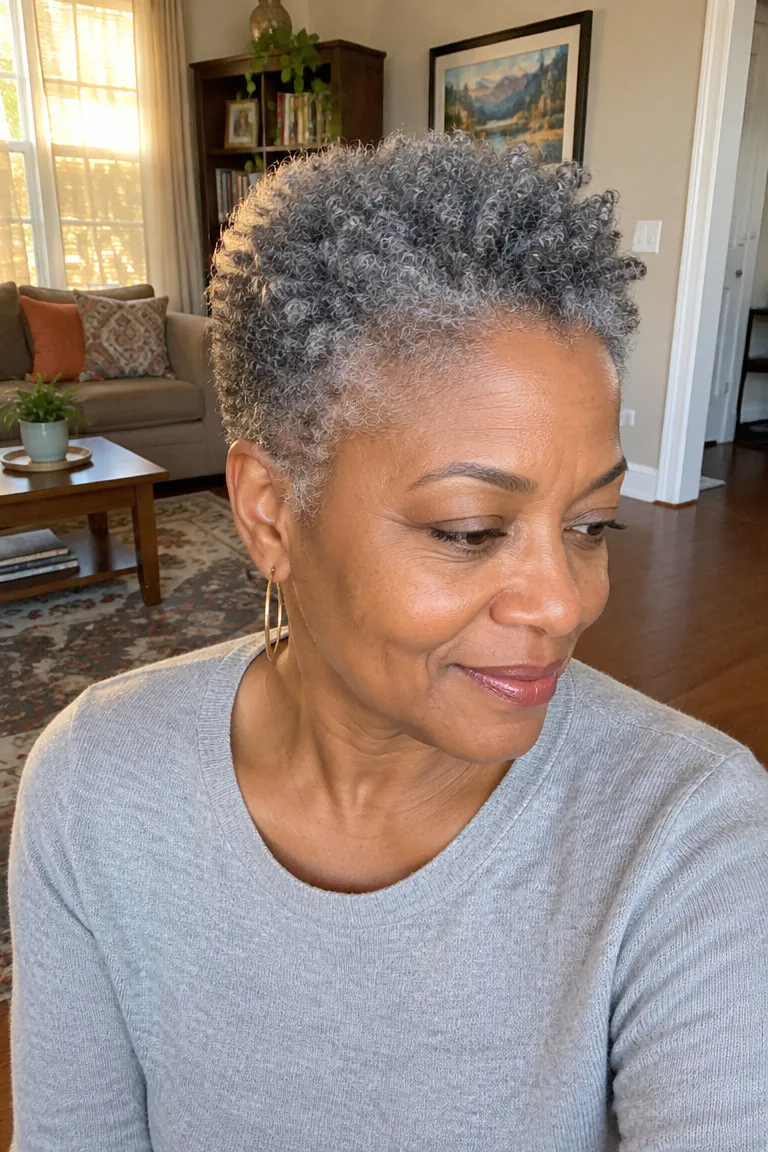
Think of this as the baseline the other cuts modify: about an inch of even-length coils on top, a tapered nape, sideburns, and a clean line around the ears. Learning its parts gives you words to use for any cut on this list.
- Taper start: where the short sides begin, at the top of the ear, above it, or lower.
- Top length: how much stays up top, here about one inch, measured in inches rather than "a little."
- Nape: rounded follows the curve of your neck, squared gives a sharper corner.
- Ear line: a clean edge around each ear, with sideburns ending where you choose.
It needs no heat, which spares gray hair the drying that blow dryers and hot tools cause. Moisturize regularly, and sleep on a satin pillowcase or in a satin bonnet if you like. If you want a bit more shape than an even TWA, low-maintenance pixie cuts for natural hair show what a little extra length does.
6. High Taper, Rounded Crown
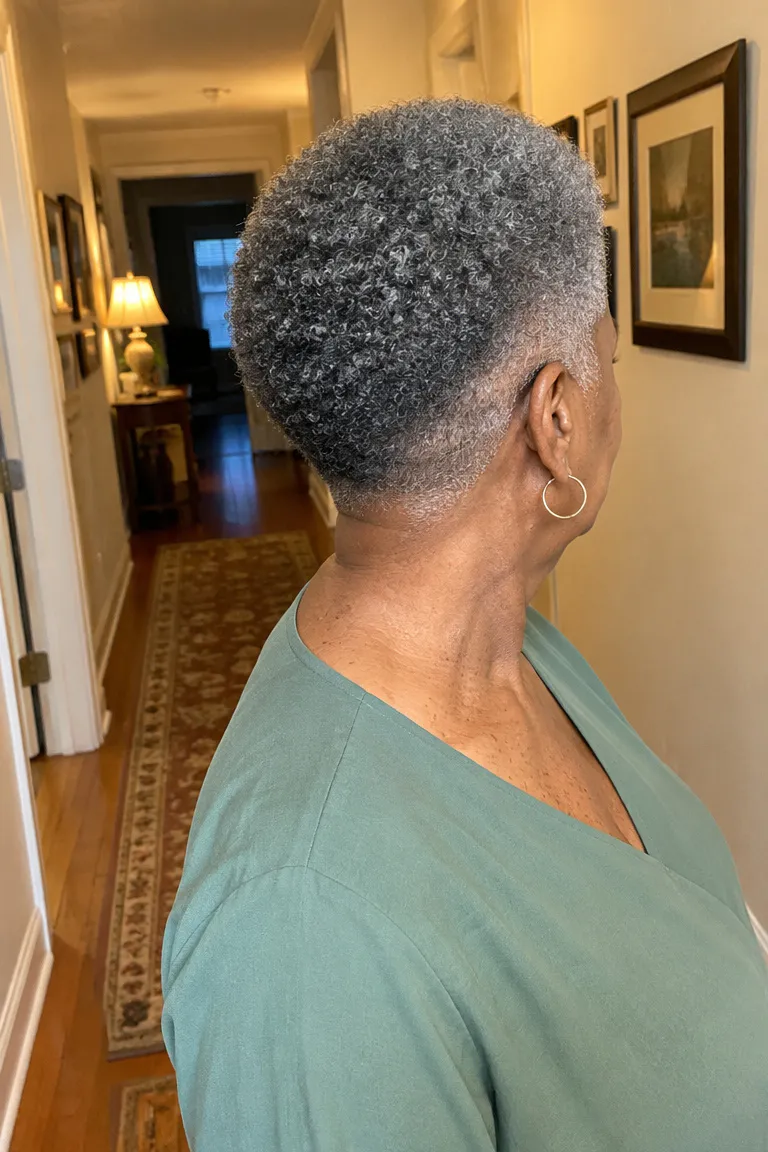
The taper starts higher above the ears, so more skin shows at the sides, and the crown stays full and rounded at about two inches tall. Shorter sides pull attention to your cheekbones, jawline, and ears, and the rounded top gives the head an even outline.
Here’s a mirror check: if the sides of your face look narrower than the top of your head, a rounded crown balances that. If your face is already narrow at the sides and your crown is tall, a high taper can look top-heavy, so go lower or trim the crown to an inch and a half.
High tapers grow out faster than low ones, because the step between short and long is bigger. Ask your stylist how often to come back for yours.
Ask your stylist: Say where you want the taper to start. "At the top of the ear" gives a moderate look, while "at the temple" shows much more skin and reads sharper.
7. Taper for Glasses and Earrings

A taper cleans up the area behind and around the ears, so glasses arms sit flat without catching coils and earrings stay visible. For that to work, the sides need to be short enough that the arm rests directly on the skin, and the sideburn should end above the hinge.
If you can, bring your glasses to the appointment and ask the stylist to put them on partway through the cut. A half-inch of extra hair behind the ear is easy to miss in the mirror and shows up the moment the frames go on.
A tight taper also means earrings and glasses arms show through more. Keep the nape a little softer if the skin behind your ear is sensitive.
Comfort check: Press the arm of your glasses behind your ear after the cut. If it rubs a tender spot, ask the stylist to leave a little more length right at the nape.
8. Salt-and-Pepper Taper
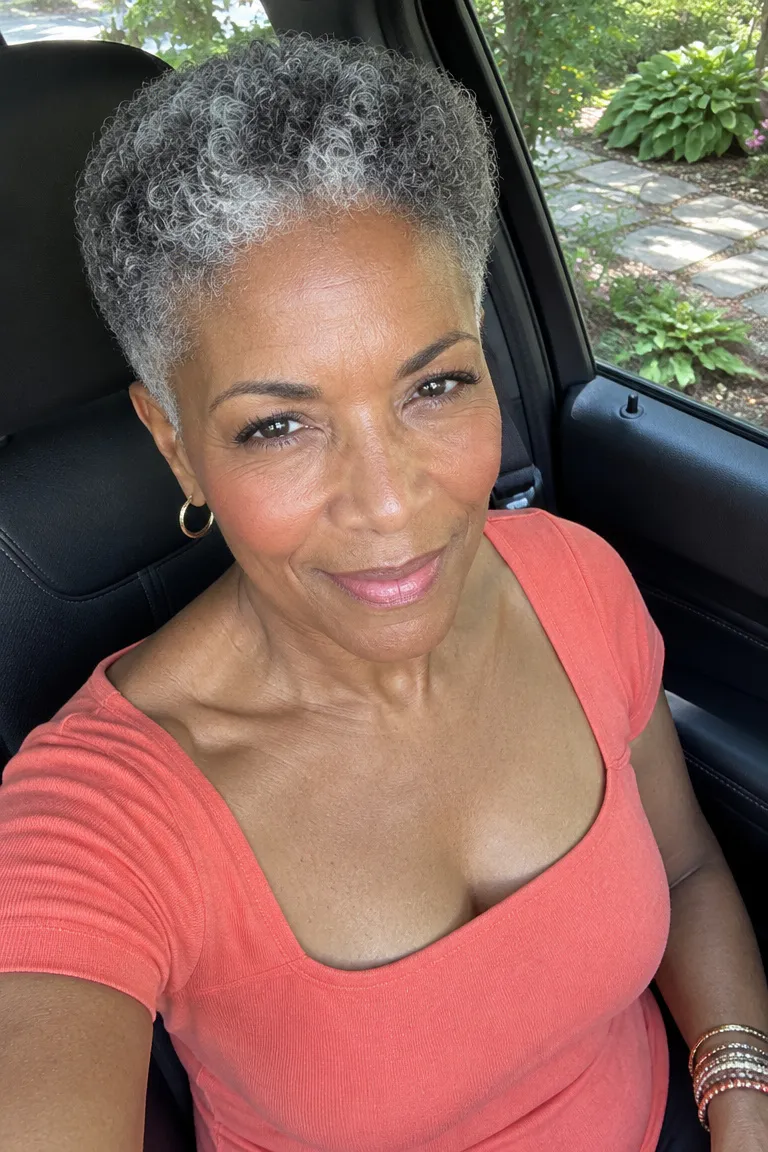
When gray and dark strands are mixed, an even top length of about an inch and a half lets both colors read at the same depth. A heavily faded side can make the gray look patchy, because the shortest hair exposes more scalp and reads lighter than the top. Ask for a gradual taper instead.
Dye is a separate decision, and gray hair can resist color.
One natural-hair site suggests using a clarifying shampoo or a vinegar rinse about once a month if gray covers more than about 35% of your scalp, to remove product buildup. Treat that as one source’s suggestion, not a rule. If your scalp is dry or sensitive, ask your stylist before trying either, since both can strip moisture.
9. Silver-Front Taper

If most of your gray sits at the front and temples, the taper decides whether it shows. A taper that leaves the front a bit longer, around two inches, keeps the silver as a visible highlight. A tight taper at the temples can cut it away.
Before you reach for purple shampoo, look at the strands. Use it only if white or gray hair looks yellow, and not on every wash. Silver hair doesn’t require it, and it doesn’t prevent yellowing.
Maintenance tip: A smoothing cream helps silver strands lie flat at the front. Prices often run roughly $10 to $25, so check current prices, and use a pea-sized amount on damp hair so the front doesn’t look greasy.
10. Curly Top, Mixed Texture
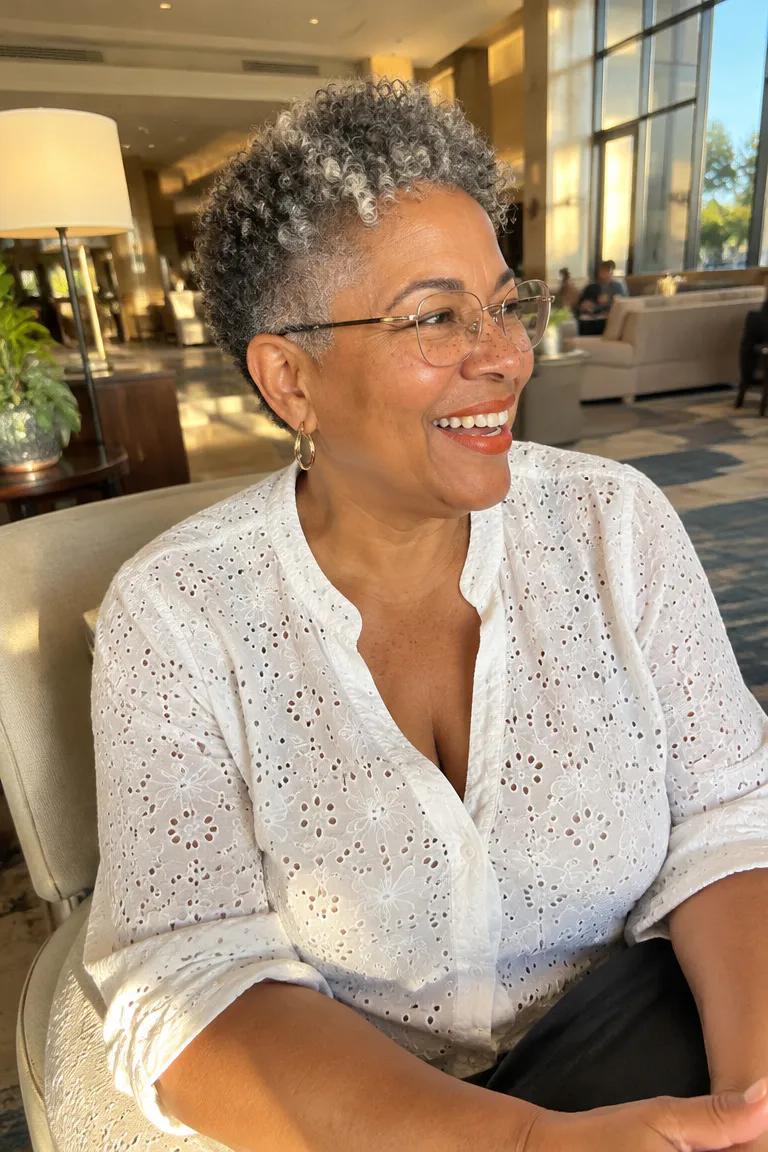
Some hair has loose or mixed curl patterns where the gray strands behave differently from the rest. One natural-hair site says gray strands can differ in texture and often need more moisture. That means the gray areas on top may want a heavier cream, while darker, pigmented sections do fine with a light one.
Leave about two inches on top so the curl has room to form. Any shorter and the curls tighten into coils that hide the difference in texture, which can look uneven.
For budget, one example is Qhemet Biologics Amla & Olive Heavy Cream at around $23. That’s a price example only, not a recommendation, and you should verify current prices. For strands that stick out, add a smoothing product with light hold.
11. Tapered Twist-Out Top
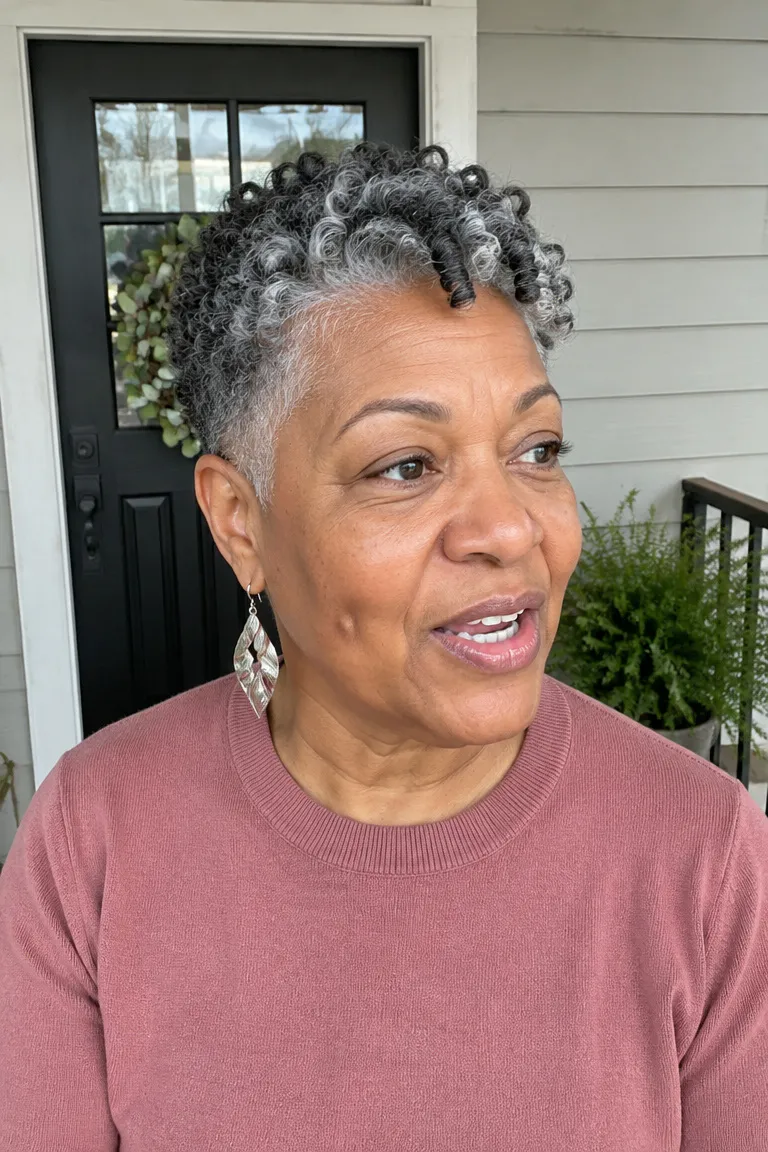
This cut takes more time than any in the first half of the list. Leave about two to three inches on top, taper the sides, and set twists or finger coils on damp, moisturized hair for definition. No heat is needed.
The definition holds on the top only, while the taper keeps the sides neat. When the top starts to frizz, you’ll need to retwist it, and a satin bonnet at night helps if you like wearing one.
If you’re deciding whether the extra effort suits you, twist-out styles for gray natural hair over 60 cover drying times, product amounts, and day-three-to-five refreshes.
Ask your stylist: Say you want a twist-out and ask whether the top is long enough to hold definition. If it’s short of two inches, wait a few weeks before cutting again.
12. Taper for Thick Coils
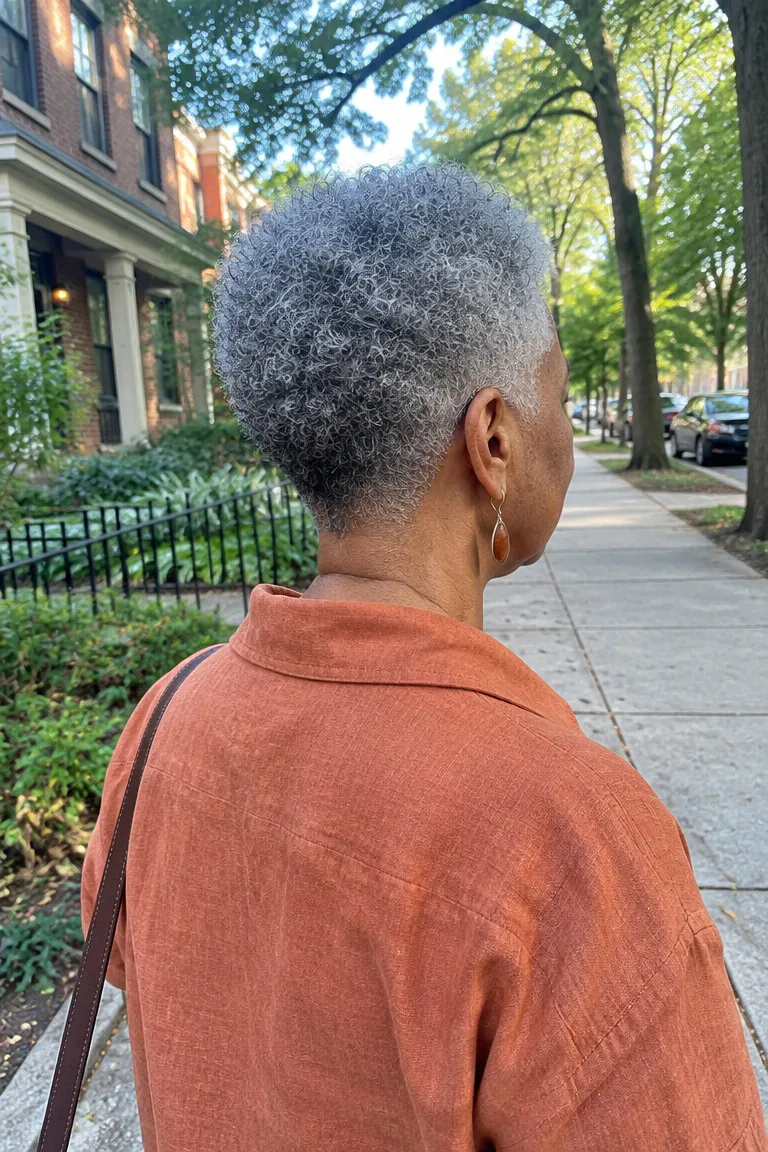
With dense hair, bulk at the sides is the main issue. A taper removes width at the ears and temples so the cut doesn’t widen into a triangle, and it leaves a rounded top about two inches long.
Dense coils also tend to hide the taper line, so the transition can disappear into the hair. Ask your stylist to define it with a visible step instead of blending it completely.
If water beads on your hair and products sit on top, that can be a sign of low porosity. In that case, lighter oils may absorb better than heavy butters. Not all gray hair is low porosity, so test with a small amount first.
13. Tapered Fade Bob

For readers who searched "fade bob" and want more length on one side, this is an asymmetrical shape. One side is tapered close to the ear, and the other is left longer, about chin-to-jaw length, in natural coils. There’s no heat straightening, and the longer side stays coily.
It’s the highest-upkeep cut in the list. The longer side needs more daily care and moisture, and it needs regular shaping to keep the line sharp. It suits readers with enough density to hold the longer side without it thinning out at the ends.
Maintenance tip: Moisturize the long side every day, and ask your stylist how often to book a shape-up. A satin bonnet at night helps protect the length.
14. Razored Part Line
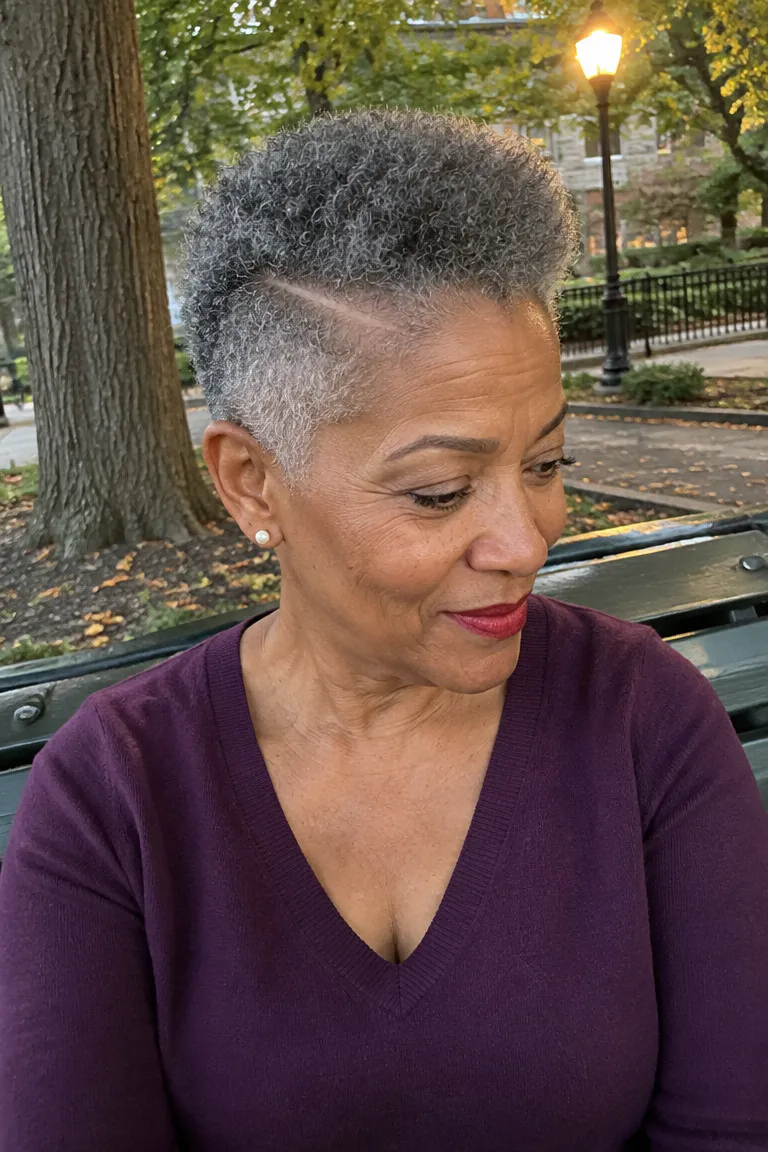
This is a more defined option: a side part shaved or razored into the hair above one temple, with the taper below. It adds structure to a short natural top of about an inch and a half, and it suits readers who like a crisp look. It’s the opposite of the feathered front in section 1.
The line grows in within a couple of weeks, so it needs frequent touch-ups to stay sharp. A razor or very close cut can irritate sensitive skin or bumps, so tell your barber before they start.
If you’re torn between this and the soft hairline, pick based on how often you’re willing to be in the chair. The script in the conclusion works for both.
What to Tell Your Stylist
Screenshot the cut you like and write three things on your phone: where the taper starts (top of the ear, above it, or at the temple), how long the top should be in inches, and whether the front is soft or lined. Then say it plainly: "I want a short taper on natural gray hair. Start the taper at ___, leave ___ inches on top, and keep the front hairline soft.
My scalp is sensitive here, so please go easy with the razor."
Bring the photo, ask how often to return, and bring your glasses if you wear them.