Crochet hair can look natural and feel easy to wear, but the wrong length, density, or foundation may create unnecessary weight around fine edges and sensitive areas. A short bob, compact twist, or lightweight loc usually offers simpler upkeep than long exposed curls, while a softened part and low-sheen fiber help the installation blend more convincingly.
Use comfort as the first filter: if the style feels tight during installation, ask for fewer foundation rows, larger braids, lighter hair, or a shorter finished length. The options below compare texture, face framing, color, scalp access, seasonal practicality, and the maintenance each style requires.
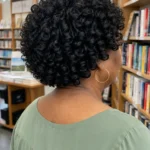
1. Chin-Length Curly Bob
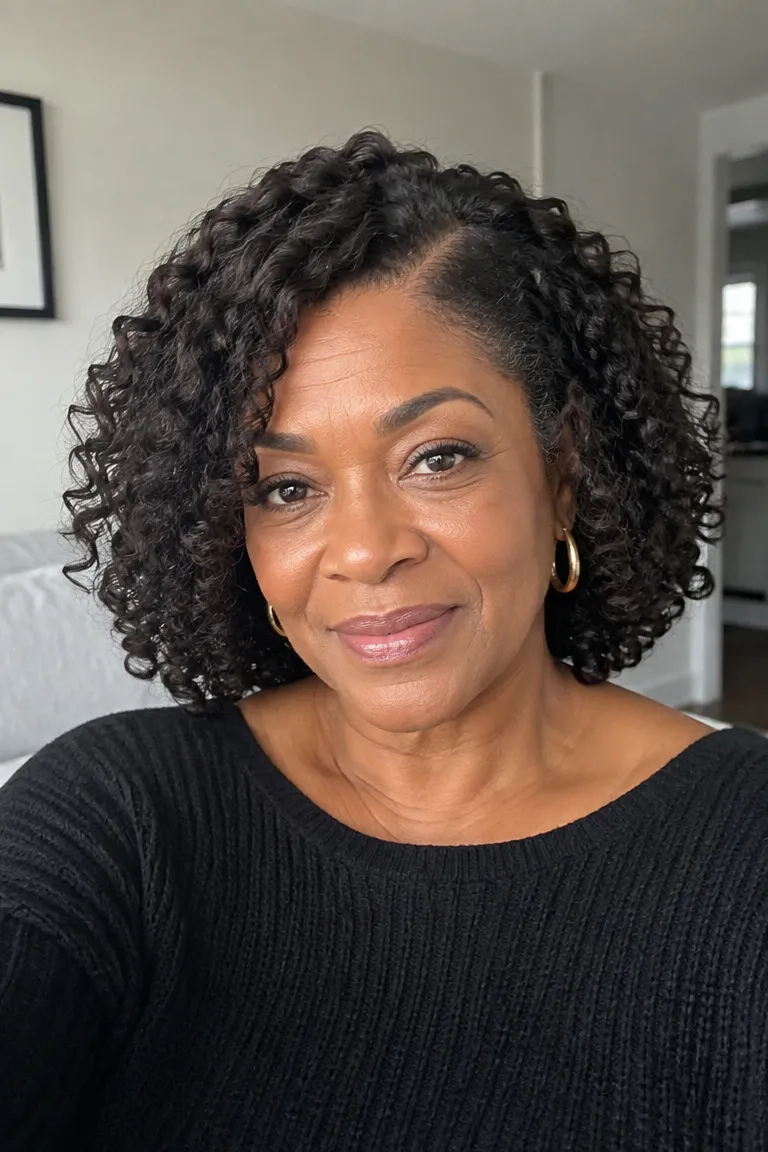
A chin-length curly bob frames the cheeks and jaw without leaving long strands rubbing against the neck. The shorter shape can feel lighter than shoulder-length crochet, especially when the curls have moderate rather than dense volume. A matte curl pattern in soft black-brown usually looks less artificial than a highly glossy fiber.
A softened side part adds movement without creating a perfectly straight visible line. The shape may complement oval, heart, or longer faces, while trimmed curls near the cheekbones can prevent the style from looking bulky. Ask for minimal tension around the temples and a loose foundation that leaves enough scalp access for cleansing.
Refresh only flattened areas with a light water-based spray and separate curls with your fingers. Avoid brushing the entire bob, since repeated manipulation can expand the curl pattern and increase frizz. A small satin bonnet or scarf can reduce overnight friction without compressing the curls too tightly.
Ask your stylist: Request moderate density, trimmed ends, a loose perimeter, and a part that remains soft rather than sharply outlined.
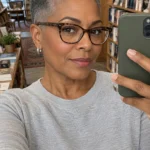
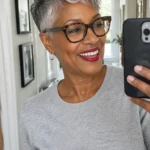
2. Salt-and-Pepper Curly Bob
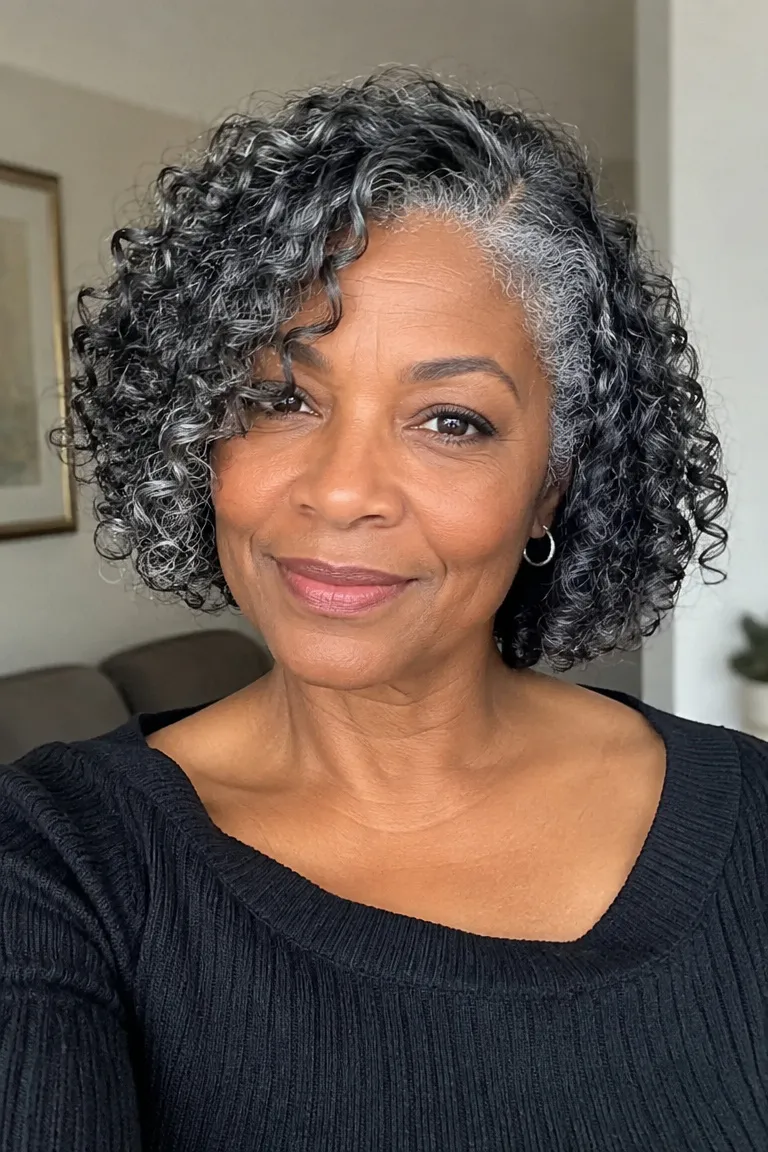
A salt-and-pepper curly bob combines dark and gray fibers so the finished color has dimension instead of appearing like one solid silver block. Chin or jaw length keeps the style compact, while low-sheen curls help the gray blend resemble natural texture. Less density at the temples can make the front appear lighter and reduce pressure near fine edges.
A gently irregular side part can look more believable than a sharply centered part. If your face is round or oval, modest height at the crown can balance the width without requiring a large installation. Ask your stylist to compare gray samples with your own hair in daylight, since indoor lighting can make charcoal, silver, and white fibers appear similar.
This style needs more attention than enclosed twists because exposed curls can tangle at the ends. Separate only the areas that have compressed, and use a light mist instead of layering heavy oils that may collect lint. A satin covering and a wide-tooth tool reserved for the ends can help preserve the bob between washes.
Color check: Choose the proportion of dark, charcoal, and silver fibers rather than accepting a single pre-mixed gray shade that may not match your natural new growth.
3. Short Tapered Crochet Crop
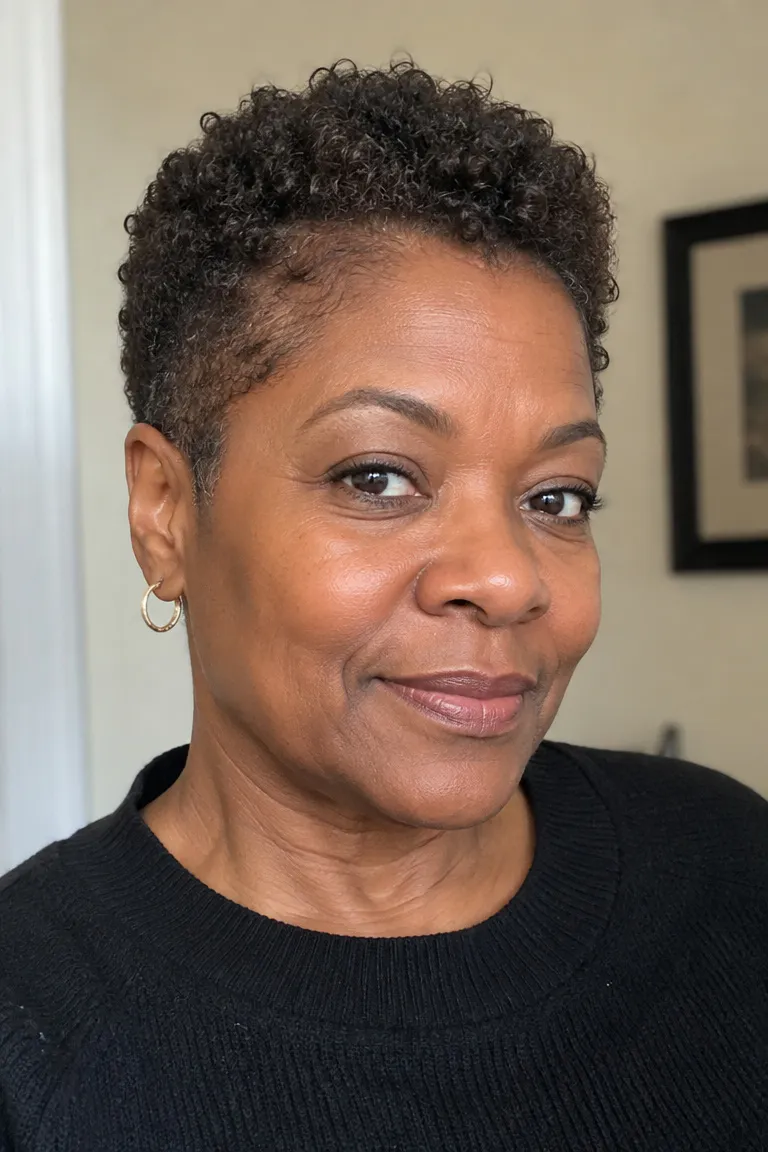
A short tapered crochet crop creates one of the lightest silhouettes in this list and fits easily beneath hats or around high collars. Keep the crown softly textured while shortening the sides and nape, but avoid a tight or shaved perimeter if your hairline is delicate. Low-density short curls can be reshaped quickly with a mist and your fingertips.
The crop can work with oval, round, or square faces when the stylist adjusts the crown height and side width. A little extra texture on top can lengthen the appearance of a rounder face, while a fuller side shape can soften a narrow one. The finished nape should sit comfortably without pulling when you turn your head.
Because the hair is short, this option offers easy access for scalp observation and cleansing. Ask for a foundation that does not crowd the temples, along with minimal added hair near the edges. Use a water-based refresher and fingertip shaping instead of frequent combing, which can disturb the compact curl pattern.
Comfort check: During installation, ask whether the nape can be left slightly longer and lighter if the shortest area feels tight or exposed.
4. Side-Parted Wavy Bob
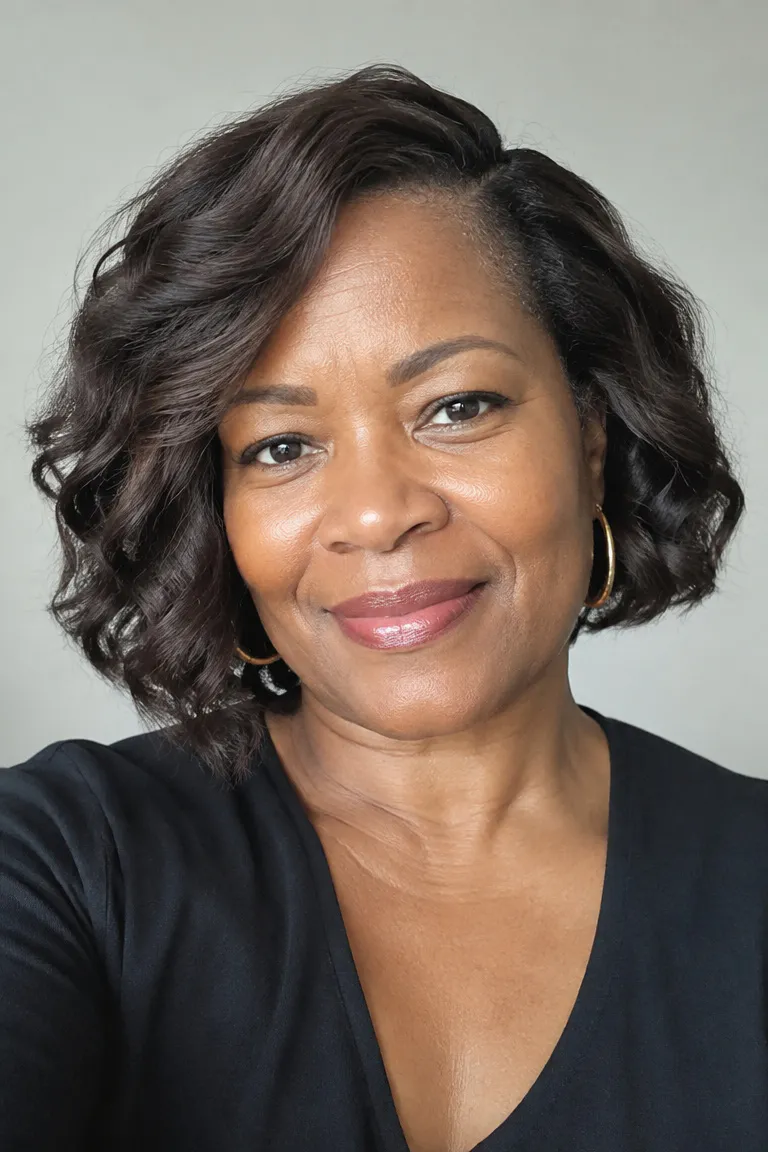
A side-parted wavy bob offers movement with less bulk than a dense curly bob. Chin-length or shoulder-skimming ends keep the shape manageable, while layered tips prevent the nape from becoming one heavy line. Choose low-sheen waves in dark brown or black-brown for a finish that looks softer than glossy synthetic hair.
The off-center part can visually lengthen a round face and create gentle asymmetry without a dramatic cut. A moderate bundle count keeps the base lighter and leaves space for scalp access. Ask for a softened part rather than a perfectly straight opening, especially if you want the crochet to blend with natural hair near the front.
Waves generally need less daily separation than loose boho curls, but friction can still roughen the ends. Cover the bob at night and reshape flattened sections with damp fingers. If you plan to travel during early fall, the chin-length version takes less room in a bag and is less likely to catch on scarves or jacket collars.
Ask your stylist: Request layered ends, moderate density, and enough space between foundation rows to reach the scalp without dismantling the whole bob.
5. Shoulder-Length Loose Curls
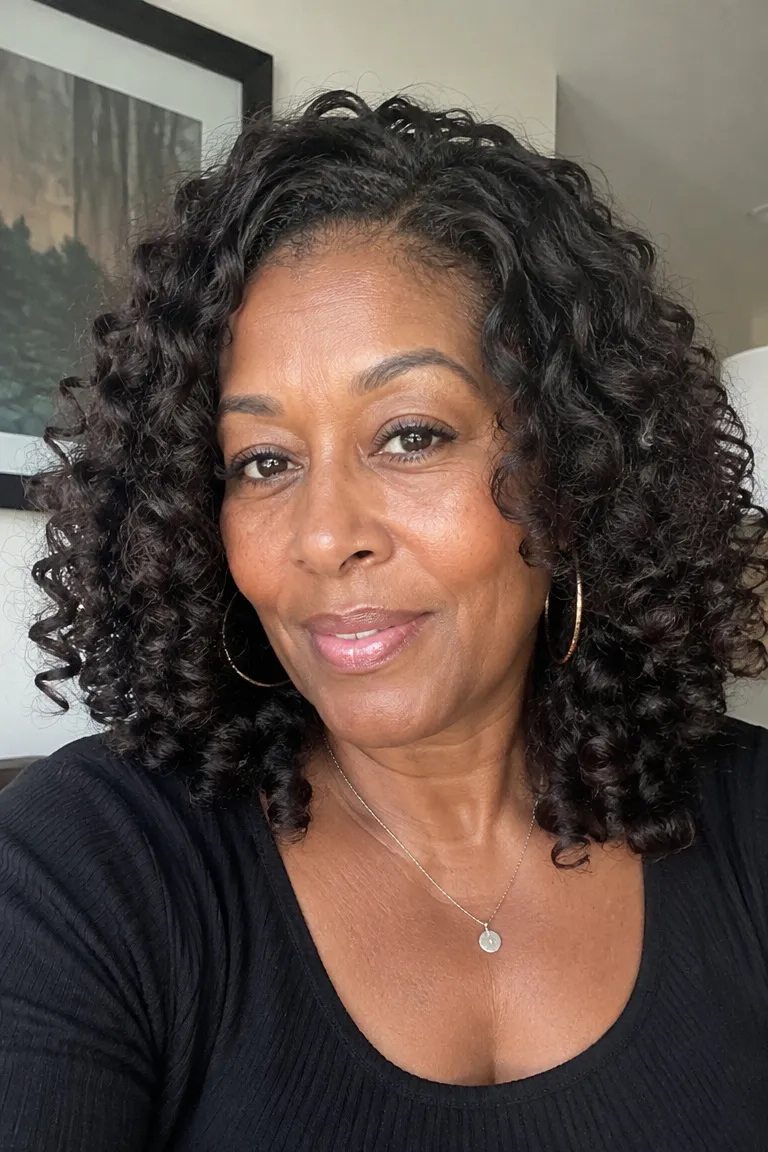
Shoulder-length loose curls create a softer frame for an oval or long face by adding width around the cheeks and shoulders. Shorter layers near the face prevent the front from hanging like one long curtain. Choose a curl pattern close to your own texture so the installation looks more integrated as the hair moves.
This style requires more upkeep than a compact bob because the exposed curls can frizz, mat, or tangle. Keep the bundle count moderate and avoid excessive crown density, which can make the finished shape heavy. A small detangling tool, satin covering, and light section-by-section refresh are more useful than repeated brushing.
Ask for a nape length that remains easy to separate with your fingers. If your scalp is sensitive, discuss a loose cornrow foundation and fewer crochet attachment points before installation begins. For a polished appearance at a fall gathering, refresh only the face-framing curls and leave the rest of the texture relaxed.
Maintenance tip: Support the curls from underneath while refreshing them; pulling downward from the ends can stretch the pattern and loosen the installed hair.
6. Soft Crochet Twists
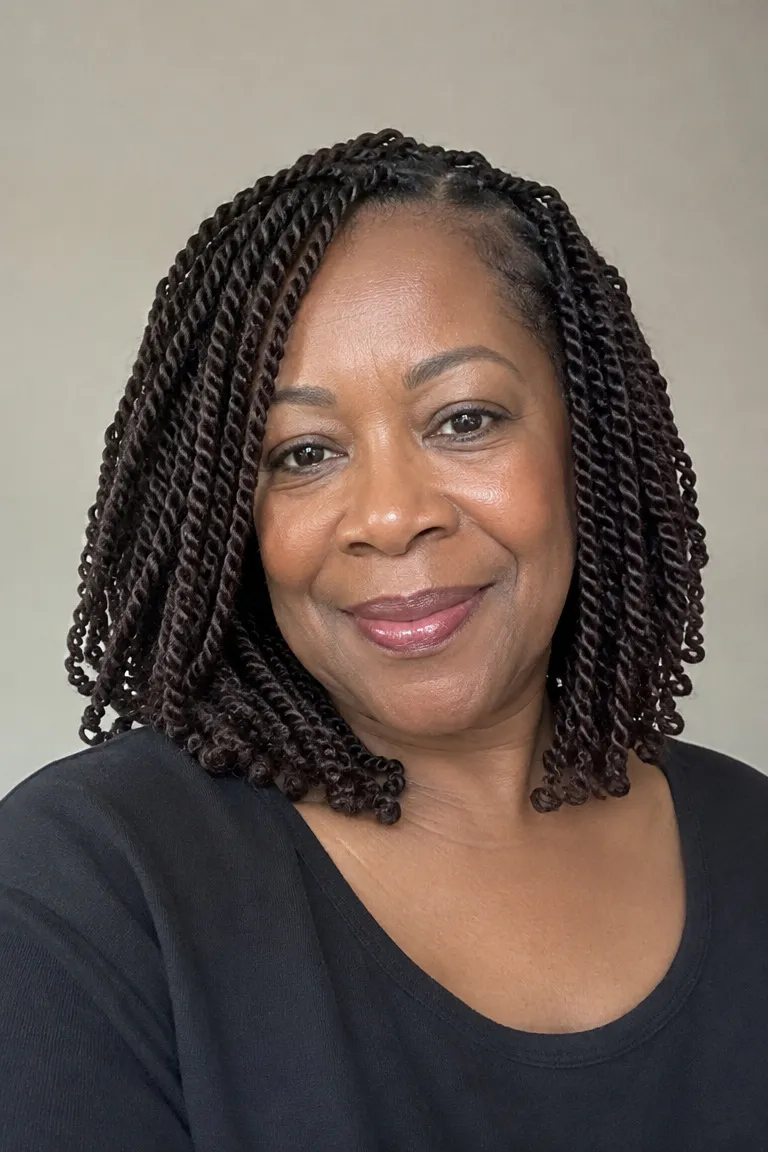
Soft medium twists offer an enclosed texture that usually needs less daily separation than exposed curls. Collarbone or shoulder length provides movement without the weight of very long twists. Low-sheen deep brown or black-brown fibers create a restrained finish, while medium-sized twists keep the base from becoming overly dense.
The style may suit square or round faces when the front twists are slightly shorter than those at the sides. A few face-framing pieces can soften the outline without requiring a side-swept installation. Ask the stylist to leave the temple and nape areas comfortable rather than filling every available space with hair.
Twists can work well for travel because the texture stays contained and is less vulnerable to humidity than loose curls. Apply a light scalp mist when needed and check the foundation weekly for buildup or tightness. A satin bonnet or scarf helps reduce friction, while heavy product can leave the twist bases dull and difficult to cleanse.
Comfort check: Choose fewer, slightly larger twists if the finished style feels heavy; adding more small twists rarely improves comfort.
7. Medium Passion Twists
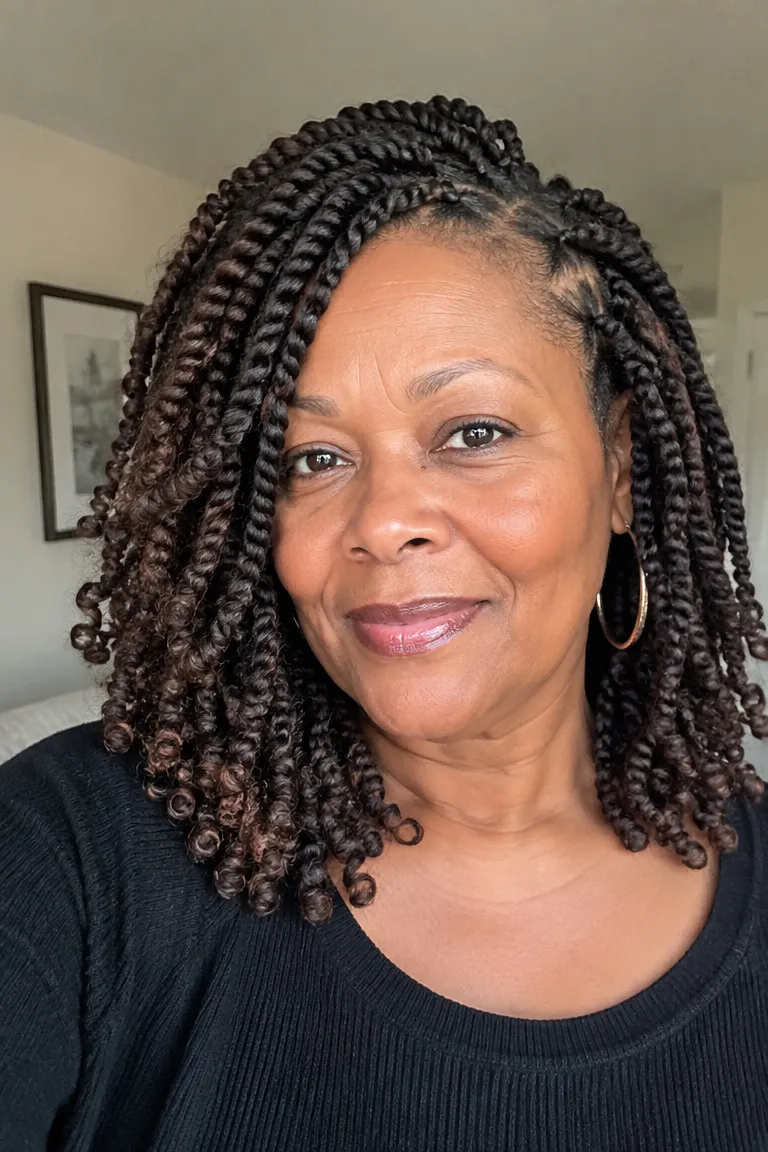
Medium passion twists create a defined rope-like texture without individual braid-by-braid installation. A short-to-medium length keeps the loops from catching on scarves and reduces the pull created by long, waterlogged strands. Muted brown or black-brown hair usually looks more natural than a highly reflective synthetic shade.
Side-swept front twists can complement oval or heart-shaped faces by moving the visual line away from the center. Keep the front section light and avoid packing small twists tightly around the temples. Pre-looped lightweight hair and a loose cornrow foundation are practical choices when scalp comfort matters.
Passion twists need occasional smoothing because the loops can catch lint or begin to separate. Check the base for buildup and use a light mist rather than saturating the twists with oil. If you will sit for long periods at a family gathering or travel appointment, shorter twists reduce the weight resting against the back of your neck.
Ask your stylist: Confirm the total number of packs before installation and request lightweight hair so the finished twists do not become heavier than expected.
8. Short Faux Loc Crochet
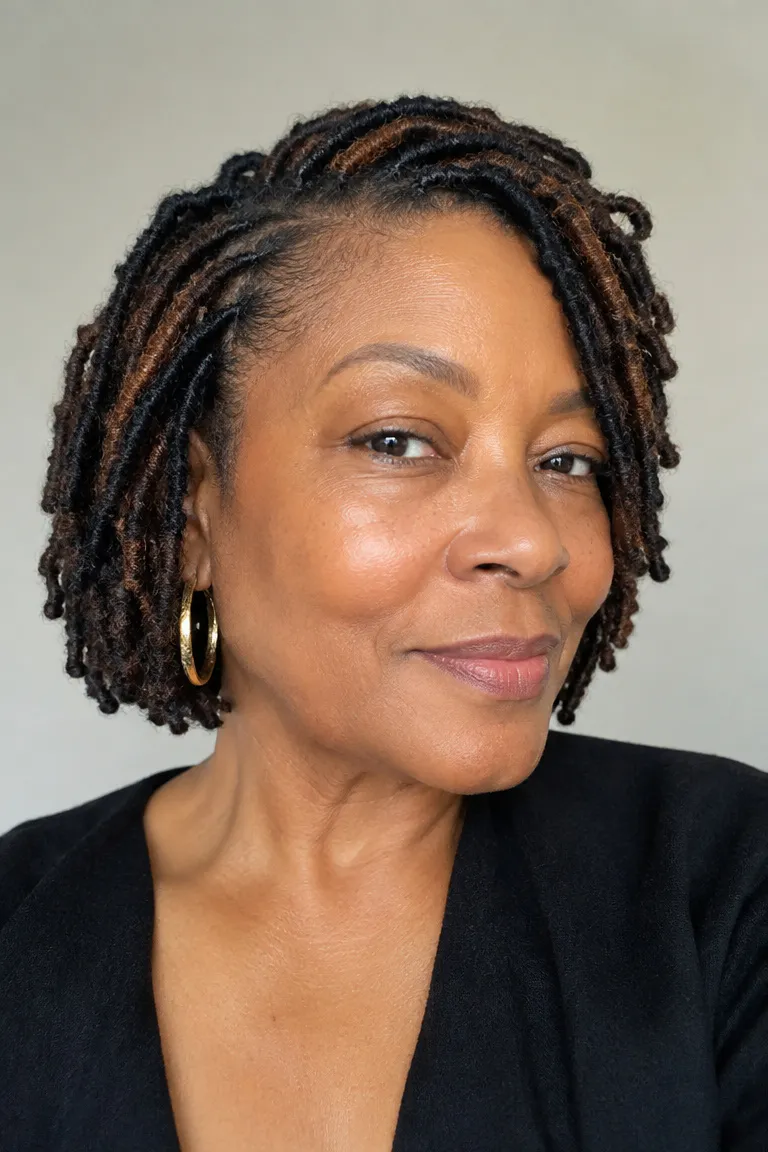
Short faux locs provide a compact enclosed texture that handles rain and humidity more predictably than loose curls. Jaw- or neck-length locs create shape around the cheeks without carrying unnecessary length. Blended black and brown tones, varied parting, and a softly finished hairline keep the installation from looking overly uniform.
The style may suit long or oval faces when the locs add moderate width near the cheeks. Small-to-medium locs offer more movement than very thick locs but should not be installed in tightly packed rows. Ask for a natural part pattern and a perimeter that does not pull at the temples or nape.
Short locs are practical for active routines because there are fewer exposed curls to detangle. A light scalp mist and gentle fingertip separation can maintain the shape, while heavy oils may attract lint between washes. Inspect the base regularly, especially if the style is worn through humid fall weather or beneath head coverings.
Comfort check: Hold a sample loc bundle before installation and ask about its weight; a loc that feels substantial alone can feel much heavier when multiplied across the head.
9. Lightweight Gray Goddess Locs
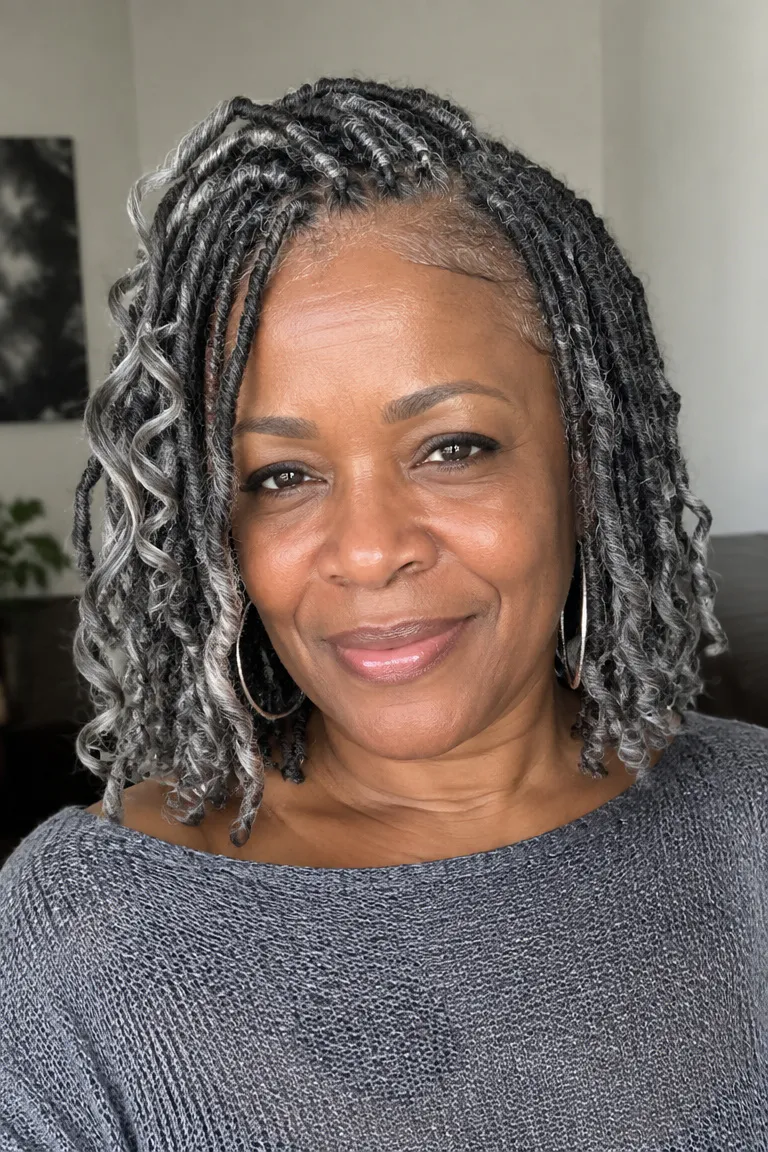
Gray goddess locs create dimensional silver coverage through charcoal, gray, and lighter fibers rather than one bright-white tone. Short-to-medium locs keep the installation easier to manage, while a few loose curl accents provide softness around the face. Use limited accents because exposed curls tangle faster than the enclosed locs.
A gentle face-framing arrangement can suit oval or heart-shaped faces without adding bulk at the temples. Ask for lightweight hair and a scalp-friendly foundation with visible access between rows. A low-sheen finish is especially useful with gray colors, since excessive shine can make the silver look less natural.
Refresh the loose curls separately from the locs with a small amount of water-based product. Avoid heavy oils that collect lint in pale fibers and can make the roots look coated. For fall gatherings or family photographs, touch up the front accents and leave the locs intact instead of repeatedly manipulating the full installation.
Color check: Ask for a charcoal-silver sample beside your natural gray so the finished blend reflects your preferred amount of contrast.
10. Curled-End Crochet Braids
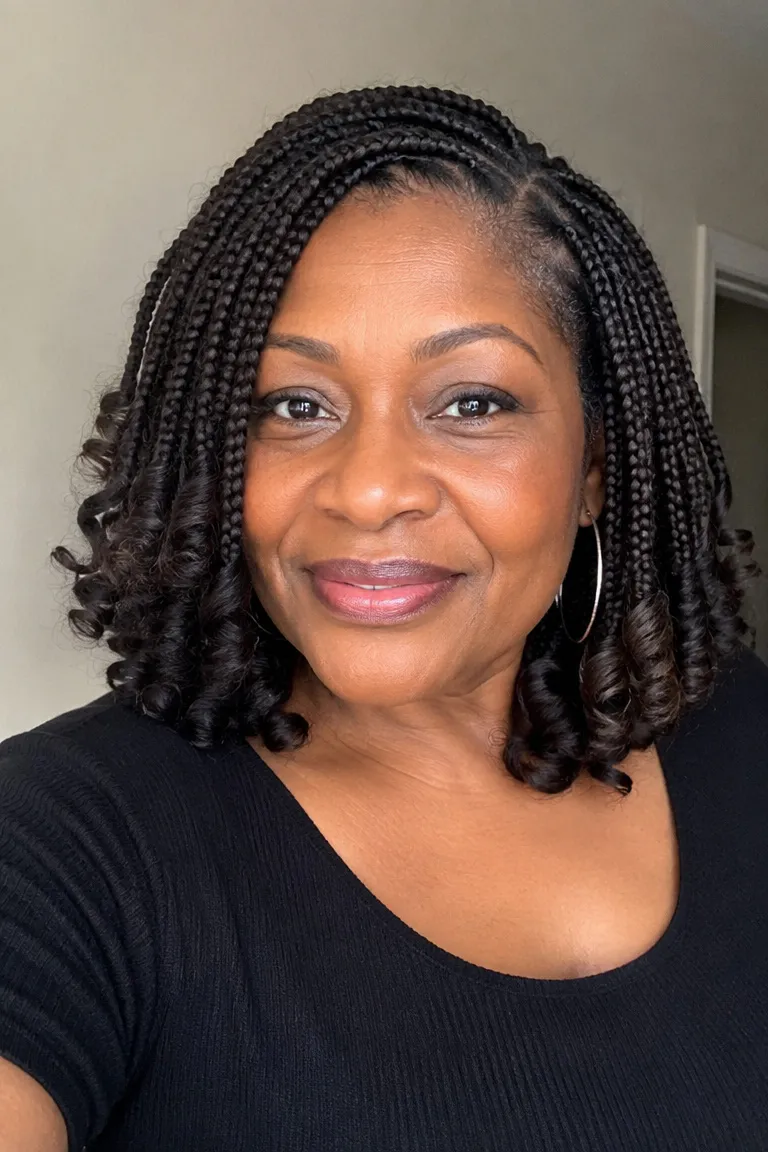
Crochet braids with curled ends keep most of the hair enclosed while adding a rounded, polished finish. Chin-to-shoulder length gives the ends room to move without loading the nape. Medium braid size and trimmed tips help the shape look intentional rather than overly dense.
The curled ends can add width near the jaw, which may complement a longer face. A low-sheen black-brown fiber and sparse, irregular parting make the style appear less like a repeated factory pattern. Ask for a base that supports movement and avoids a heavy row of hair at the back of the neck.
Maintenance is moderate because the tips need occasional separation, but the full length does not require daily detangling. Use your fingers or a small wide-tooth tool on the ends only. A satin covering can protect the curl from friction, and a light mist can restore shape after several days of sleep or travel.
Ask your stylist: Request rounded, lightly layered ends instead of a blunt heavy line that may make the nape feel crowded.
11. Layered Afro-Textured Crochet
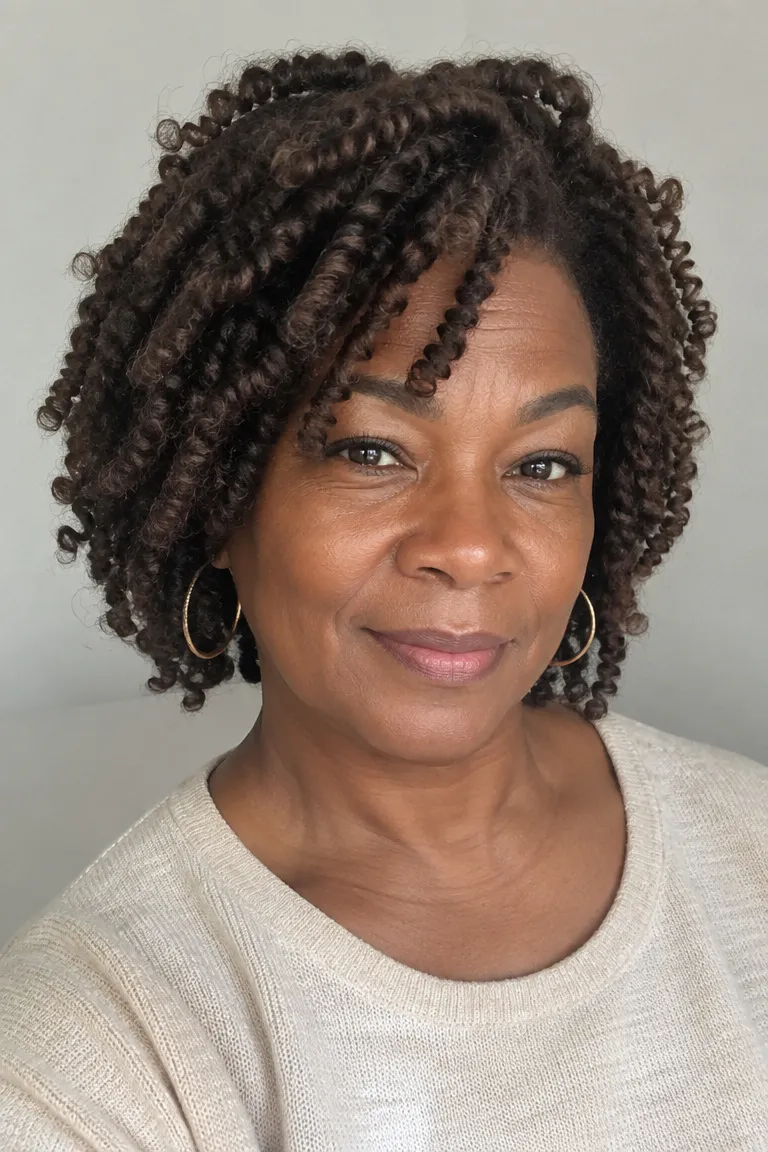
Layered Afro-textured crochet can echo a natural coily pattern while controlling volume around the crown and sides. Short-to-medium layers create a shaped silhouette without forming one large uniform halo. Matte dark brown fibers usually blend more convincingly than shiny hair with a sharply defined part.
A little width at the sides can balance a long or narrow face, while varied face-framing layers keep the outline from appearing boxy. Ask the stylist to adjust the crown height to your preferred fullness and leave the center part subtle. Moderate density is easier to maintain and less likely to feel heavy over a long appointment or event.
Use a light moisturizer or water-based refresher and avoid combing the texture dry. Separate only flattened or compressed areas with your fingers. If you want a natural-looking result for photos, focus on shaping the front and crown rather than repeatedly expanding every coil.
Maintenance tip: Ask for a few test pieces before committing to full density; Afro-textured crochet can expand after installation and may look fuller than the initial sample.
12. Half-Up Crochet Bob
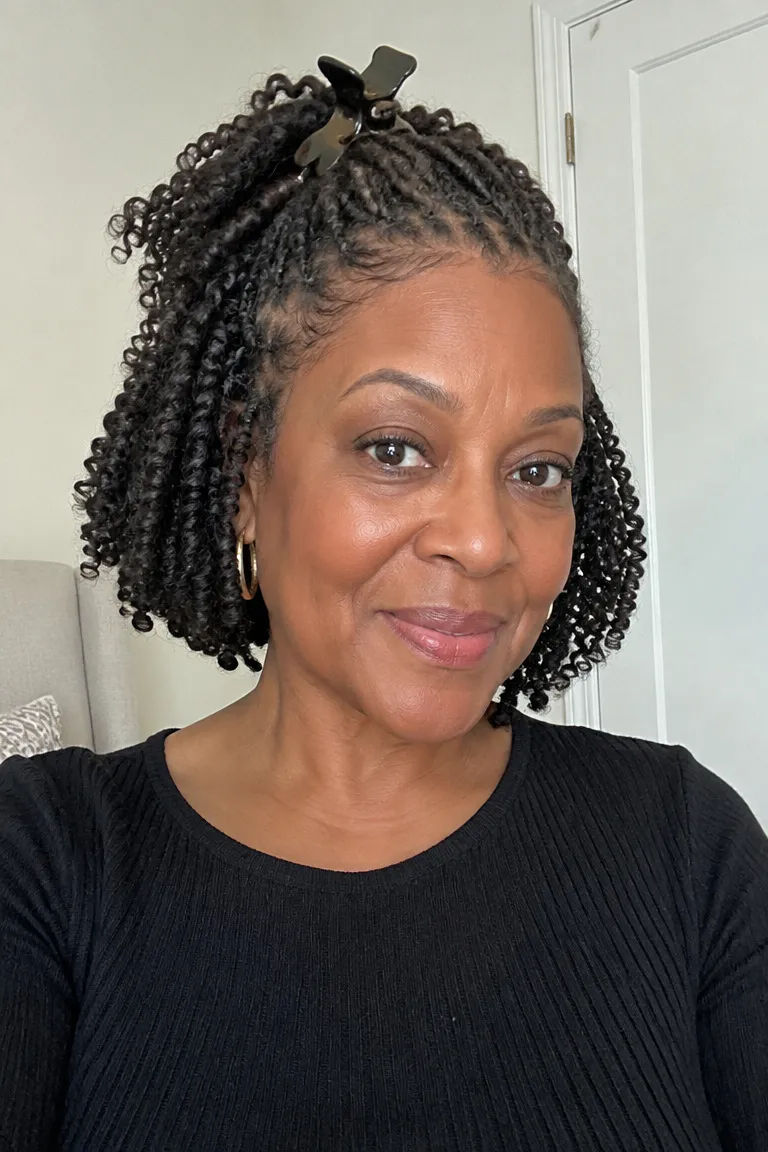
A half-up crochet bob adds limited styling flexibility without requiring long hair or a heavy updo. A chin-to-shoulder bob can be gathered loosely at the crown while the nape remains relaxed. Use a soft clip rather than a tight elastic, especially if the front hairline is fragile or easily pulled.
The shape may suit oval or heart-shaped faces when the gathered section stays low and a few pieces remain near the cheeks. Moderate density helps conceal the foundation without making the bob bulky. Ask for a softened part and enough hair around the top to cover the base after the clip is placed.
This option packs easily for fall travel because the style can be worn down or loosely gathered. Keep a soft clip, satin scarf, and light spray moisturizer in your bag for simple adjustments. Do not sleep with the hair pulled up, since repeated tension at the same point can make the installation uncomfortable.
Comfort check: Test the clip placement before leaving the appointment and make sure the bob can fall naturally after the clip is removed.
13. Side-Swept Curly Crochet
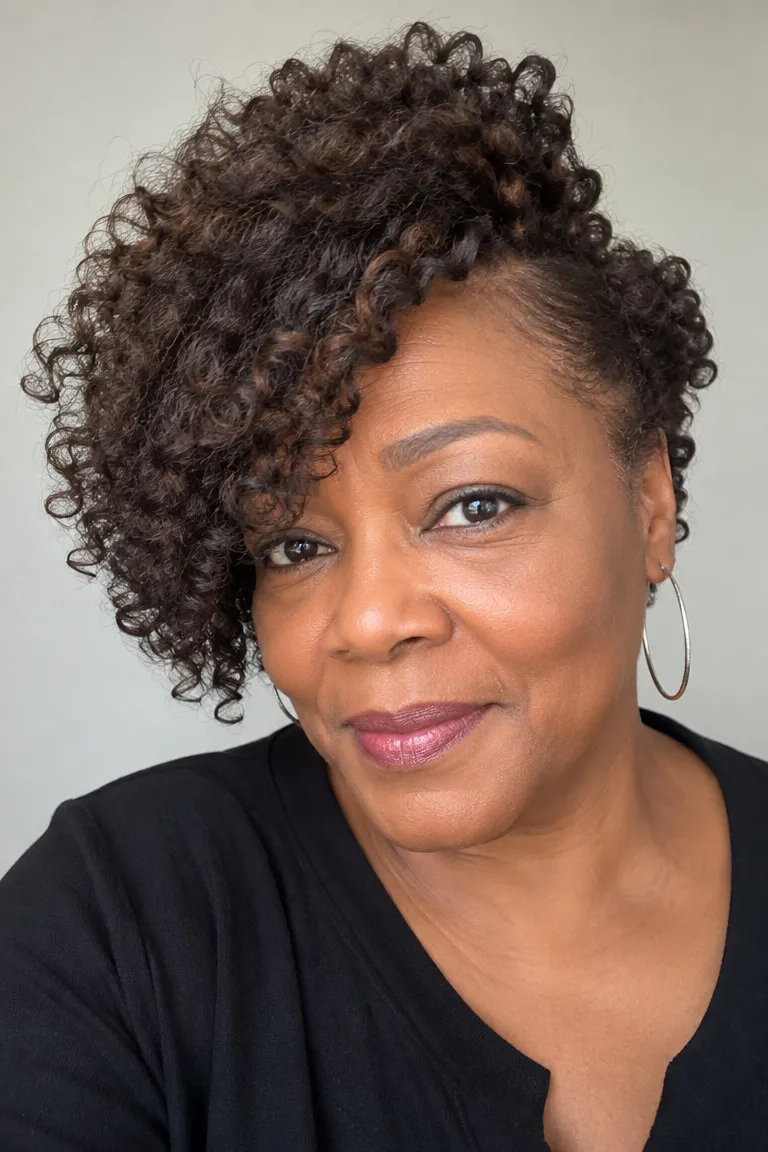
A side-swept curly crochet style moves volume away from a centered part and creates soft framing across the forehead. Short-to-medium curls keep the sweep light, while low density prevents the temples from feeling crowded. A dark brown matte fiber can add dimension without relying on obvious highlights.
The shape can complement round, square, or heart-shaped faces when the front section is allowed to move rather than being pinned tightly. Ask for a discreet anchor at the side and a softened part that does not expose a perfectly straight foundation line. The front should shift with your fingers without pulling the hairline.
Because the curls are exposed, protect them at night and refresh them with a light mist. Separate only flattened areas, since full combing can make the sweep frizzy and larger than intended. For a family photo or fall appointment, reshape the forehead section first because it has the greatest effect on the visible silhouette.
Ask your stylist: Request a side part that is slightly irregular and a front section with enough movement to fall back into place after gentle handling.
14. Short Spring-Curl Crochet
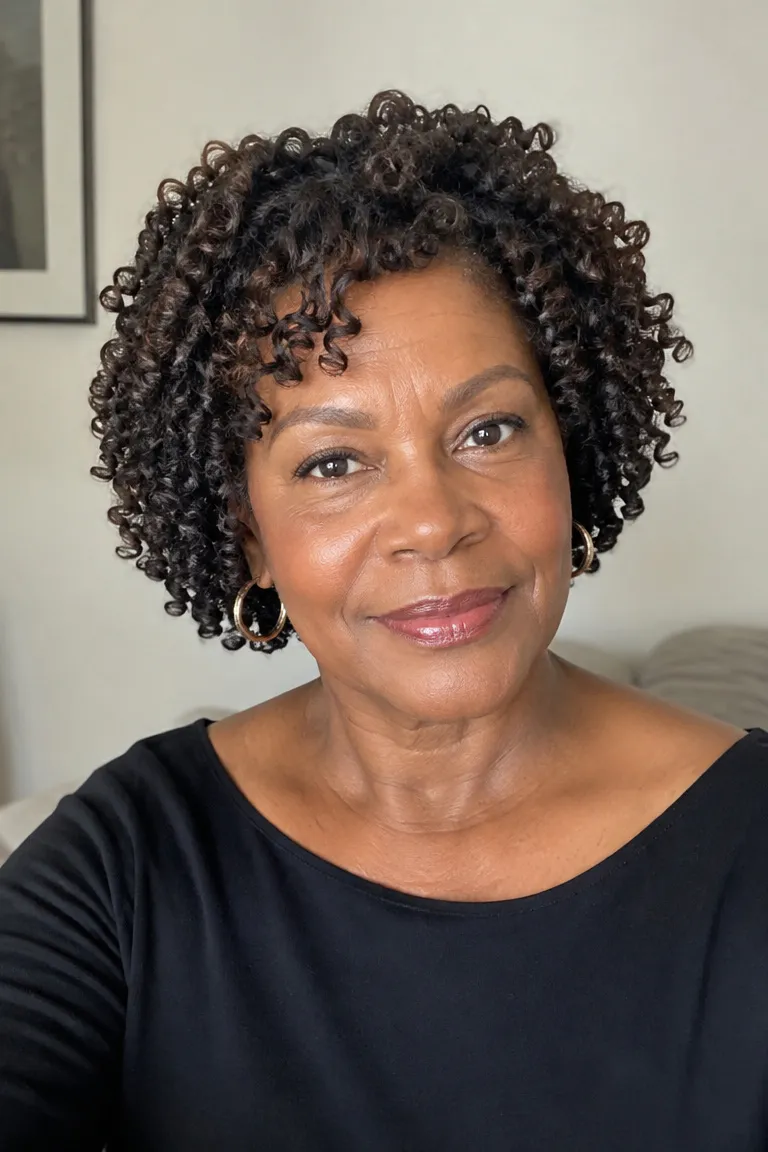
Short spring curls provide defined texture without long strands catching on coats, scarves, or high collars during early fall. Keep the finished length above the shoulders and choose small-to-medium curls that resemble your natural pattern. Moderate density preserves shape without creating a rounded mass that overwhelms the face.
The style may suit oval or long faces when the sides retain some width instead of being over-tapered. A loose perimeter braid at the nape can improve comfort, while lightweight spring-curl hair reduces the amount of weight attached to the foundation. Ask for soft shaping at the sides and a hairline that is not filled with extra pieces.
Use a satin covering at night and separate only areas flattened by sleep. A water-based mist can revive curl definition without coating the hair. Since short curls have less length to tangle, this option often takes less time to refresh than shoulder-length loose curls.
Maintenance tip: Compare the curl diameter with your own hair before installation; a large mismatch can make the crochet texture look separate from the hairline.
15. Natural Black-Brown Blend
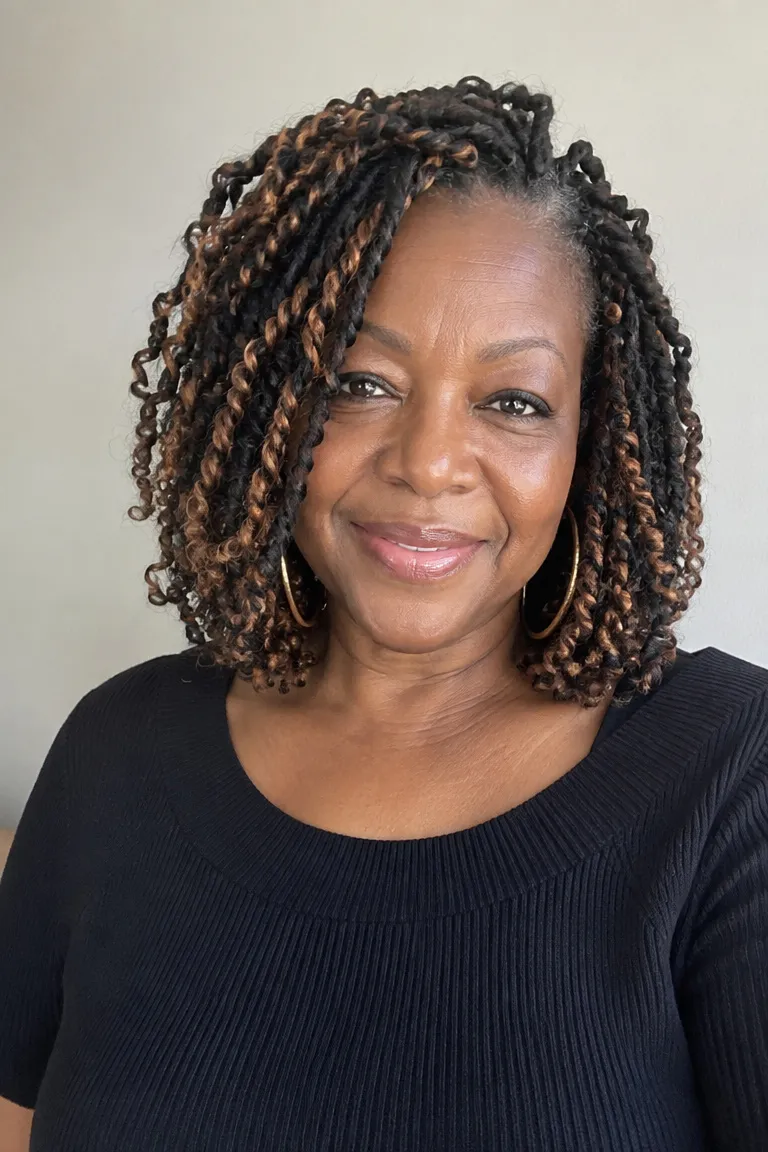
A natural black-brown blend creates dimension without the stark appearance of one solid jet-black shade. The mixed tones work with a short crop, bob, or shoulder-length texture, depending on how much length and weight you prefer. Keep the fibers matte and the part softly irregular for a less uniform result.
Compare the color with your natural hair in daylight before installation, especially if your hair includes warm brown or faded black areas. A dimensional blend can suit warm or neutral complexions, but the exact balance of brown and black determines whether the result appears soft or overly dark. Ask for mixed-tone bundles rather than a single flat color.
Moderate density keeps the blend believable and leaves more room to reach the scalp. If you choose shoulder length, request face-framing layers and a lighter nape; if you choose a bob, ask for ends that do not form a heavy shelf. A light spray and fingertip shaping are usually enough for routine upkeep.
Color check: View the hair sample beside your face near a window before the stylist starts, since salon bulbs can hide an overly warm or overly dark blend.
16. Silver-and-Charcoal Blend
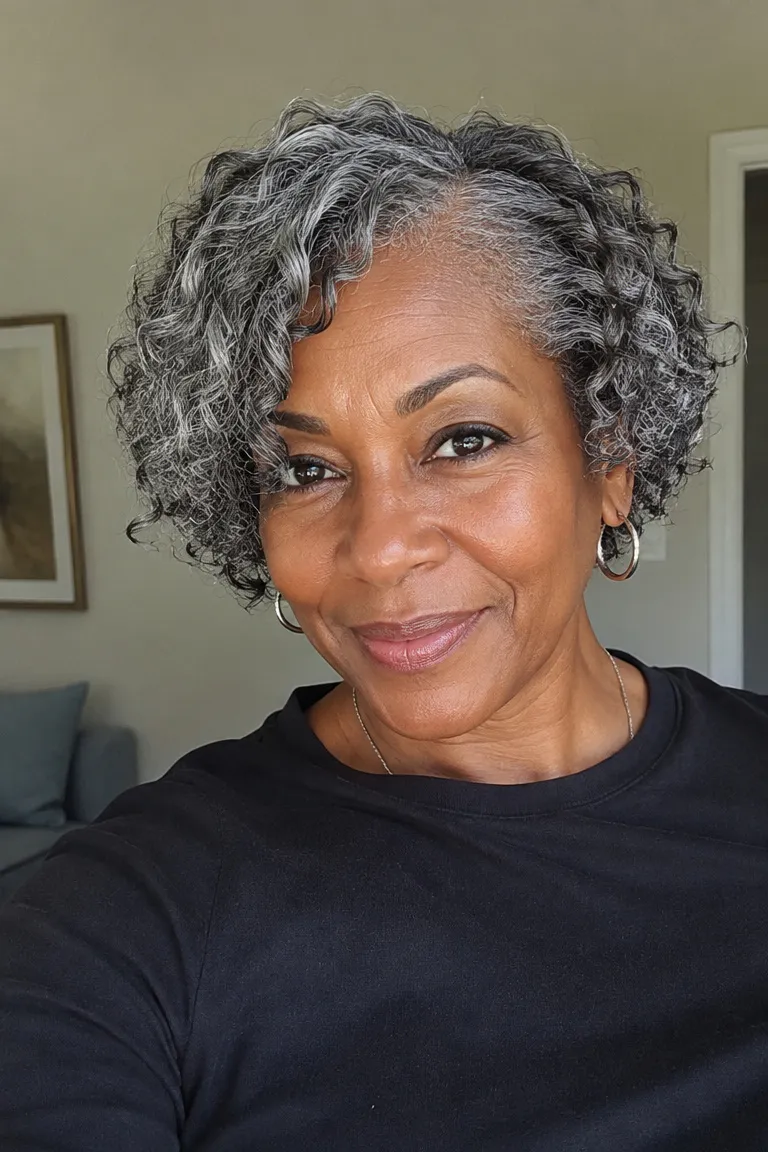
A silver-and-charcoal blend offers gradual-looking gray coverage instead of a flat bright-silver block. A short bob, compact crop, or short twist installation keeps the color easy to manage and reduces bulk under fall layers. Low-sheen fibers are useful because strong shine can make gray hair appear more synthetic.
Choose a density that allows movement and keeps the scalp accessible for regular observation. An irregular part can soften the transition between charcoal and silver fibers, while a shorter nape reduces weight. Ask for a tone sample and explain whether you prefer more charcoal contrast or a lighter silver appearance.
Gray installations still need gentle cleansing and routine checks at the foundation. Use a light mist and avoid heavy products that can dull the color or collect lint. If you are comparing options for a seasonal appointment, compact twists or a short bob usually require less daily reshaping than loose gray curls.
Ask your stylist: Discuss the ratio of silver to charcoal fibers, the finished weight, and the number of foundation rows before choosing the final style.
17. Tucked-Back Crochet Style
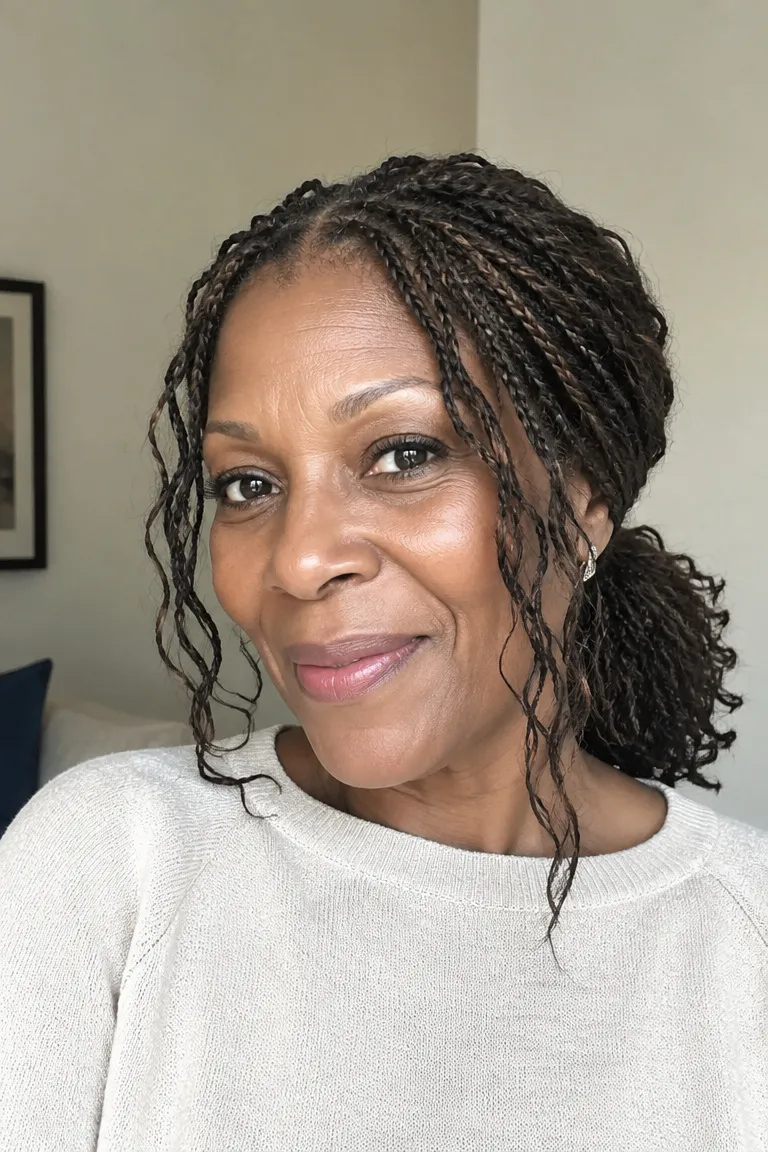
A loosely tucked-back crochet style keeps the hair contained for travel, family photos, and fall appointments without requiring individual box-braid installation. Start with a short-to-medium bob or twists, then secure the back with a soft tie or clip. Leave a few pieces near the cheeks if you want face framing rather than a fully pulled-back outline.
Oval and long faces may suit this shape when the side pieces remain soft and the back is not pulled flat. Avoid tension at the temples and nape, particularly if the style must stay secured for several hours. Ask for a foundation that supports a loose tie and confirm whether trimming, styling, refreshes, and takedown are included in the quoted service.
Pack a satin scarf, light spray moisturizer, edge-safe clips, and a small tool for any exposed curls. Secure the style loosely during travel and release it when you have reached your destination if the base feels warm or tight. A contained shape can be convenient, but the installation still needs scalp access and periodic checks.
Budget check: Ask for the complete cost of hair, installation, trimming, refreshes, and takedown before booking so a low-maintenance style does not create unexpected service charges.
Choose Comfort Before Length
For the simplest decision, choose a short bob, tapered crop, or compact twist when scalp access and low weight matter most; choose exposed curls only if you are comfortable with nightly protection and occasional reshaping. Pack a satin covering, light water-based spray, soft clip, and small detangling tool, then ask your stylist to confirm foundation tension before the crochet hair is attached.
18. Jumbo Crochet Box Braids
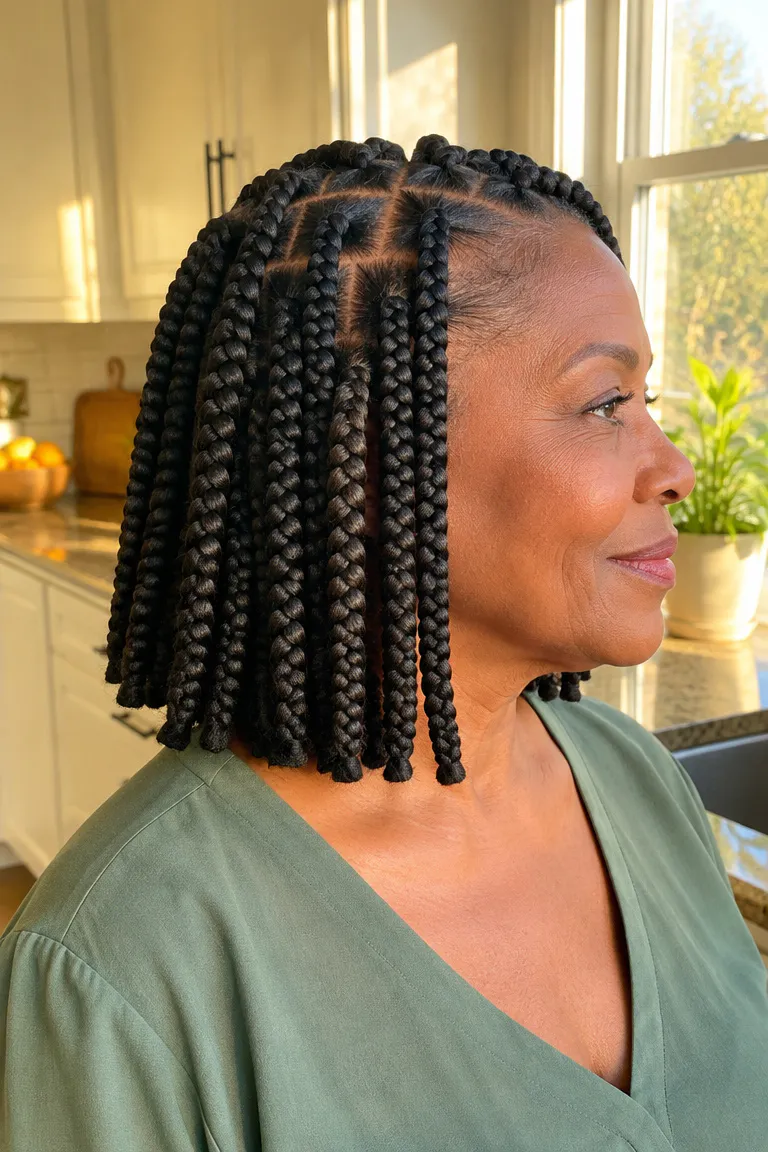
Jumbo box braids use fewer, thicker sections, so the weight spreads across a wider area of scalp instead of crowding into tight clusters. A chin-to-shoulder length keeps each braid light enough to move. Installation and removal both go faster, which means less time spent with your head tilted and less handling of the hair underneath.
Square parts around one inch wide are a common jumbo size. Ask whether the stylist plans to double the fiber or use a single strand per braid, because doubled braids feel noticeably heavier at the base. Blunt ends look neat at this length, and you can snip stray fibers with sharp scissors.
Larger parts show more scalp, so clean lines carry the look. To keep them tidy for three to four weeks, apply a small amount of foam or light oil along the part lines only, then wipe away buildup with a damp cloth.
Ask your stylist: Request one finished sample braid before she does the full head. Hold it up and judge the weight against the sensitive areas at your temples and nape.
19. Sleek Straight Crochet Bob
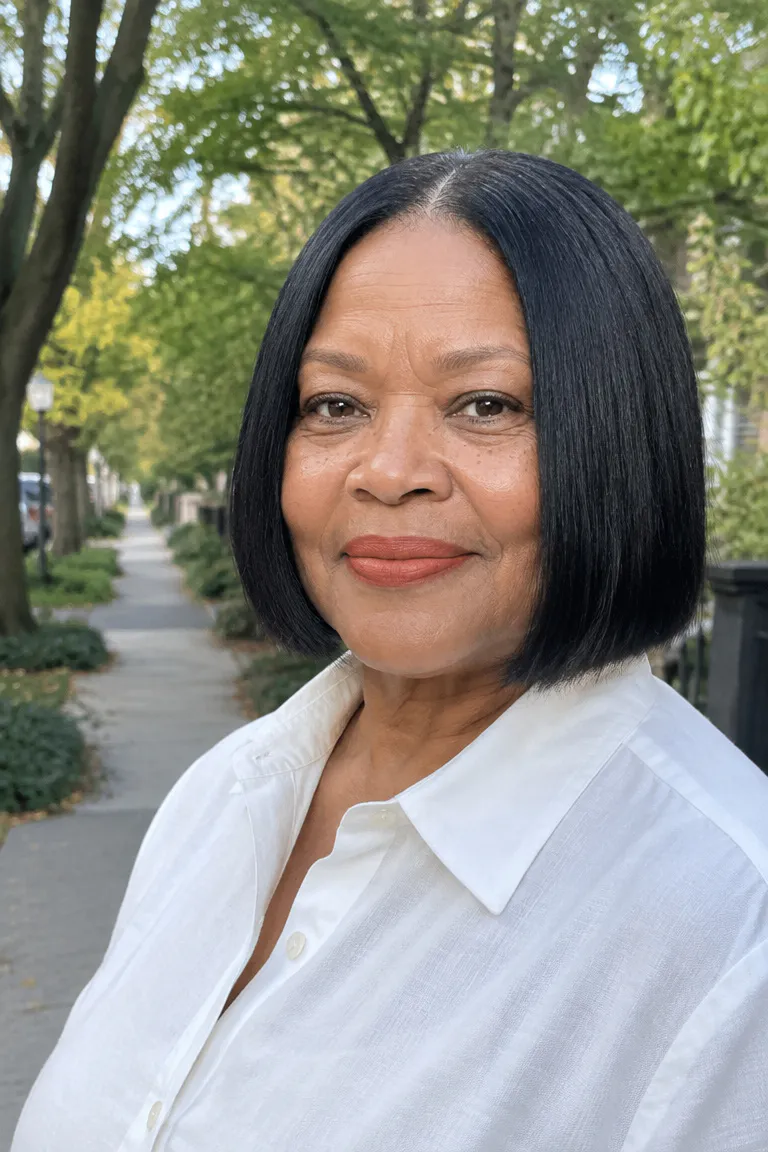
A jaw-length straight bob gives a polished outline without a flat iron, since the fiber arrives smooth. A center part with a blunt cut edge looks crisp at this length. The line should end right at the jawbone, where it frames the face without reaching the collar.
Fiber choice decides whether the bob looks natural. Pick a matte or soft-sheen texture, and rub a strand between your fingers in store light; if it feels glassy, it will look plastic outdoors. Fibers with a slight natural wave in the strand also hide the foundation better than perfectly flat ones.
Straight fiber tangles at the ends where it brushes the neckline. Keeping the cut at the jaw reduces that friction. Each night, brush from the ends upward with a soft-bristle brush, then smooth the bob flat with your palms.
The whole routine takes about two minutes.
Maintenance tip: Skip heavy serum on straight fiber. One drop worked through the ends is enough to cut static without weighing the bob down.
20. Curly Crochet With Wispy Bangs
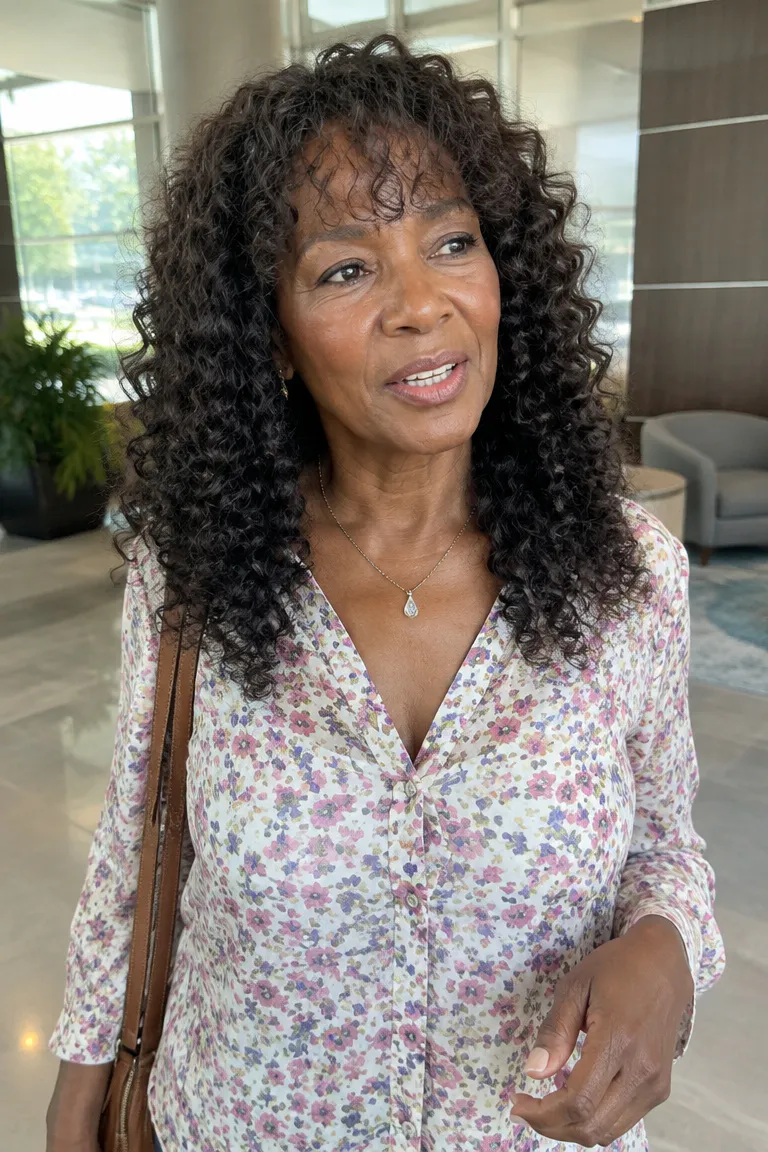
Short curly bangs give you face framing without cutting your own hair. Aim for a length that lands at or just above the eyebrows once the curls spring up. Curled fiber looks shorter on the forehead than it does straight, so a bang that seems right in the mirror before curling can end up too high.
Match the bang curl to the rest of the style. If the body is a loose or medium curl, use the same pattern for the fringe; tight coils next to loose waves can look pasted on. Soft layers at the sides help the bangs blend instead of sitting like a separate piece.
Stiffness usually comes from too many strands and too much product. Ask for a thin, airy section, and use water or a light curl cream instead of gel.
Ask your stylist: Have her cut the bangs long first, with the curls in their natural shape, and trim in small steps. Ask for fewer strands in the fringe than you think you need.
21. Leave-Out Crochet With Blended Part
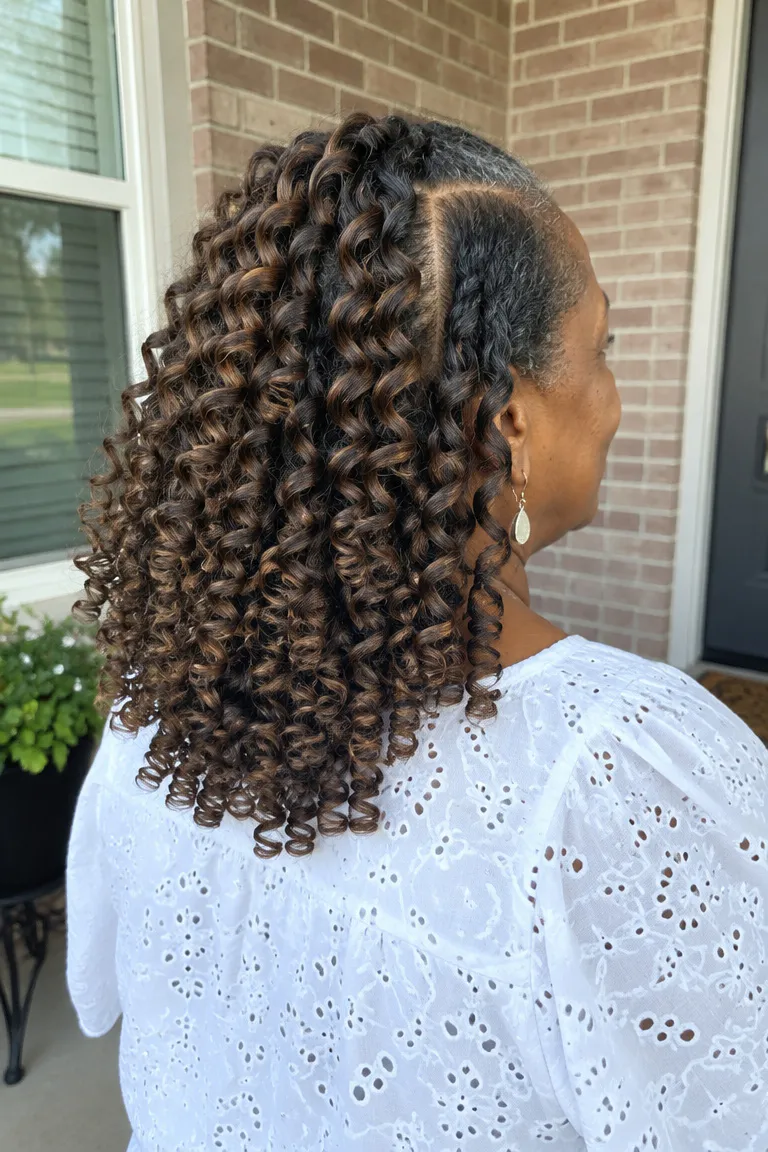
A narrow leave-out at the part makes the scalp line look believable, because your own hair meets the crochet at the most visible spot. Keep it small: about one to two inches long and half an inch wide, set off center. A larger section is harder to match and needs more daily attention.
Texture comes first. Bring a strand of your own hair to the appointment, or ask the stylist to compare your coil pattern with the curl fiber before she commits. If the two are close, blending takes very little effort.
To blend, the stylist can twist the leave-out loosely around the first crochet row or smooth it with a low-heat tool on a protectant. Use the lowest setting you can, and skip heat altogether if your hair is fine or brittle. Any extra heat only needs to be repeated when the section frizzes or lifts.
Maintenance tip: Moisturize the leave-out every couple of days and cleanse it with the rest of your scalp. That small section tends to show dryness first.
22. Flat Cornrow Base, Curly Crochet
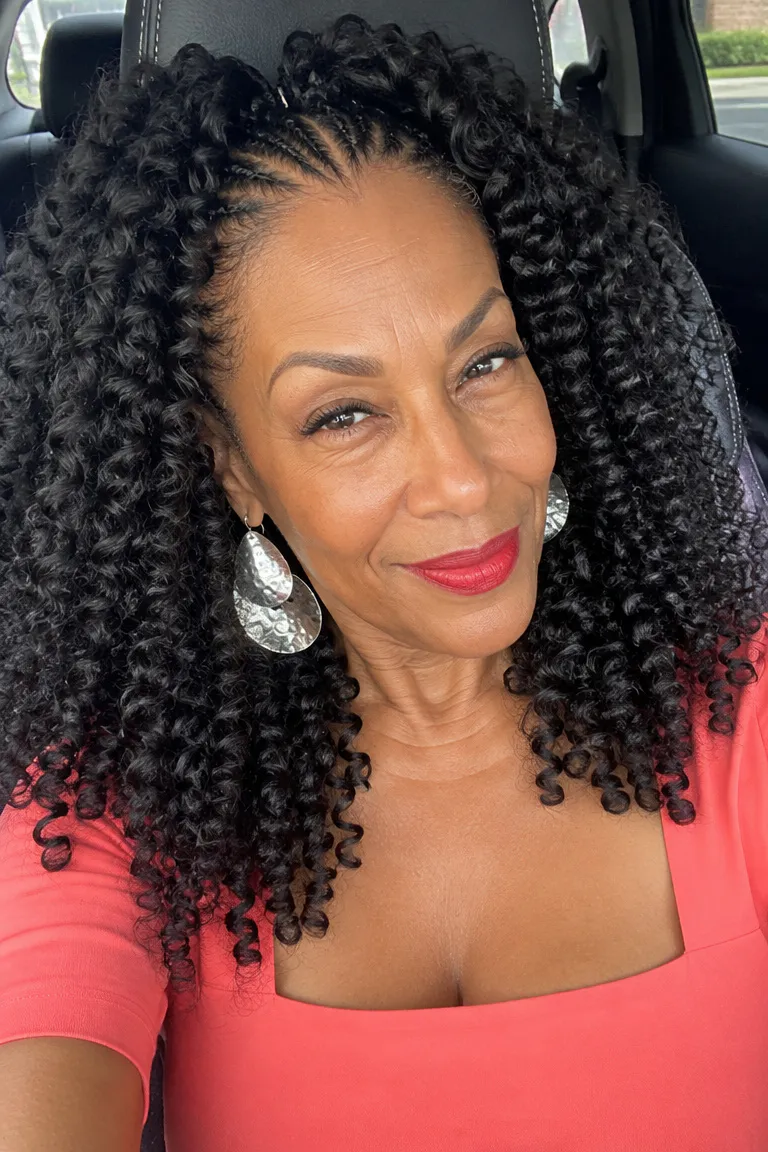
A thin cornrow foundation suits readers who find lumpy braided bases uncomfortable under curls. Straight-back rows lie flatter than curved patterns and let the curls fall evenly from the scalp. Small to medium cornrows, about the width of a pencil or slimmer, hold the crochet latch without adding bulk.
Tension decides how the style feels. The rows should hold firmly but never sting, pull at the hairline, or make your eyebrows feel lifted. Tell the stylist before she starts that you prefer a lighter hand, and speak up as soon as any row feels tight.
To keep the base flat, ask her to braid with your natural hair only, without feeding in extra fiber. She can latch the curls along the rows and tuck the knots into the braid. Leave a slight cornrow line visible at the part so it reads as scalp, not a seam.
Comfort check: Press your palm on the finished base and tilt your head back. You shouldn’t feel ridges, and the rows shouldn’t feel tight.
23. Honey-Highlight Crochet Waves
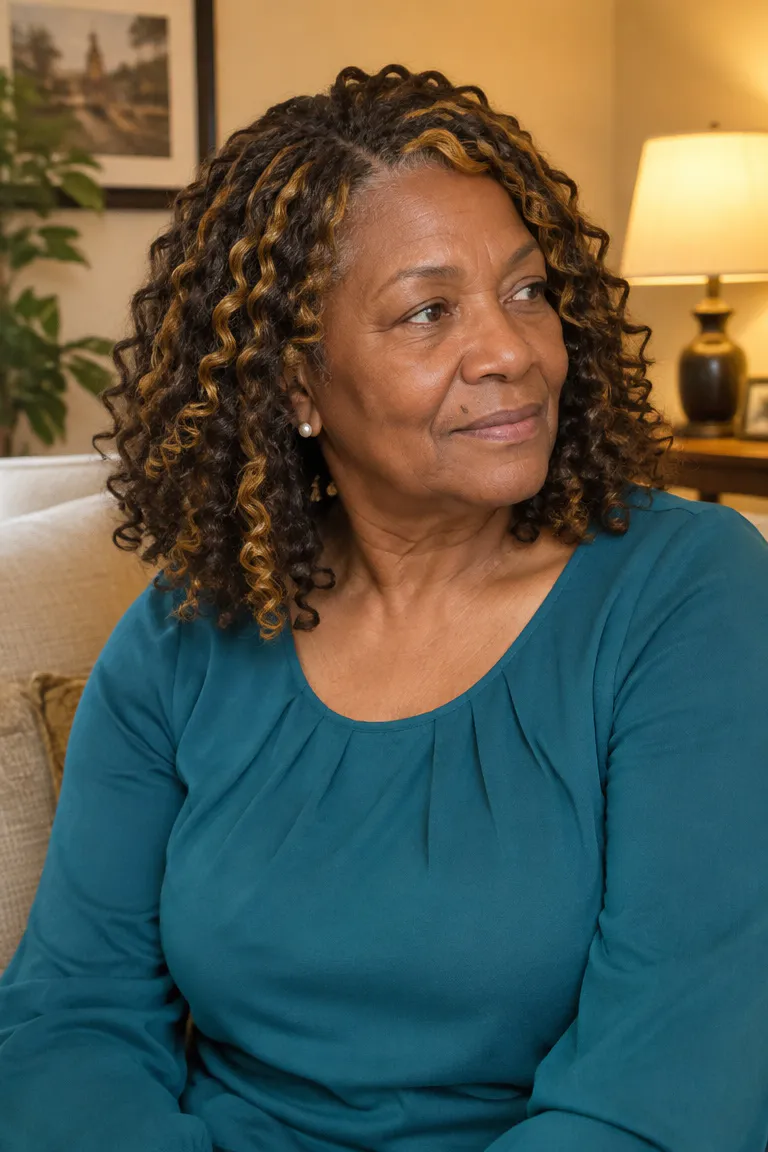
Honey highlights brighten the face without going fully blonde. On collarbone-length waves, a dark brown base with a few honey strands looks soft and unforced. Concentrate the lighter pieces in the front two to three inches near the face, and keep the length and ends mostly dark.
Honey and brassy gold look different. Honey has a brown-amber warmth, while brassy gold leans yellow or orange in direct sun. Check the fiber by a window before buying, since store lighting can make both read the same.
Pre-colored fiber saves a salon visit. Many brands sell packs with highlights already blended in, so no bleach or dye touches your own hair. Buy one extra pack of the dark base shade if you want the highlights sparse.
Ask your stylist: Ask her to place the lighter strands by hand, a few at a time, rather than installing the pack as it comes. That gives you control over how much honey shows.
24. Burgundy-Plum Crochet Curls
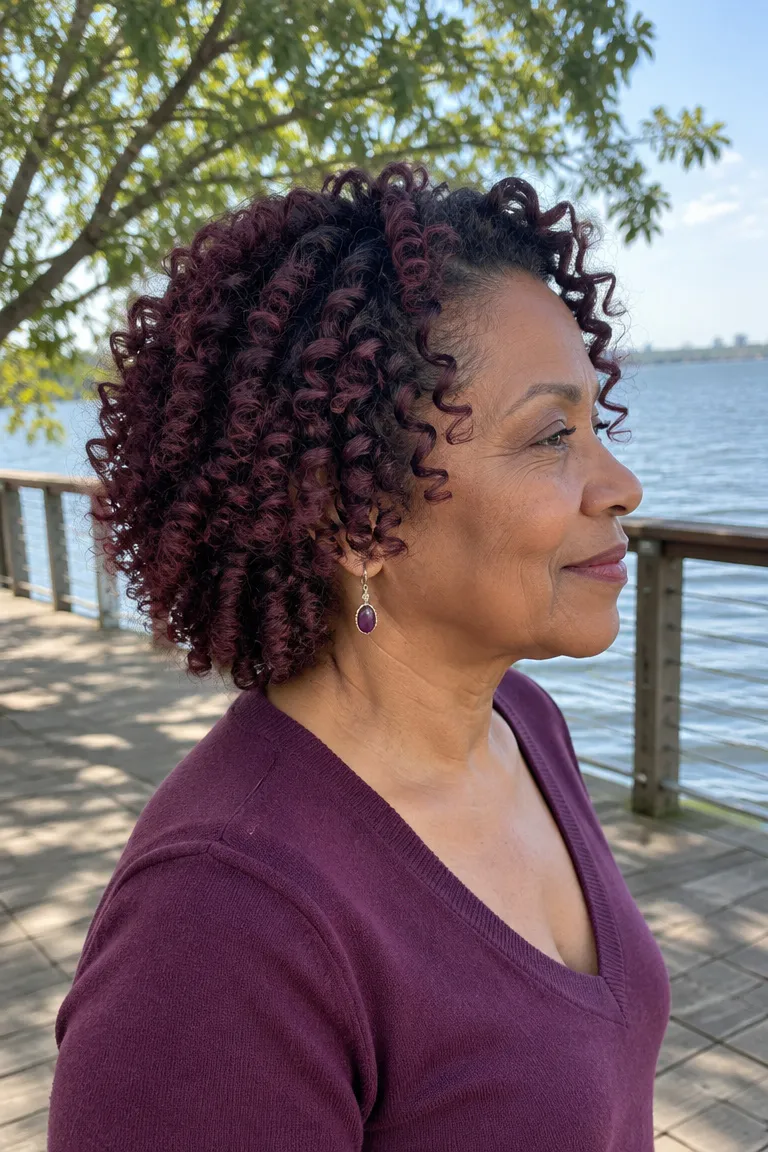
Deep burgundy-plum reads as rich rather than bright when it stays close to natural dark hair. Medium-length springy curls show the color in the twists and dips, while darker roots keep the hairline believable. Pick a shade no more than a step or two away from your own black-brown.
Hold a swatch against your hairline in daylight and again indoors. Outside, a good plum shows red-violet depth; under warm indoor light, it often looks nearly black. A shade that looks vivid in the package may feel too loud against skin in sunlight.
Dark red dyes can fade or bleed. Rinse new fiber in cool water before installation, and wash the style with cool water afterward. Use a dark pillowcase for the first couple of weeks, since transfer can show up on light fabric or damp skin.
Maintenance tip: Apply products with your hands only at the roots and curl centers. Heavy residue can dull the color and make it look flat.
25. Kinky-Straight Crochet Blowout
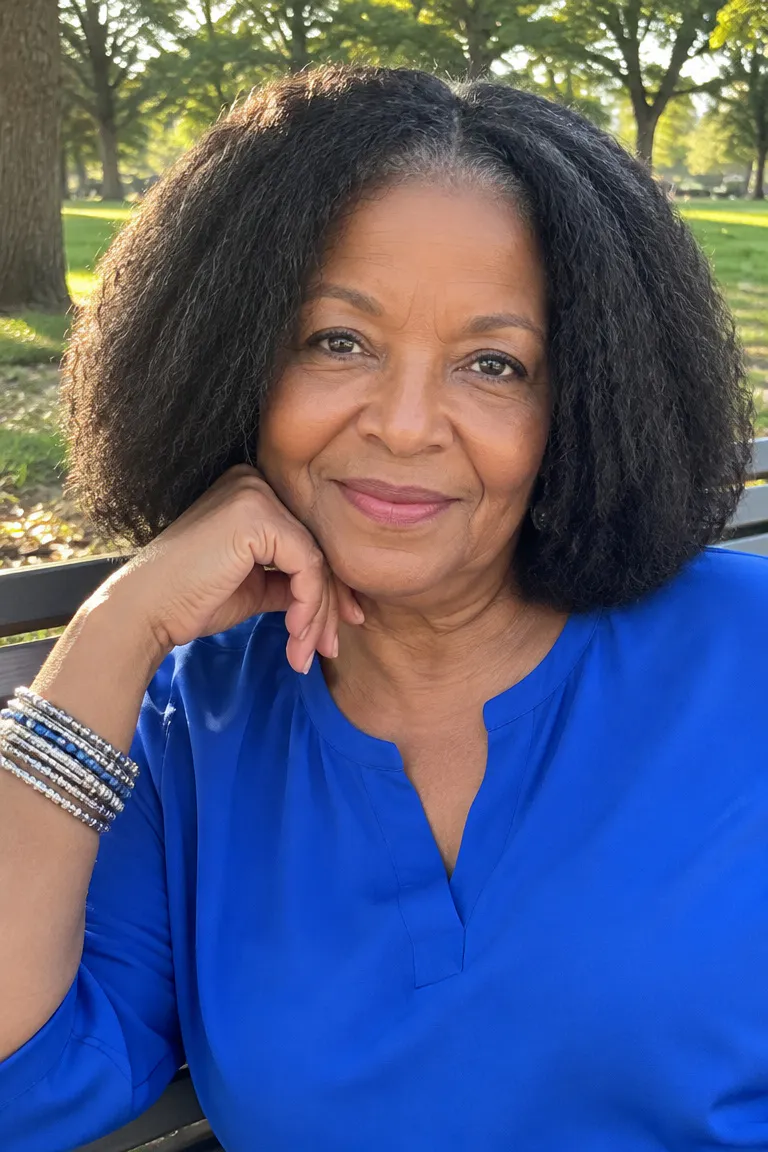
Kinky-straight fiber has a slight bend and coarse body that resembles a stretched, blown-out natural look. At chin to shoulder length, it forms a full rounded shape with volume around the crown. Choose fiber that matches your own texture by holding a strand next to a section of your hair.
A pick shapes the volume. Lift the roots first, then work the pick gently from underneath so the top stays smooth. Combing the outer layer flattens the bend and makes the style look stringy.
Flatness usually comes from weight. Ask for light tapering or soft layers at the sides, and avoid cream or gel on the fiber. If the shape collapses, a quick fluff with the pick at the roots does more than product.
Comfort check: Choose a medium installation density. Too much fiber makes the blowout heavy around the nape and harder to shape.
26. Fulani-Style Crochet Braids
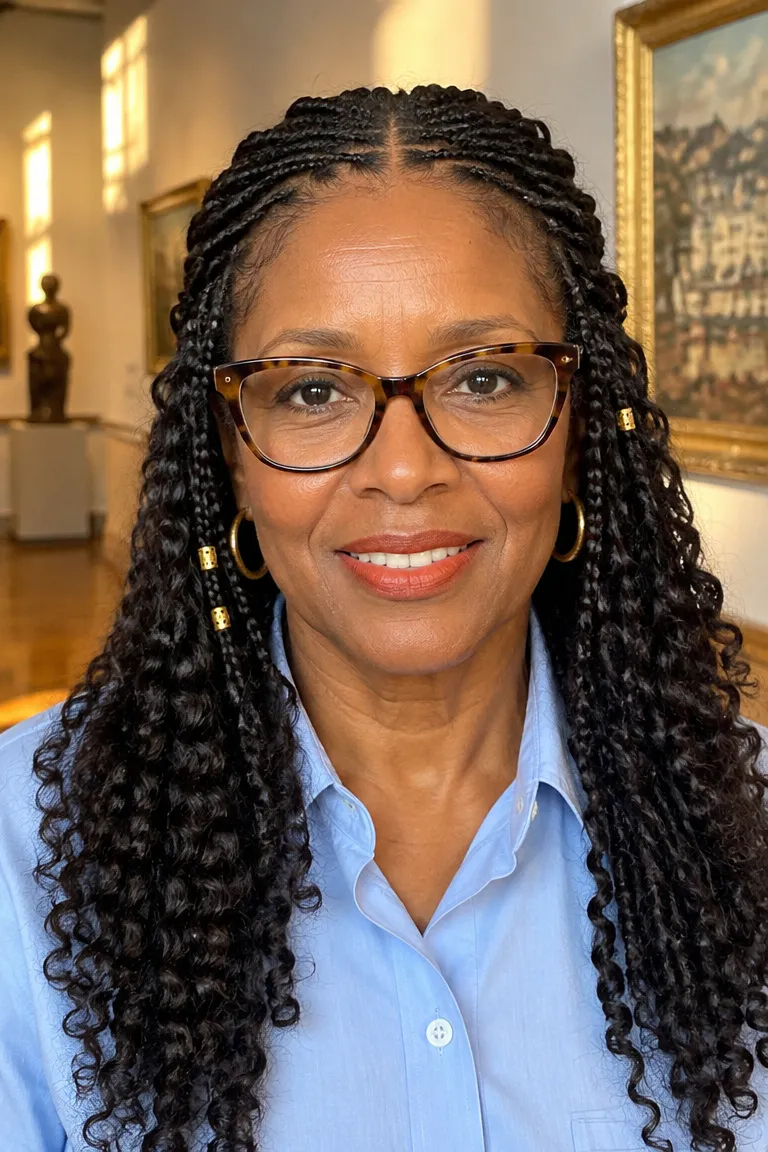
This version of Fulani braids keeps one center braid from the hairline to the crown, thin side braids near the temples, and loose curly ends. The simple layout shows off the part without requiring a complex pattern. Keep decoration modest: three to five small beads or one or two cuffs are plenty.
Bead weight adds up quickly on fine or fragile edges. Ask for lightweight hollow beads or small cuffs, and place them on the side braids toward the ends, not near the hairline. Metal pieces should slide on easily without needing to be squeezed shut.
The center braid needs a clean, straight part to look neat. A slightly slimmer braid than the side ones keeps the front from feeling bulky, and it can be refreshed with a damp cloth when flyaways appear.
Ask your stylist: If your hairline is fragile, ask her to begin the side braids a little farther back and leave the fine front hairs loose.
27. Low Crochet Braid Bun
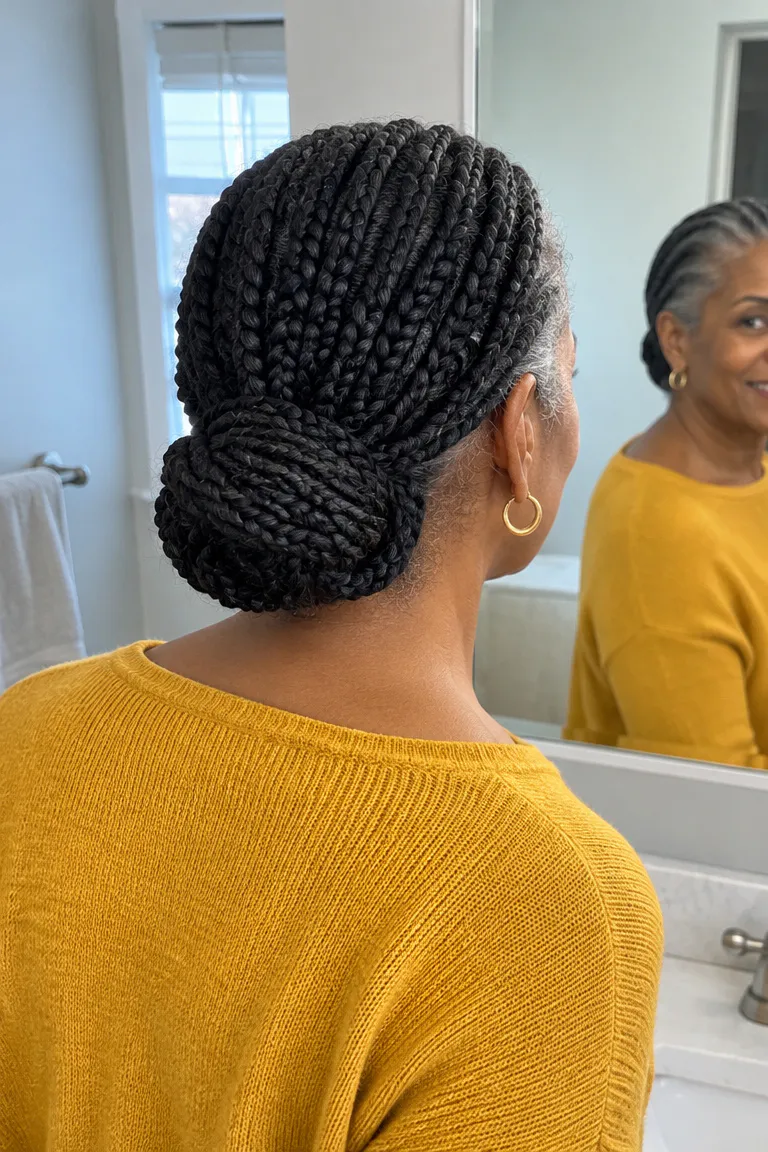
A low bun lifts medium braids off the neck while keeping the shape soft at the nape. You need braids that reach at least mid-back or the shoulder blades to wrap into a rounded bun. Shoulder-length braids usually won’t hold one without pulling.
Use a wide, fabric-covered elastic and gather the braids loosely, with one or two wraps. Make the hold at the nape rather than higher, and ease the sides so the elastic doesn’t tug at the edges. A bit of gel on the hairline can smooth the sides without touching the braids.
Overnight flattening comes from creasing. Take the bun down at night and loosely gather the braids to the side, then rewrap in the morning so the shape comes from fresh coils instead of old bends.
Maintenance tip: Switch the bun position a little each day, left of center one morning and right the next. That keeps pressure from landing on the same braids.