Holiday braids can feel too tight fast if your edges are already thin, especially when you want to sit through dinner, church, or a long family visit without scalp pressure. The styles here lean on lighter parts, softer starts, and lengths that won’t drag on the front hairline.
Use the fit check in each section to match the braid size, length, and placement to your scalp comfort before you book. If your temples feel tender, choose styles that start farther back, stay shoulder length or shorter, and avoid slicked-down fronts that need extra tension.
1. Knotless Shoulder Braids
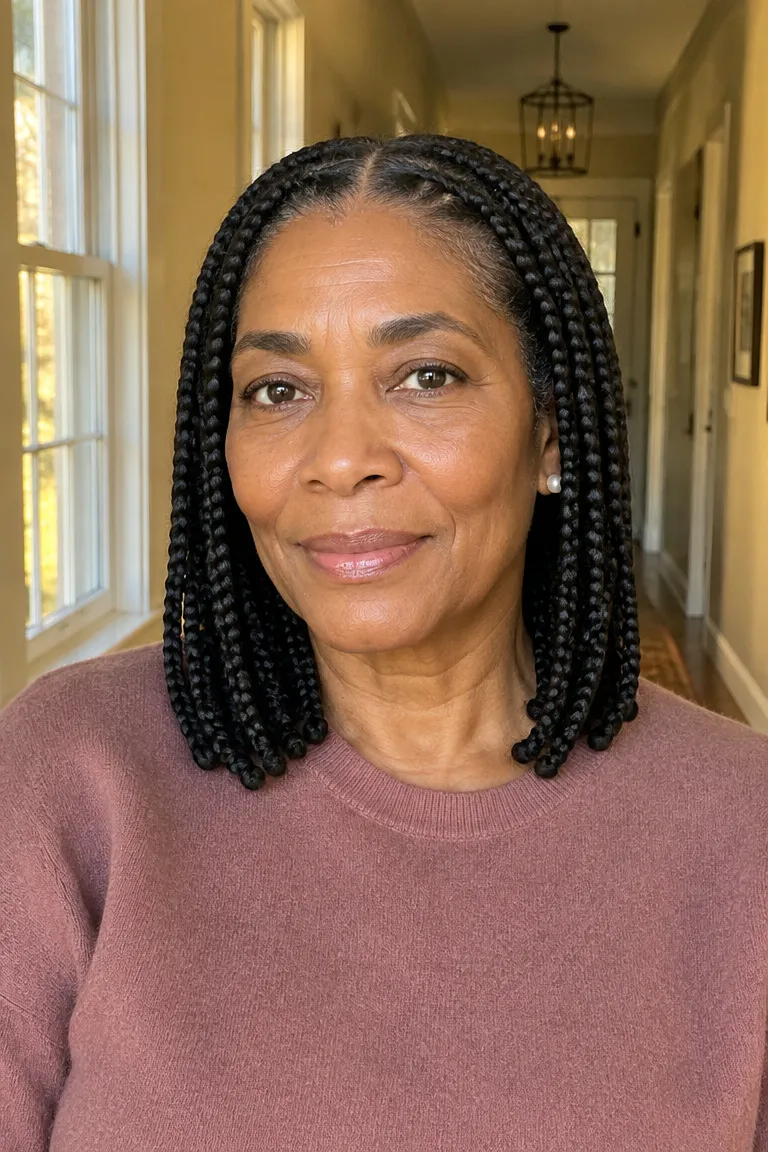
Knotless shoulder braids work well for holiday wear because the braid starts with your own hair before added hair is fed in, which usually feels gentler than a knot at the root. Shoulder length keeps the weight manageable, so the braids still look finished without swinging so long that they tug at sparse edges.
Ask for small to medium sections if you want a neat look without making the install too dense. A stylist can also begin the braid slightly behind the hairline, which helps if the front area is fragile.
Ask your stylist: Request a soft front perimeter, medium fullness, and a length that stops around the shoulders. If you like this lighter look, you may also want to compare it with these medium knotless braids for any occasion.
2. Side-Part Feed-Ins
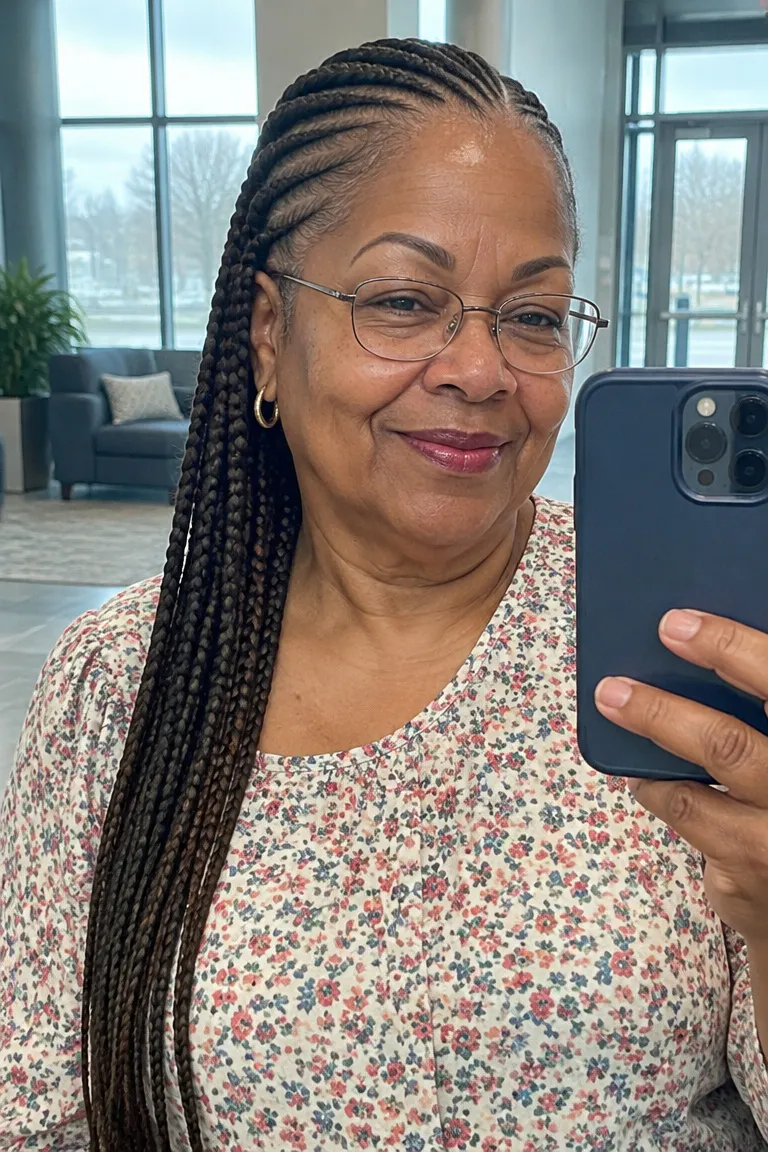
A side-part feed-in style gives you a clear part without flattening the entire front with tight braiding. The braids can curve back from the part and travel into longer plaits, which keeps the style polished while reducing pressure across the temples.
This is a good choice if you want something that photographs cleanly for holiday events but still feels light enough for a full day. Medium-sized rows usually look more balanced than very small ones, especially on finer or thinning hair.
- Choose a deep or medium side part instead of a sharp center line if your front hairline is sensitive.
- Ask for rows that turn back gradually, not rows that hug the temples tightly.
- Keep the plaits medium rather than very long if you want less pull at the nape.
3. Braided Crown Halo
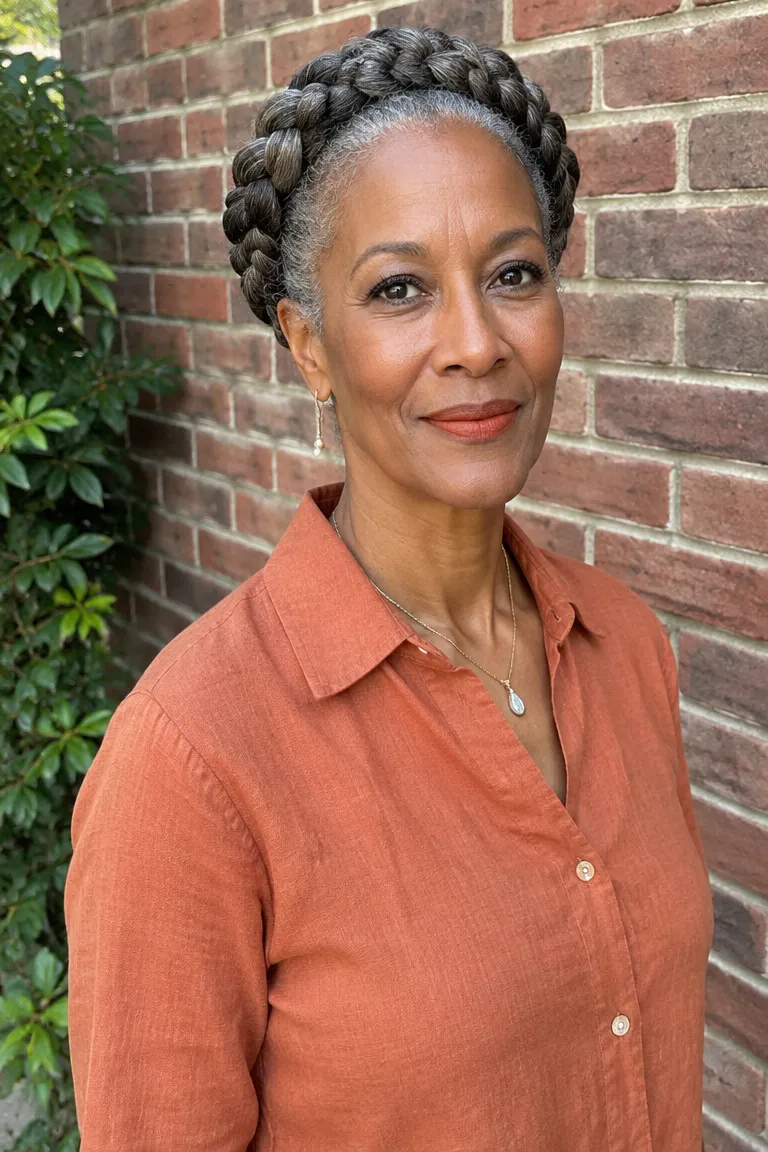
A braided crown halo places the braid around the perimeter, so the front sections do not need to be slicked flat or pulled hard into place. That makes it a smart option for a dinner, church service, or family gathering where you want a finished look with less front stress.
The braid can sit low and smooth around the head, with the rest of the hair tucked away cleanly. The style works best when the braid is thick enough to read clearly from a distance but not so bulky that it creates pressure behind the ears.
Comfort check: Make sure the halo can rest lightly on the head without pinching behind the ears or at the nape. If you need more options like this, see these braided hairstyles for natural gray hair.
4. Low Braided Bun
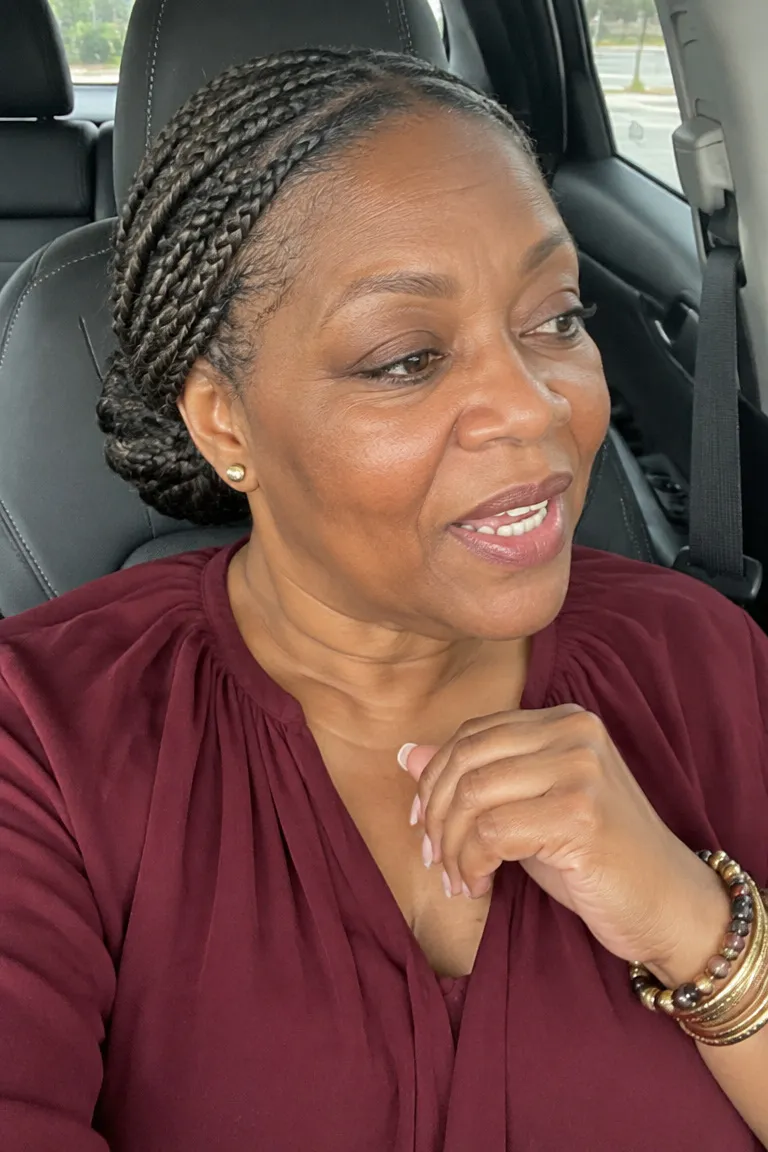
A low braided bun keeps the weight centered near the nape, which is easier on the front hairline than an updo that starts high. It also gives a formal finish without leaving long braids hanging where they can rub on collars or get caught on coat seams.
Keep the base low and the bun compact if your scalp feels tender. The front should stay soft, with no need for extra-tight smoothing around the temples or a hard middle part.
5. Half-Up Braids
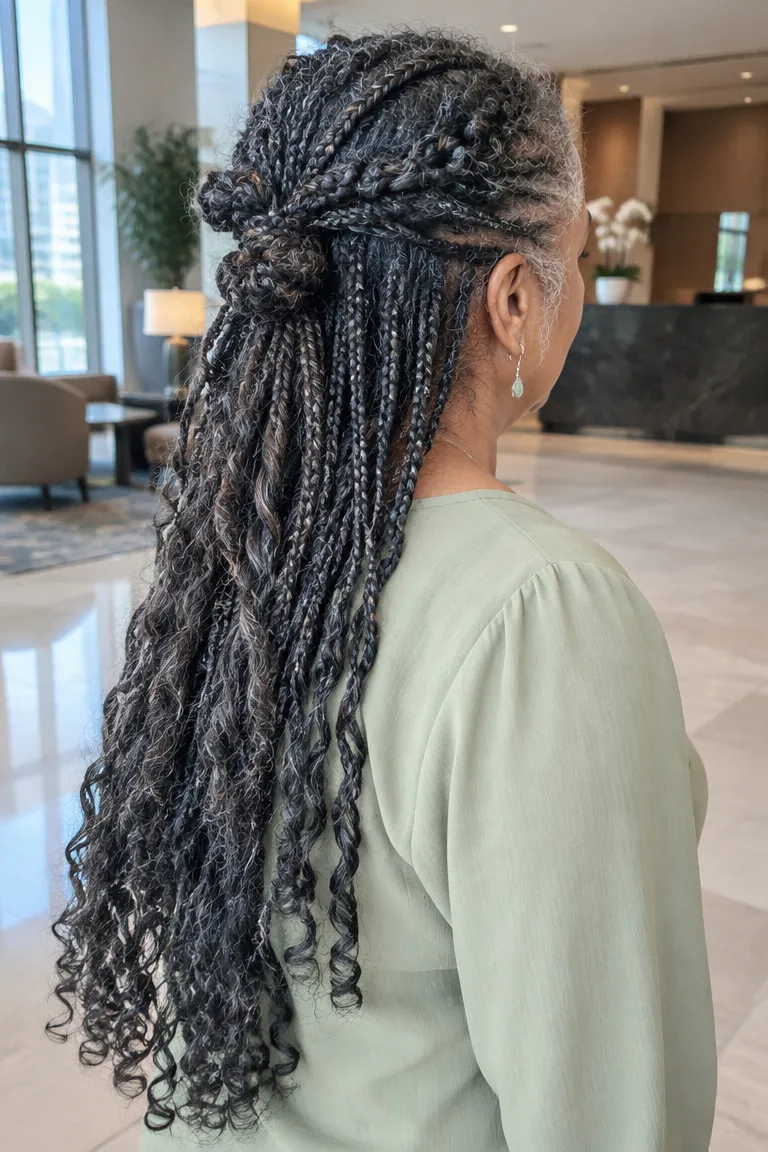
Half-up braids let you keep some movement in the back while lifting only a small section at the crown. That gives you a festive shape without forcing the whole front into a tight updo.
This style works best when the top section is gathered loosely and the braids are not pulled high. If the top feels snug before you leave the chair, ask for less tension right away instead of waiting for the scalp to settle.
- Keep the lifted section small enough to avoid pressure at the crown.
- Leave enough hair around the face to soften the hairline.
- Choose medium braids so the back stays light and easy to wear.
6. Curly-Ended Braids
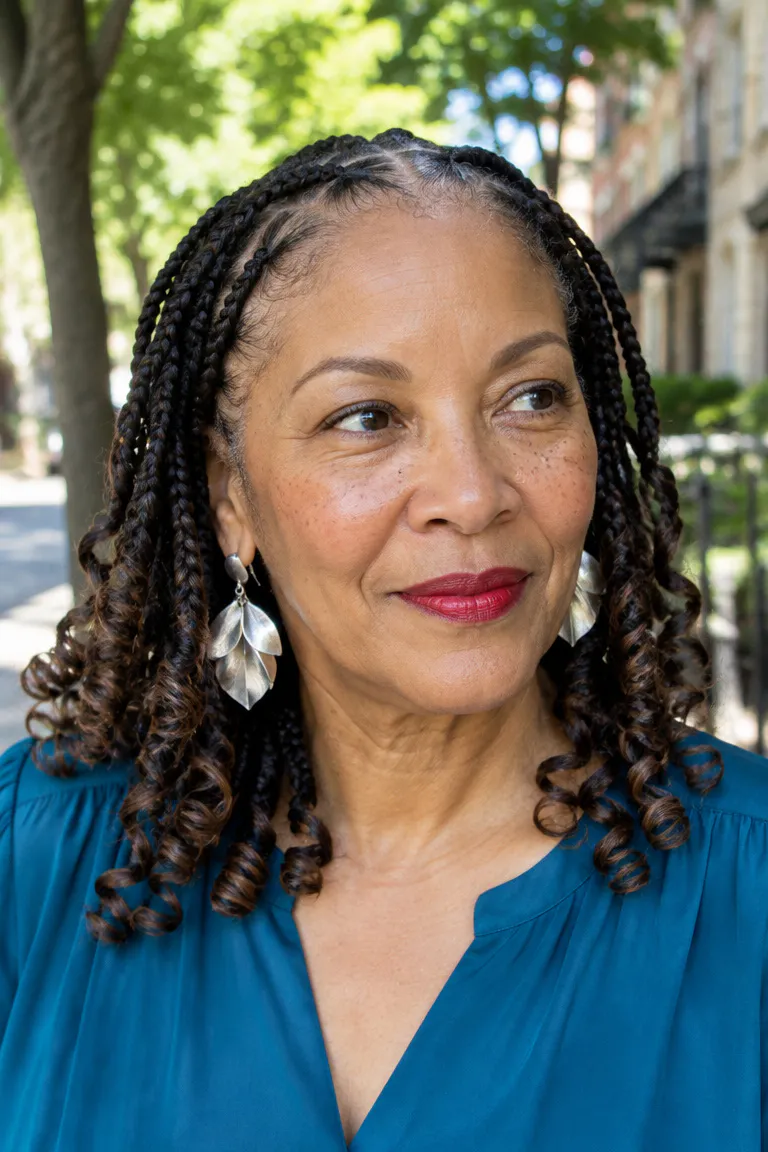
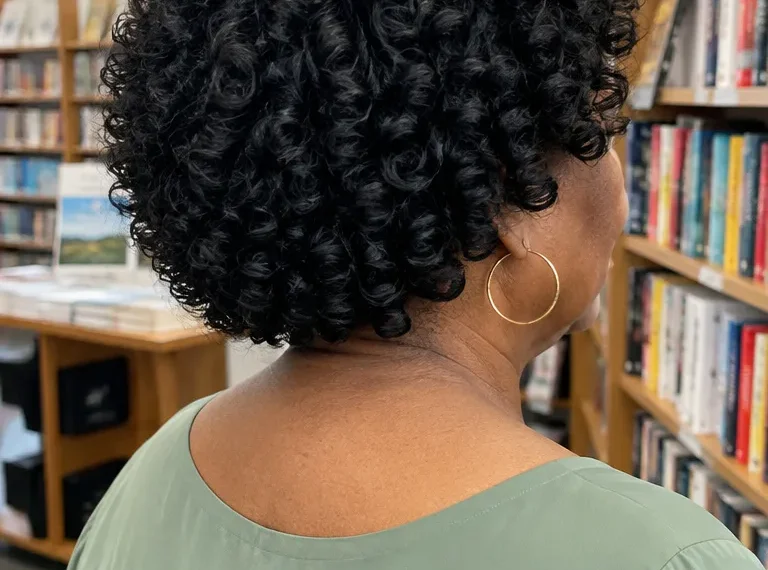
Curly-ended braids add shape without making the full style heavier. You get the look of a dressier finish while keeping the braid length medium, which helps reduce drag on thinning edges.
This works especially well if you want a softer holiday look that still reads neat in photos. The curls can sit at the ends only, so the scalp and front hairline are not carrying extra bulk.
7. Triangle Part Braids
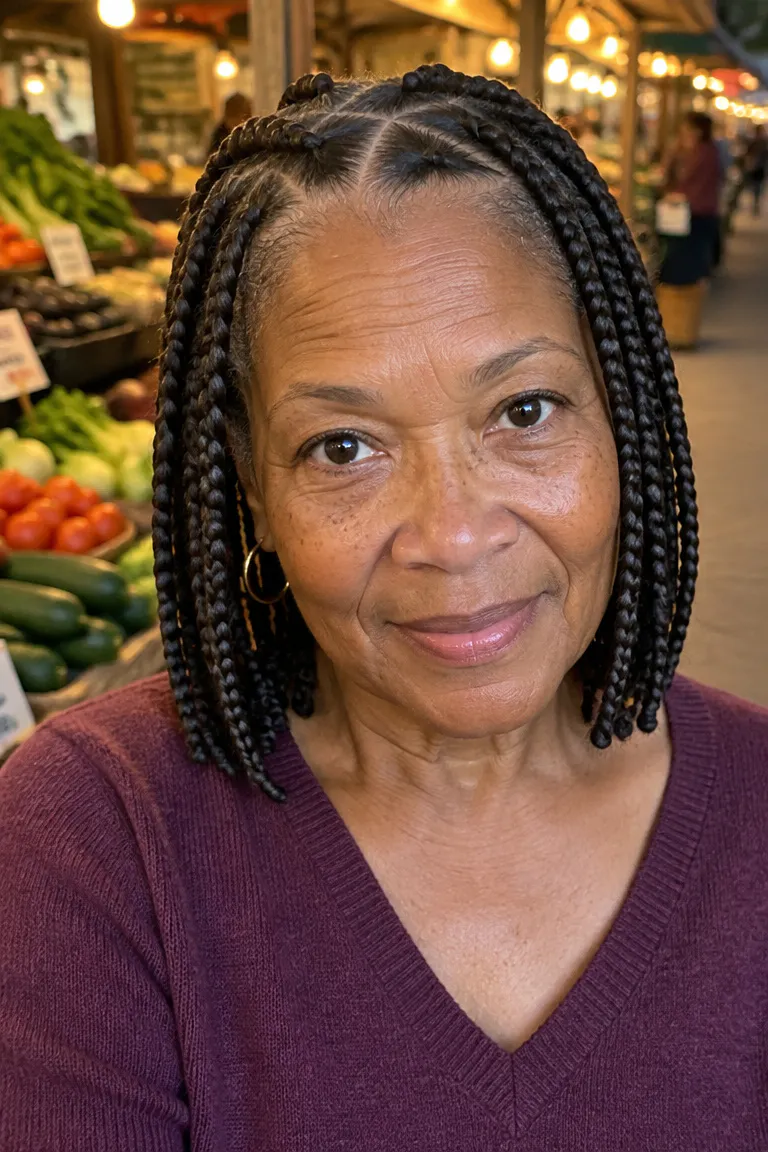
Triangle parts create visual interest from the scalp pattern instead of from extra-long braids or heavy accessories. The shape looks intentional up close, and it can feel less repetitive than standard square parting.
Keep the parts medium in size if your goal is low tension. Very small triangles can increase install time and stress the scalp, while larger sections still give the pattern enough definition for holiday wear.
Maintenance tip: Triangle parts show best when the scalp is clean and the sections are neat, so ask for crisp parting without over-tight braiding at the roots. If you prefer shorter, easier wear, pair this idea with a short bob braid shape that keeps the weight down.
8. Short Bob Braids
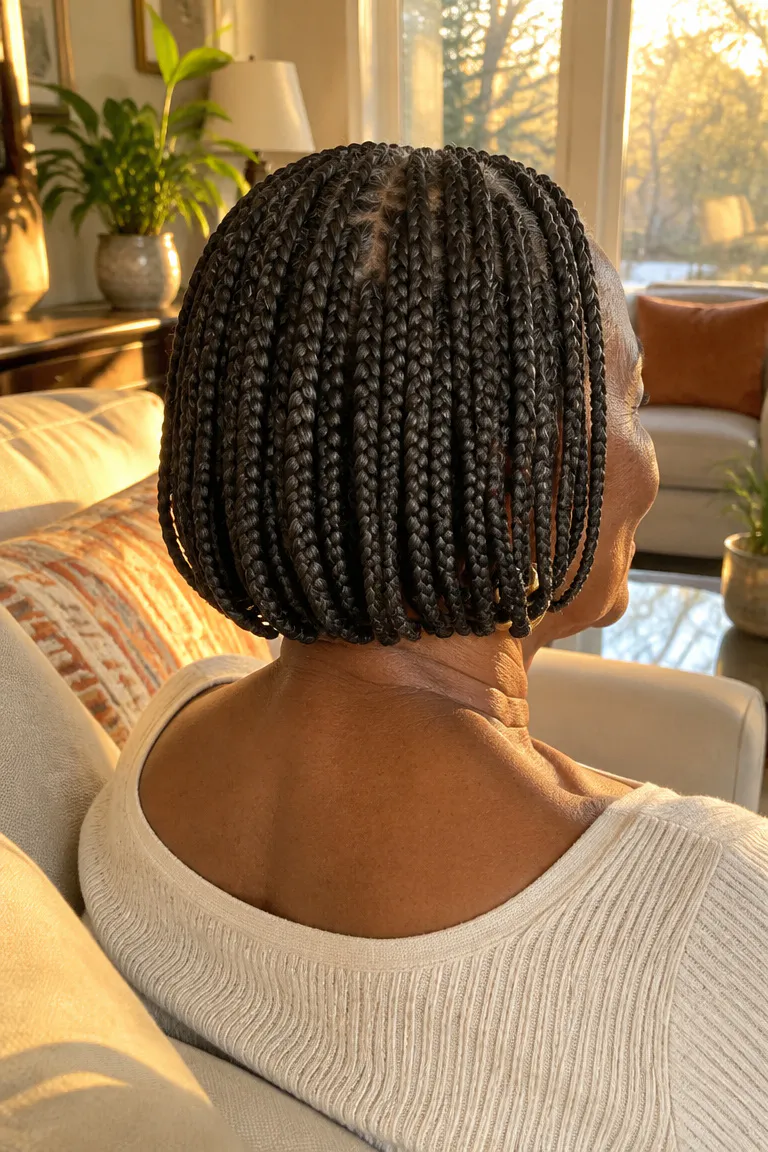
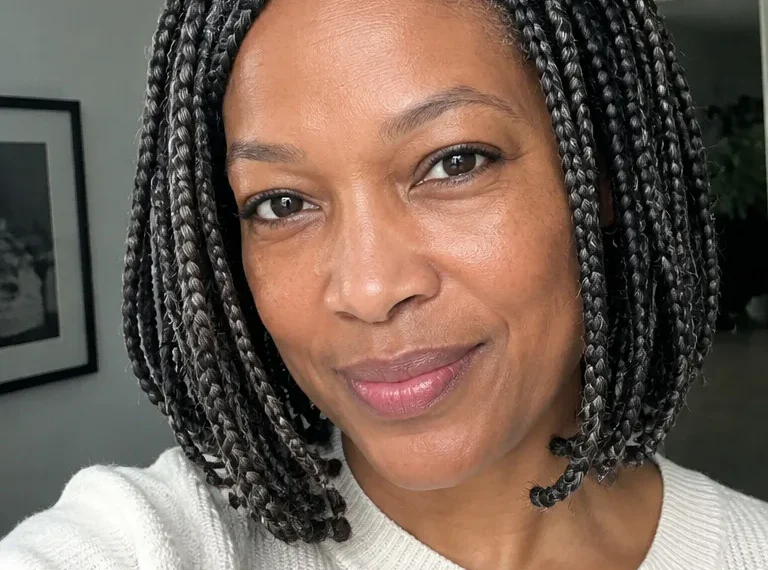
A short bob braid keeps the entire style lighter, which is helpful if you dislike heavy hair on your scalp or along your neck. The shorter length also makes sleep care simpler because there is less braid to gather and tuck away at night.
This length works well under winter coats, scarves, and high collars because it does not bunch up as much as longer braids. Ask for ends that stop at the chin to collarbone area if you want the bob to look intentional rather than cut off too bluntly.
For readers who want even more comfort-focused options, these lightweight braids for older Black women give the same easy-wear feel with different shapes and parting patterns.
9. Jumbo Flat Twists
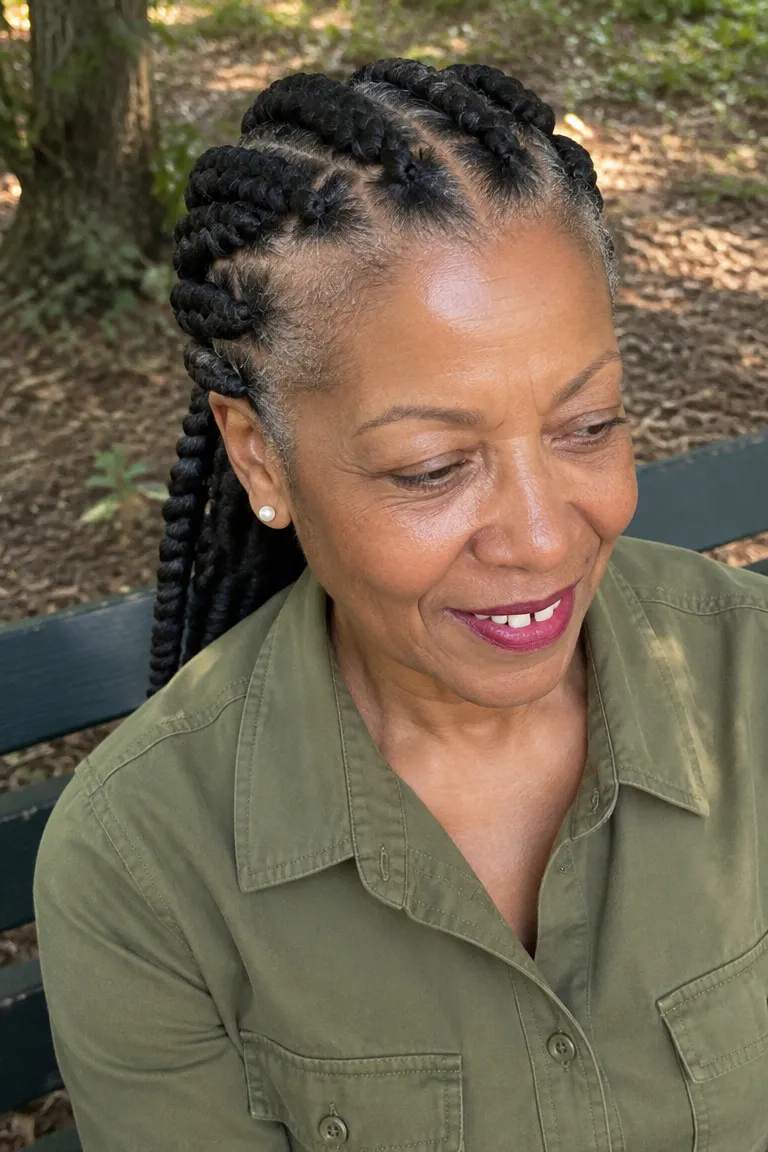
Jumbo flat twists are a softer alternative if you want a braid look but need less small-section tension. Bigger sections sit more gently on the scalp and usually dry faster after washing or refreshing the roots.
The style can look neat and intentional for a holiday gathering without requiring a tight, highly detailed install. If your hairline is fragile, keep the twists straight back or slightly angled rather than forcing them into a tight front design.
- Choose jumbo sections over tiny rows to reduce root stress.
- Keep the front loose enough that your edges do not feel anchored.
- Ask for a shape that follows your head, not one that flattens it hard.
10. Cornrow Bob Ends
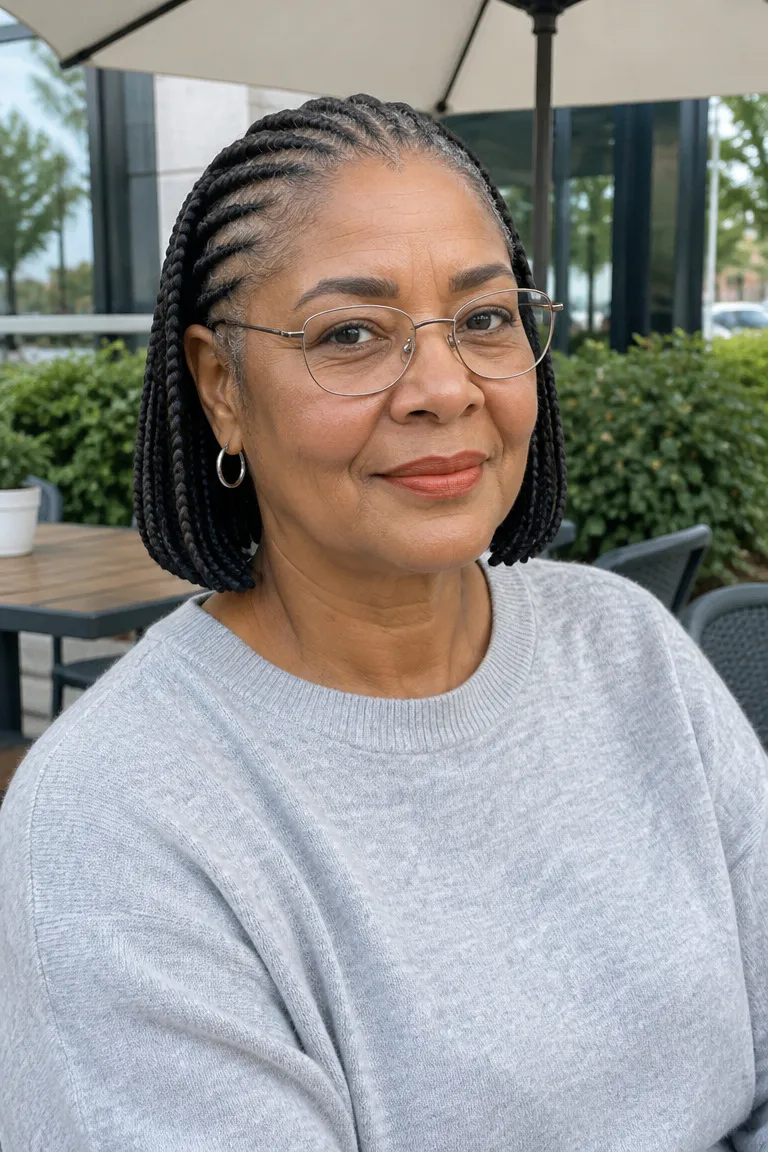
Cornrow bob ends give you structure without the extra bulk of long hanging braids. The shorter finish reduces weight, and the bob shape helps keep the overall style neat through a long day of travel or visiting.
Spacing matters here more than usual. If the rows are packed too tightly or anchored too hard near the front, the style can feel worse than longer braids with a gentler base.
11. Side-Swept Braids
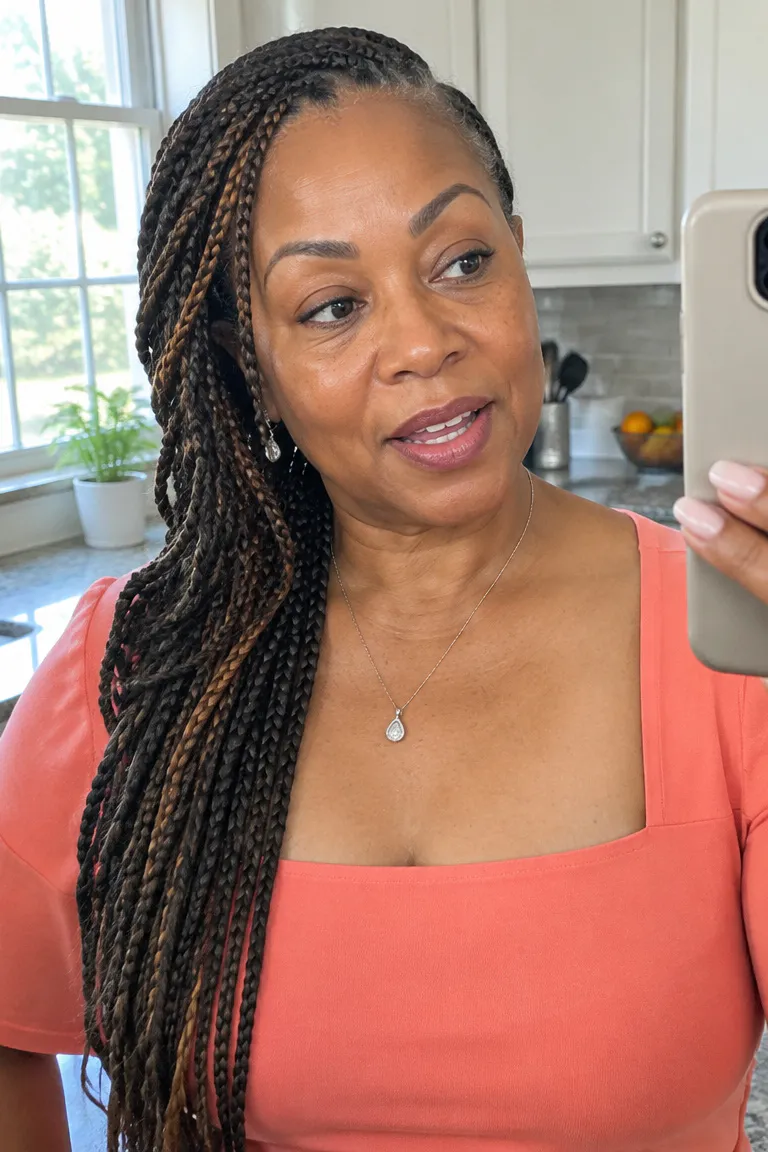
Side-swept braids soften the forehead area without asking the front hairline to stay slicked flat. The deep side placement can also balance the face without needing extra height or tight pulling at the temples.
This is a practical choice if you want one side to carry more of the style and the other side to stay calmer. It also works well with medium-length braids because the shape stays visible without needing a lot of added weight.
Quick tip: Ask for the side-swept section to be loose enough that you can slip a finger under the roots at the front. If you want more face-framing braid ideas, this face-framing bob haircut roundup shows how softer front shapes can change the whole look.
12. Medium Box Braids
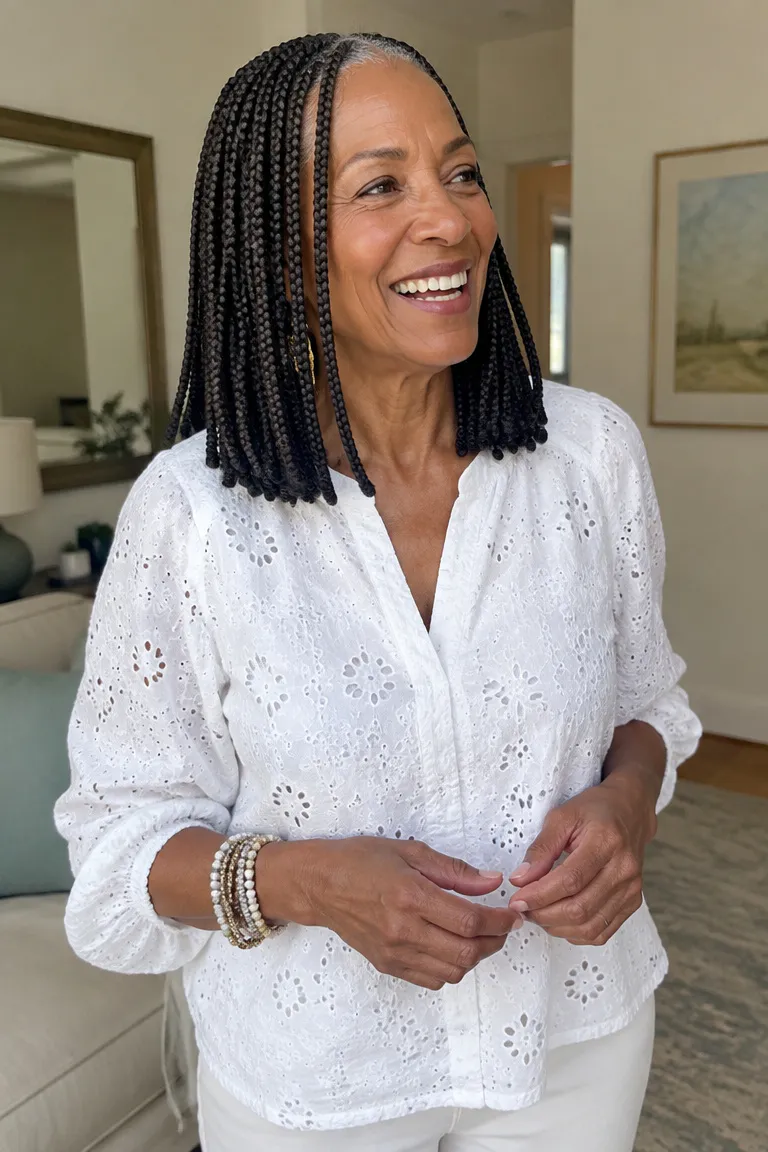
Medium box braids sit in the middle of the comfort range for many wearers. They give enough fullness for a holiday look while avoiding the extra time, weight, and upkeep that often come with very small braids.
If you want a style that can go from a family meal to a longer visit without constant adjustment, this is a practical pick. The main thing to check is section size: if the braids start feeling dense at the hairline, ask for fewer rows in the front.
13. Feed-In Pony Braids
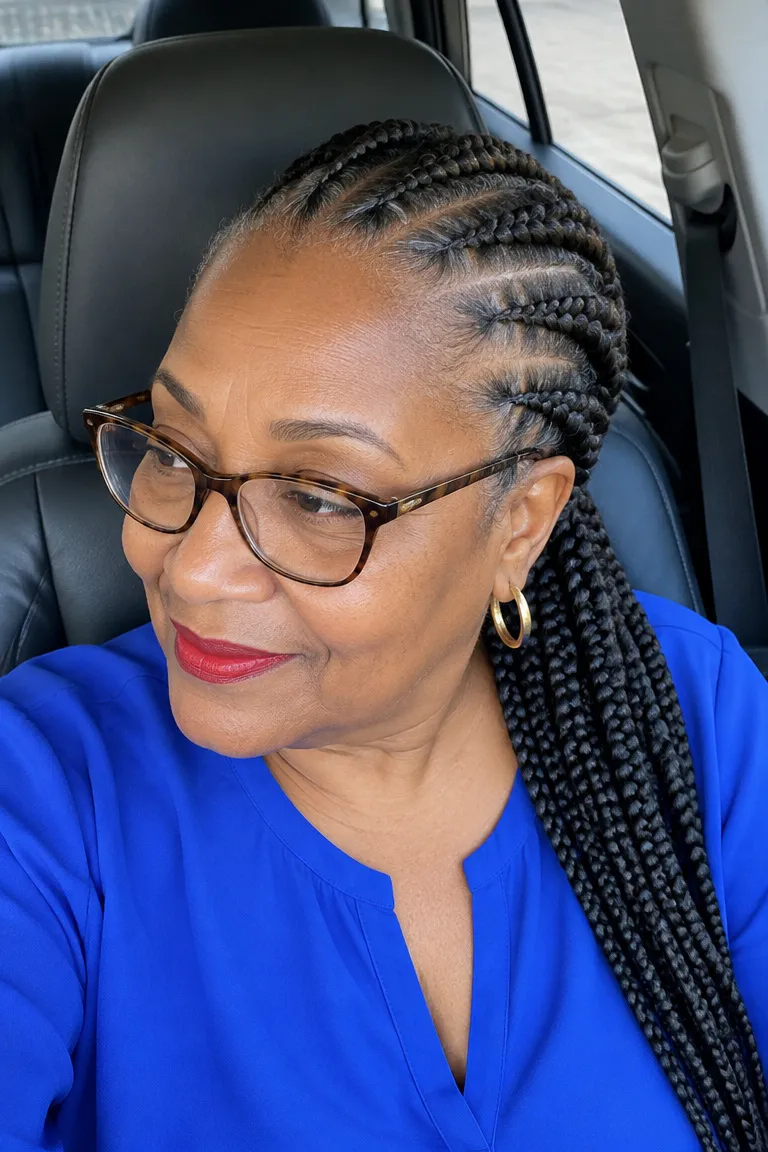
Feed-in pony braids create lift without needing a tight slick-back base. The braids feed in gradually, so the roots can stay softer while the ponytail itself sits low or mid-height for easier wear.
A low ponytail usually puts less strain on thinning edges than a high ponytail. If the style feels pulled at the temples in the chair, it is better to lower the placement right away than to try to tolerate it for the whole event.
- Keep the feed-in start soft and gradual.
- Choose low or mid placement instead of a high crown pony.
- Ask for enough fullness in the ponytail to look finished without overloading the roots.
14. Braided Mohawk Rows
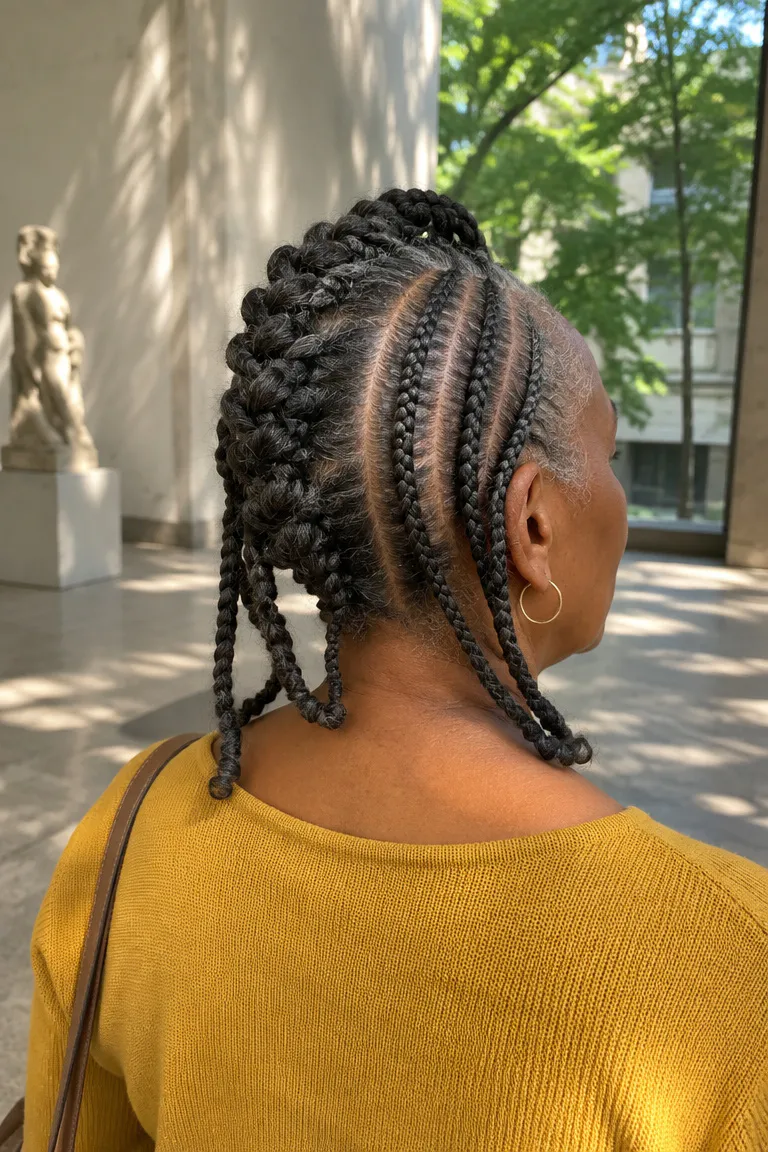
Braided mohawk rows give you a stronger shape through the center of the head while letting the sides stay looser. That matters if the temples are sensitive, because the style does not need to rely on tight side braiding to hold its outline.
The center rows do the visual work, so the sides can stay more relaxed and less compressed. This is a good holiday option if you want something bolder than a simple back braid but still need to protect the front edge line.
15. Gray-Blended Braids
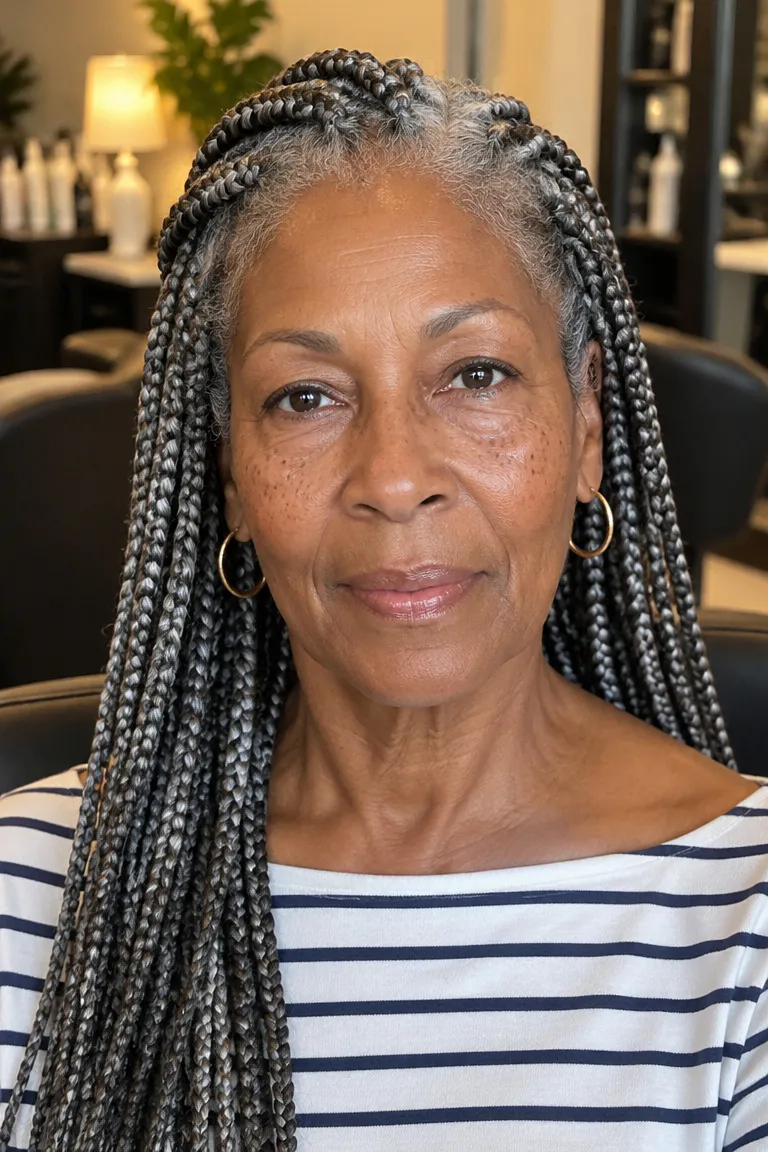
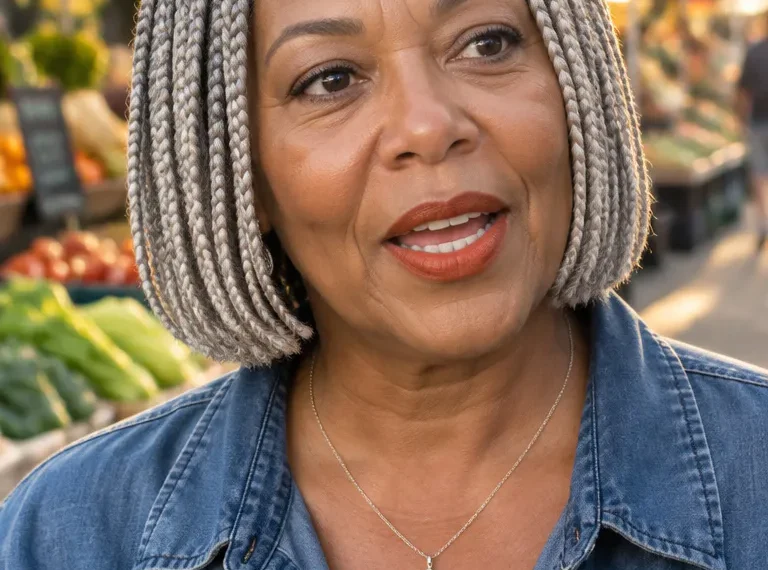
Gray-blended braids can look especially clean if you already wear silver, salt-and-pepper, or mixed gray strands. Mixing black and silver braid hair creates a deliberate finish instead of trying to cover natural gray completely.
That color choice also makes the style easier to match to your own hair at the roots, which helps the braids look cohesive as they grow in. If you want a similar approach with a softer install, compare it with these gray braid styles for natural hair.
16. Soft Crochet Braids
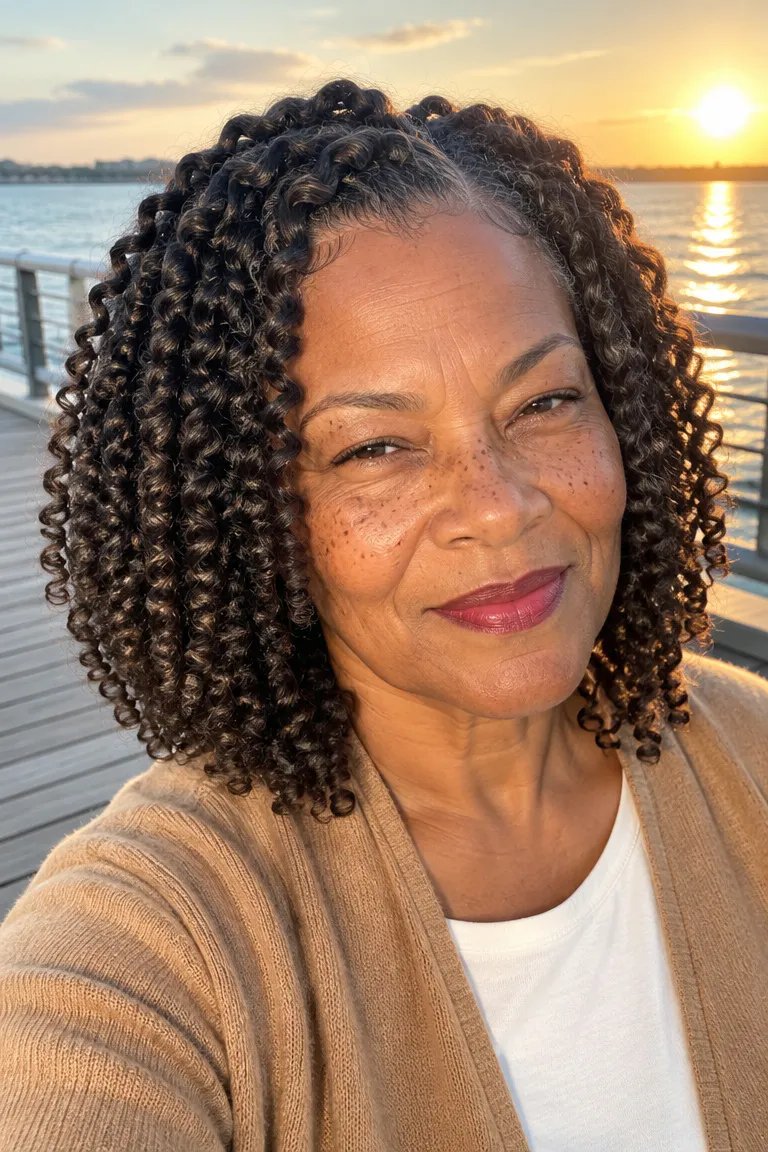
Soft crochet braids can give you fullness without the length of a full braided install. The lighter curly or textured hair is useful if your scalp gets sore from long, heavy braids and you still want a polished holiday finish.
The base should stay loose, and the added hair should not be packed in so tightly that the cornrows underneath feel compressed. This style is often easier to wear if you keep the volume moderate instead of chasing extra density.
Comfort check: Ask for a lightweight crochet pattern with loose cornrows underneath and hair that does not overwhelm fine strands. If you want a fuller version that still feels natural, these low-maintenance crochet braids are a useful comparison point.
17. Tapered Face-Framing Braids
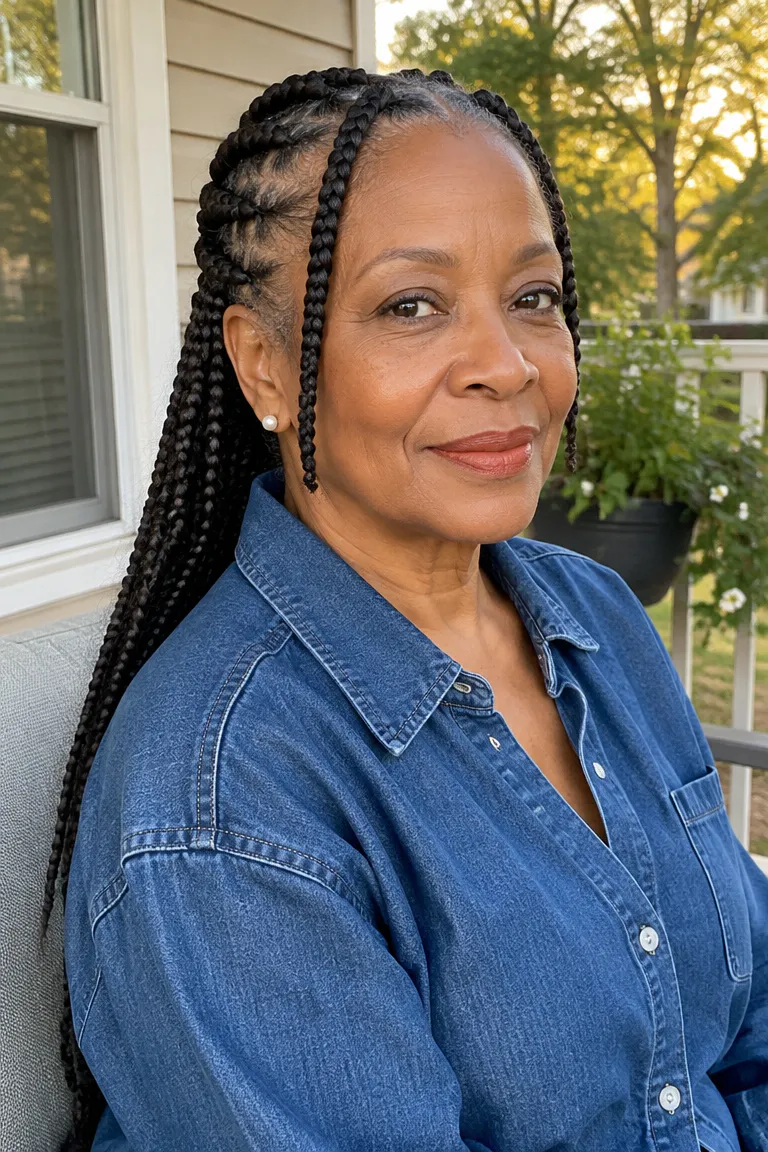
Tapered face-framing braids keep the front pieces shorter and lighter so the shape falls around the cheeks and jaw instead of pulling on the hairline. That taper helps the style look intentional while reducing the amount of weight carried at the edges.
This is a strong choice if you want some movement near the face but do not want a lot of hair resting on the temples. Ask for the shortest pieces to stay soft and the longer back sections to carry most of the length, so the balance feels comfortable from the start.
Comfort Check Before You Leave
Before you leave the chair, check that the front feels soft, the parts are not too tight, and the length won’t drag on your edges during the event.