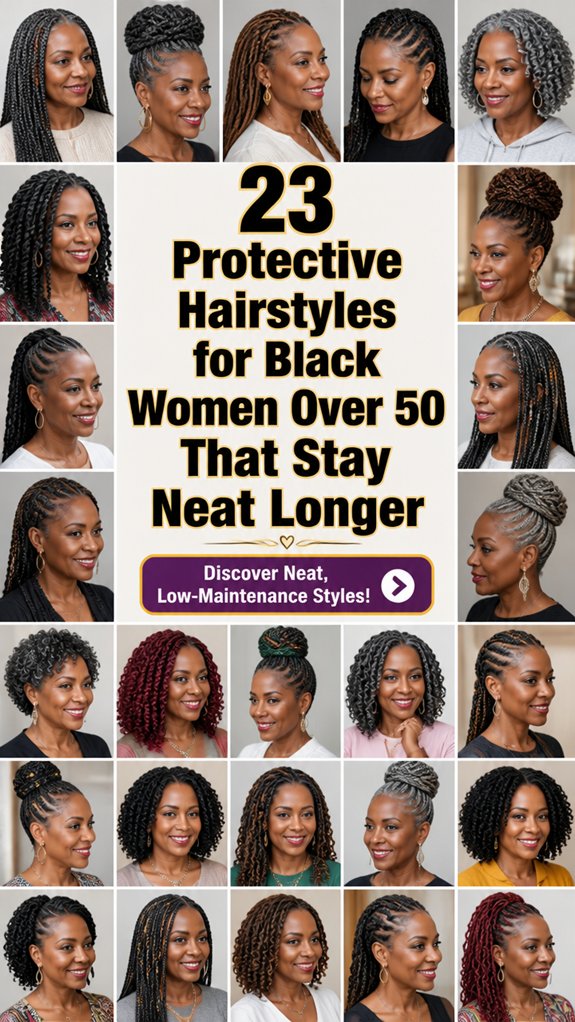
You can choose 23 protective styles over 50 that stay neat longer by going low-tension and prepping well, start with gentle detangling, deep conditioning on dry spots, and fully dry hair, then install cornrows, box braids, Senegalese or rope twists, faux locs, crochet blends, or wigs with comfy, secure parts. After, seal lightly with oil, mist with water-based spray, and protect at night with a satin scarf or cap. If your scalp itches or edges feel tender, loosen sections, rinse, and spot-clean. Keep up touch-ups to learn more.
Best Protective Styles for Black Women Over 50
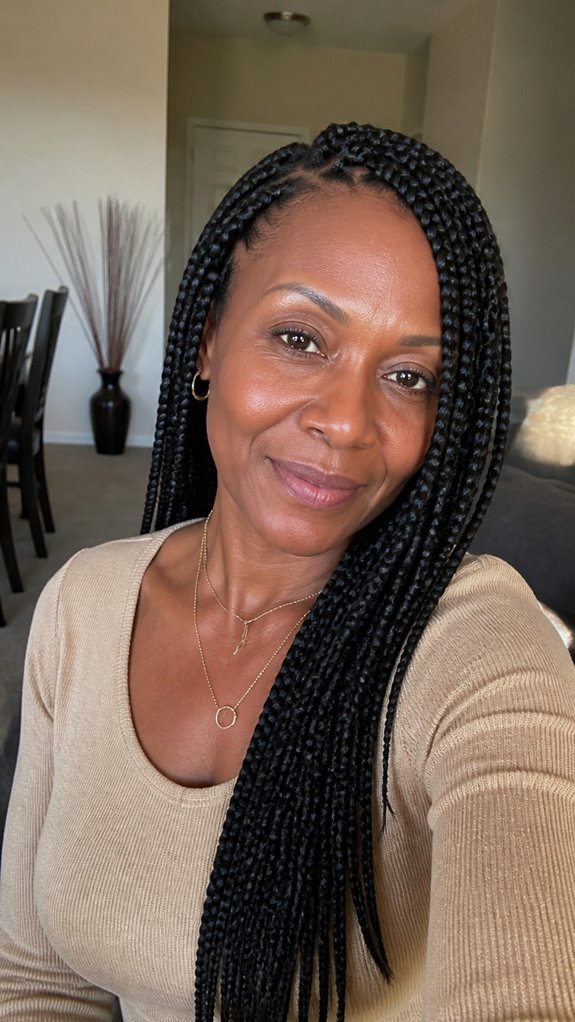
Protective hairstyles can help you keep your hair healthy, while you stay comfortable and look great, and you don’t have to choose complicated styles.
You’ll love how soft, low-manipulation options, like senegalese twists, chunky braids, or a sleek wrapped bun, protect your ends.
Before styling, give yourself a gentle scalp massage for 3 to 5 minutes, then seal your hair with a light oil.
You can also add protein treatments every few weeks, which helps your strands feel stronger and less stretchy.
Choose secure, not tight, parts, and check edges daily, so you feel cared for.
Low-Tension Cornrow Styles That Hold Up
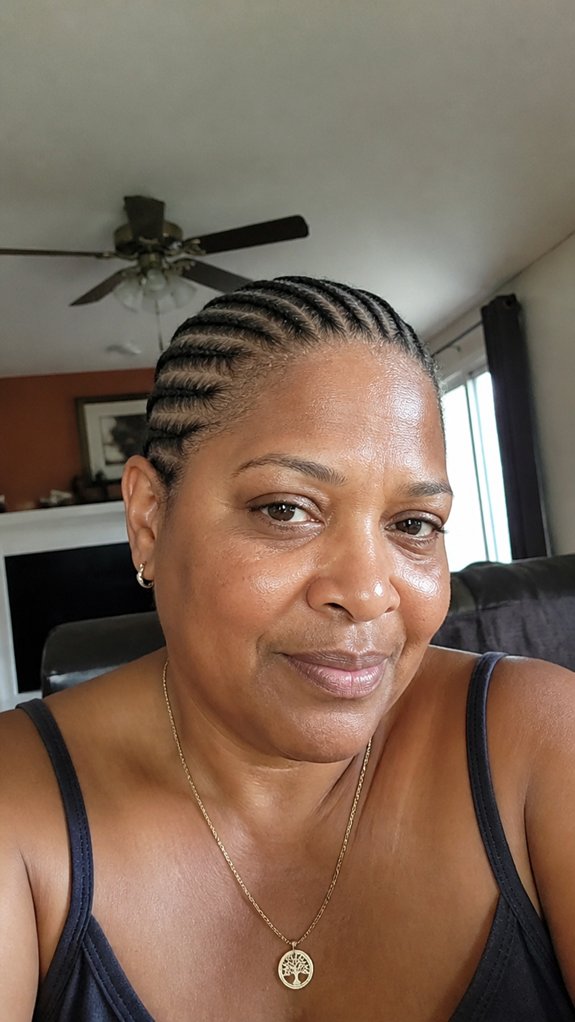
Low-tension cornrows can give you the neat look you want, without pulling your scalp too hard.
You can start with scalp friendly parting, keeping sections even, so your braids sit flat and pretty.
Next, you work with light tension, add small amounts of hair as you go, and keep your braid pattern consistent from front to back.
Try medium-sized cornrows, they hold longer, and they reduce tugging at the edges.
Secure the ends well, but don’t knot them tight.
When you moisturize, focus on your scalp, and mist the hair lightly, so the style stays tidy for weeks.
Box Braids for Mature Hairline Support
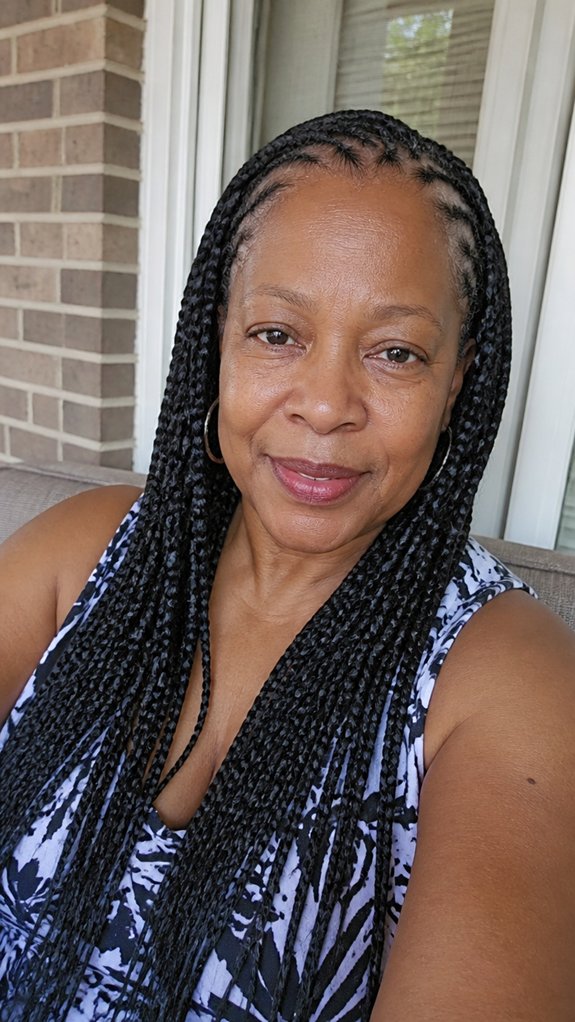
Box braids can be a smart choice when you want reliable coverage, plus support for a mature hairline, especially after years of wear and styling.
When you pick an edge friendly parting, you protect your hairline and keep your edges from feeling pulled. Ask your stylist to use lightweight extensions, so your scalp stays comfortable, and your braid tension feels gentle.
You’ll notice box braids help you avoid daily manipulation, and they let your hair rest while still looking polished. To keep them neat longer, mist lightly, wrap at night, and retouch any loose sections quickly. You’ll feel confident, and so close to your best look.
Senegalese Twist Styles With a Sleek Finish
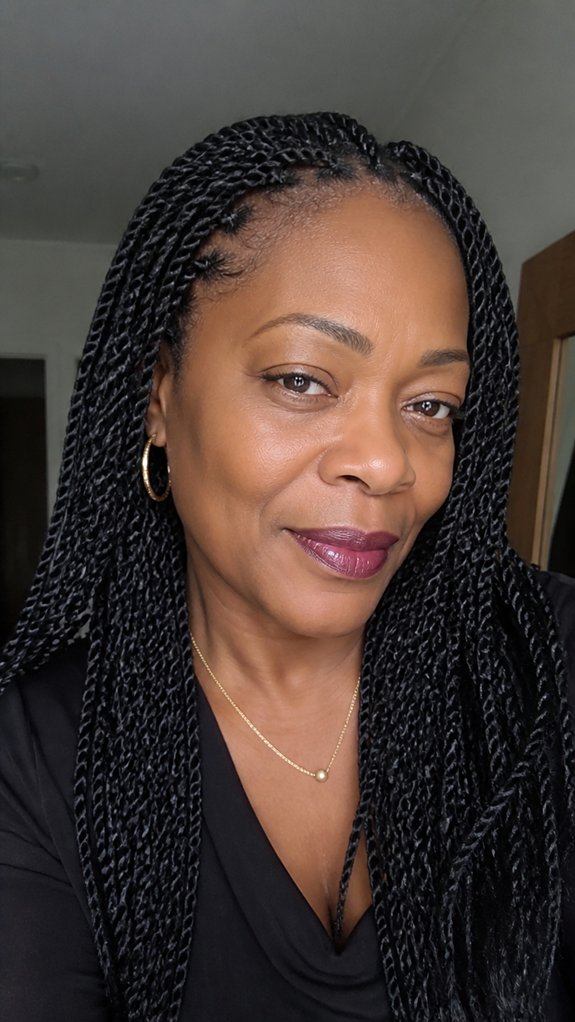
Senegalese twist styles give you a sleek, polished look, while still helping your hairline feel supported and calm.
You start by planning a clean scalp parting, then section evenly so every twist sits flat and neat.
As you install, keep tension comfortable, not tight, and smooth each twist as you go.
When you finish, use a light shine serum to tame frizz, add softness, and make the whole style glow.
You’ll love how the twists move, yet stay controlled, and how your hairline looks tidy for weeks.
Reapply serum on edges, and refresh at night with a satin scarf.
Faux Locs That Stay Neat Longer
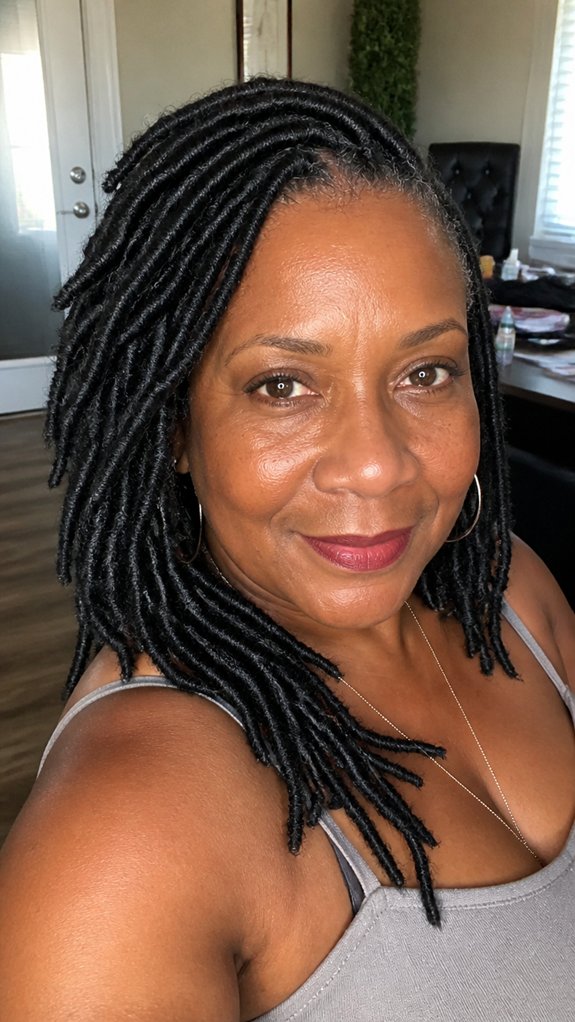
Choose faux locs that stay neat longer by starting with a solid base, and you’ll notice the difference right away.
Begin with clean, moisturized hair, then braid it tight but comfortable. You control the tension, and that means fewer slips and bumps.
When you install, separate each section carefully, and keep your part lines crisp.
For texture maintenance, mist lightly with water-based spray, then seal with a tiny bit of oil on your scalp only.
If you want intimacy-ready style, add colored accents near your face, like caramel or burgundy, so they catch light and still look polished.
Crochet Protective Styles for Fast Installs
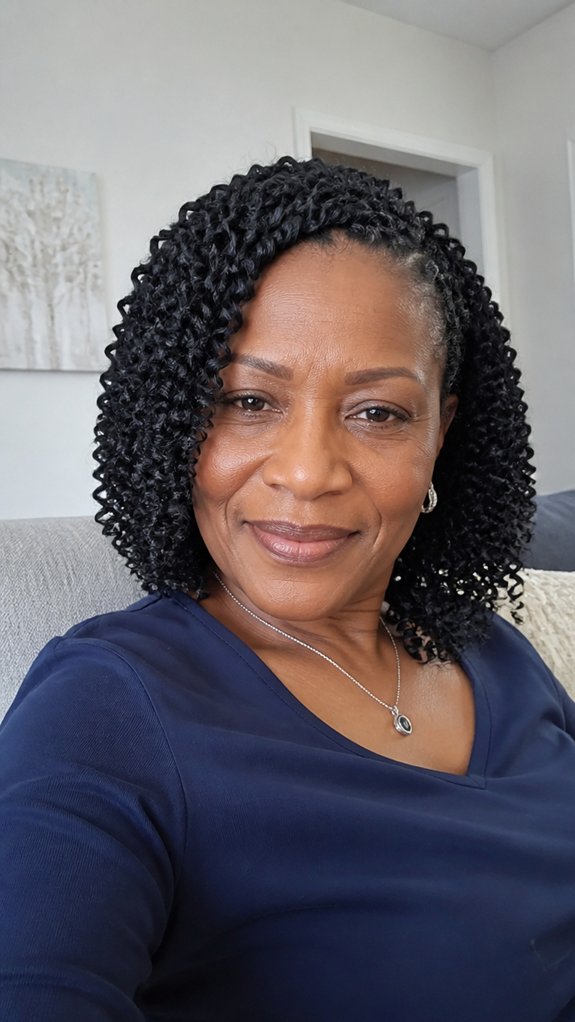
Crochet protective styles are a smart next step when you want faux locs to stay tidy, but you also need faster installs and a lighter daily routine.
When you choose crochet, you can pre-part your hair, then quickly work in the pieces, so your install feels almost effortless. Look for synthetic blends for a soft, natural swing, and less tangling as the weeks pass.
You’ll love how you can keep your edges neat, by laying them with a light gel before you crochet. Then, add a gentle scarf at night, so your style stays fresh.
Goddess Braids That Keep Their Shape
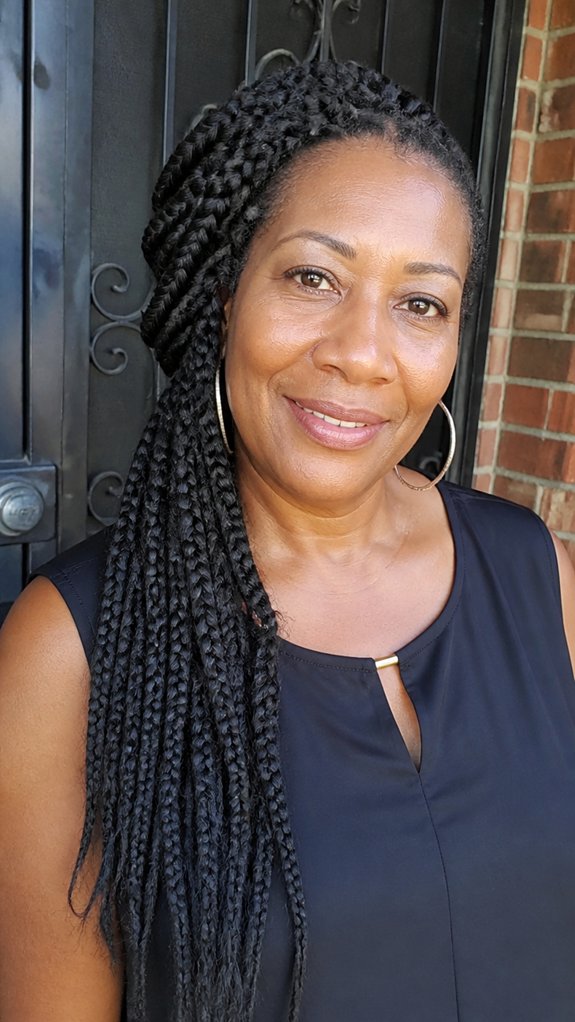
Goddess braids can keep their shape longer when you start with clean, fully detangled hair and a sturdy prep, so your style looks polished from week to week.
You section carefully, braid tight but not painful, and smooth each base with edge friendly styling. Use lightweight extensions so your scalp stays comfortable, and the braids don’t sag early.
As you install, keep tension even from root to tip, then seal flyaways with a soft gel or mousse. At night, you wrap with a satin scarf, and mist lightly to refresh without unraveling. You’ll feel secure, and you’ll look amazing.
Knotless Braids for Less Scalp Tension
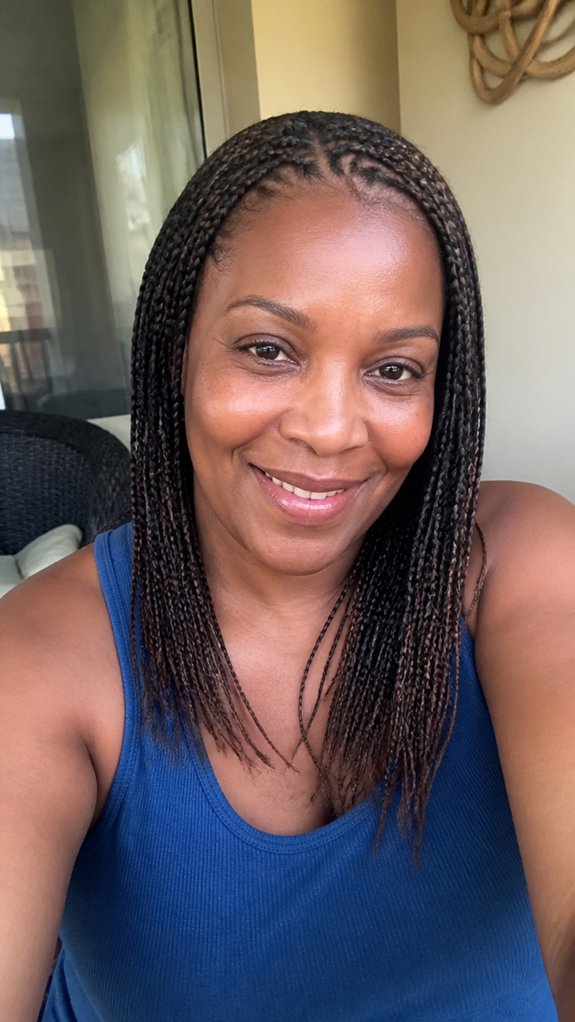
In knotless braids, you start with your natural hair at the root, then you add the extensions gradually, so you feel less tugging right from the start. You’ll notice a softer hold, and that matters as your hair gets drier with age.
During installation, you should ask for tension monitoring, the braider checks each section before moving on. Afterward, you can support comfort with light scalp massage, using clean fingers along your part lines, not deep pressure. This keeps your scalp calm, helps circulation, and can reduce soreness.
When it feels snug but not painful, you’re doing it right.
Protective Bantu Knots for Defined Ends
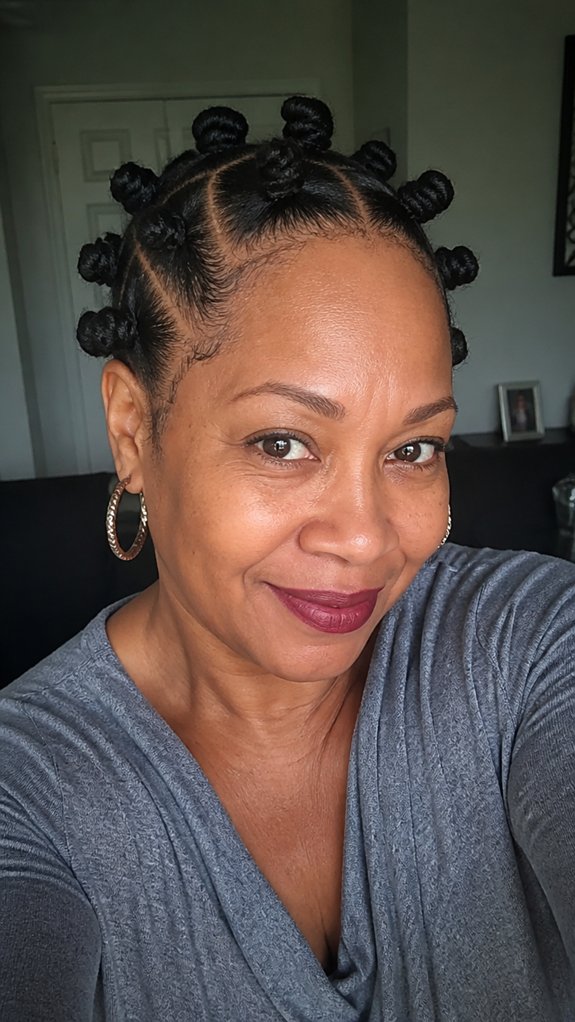
Protective Bantu knots can give you that bold, defined texture, without overstretching your hair.
You start by sectioning damp, detangled hair, then you coil each section tightly but gently.
As you roll, you pay attention to your ends, tuck them neatly, and keep the tension even, so your shape stays clean.
Before you tie it down, you do moisture sealing with a light oil or cream, then you smooth a bit more product to reduce frizz.
Finally, you cover with a satin scarf or bonnet, because satin preservation helps your knots hold their definition overnight.
When you unwind, you get soft, long-lasting curls.
Rope Twists for a Clean, Natural Look
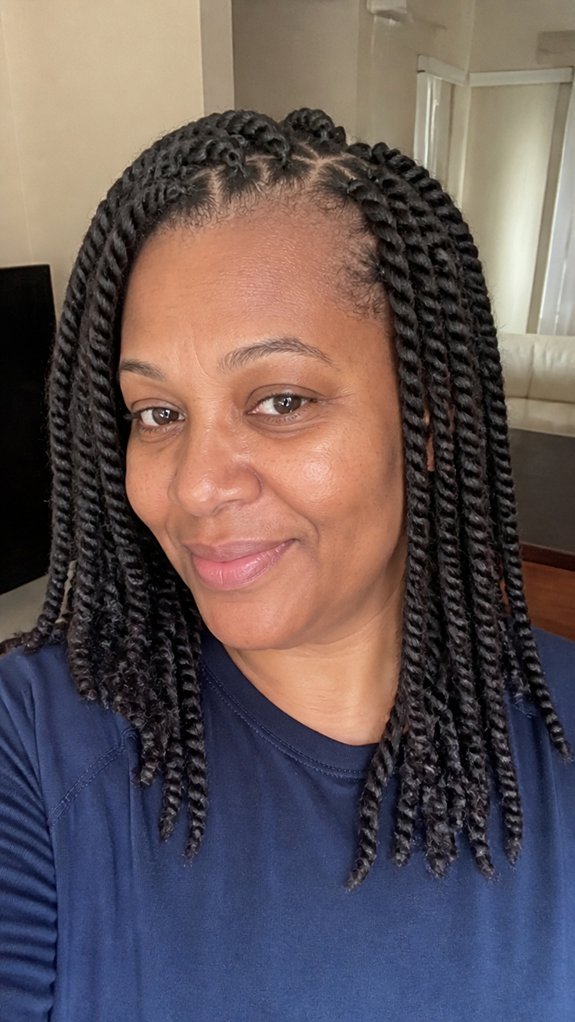
Rope twists help you create a clean, natural look, and you can wear them for days with less stress on your ends.
Start with freshly detangled hair, then section it into small, even parts. Twist two thin strands around each other, keep tension light, and smooth as you go.
Use a light gel or cream to seal in moisture retention, so your twists stay soft, not dry.
Cover your finished style with satin protection at night, using a satin bonnet or scarf.
When you touch them, you should feel defined, bouncy texture, ready for intimate moments and confident mornings.
Havana Twists With Minimal Frizz
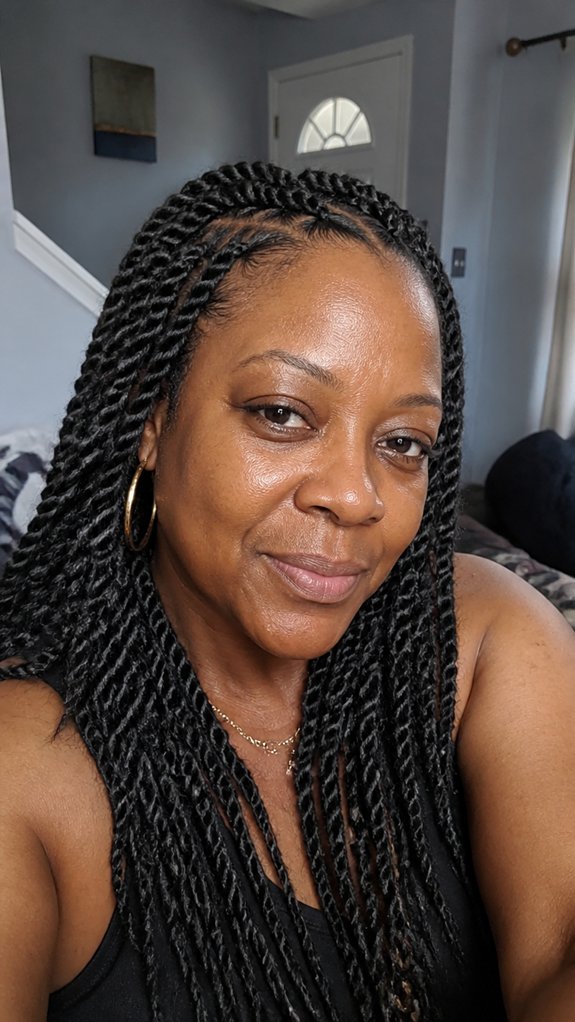
Once you’ve mastered rope twists, you’re ready for Havana twists, and you’ll love how they bring a fuller, soft look with less daily fuss.
You part your hair into neat sections, then you twist in pre-looped Havana hair, keeping tension gentle so your scalp stays comfortable.
For minimal frizz, you smooth each twist with a light cream, and you seal the ends with a bit of gel, not heavy wax.
At night, you protect your style with satin scarf care, wrapping snugly, and sleeping on a satin pillowcase.
In the morning, you shake, then mist lightly, and you’re set.
Marly or Butterfly Locs for Lightweight Wear
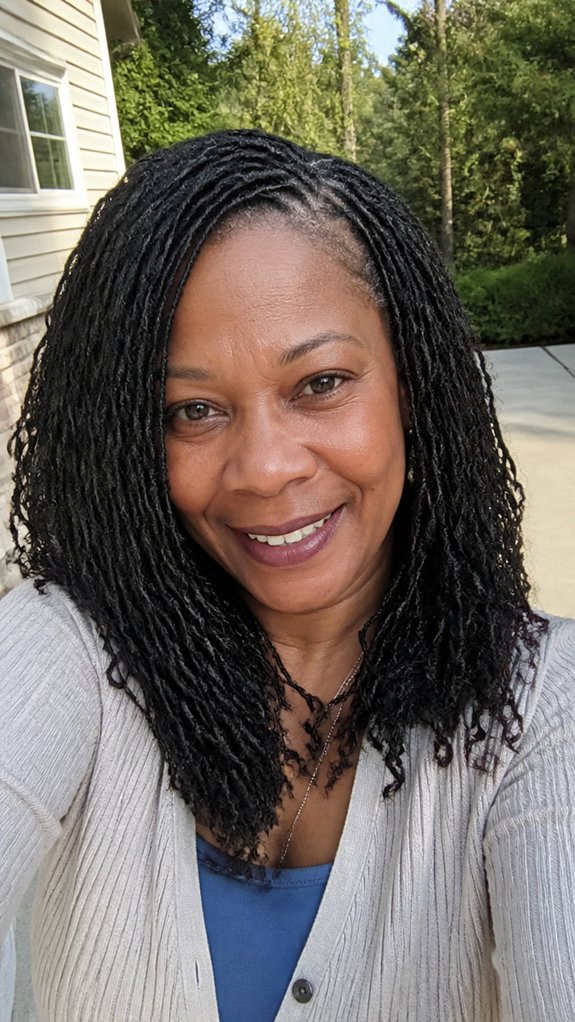
Every few weeks, you can switch up your look with Marly or butterfly locs, and you’ll love how lightweight they feel.
You’ll start with a lightweight installation, keeping parts neat, so your roots look polished even when you move close.
Choose scalp friendly extensions, because they sit comfortably and don’t pull at your edges.
When you install, anchor each section gently, then palm-roll the ends for a soft, natural curl.
To keep them neat longer, mist lightly with water, then seal with a thin oil.
At night, cover your locs, and you’ll wake up feeling fresh and beautiful.
Short Protective Styles for Easy Maintenance
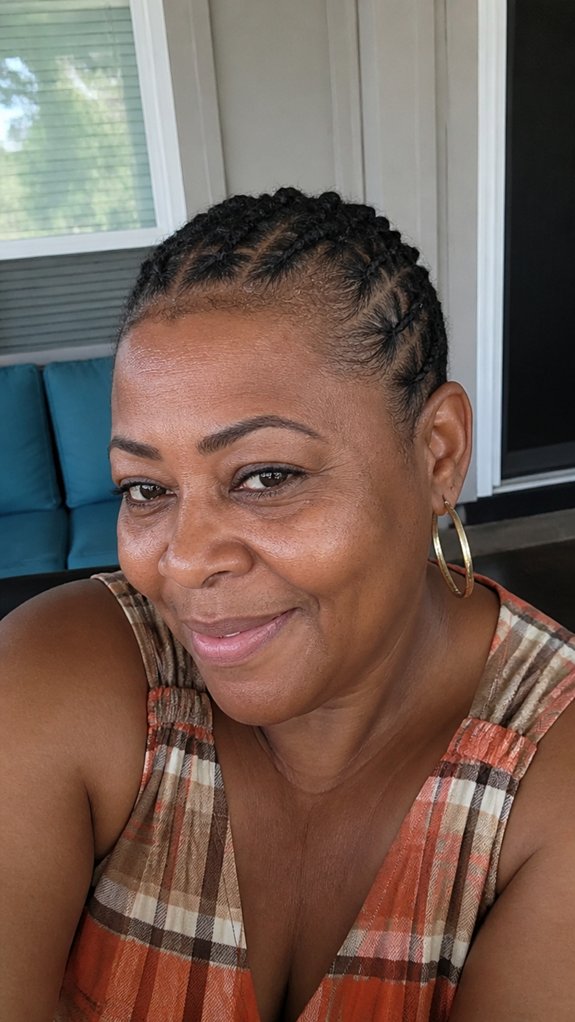
Short protective styles give you an easy, low-stress way to care for your hair, and they help you protect your ends while you stay looking polished.
When you choose short protective styles, you keep things manageable, you reduce daily tugging, and your scalp gets breathing room.
Try low manipulation cuts, like a tapered bob with neat curls, or short twists that you can re-pin in minutes.
Before you sleep, wrap with satin lined caps, they guard your edges, and they help your style last longer.
Keep a light oil on your scalp, and refresh with a soft mist.
You’ll feel cared for, and your hair will look fresh.
Medium-Length Installs for Weekend-to-Work
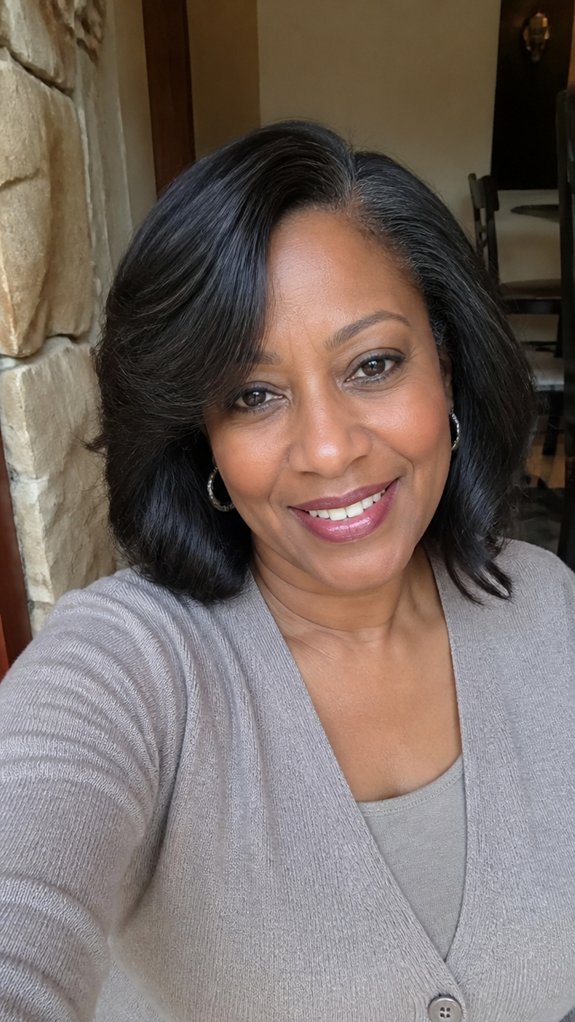
Plan your next protective look with medium-length installs that take you from weekend vibes to work-ready polish, without constant adjusting. You’ll love how these installs balance volume and manageability, when your days get busy and you still want your edges to feel calm.
Start by choosing a secure base, then part with neat middle partings for a clean finish. For weekend styling, let your waves fall naturally, add a light serum, and pin just enough for shape. On workdays, smooth the hairline, tuck any stray ends, and mist lightly. You stay polished longer, and you feel closer to your best self.
Long Protective Styles Without Heavy Pull
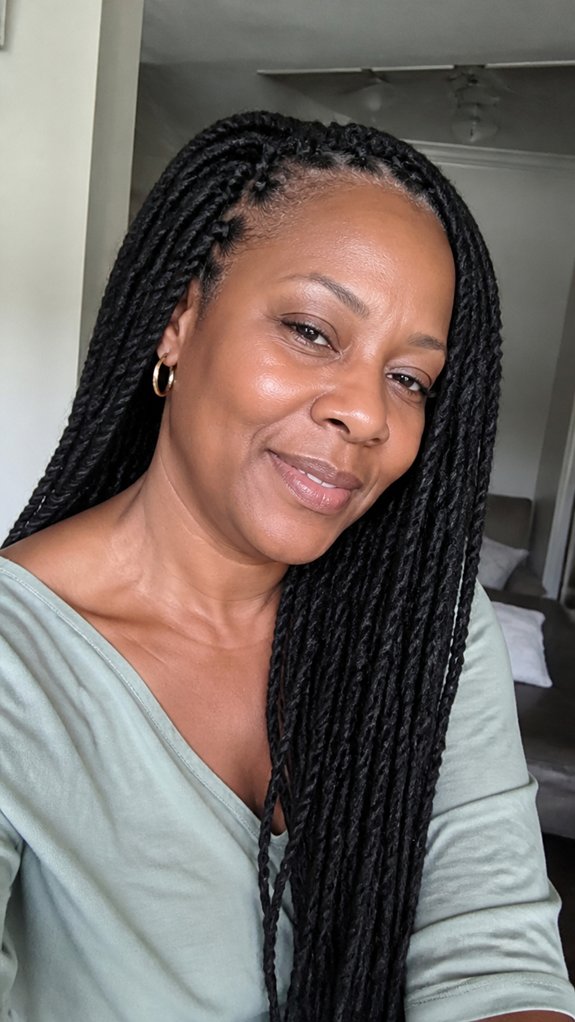
Long protective styles can look amazing on you, and you deserve one that feels light, not tight. Choose long looks built with low tension updos, so your scalp stays calm, and your edges get a break too.
Start by sectioning evenly, then braid or twist with a gentle hand, you should feel support, not pressure. Wear silk lined caps at night, they reduce friction, and they help your style stay smooth while you sleep.
When you install, secure ends, but don’t tug at the roots. Re-set loose pieces every few weeks, and you’ll keep that neat, polished finish.
Crown Braids That Protect Edges and Part Lines
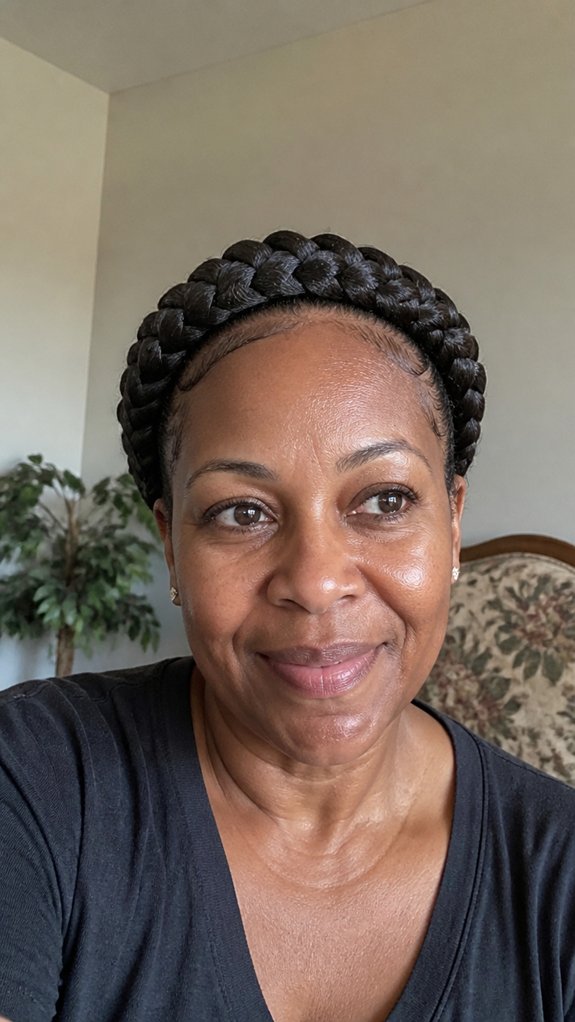
Crown braids can give you a neat, lifted look, and they also help protect your edges and your part lines.
You start with edge friendly parting, using a tail comb to create clean sections that don’t tug. Then you place soft crown padding under the braid line, so your scalp stays comfortable, and your parts look crisp.
When you braid, keep tension gentle, and braid small sections close to the scalp, so the pattern settles flat. You secure each end carefully, then cover at night, and refresh with a light oil mist. Your crown stays tidy longer.
Half-Up Protective Styles for More Flexibility
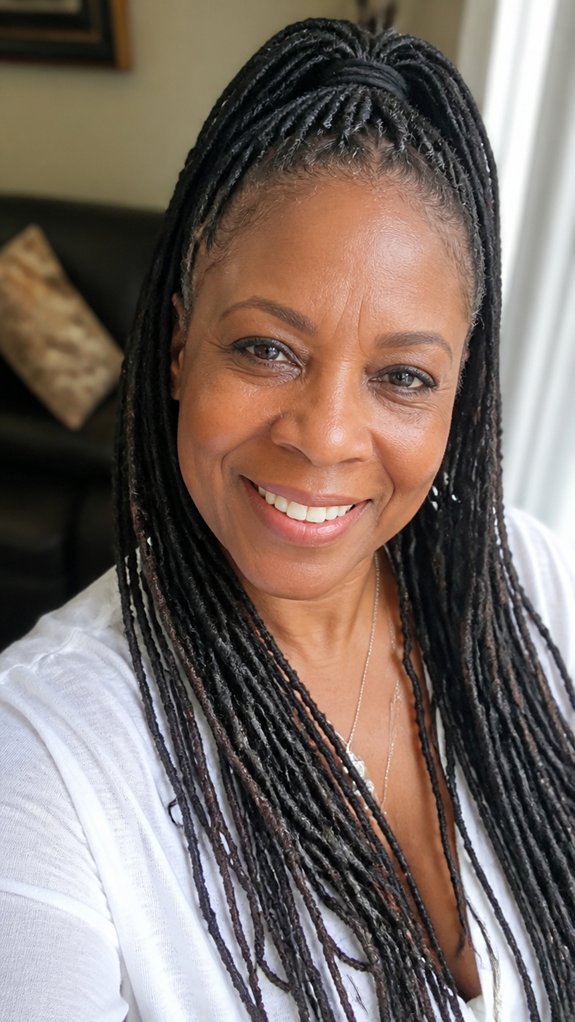
Half-up protective styles give you the best of both worlds, a pulled-back, polished look while still leaving some hair down for softness and flexibility.
You can start with adjustable half updos, clipping or banding the top section securely, while keeping the lengths relaxed and free.
Try sleek twists at the crown, then let the ends fall naturally, you’ll feel easy movement, like you can breathe.
For extra comfort, use textured half upstyles, add a light mousse to the down part, and pin the sides just enough to protect your hairline.
In the morning, smooth with a satin scarf, sleep well, and stay neat longer.
Protective Updos for Events and Photos
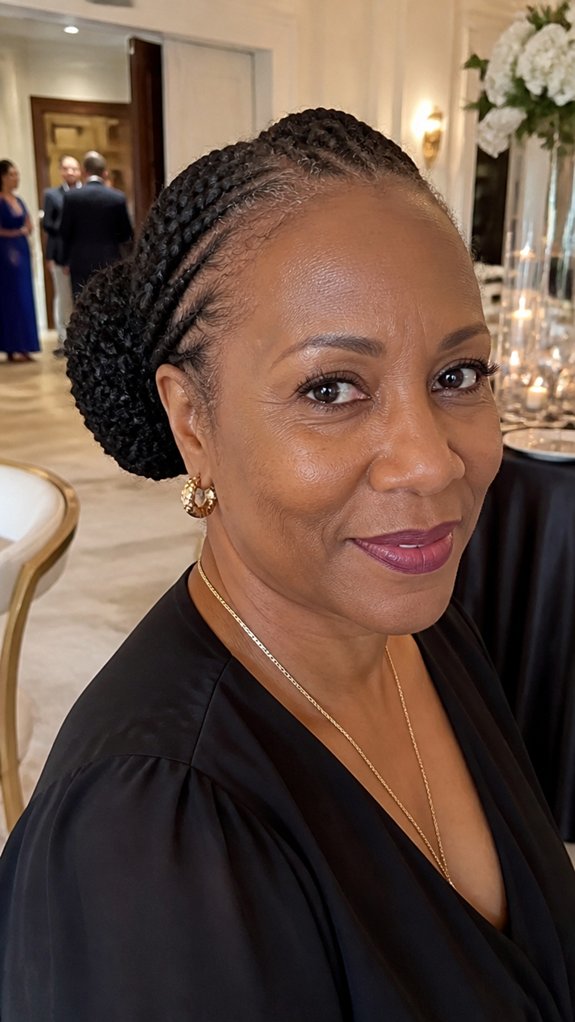
Get ready for your next event by choosing a protective updo that looks polished in photos, and still keeps your hair safe.
You can create a neat bun, twist roll, or braided crown, then secure it firmly with soft pins.
For updo longevity, set the shape with a light gel or cream, and cover with a satin scarf for a few minutes while it cools.
Use photo friendly accessories, like discreet jeweled clips or a satin headband, so they won’t snag or pull.
When you arrive, touch up edges gently, and keep a small mist bottle, so every picture stays fresh.
Sleek Wrap Styles That Reduce Daily Manipulation
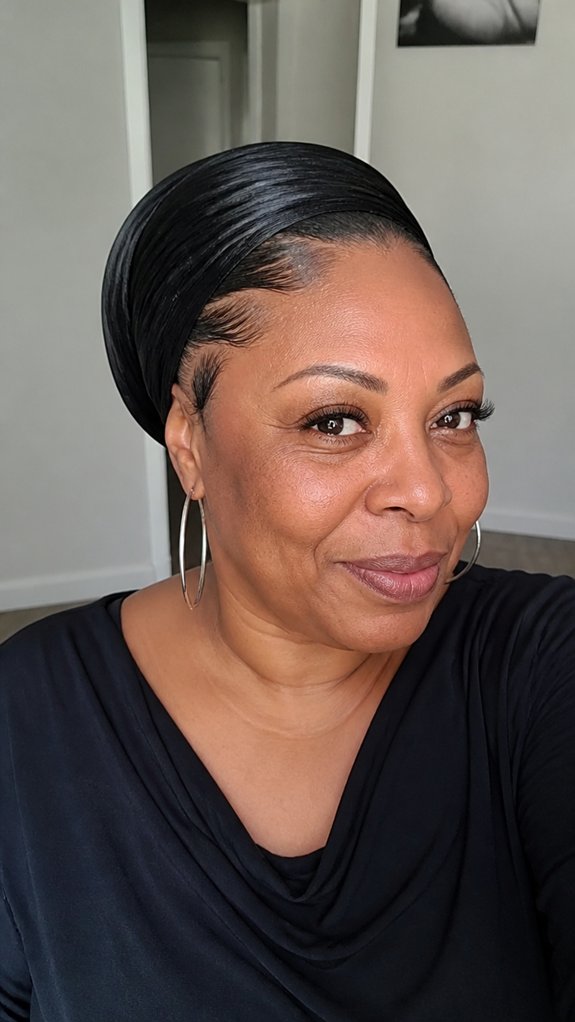
Sleek wrap styles help you protect your natural hair while you cut down on daily tugging, because the wrap does the heavy lifting instead of constant combing.
Each night, you slip on a sleek silk wrap, smooth the edges gently, and let your hair rest, like it’s getting a quiet, cozy reset.
In the morning, you shake out lightly, then style with a low manipulation bun, using soft bands and bobby pins only where needed.
You’ll keep your shape longer, reduce breakage, and feel more confident, because your hair stays neat while you move through your day.
Wigs and Seamless Units as a Protective Option
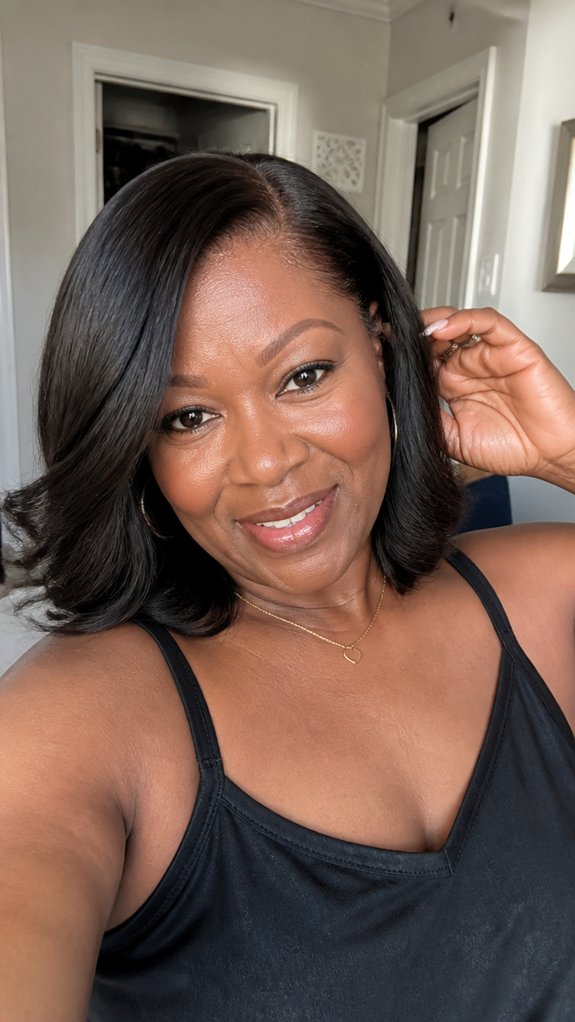
When you want a protective style that still looks polished, wigs and seamless units give you that “put it on and go” convenience, with less everyday tugging than you might do with your natural hair. You can choose a secure fit that feels close, and still lets your scalp breathe.
For extra hold, you use medical grade adhesives, so the bond stays gentle, yet firm. You also enjoy cap wig customization, like adjusting the cap size, adding combs, and mapping where the part sits. This keeps edges smooth, and the style neat longer.
How to Prep Hair Before Any Protective Install
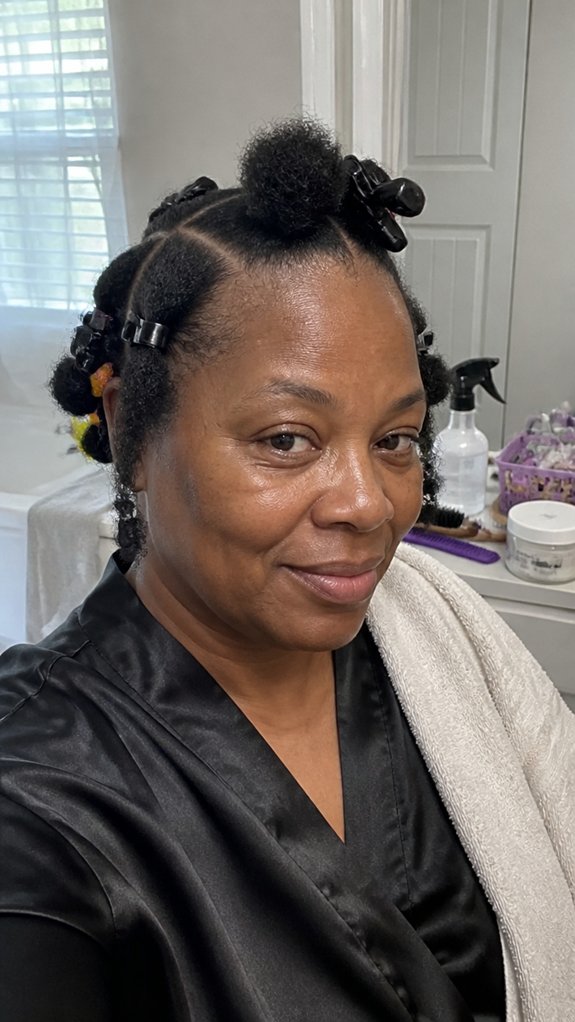
Before you install any protective style, you need to prep your hair so it stays healthy, comfortable, and secure.
Start by detangling gently, using a wide-tooth comb, and detangle from ends to roots.
Then, do a scalp massage with your fingertips for a few minutes, it boosts circulation and helps you feel the scalp.
Next, deep conditioning soaks in moisture, focus on dry spots, and leave it on long enough to soften every strand.
Rinse well, apply a light leave-in, and seal with a small amount of oil.
Finally, make sure your hair is fully dry, so nothing slips or smells.
What to Do for Itchy Scalp and Loose Edges
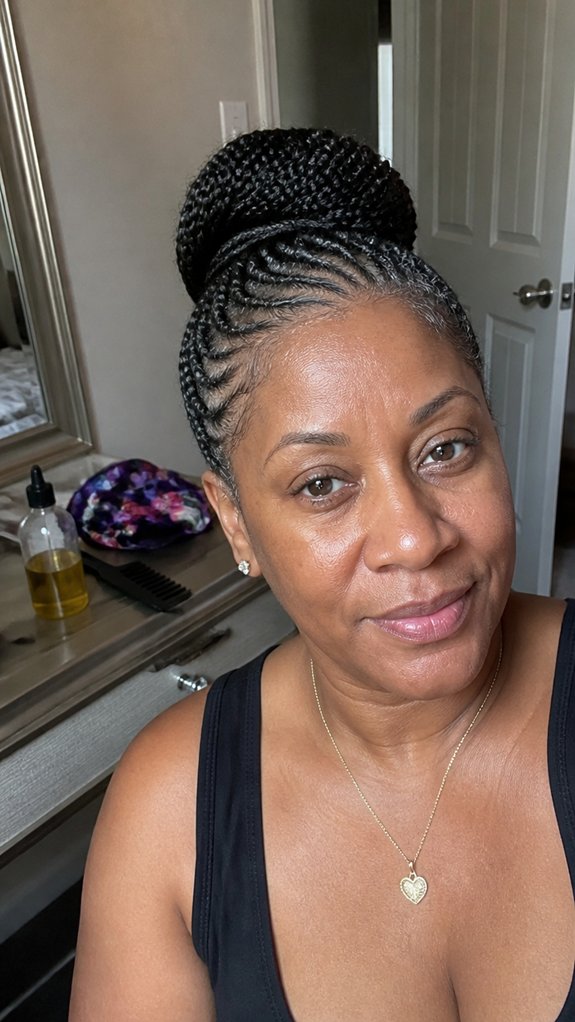
If your scalp feels itchy during or after a protective install, don’t ignore it, and don’t automatically blame “normal shedding.” First, check for buildup or dryness, because trapped product, sweat, and tight braids can irritate your skin.
Loosen anything that feels pulling, then pause and rinse your scalp with lukewarm water and a gentle, clarifying shampoo if needed. Use a scalp massage with your fingertips, not nails, to lift residue.
If your edges feel tender or look loose, apply soothing edge treatments like aloe gel or a light, non-greasy moisturizer, then cover while you sleep.
Maintain Braids and Twists to Extend Wear Weeks Longer
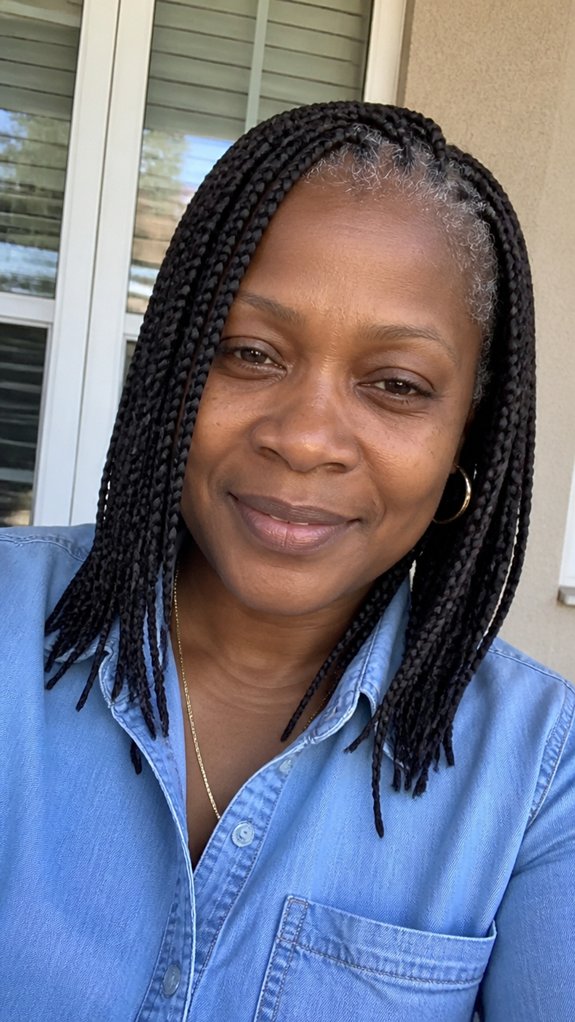
Regular maintenance helps your braids and twists last longer, and it starts the moment the install is finished.
You’ll want to keep your roots calm, so lightly mist with a water-based spray, and smooth flyaways with a soft gel.
Cover your hair at night, using a silk lined cap or a quality sleep bonnet care routine, so friction stays low.
Re-tighten any loose sections early, because waiting makes your style unravel.
Don’t soak them, instead spot-clean with a diluted shampoo, then dry well.
When you refresh, focus on the perimeter, and your braids stay neat longer.