Thin hair can look flat in a bob if the cut removes too much weight or leaves the perimeter too soft. The better choice is usually the shape that keeps the ends dense, the crown lifted, or the front framed enough to make the whole cut read fuller.
As you compare options, check one detail first: if your hairline shows easily at the crown or through the part, choose a blunt edge, stacked back, or side part before you choose extra layering. That one decision changes how much scalp shows, how much styling you need, and how often the cut needs a trim.
1. Blunt Chin-Length Bob
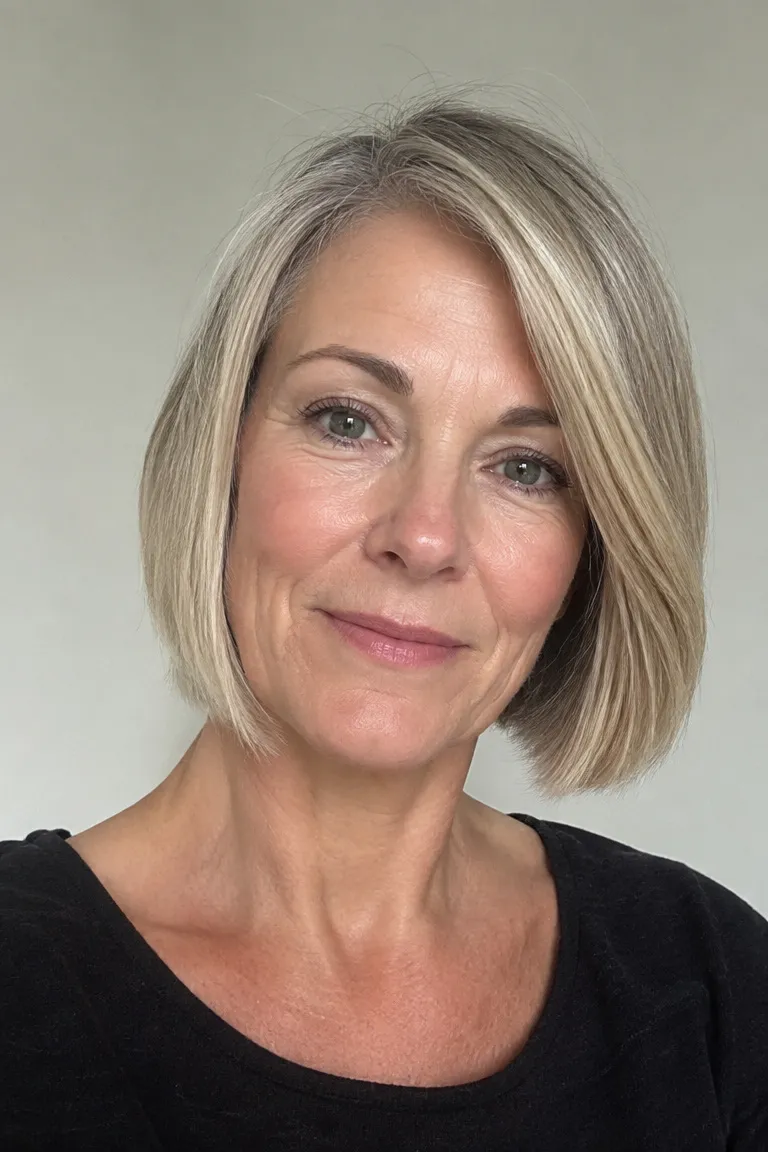
A blunt chin-length bob gives thin hair the cleanest-looking edge because the ends land in one solid line. That makes the perimeter look denser, especially if the hair is fine through the mids and only needs help at the bottom.
This cut works well if you want something neat for everyday wear and you don’t want to spend time round-brushing it into shape. It also holds up better in humid weather than a heavily layered cut, since the ends stay together instead of fraying apart.
Ask your stylist: Ask for a blunt edge at the chin with only light internal shaping. If your hair is very sparse at the ends, skip strong texturizing shears so the line stays full.
2. Stacked Bob

A stacked bob adds height through the back by building shorter layers near the nape. That lift helps thin hair stop clinging flat to the head, which is useful if your crown needs a stronger silhouette.
The shape looks best when the graduation is visible but not extreme. If the stacking is too soft, the back can lose the lift that makes this cut work; if it’s too tight, the profile can look too steep for finer hair.
This cut does need trim appointments more often than a blunt bob because the shape shows quickly as it grows. If you want a fuller back without daily teasing, it’s a practical choice for salon maintenance every 5 to 7 weeks.
3. Angled Bob
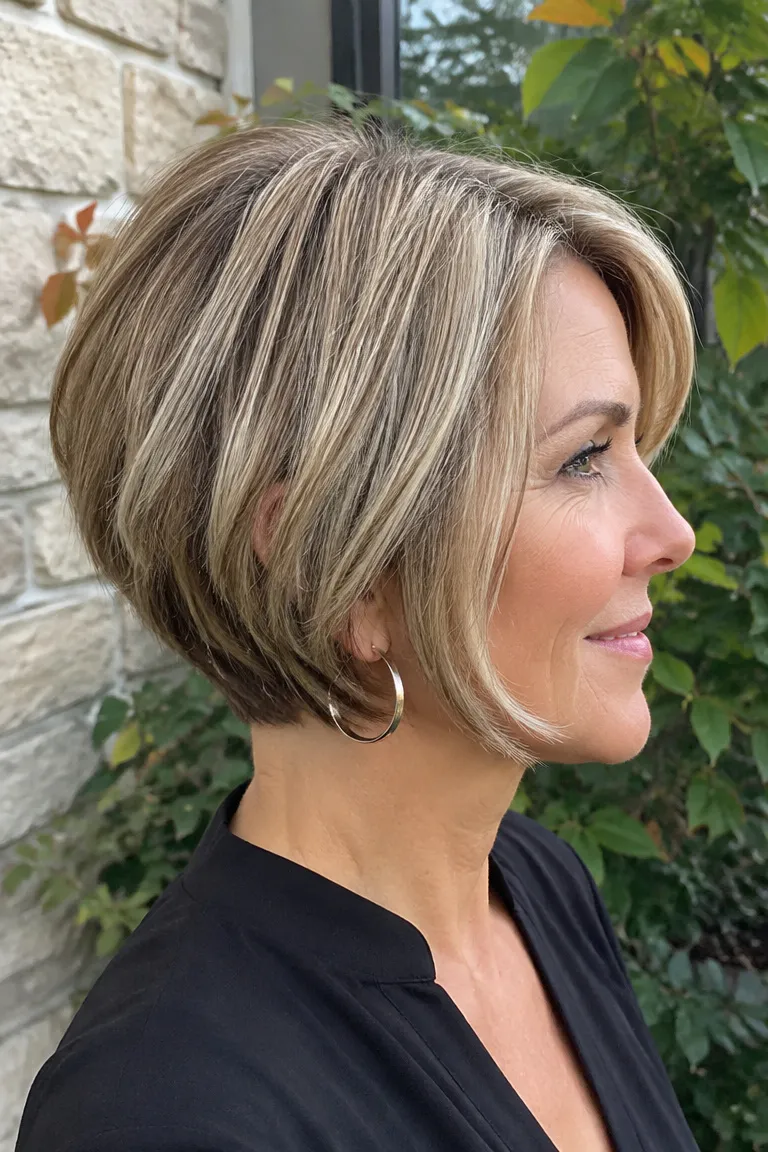
An angled bob creates a longer front and shorter back, which gives thin hair a sharper outline without adding bulky layers. The front pieces help the face look framed, while the shorter back keeps the shape from collapsing under its own weight.
This is a good pick if your hair tends to sit flat around the jaw and you want a cleaner line than a shaggy cut gives. Keep the angle subtle if your hair is very fine, since a steep drop can make the ends look too thin.
For readers comparing bob shapes, this sits between the fullness of a blunt cut and the movement of a textured one, similar to what you’ll see in short bob haircuts for thin fine hair over 50.
4. French Bob
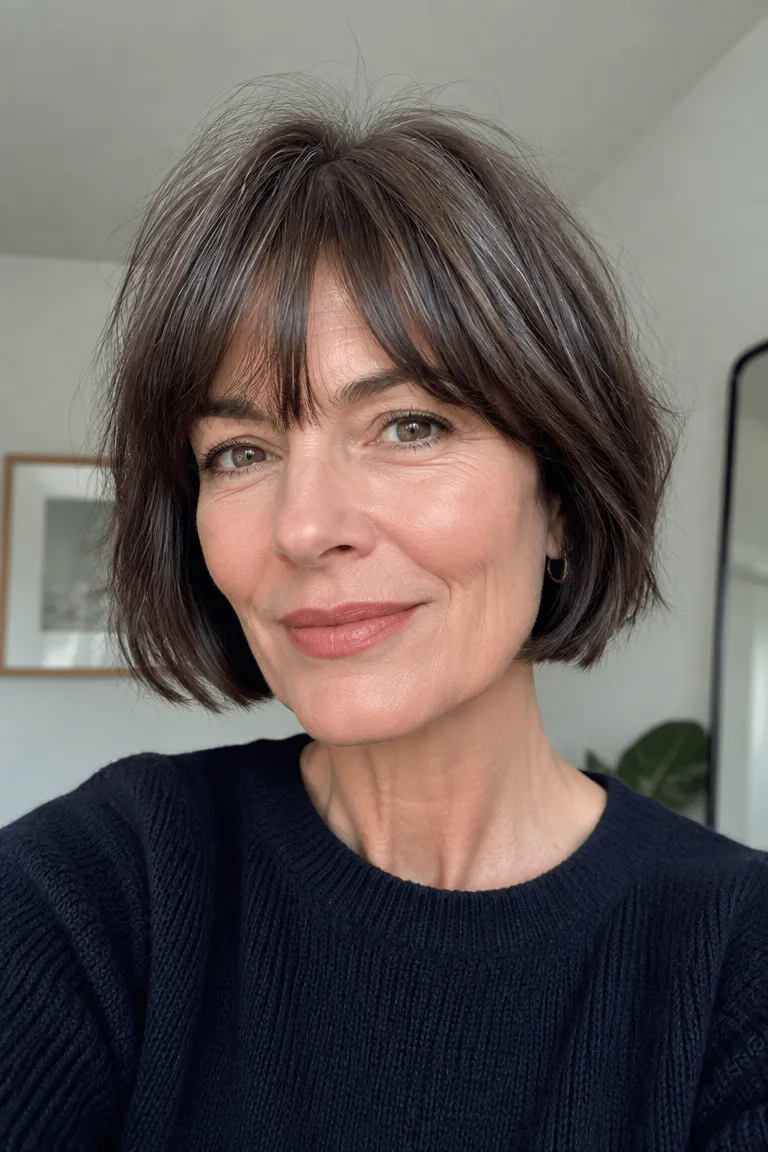
A French bob sits shorter, usually near the jaw or just above it, so it puts the focus on the face instead of length. That shorter length helps thin hair look intentional because the ends don’t taper out over a long distance.
A soft fringe or side sweep can help this cut read fuller around the front, especially if the hairline is sparse near the temples. Keep the ends blunt rather than wispy, since a soft perimeter can make fine hair look lighter than you want.
This option is especially useful if you want less styling time on busy mornings. It usually needs only a quick blow-dry or air-dry with a small amount of smoothing product to keep the outline tidy.
5. Side-Part Bob
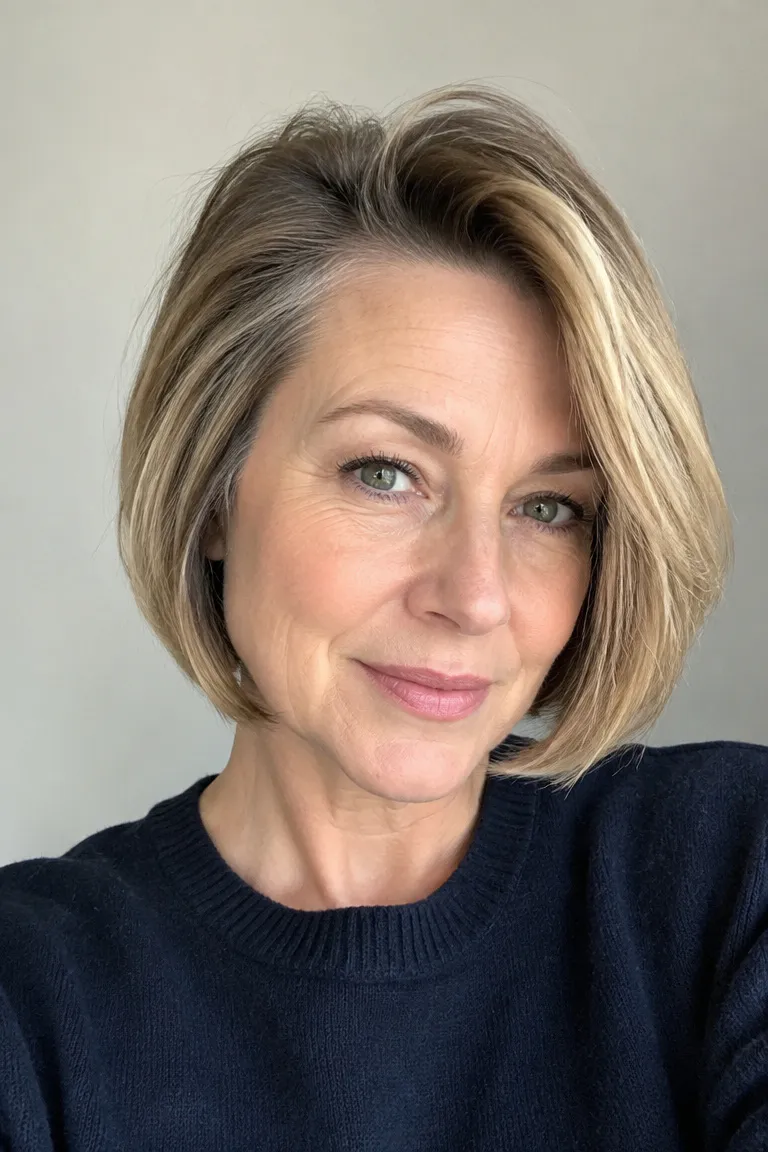
A side-part bob changes the look of thin hair without changing the cut itself. Shifting the part gives one side more lift at the root, which can make the crown look thicker right away.
This is one of the easiest ways to get more fullness on days when your hair dries flat. It works best if your bob already has a strong shape, since the part boost shows more clearly on a solid cut than on one that’s overly layered.
- Choose a deeper part if the scalp shows at the center part.
- Use this on second-day hair when roots need a quick reset.
- Keep the part near the arch of the brow if your face shape looks best with balance rather than height.
6. Soft Layered Bob
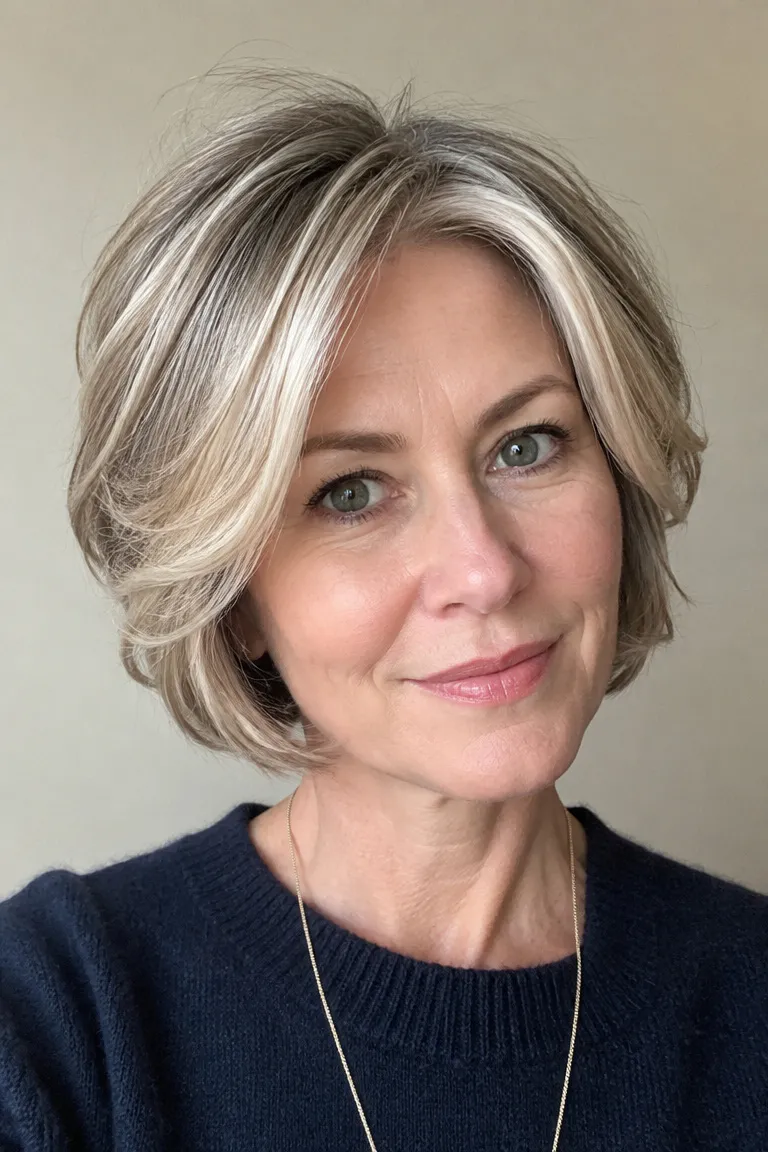
A soft layered bob adds movement without removing too much bulk from the ends. The layers should be light and controlled, placed to support the shape rather than break the outline into pieces.
This cut works well for straight or softly wavy hair that looks heavy at the bottom but flat at the crown. It’s less risky than strong layers on thin hair because it keeps enough weight in the perimeter to read as full.
If you want a similar balance of shape and density, the cuts in voluminous bob haircuts for women over 50 with thin fine hair show how small changes in layering can change the outline without over-thinning the hair.
7. Textured Bob
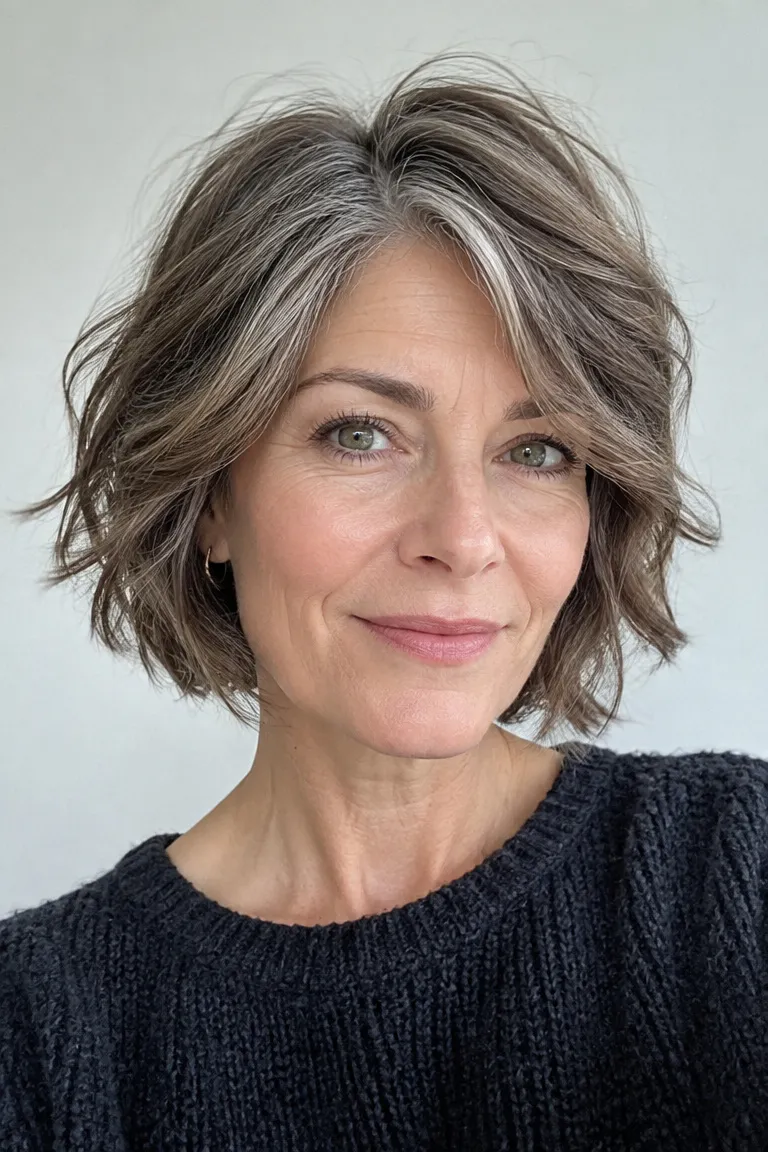
A textured bob gives the ends a little separation, which can keep fine hair from looking like one solid block. The trick is to keep the texture light enough that the perimeter still looks full from a few feet away.
This shape suits hair that air-dries with a slight wave or bends easily with a bit of mousse or cream. If the hair is very sparse, too much choppy texturizing can expose the ends and make the cut look thinner than a cleaner bob would.
Comfort check: If your scalp feels sensitive, ask for soft texturizing rather than heavy razor cutting. You want movement at the ends, not a cut that feels airy all the way through the crown.
8. Curved Under Bob
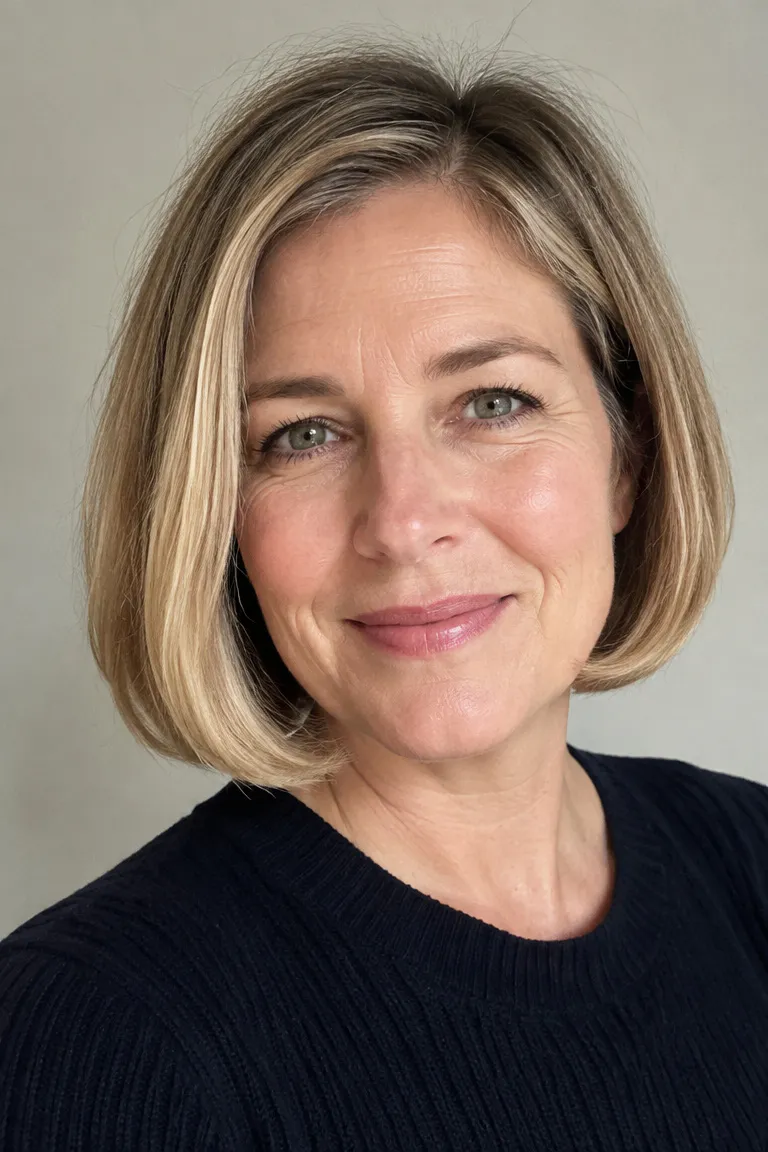
A curved-under bob creates a rounded finish at the bottom, so thin hair looks denser along the outline. The ends tuck in slightly, which gives the haircut a controlled shape from the front and side.
This is a strong choice if you prefer a smoother look over a piecey one. It also suits hair that doesn’t hold big volume well, because the curve comes from the cut itself instead of from daily styling.
Ask for the ends to be shaped to turn under naturally, not curled hard under with heat every morning. That keeps the haircut easier to wear and avoids a puffy finish around the chin.
9. Jawline Bob
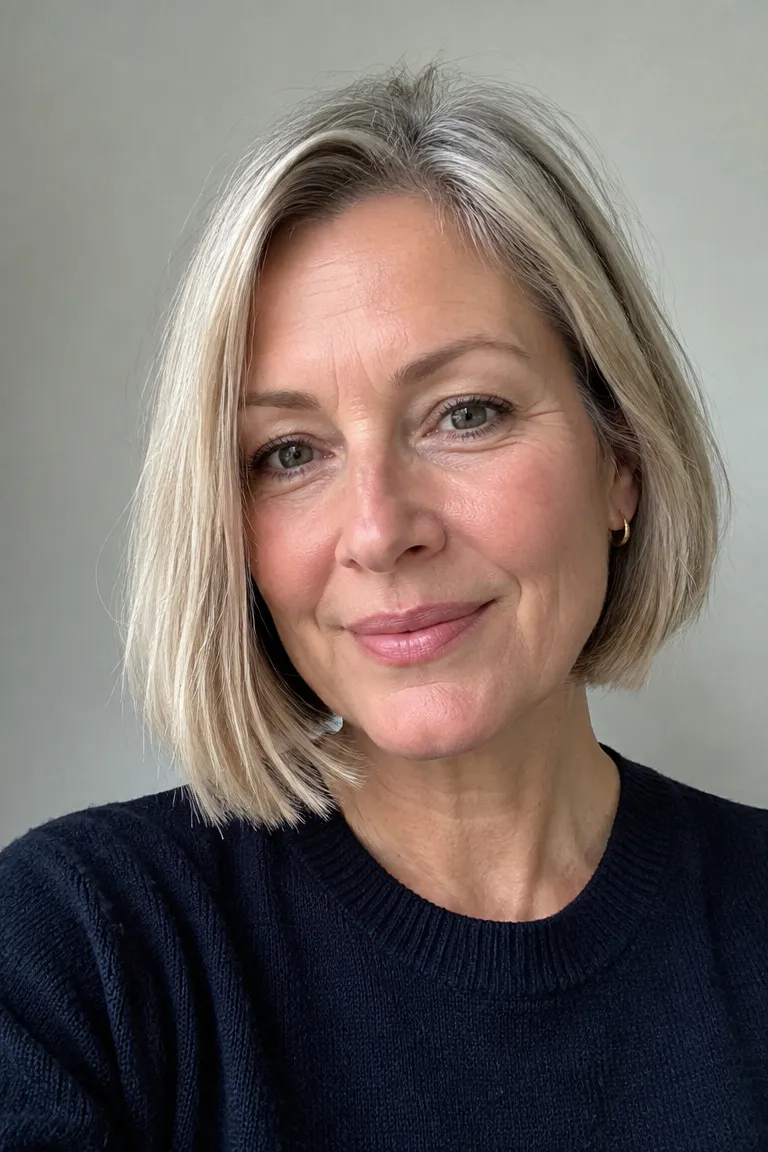
A jawline bob gives the face a clear frame and keeps the cut compact, which can help thin hair look deliberate instead of stretched out. The shorter length also keeps the ends closer together, so the perimeter reads fuller.
This length is useful if the crown is a little sparse, because it doesn’t drag attention downward. It works best when the line lands right at the jaw or just below it; too long and the thin ends start to show more clearly.
For readers deciding between a shorter bob and a crop, a jawline cut usually offers more face framing while still staying easy to tuck behind the ears when needed.
10. Bob With Side Fringe
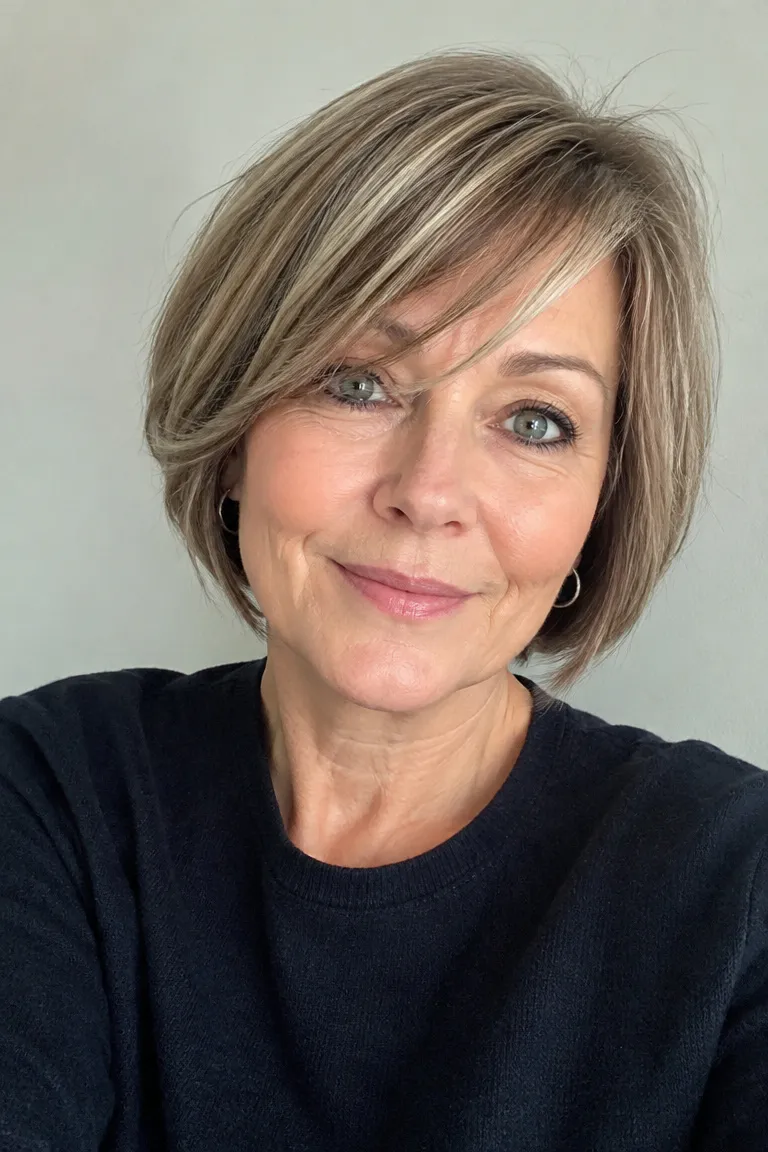
A side fringe adds softness at the front without the heavy look of a full bang. It can blend into the bob and put more visual weight where thin hair often needs it most, especially near the forehead and temples.
This works better than a blunt fringe if your hairline is uneven or your hair grows in different directions. The side sweep also grows out more smoothly, so you can go longer between shape-up trims.
If you want more face-framing options beyond a fringe, short hairstyles for women over 50 that make fine hair look thicker includes shorter shapes that use the front pieces to create the same fuller effect.
11. Bixie Bob Hybrid
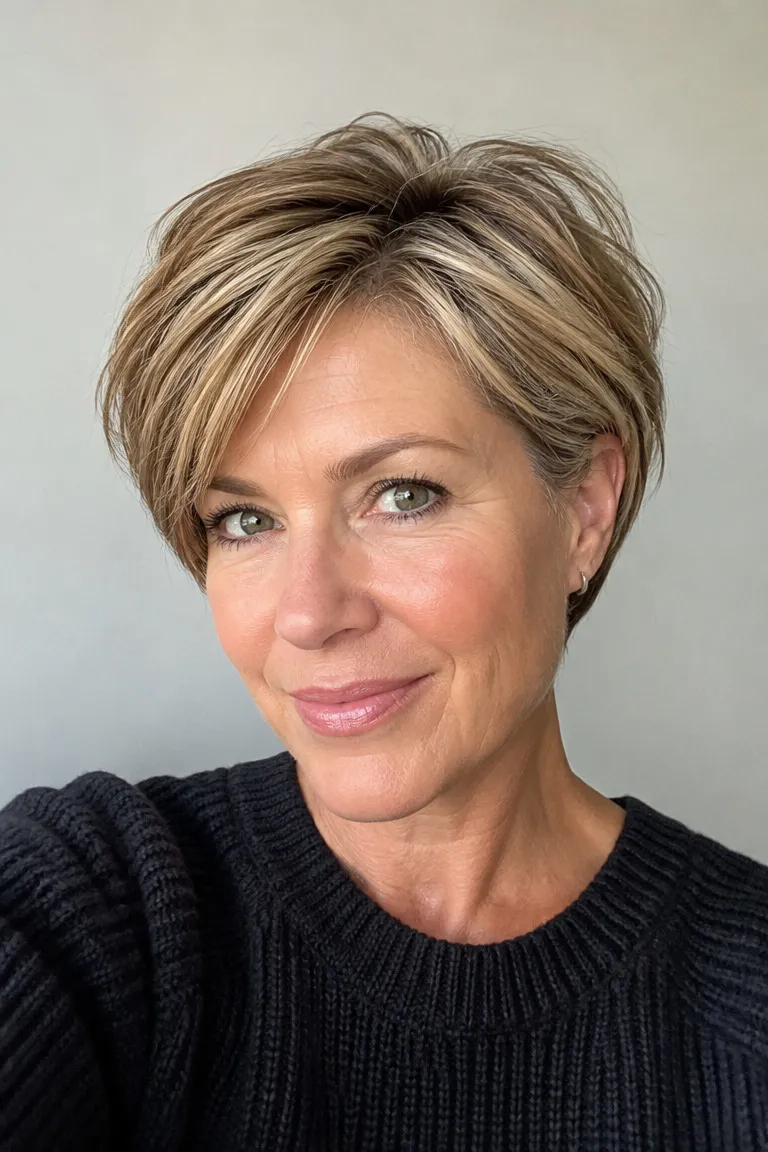
A bixie-bob hybrid mixes bob structure with a shorter, lighter crown, which can help fine hair sit higher at the top. The shape often feels more lifted than a classic bob because the crown is trimmed to support volume instead of length.
This is a better fit if your hair droops quickly and you don’t mind a cut that needs careful shaping. The balance matters here: too much thinning and the style can look airy in a bad way, while enough structure keeps it from collapsing.
It’s a good option for readers who like texture and want a cut that looks finished with a small amount of paste, mousse, or light styling cream rather than a full blowout.
12. Mini Stacked Bob
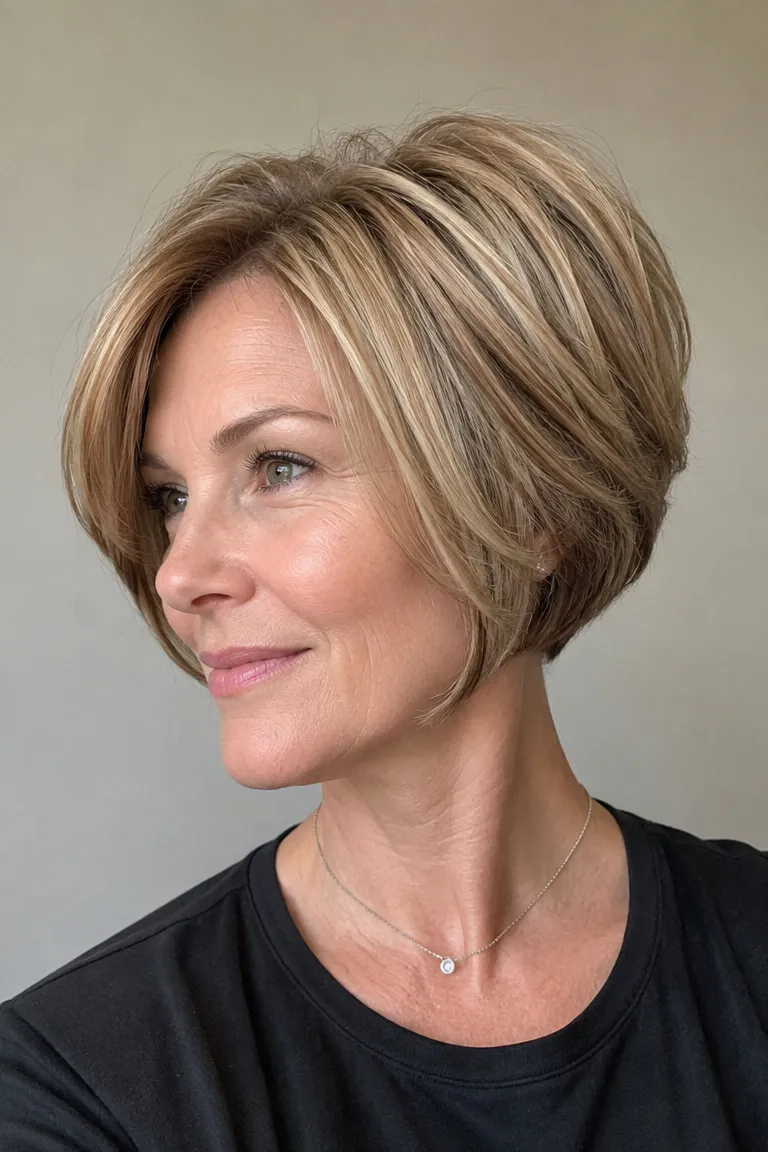
A mini stacked bob keeps the nape short enough to build lift without making the whole cut feel severe. The back gets structure, but the shape stays softer and easier to wear than a more dramatic stacked bob.
This is a smart middle ground if you want fullness but don’t want a cut that exposes too much scalp at the crown or around the neckline. It also tends to feel lighter in warm weather because the nape stays close to the head.
- Ask for a short structured nape with modest graduation.
- Keep the crown full enough that the back doesn’t look too tight.
- Avoid heavy thinning at the ends, which can cancel the stacked shape.
13. Sleek Blunt Bob
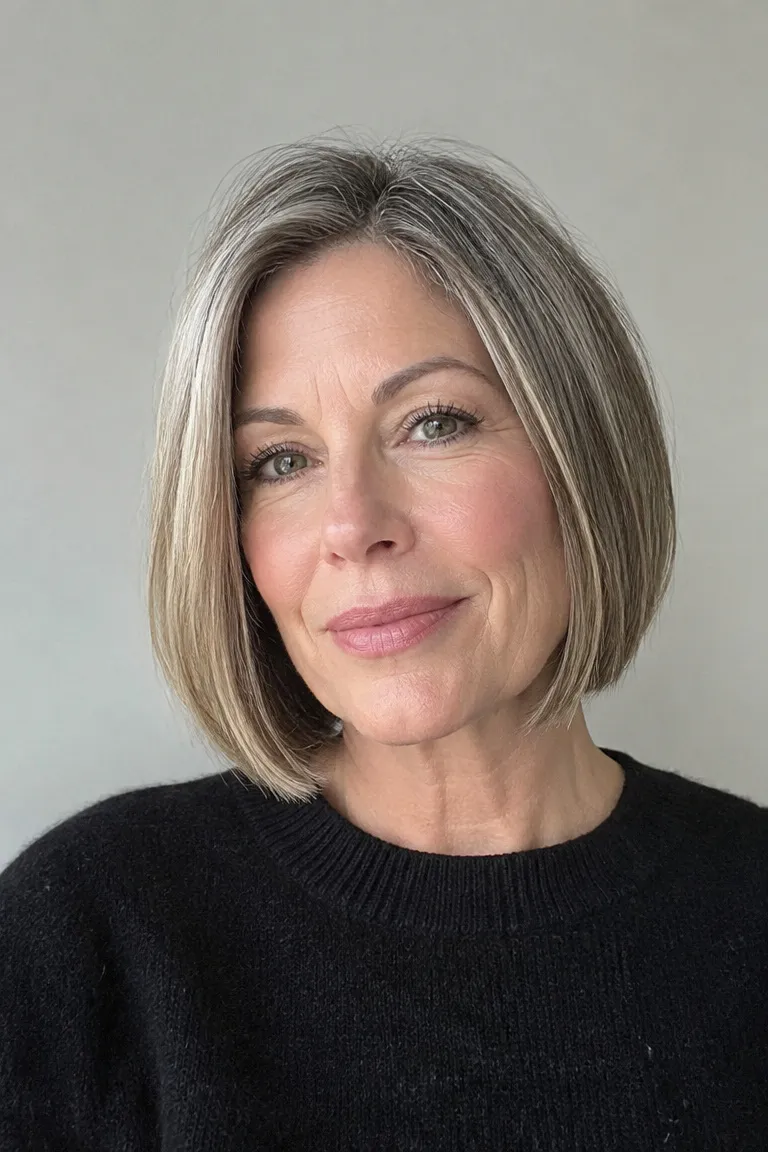
A sleek blunt bob gives thin hair one of the simplest paths to looking fuller. The solid line matters more than heavy styling, and that makes this cut a good choice if you want a clean shape with minimal effort.
Cutting it just below the chin keeps enough length to tuck behind the ears while still holding a compact outline. Minimal interior shaping helps the hair lie smoothly without creating gaps in the perimeter.
Maintenance tip: Ask for a blunt perimeter and skip heavy razoring. If your hair is fine through the ends, too much internal texturing can make the cut look see-through after a few washes.
Choosing the Right Bob
Pick the bob that protects the perimeter first, then decide whether you need lift at the crown or softness around the face. If your hair is very fine, bring one photo with a blunt line and one with your preferred amount of movement so your stylist can match the shape to your density.