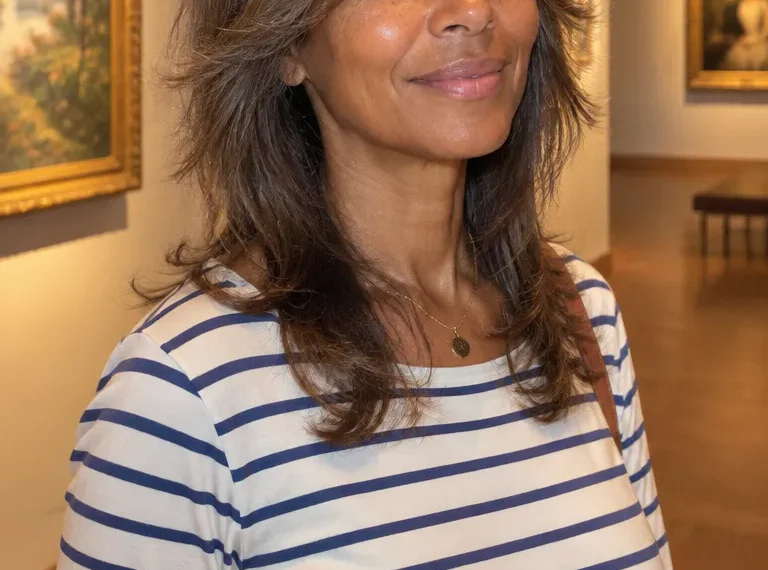
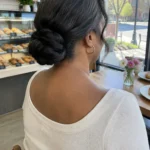
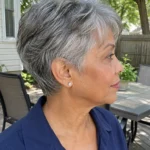
A curly cut can look right wet and wrong dry, because curls spring up as they dry and the layers end up an inch or two higher than planned. Layer placement, more than the name on the cut, decides whether a butterfly or a shag works on your natural curl. Below are 13 cuts matched to curl type, length, and upkeep, each with a line you can say to your stylist.
Use one decision rule to narrow the list. If you want to keep your length, choose a butterfly, which pairs short face-framing layers with long ones. If you want fullness and shape all over, choose a shag, which layers throughout and adds crown volume.
Then check your curl type and how much time you’ll spend on wash day before you book.
1. Long 3C Butterfly Cut

The butterfly cut keeps your length and adds short face-framing layers over long ones. In this version the shortest pieces start at the cheekbone or jaw, while the back still reaches past the shoulders. On 3C curls, those front layers take bulk out around the face and give the curls room to form separate clumps instead of one wide shape.
Shrinkage is the thing to plan for. A front piece that hangs to the cheekbone when stretched can spring up to the cheek or higher once it dries, so have those layers cut a bit longer than where you want them to land.
Ask your stylist: ‘A dry cut on my natural curl, framing layers starting at the cheekbone, and no length removed from the back.’
Upkeep runs medium to higher. The length still needs detangling and shaping on wash day, so skip this cut if you want a wash-and-go with no shaping.
2. Short 4A Curly Shag
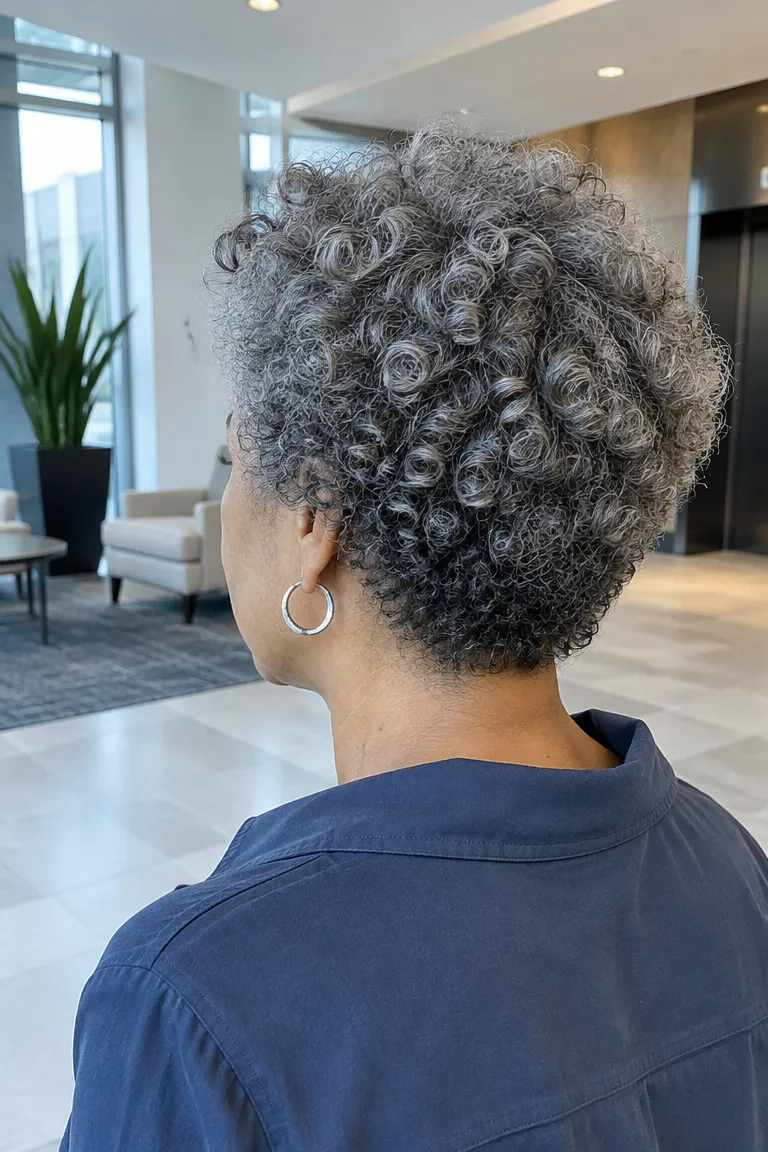
A short 4A shag is built from rounded layers throughout, extra volume at the crown, and tapered sides that keep the outline close at the ears and nape. Tight coils shrink a lot, so the cut works best when it’s shaped dry, coil by coil, and each layer sits where that coil actually falls. Cutting stretched hair can leave uneven bumps once it springs back.
Say it plainly: ‘a rounded shape cut dry, with layers following my coil pattern, not thinned out.’ If your gray coils feel rougher or drier than the rest, ask the stylist to check each section’s pattern before cutting, since texture can differ from the crown to the nape.
Upkeep is low to medium. Finger-shape with a light leave-in on wash day, then fluff with your fingers between washes. Skip it if you want hair long enough for a ponytail.
3. Shoulder 3A Butterfly, No Bangs
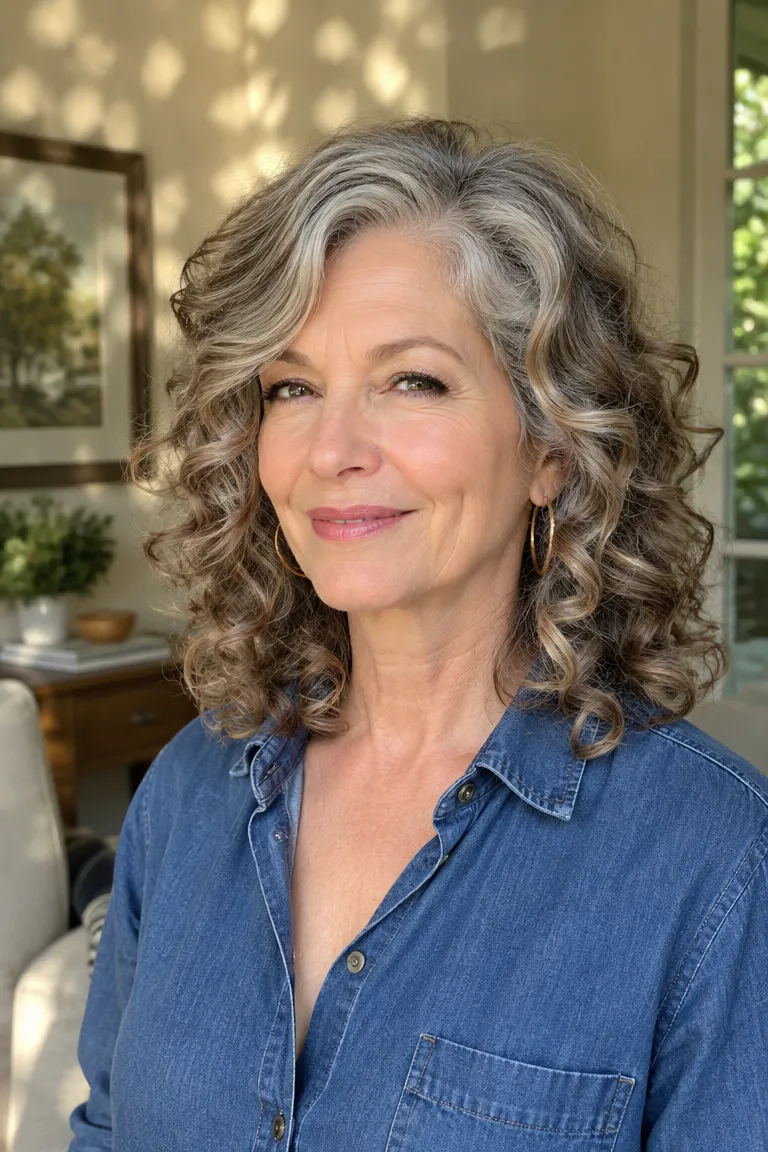
Without bangs, the whole look depends on where the front layers start. On shoulder-length 3A hair they can begin at the cheekbone or lower, and neither is the right answer for everyone.
| Front layers start at | What it does | Better if |
|---|---|---|
| Cheekbone | Adds shape near the cheeks and makes a fuller frame | You want more movement around the face |
| Jaw or chin | Keeps the frame narrower and softer | You want less width at the sides |
Upkeep is medium. Diffuse, or twirl a few front curls around a finger, to keep the loose S-curls grouped. A workable request is ‘front layers starting at the jaw, no bangs, blended into the length.’ If the front section curls differently than the back, say so before the cut starts, or the layers may be planned around the back pattern.
4. Low-Density Curly Shag

Fine or thin ends call for fewer, longer layers and a slightly blunter perimeter on a shoulder-length 3A or 3B shag. Many short layers can make thin curls look sparse at the ends, and a see-through bottom edge is the first thing people notice. Keep the crown layers gentle rather than choppy, so you get lift without pulling density out of the length.
Take this to the chair: ‘longer layers, a fuller bottom edge, and crown volume without removing much density.’ Upkeep is low to medium. Use a light mousse or foam in place of a heavy cream, and skip heavy butters and oils, which can weigh fine curls down.
For more lift ideas built around thin hair, browse voluminous shag haircuts for thin fine hair. If shedding is sudden or heavy, check in with a clinician rather than a stylist.
5. Butterfly With Curly Curtain Bangs

This collarbone-length 3B butterfly adds curtain bangs that part in the center and blend into cheekbone-length framing layers. Shrinkage matters most here: bangs that reach the cheekbone when stretched can finish near the eyebrow once dry. Have them cut dry and left longer than they’ll finish.
The grow-out stage is the real commitment. As the bangs lengthen they can sit awkwardly around the cheekbones, too long to read as bangs and too short to tuck back. A small clip holds them through that phase, and a quick bang trim can shorten it.
Maintenance tip: Wet and reshape the bangs separately on wash day, since they dry differently than the length. Ask whether your salon does short bang trims between full cuts.
Upkeep is higher. Ask for ‘curtain bangs cut dry, longer than they’ll finish, blended into the face frame.’ Skip this cut if you often pull your hair back or have a strong cowlick at the hairline.
6. Chin-Length Curly Shag Bob

A chin-length 3B shag bob has rounded layers, crown volume, and a clean curved outline. That outline is also what shows first when the cut grows out, because shorter shapes tend to lose their edge sooner than longer ones.
The trim schedule matters more here. The right interval depends on your stylist and how fast your hair grows, so ask at the end of the first appointment when to rebook. For a bob that stays softer around the face, see face-framing bob hairstyles for fine curly hair.
Upkeep is medium, with a curl cream and a quick diffuse. Ask for ‘a curly bob with layers cut dry, with the back kept slightly longer than the front.’ Skip it if you want to keep a ponytail option.
7. Wavy-to-Curly Butterfly
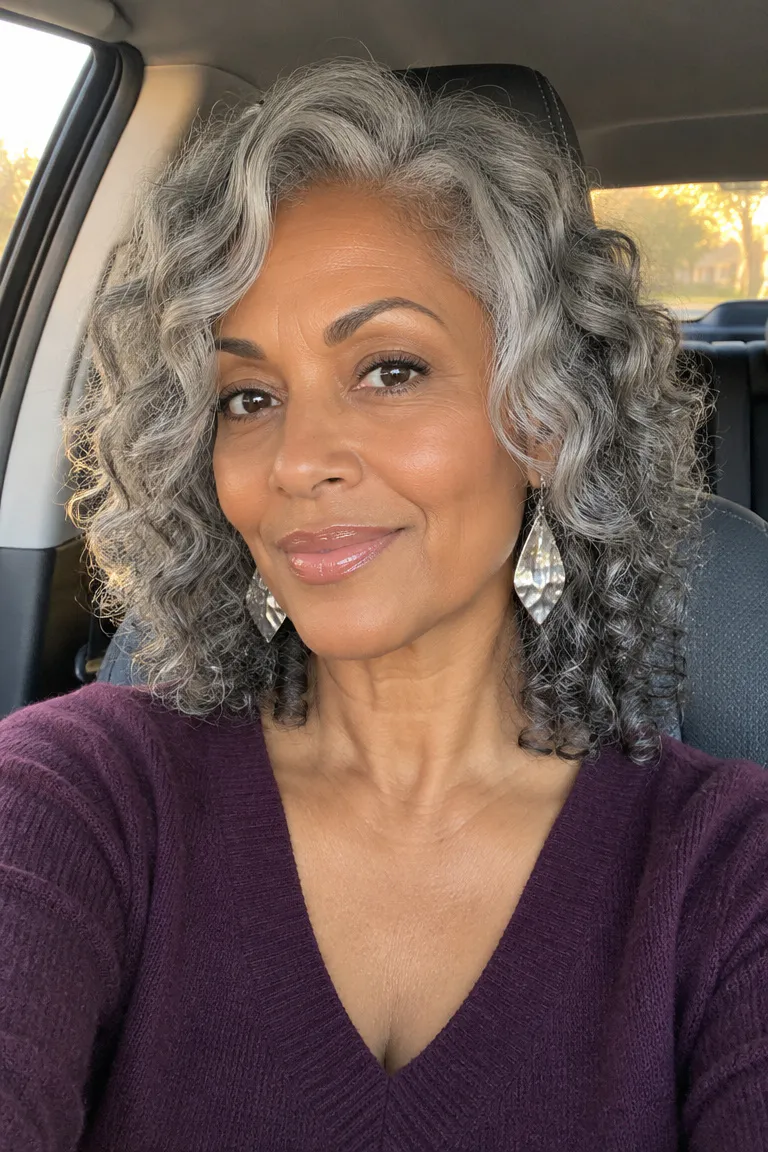
Curl pattern can shift with age, so you might have waves at the front, 2C to 3A curls at the crown, and tighter spirals at the nape. This shoulder-length butterfly is cut for that mix. The layers follow each section instead of one average, so the looser front isn’t forced to behave like the tight back.
Ask the stylist to look at your dry hair in this order:
- Front: see how the hairline section curls and dries, and whether it’s closer to a wave.
- Crown: check the 2C to 3A zone, since this is where volume will sit.
- Nape: look at the tighter spirals, and don’t assume your old pattern still applies.
The request: ‘cut dry, with the layers placed by where each section curls.’ Keep layering light in the looser front, since heavy layers there can leave it flat. Upkeep is medium: diffuse, then scrunch the looser sections.
8. Long 3B Curly Shag
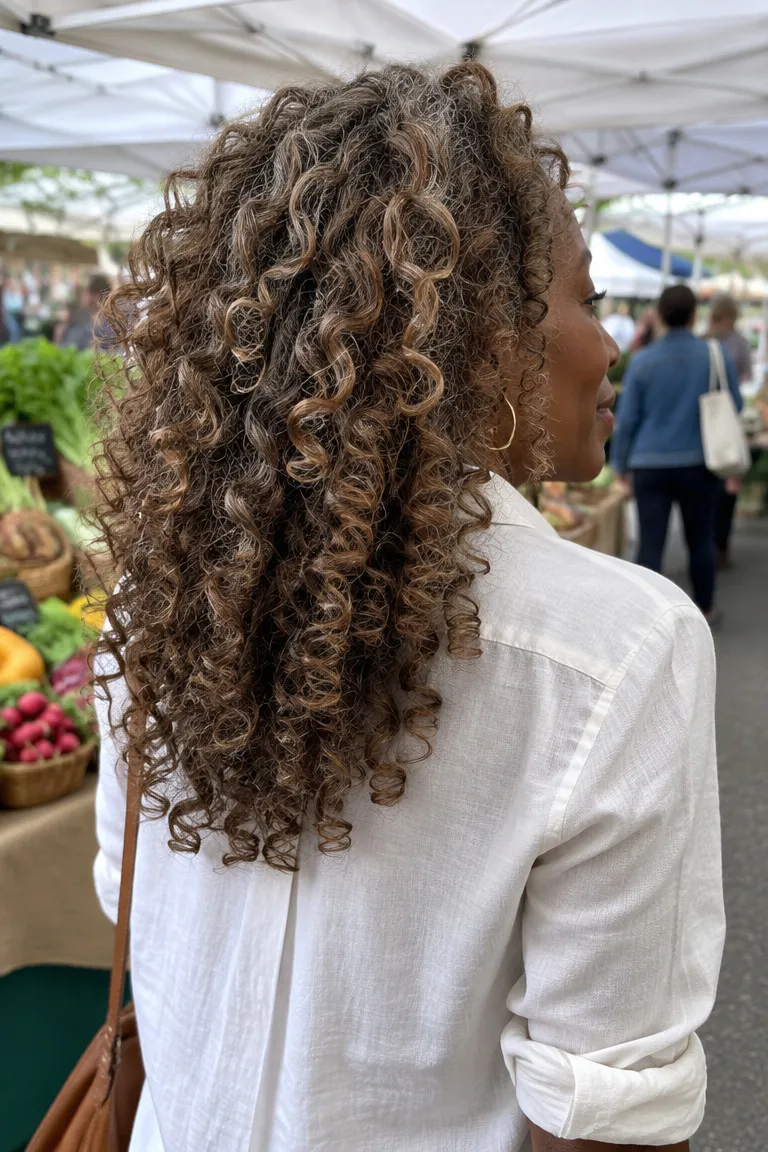
Long shag layers past the shoulders, rounded to follow 3B spirals, tend to hold their shape on humid days or when you skip a diffuse day. The curls stay stacked instead of dropping into one length. The cut still needs refreshing, so mist with water and scrunch the crown.
The trade-off shows up when you wear your hair up. Shorter layers near the crown may not reach a ponytail, so plan on a claw clip, a headband, or a half-up style. If pulling it all back matters to you, say so before the first snip.
Upkeep is medium. Ask for ‘long layers cut dry, enough length at the crown to pull back.’ If your hair feels rough or dry, deep-condition more often and trim ends as your stylist advises.
9. Dense 3C Butterfly Layers
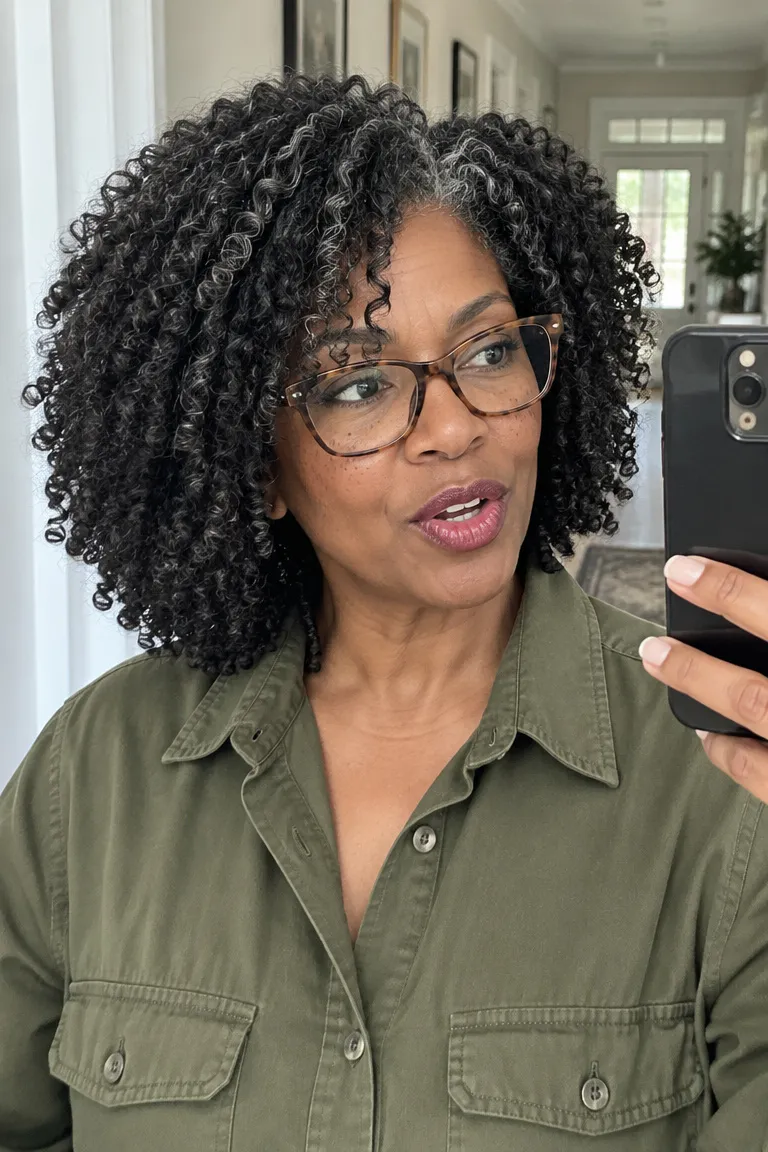
Dense 3C or 4A curls can turn a below-shoulder butterfly wide fast. The fix is layer placement, not thinning shears. Over-thinning can cause frizz or a triangle shape, because shortened strands stick out of the clumps and the weight settles at the bottom.
Say it this way: ‘remove bulk through layer placement, not thinning shears.’ Framing layers start at the chin to keep width balanced. Upkeep is medium to higher, so detangle in sections with plenty of conditioner.
Skip this cut if you want drastically lighter weight. A shorter shape may handle that better, like these short bob haircuts for Black women with gray hair.
10. Curly Wolf Cut Shag
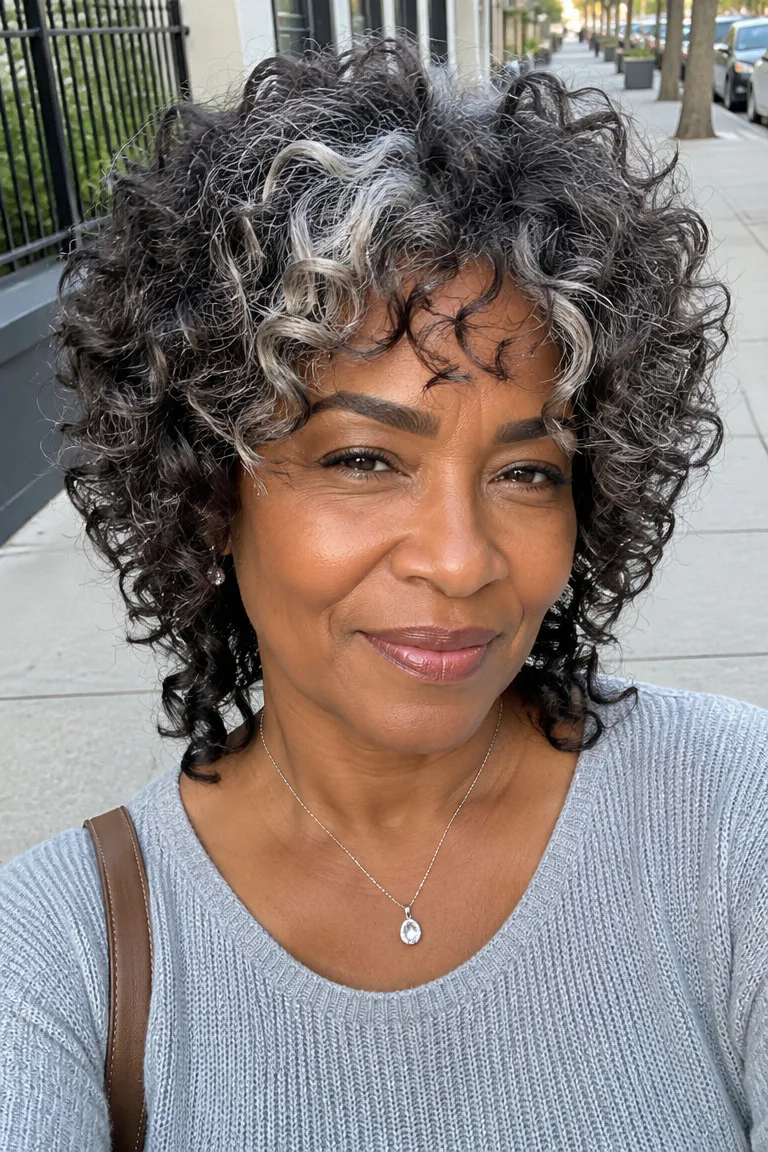
The curly wolf cut is a shag-mullet, and it’s a bolder shape than anything else here. On shoulder-length 3B or 3C hair it has shorter crown layers and a longer, wispy nape, with curls stacking up in the back. The nape layers are the main feature, so spend the most consultation time on them.
Comfort check: A longer back sits on the neck and may feel warm. Ask how short to take the sides and how much length to leave at the nape.
Upkeep is higher, because regular trims keep the shape from growing into a plain layered cut. Ask for ‘a curly shag-mullet, cut dry, with the nape pattern checked before layering.’ Skip it if you like a uniform length.
11. Curly Shag With Bangs
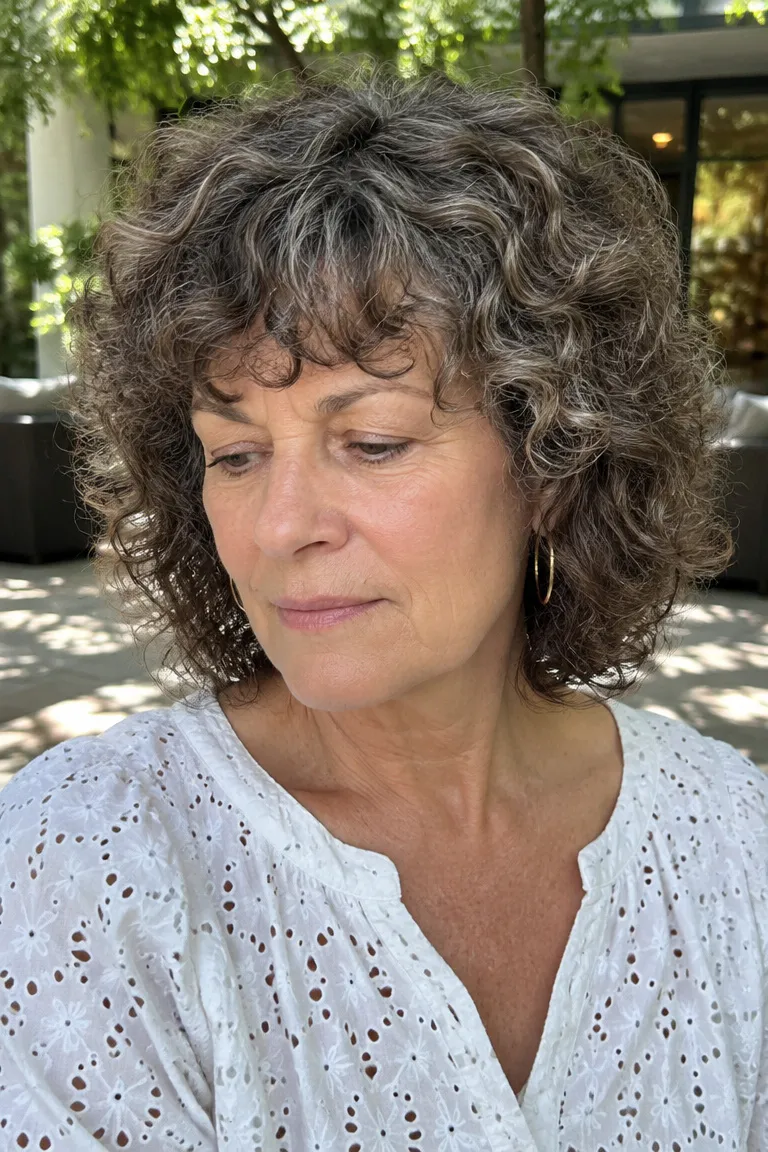
This chin-to-shoulder 3A/3B shag has short curly bangs that curve into the side layers. The bangs end around the brow, and because curls shrink, they should be cut dry with extra length left. Ask for ‘short curly bangs cut dry, leave extra length for shrinkage.’
Glasses are a question for the stylist, not a promise. Wear your frames to the consultation and ask how the bangs and side layers will sit against them, especially near the temples. Upkeep is higher because the bangs need refreshing, so skip this cut if you dislike hair near your eyes.
12. Gray Curly Shag, No Bangs
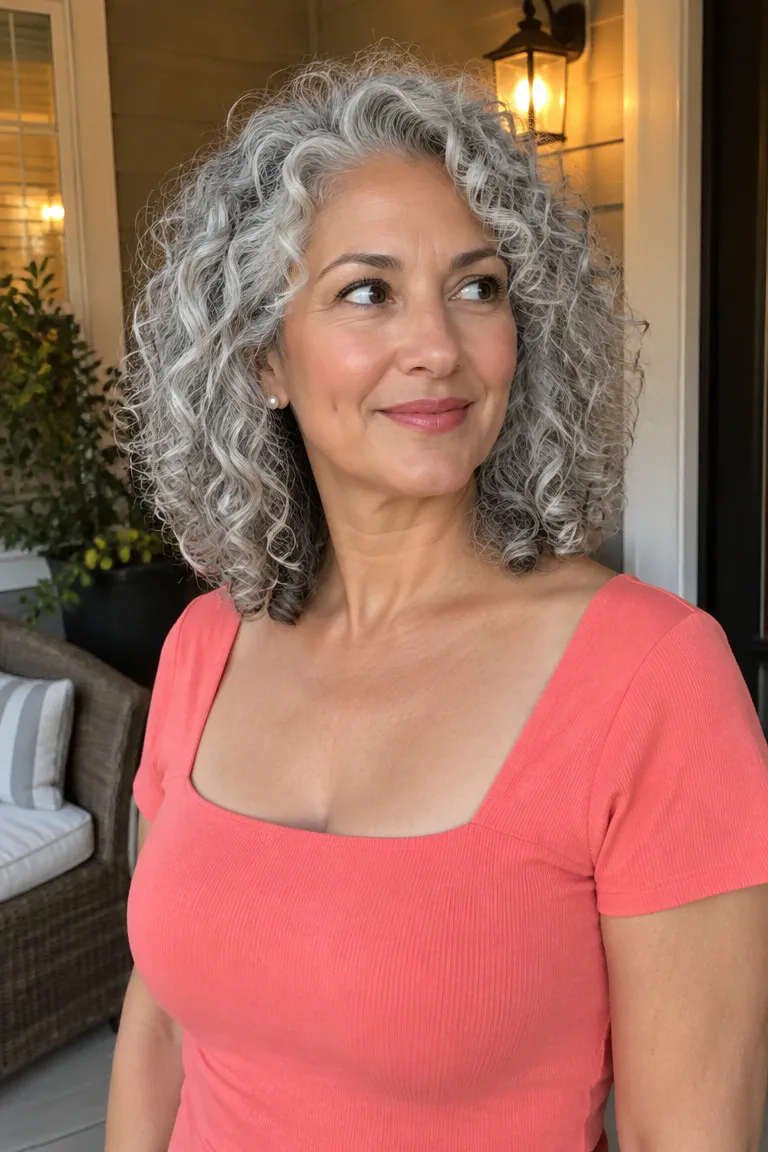
Naturally gray 3A/3B curls often change texture from section to section, and they tend to run drier and more frizz-prone. This shoulder-length shag follows that: ask for ‘layers that follow each section’s curl, no bangs.’ Care comes down to a few product categories:
- Cleansing: a sulfate-free shampoo.
- Conditioning: a regular deep conditioner.
- Clarifying: occasionally, for buildup or hard water.
- Sun protection: a hat or a leave-in with a UV filter.
Avoid heavy oils, waxes, and butters, which can dull shine on gray. Upkeep is medium. If your curls are fine, skip heavy styling products altogether.
13. Chin-Length 3A Butterfly

A chin-length 3A butterfly has framing layers that start at the cheekbone and length that stops at the chin. Butterfly cuts tend to work best at shoulder length or longer, so at this length the cut leans toward a shag.
That also shows the difference between the two. A butterfly keeps length and adds shorter face-framing layers, while a shag layers throughout and builds more crown volume. At chin length the cheekbone layers read as part of the overall shape.
Upkeep is medium. Ask for ‘a short butterfly with the front layers starting at the cheekbone, not thinned.’ Skip it if you want to keep length.
Salon Prep and Curl Care
Book a dry cut and arrive with your curls in their natural state, plus a photo of how they look when they dry. Ask the stylist to check each section’s pattern before cutting, and ask how long to wait before your next trim. At home, keep a light leave-in for wash day and a deep conditioner for dry or rough sections.