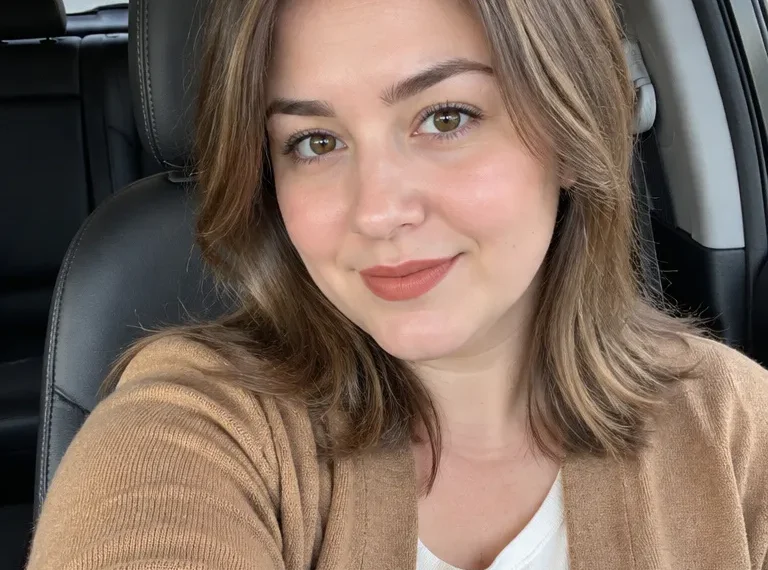
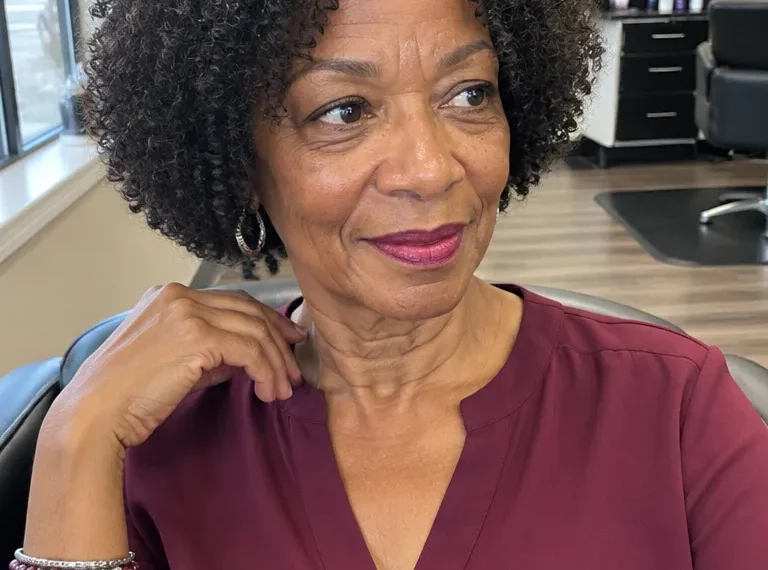
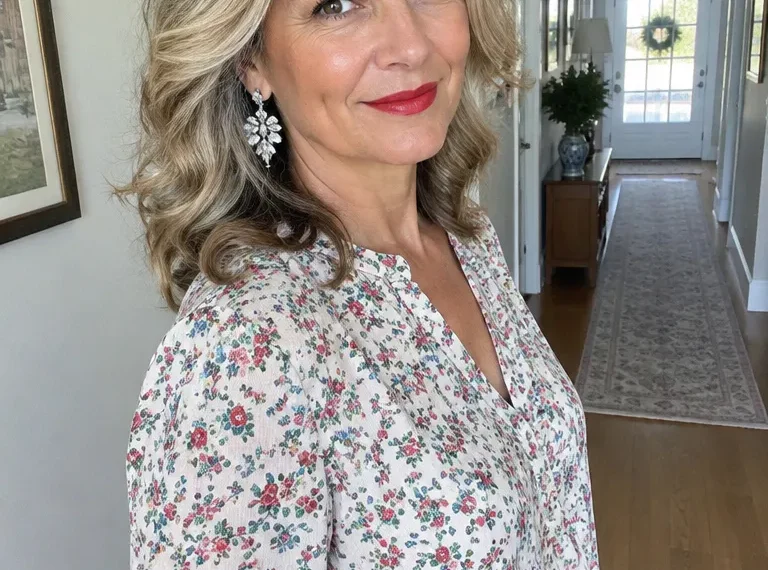
If you part your hair and see scalp at the crown, a single dramatic cut usually isn’t the fix. Three changes do most of the work: move the part off its old line, use a lightweight root-lift product instead of heavy cream, and keep the ends dense so the top looks like part of a full shape.
The twelve options below run from salon cuts to no-cut fixes you can try this morning, each with the hair type it suits and what to say in the chair. Use this rule to start: if scalp only shows when you part your hair, pick a style from the mild end of the list. If it shows with your hair down and undisturbed, choose a fuller shape like a bob or halo layers.
If the thinning is mostly at the temples, go to the fringe section.
1. Feathered Crown Pixie
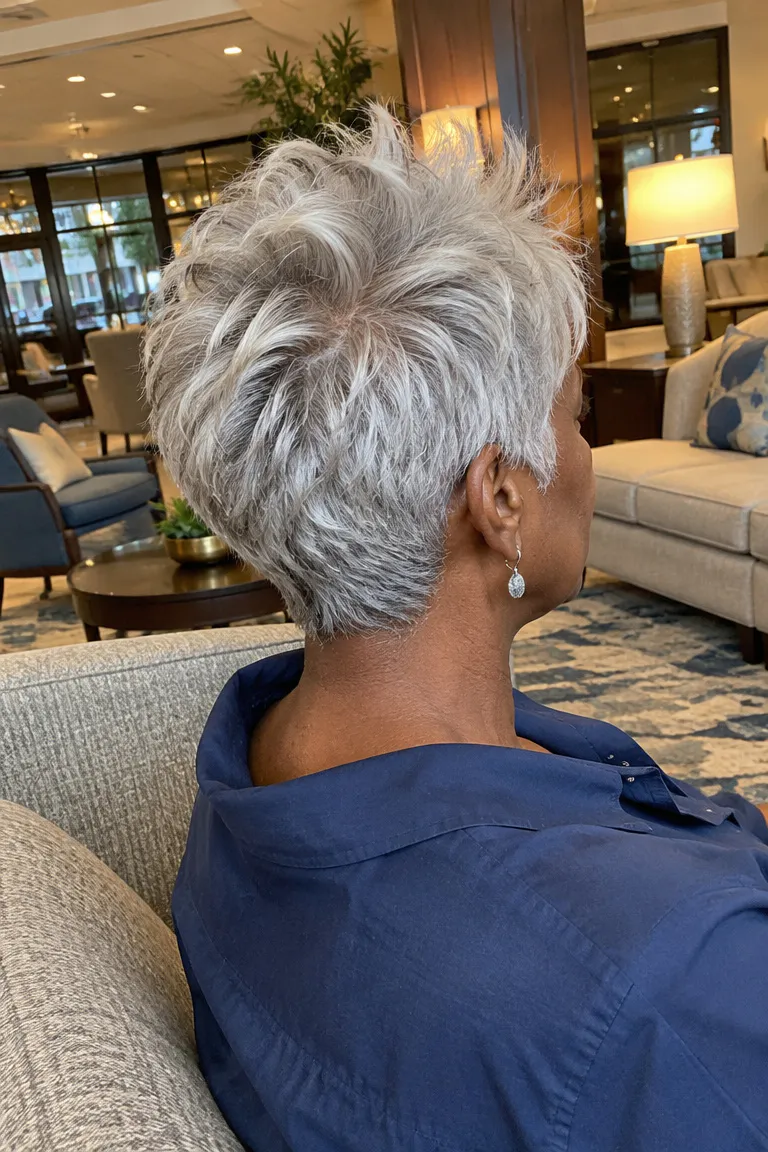
A feathered pixie suits mild to moderate thinning on fine or wavy hair. The longest layers sit on top and are cut to stand up, so the crown gets lift from the cut itself, not just from product. The sides and nape stay tapered close, which keeps the top from looking sparse by comparison.
Style it with a pea-sized amount of light paste or root spray worked in with your fingertips. Heavy wax flattens fine hair and makes the scalp easier to see. Cropped cuts also expose more skin, so run a sunscreen stick along the crown line on sunny days.
The trade-off is upkeep: a pixie loses its shape as the top grows past the layers. Ask the salon how many weeks your cut will hold instead of guessing, and book the next visit before you leave. For more variations, browse these soft pixie cuts for fine hair over 50.
Ask your stylist: "I see scalp at the crown, so please leave the top longer than the sides and add texture there."
2. Choppy Shag Layers
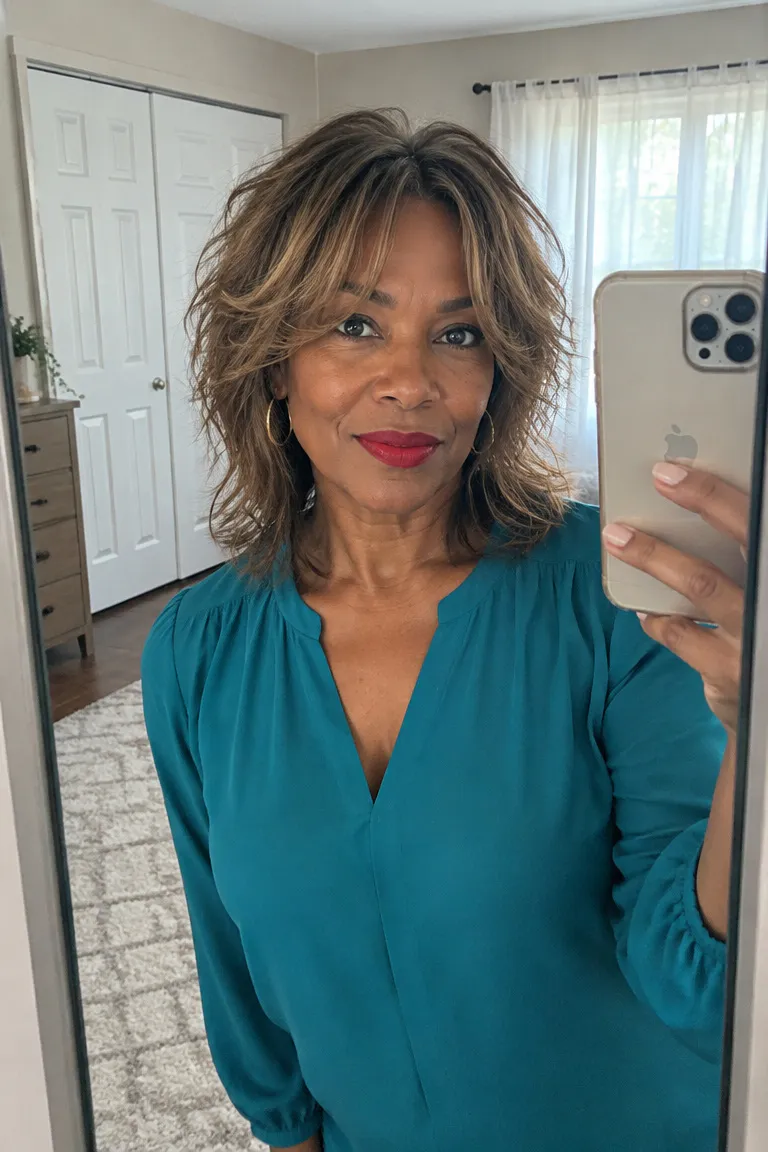
Texture does the hiding here. Short, uneven layers at the crown break up the line where scalp shows, so the area reads as movement instead of a see-through patch. The eye follows the ragged ends rather than the part.
This cut suits fine to medium hair with some natural bend, kept between chin and collarbone length. Daily styling is a rough-dry with your fingers and a light mousse at the roots, roughly five to ten minutes (approximate). If your hair is very straight and very fine, ask for the layers to stay longer so the ends don’t turn wispy.
Maintenance tip: Shags grow out unevenly, and the short layers go limp before the length does. Book a shape-up when the crown pieces stop lifting, not when the whole cut looks overgrown.
3. Blunt Bob Above Shoulder
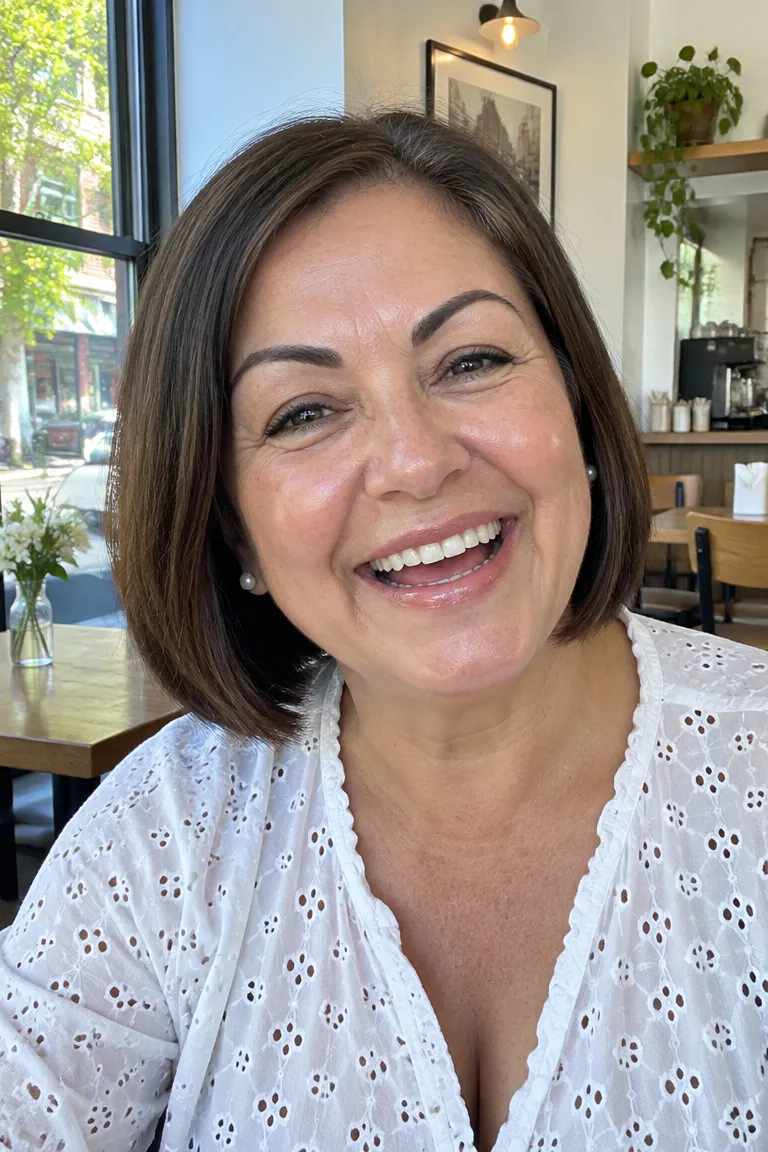
A one-length edge at the chin or just above the shoulder makes the whole shape look thicker, even when the crown is thin. The dense hem pulls attention to the perimeter, where the hair looks its fullest. Straight hair can air-dry smooth in this cut, so a flat iron is a choice, not a requirement.
Fine hair can’t spare much bulk, so tell your stylist what to leave out:
- No thinning shears and no texturizing razor along the ends.
- Hidden long layers only if the hem stays heavy.
- A clean, blunt line cut dry or damp, not feathered.
The edge softens quickly, and long gaps between trims make thin hair look thinner. Ask for a trim schedule at the first visit. If you’re comparing lengths, these short bob cuts for thin hair over 50 show how far the hem can go.
4. Beveled Bob With Height
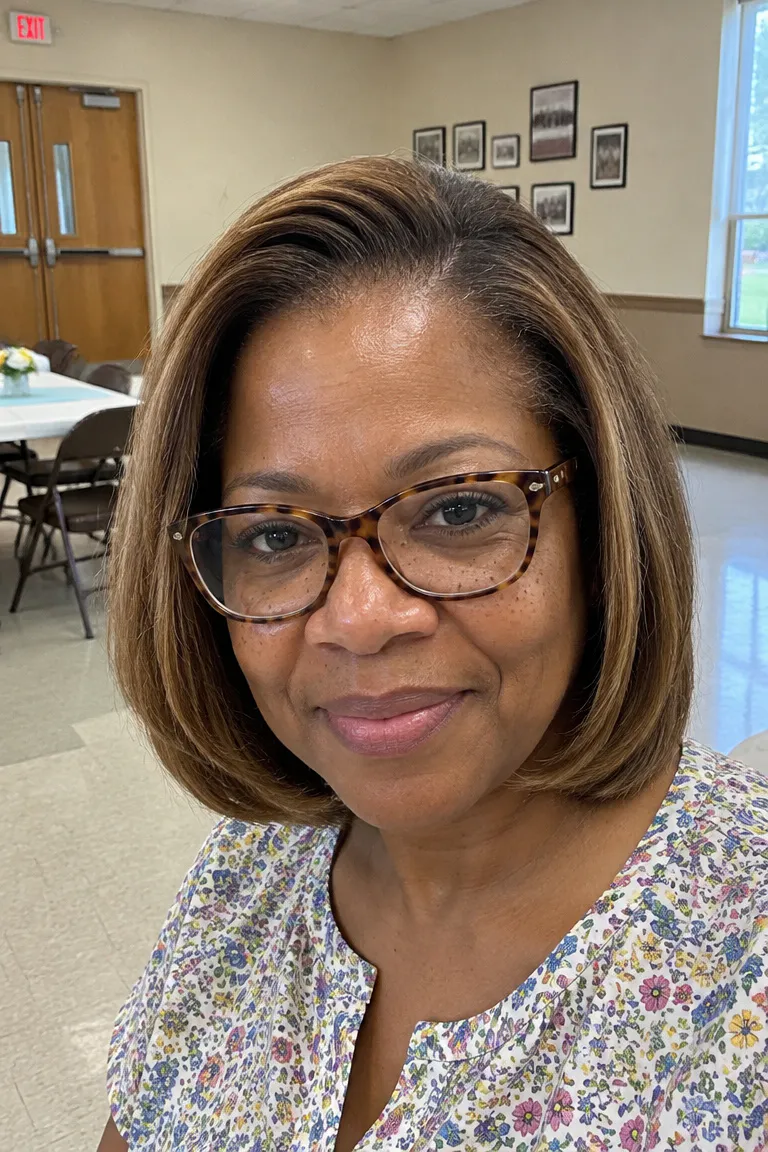
In a beveled bob, the back is cut slightly shorter and the ends curve under, which pushes shape up toward the crown. It works on straight or slightly wavy hair and gives the most lift at jaw or chin length. Any longer and the curve loses its height.
The height comes from the blow-dry. Dry the roots upward first with a round brush, then turn the ends under last. Plan on about ten minutes (approximate), which makes this a better fit than the blunt bob if you don’t mind brush time.
Ask your stylist: "I’d like a rounded shape with the weight kept at the ends and height built at the crown."
5. Layered Lob With Soft Part

This is the option for keeping some length. Cut it to graze the collarbone, with soft layers starting around the cheekbones and a relaxed side part. Those face-framing pieces pull the eye toward your features and away from the crown.
It suits straight to wavy hair with mild to moderate thinning.
Color matters as much as the cut. Going a shade darker every year to cover gray raises the contrast against your scalp, which makes thin spots easier to see. Ask the colorist for a tone closer to your scalp color, with soft blended lowlights or highlights instead of one dark solid shade.
Some colorists favor platinum for very fine hair because it narrows that contrast. Treat that as a preference, not a rule, and look at your own part line in daylight before deciding.
6. Diffused Curls and Waves
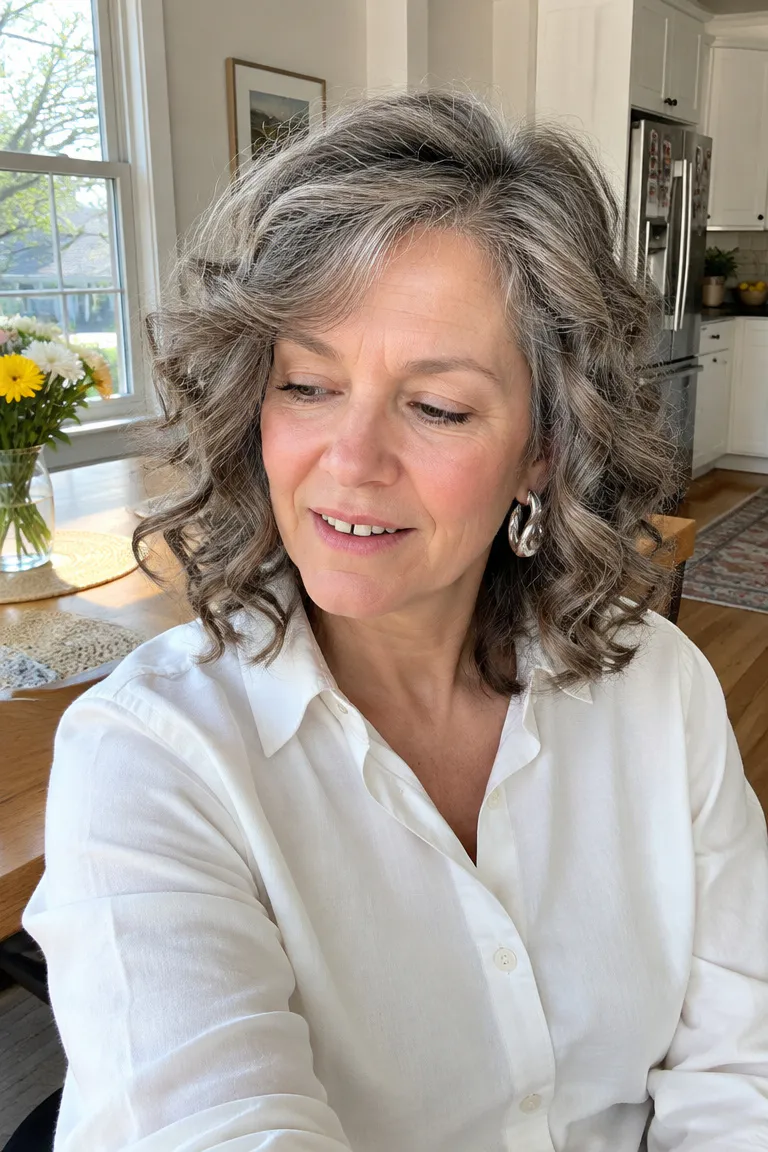
Natural curl or wave breaks up the part line and fills the crown visually. The routine is short:
- Work a lightweight mousse into damp roots.
- Scrunch the lengths upward.
- Diffuse on low heat with your head tipped to one side so the roots lift.
Hair often changes with hormones, and products made for younger, oilier hair can leave it flat or dry. Choose light formulas, and keep heavy creams away from the crown.
Curls need shape built into the cut. Ask for a dry cut or curl-aware layering that keeps the weight at the ends, so the top doesn’t collapse once the curls dry.
Comfort check: Don’t brush wet hair hard. Use your fingers or a wide-tooth comb, working from the ends up.
7. Long Hair With Halo Layers
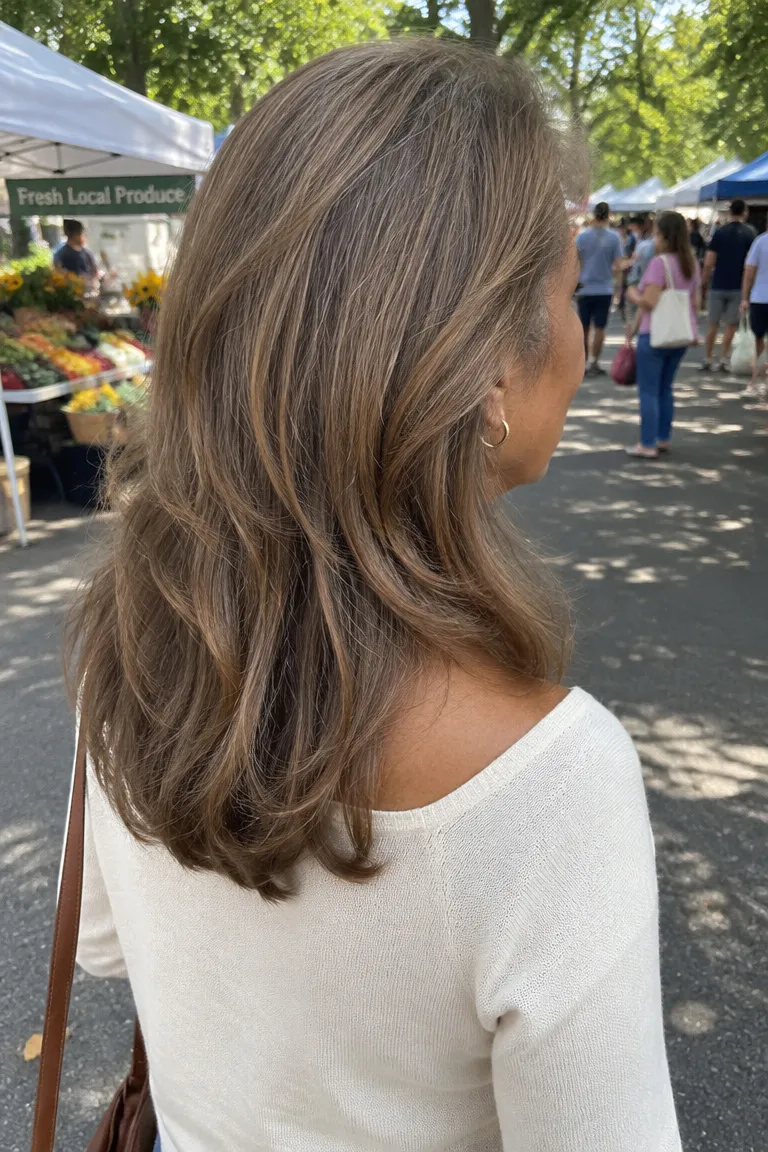
Stylists disagree on long hair. Some recommend invisible internal layers for crown fullness, while others say long wispy layers make thin hair look thinner. Both are right depending on the ends: crown layers help only when the perimeter stays dense.
Halo layers are short layers hidden under the top section, with the bottom edge left blunt. They fit medium-density hair with moderate crown thinning, for readers who don’t want to give up length. Very straight, very fine long hair can show the crown more, so consider a shorter option if that describes yours.
Browse these low-maintenance long styles for thin fine hair to compare.
Ask your stylist: "Please add short internal layers only at the crown and leave the ends full."
8. Curtain Bangs on Layers

Curtain bangs and wispy fringe mainly cover front and temple thinning. They won’t hide the crown, so pair them with a crown strategy such as light layers and root lift. This is a no-big-chop option if you want change near your face.
| Where the thinning shows | Start with |
|---|---|
| Mild crown thinning | Feathered pixie, choppy shag, or a shifted part |
| Noticeable crown thinning | Beveled bob, halo layers, or a fuller blunt shape |
| Front or temple thinning | Curtain bangs or a side-swept fringe |
A fringe cut too thin looks wispy, so ask for it to be cut from the front hair, not borrowed from the crown. Expect quick trims between full haircuts, since fringe falls into the eyes within a few weeks.
9. Shifted Part Placement

A part kept in one place for years leaves a flat line and shows scalp along it. Move it about an inch, or switch to a softer side part.
- Use a rat-tail comb to draw the new part.
- Mist a light volumizing spray at the roots.
- Dry the roots upside down for lift, then flip back.
Skip or adjust: Slicked-back styles and long, straight, flat styles put scalp against dark or light hair in sharp contrast. Slicked-back only works with very mild thinning.
Hair doesn’t reliably protect the scalp from sun, so dab a sunscreen stick or a scalp powder with SPF along the part. A wide-brimmed hat adds cover outdoors, and normal hat wearing isn’t known to cause pattern thinning.
10. Teased Bouffant or French Twist
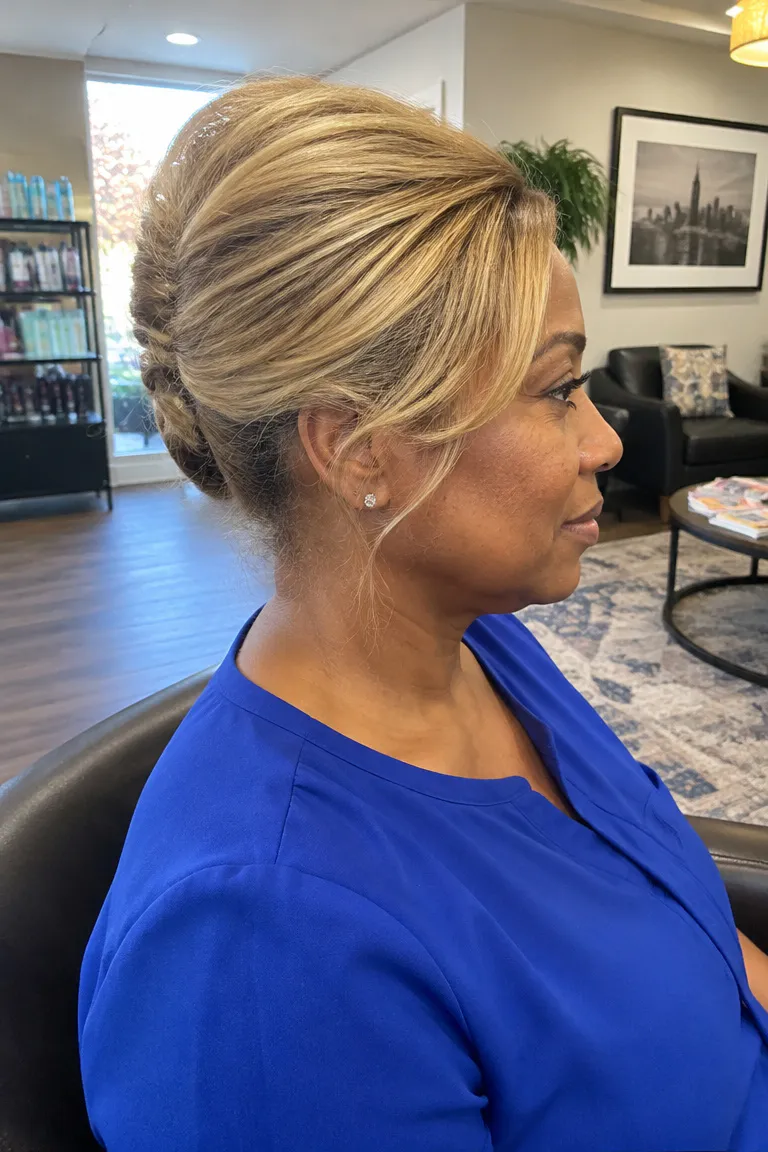
Think of this as height for occasions, not daily wear. A bouffant ponytail, beehive, or French twist with light teasing at the crown adds volume for a wedding, dinner, or photo. It suits medium to long hair with some density at the ends and mild to moderate crown thinning.
Tease only the top section, then smooth the surface layer over it so the base stays hidden. Secure the style loosely with a soft pin or a covered elastic, and finish with light hairspray instead of heavy gel.
Skip tight pulling, heavy clips, and daily high ponytails, which strain the same area you’re trying to protect. Before bed, brush teased hair out gently with a wide-tooth comb, starting at the ends.
11. Loose Low Bun
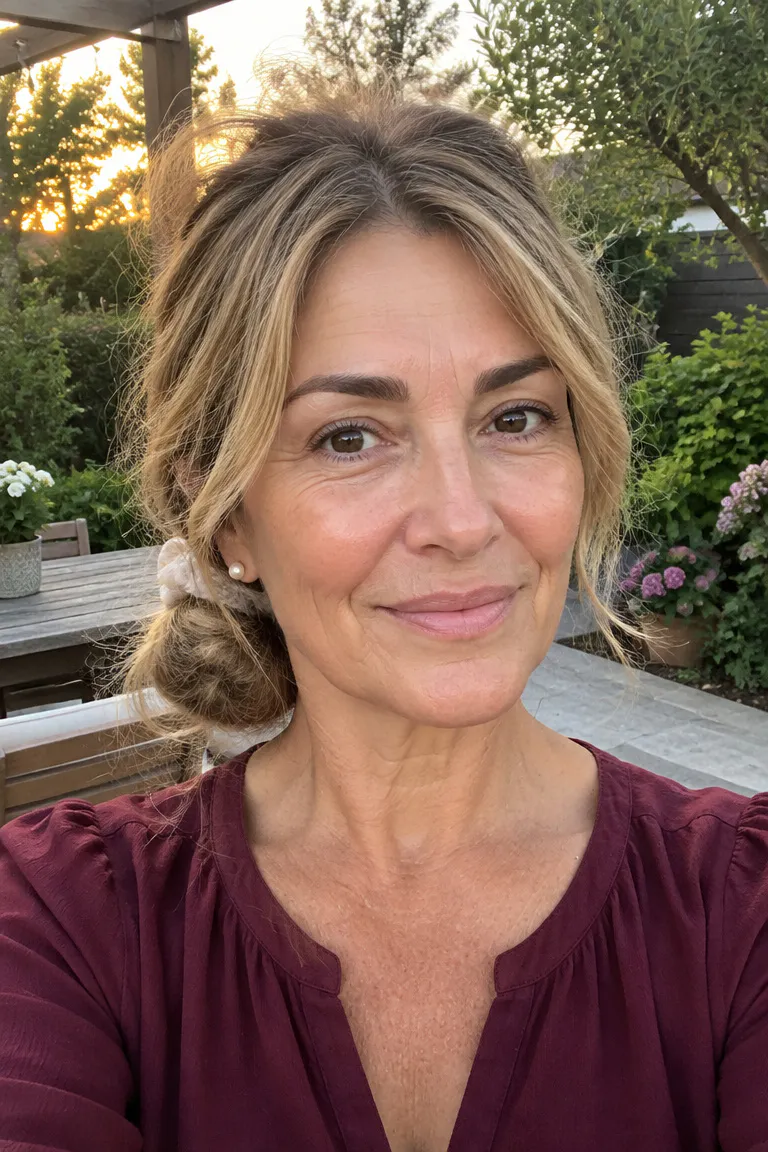
A messy low bun or ballerina-style bun sits below the crown, so it avoids pulling at the thin zone. It needs no cut and takes about five minutes (approximate), and it fits medium to long hair.
- Dry the roots with lift first.
- Make a loose twist and secure it low with a soft scrunchie or claw clip.
- Tug a few pieces at the top to add volume.
If you like hair down, try a half-up version with volume at the top and the lengths left loose.
Comfort check: Rotate where the elastic sits from day to day, and skip any style that leaves a headache or sore spots.
12. Wide Soft Headband Styling
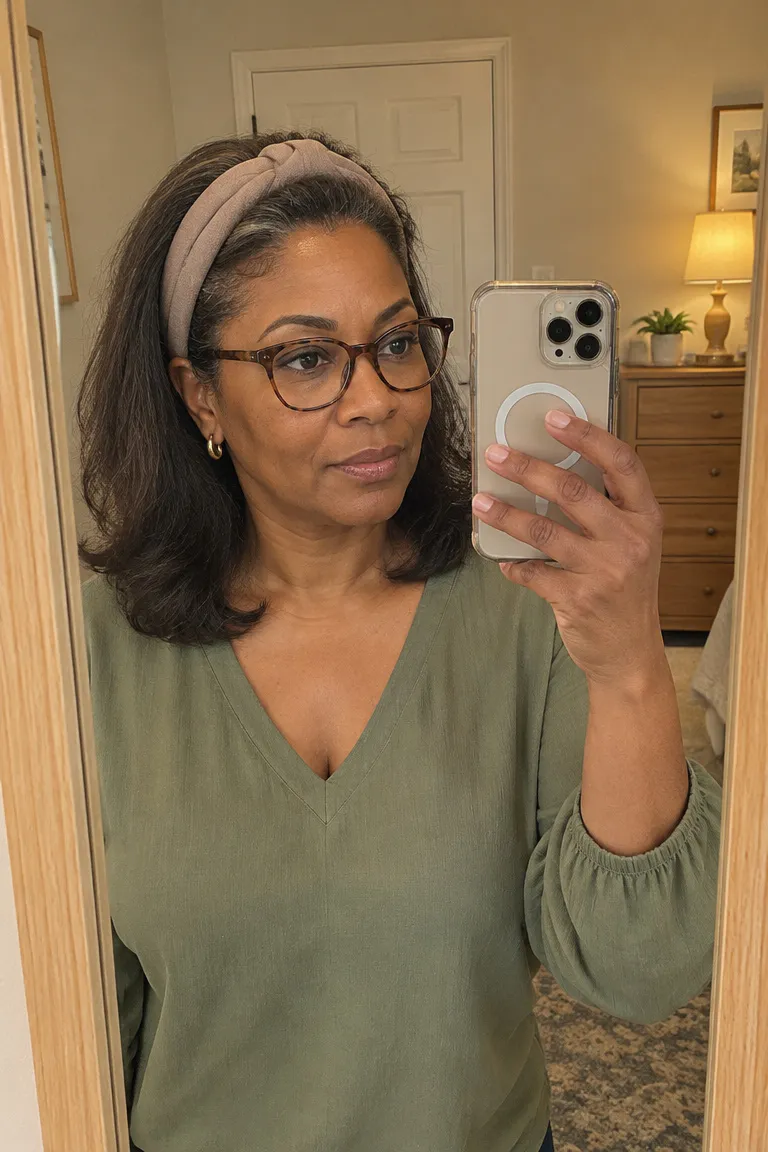
A wide, soft headband or a folded scarf sits across the crown line and adds structure without pulling. Choose padding and a gentle fit over a tight band. Lift the roots first with a light mousse, then push the band slightly back.
It costs the least of anything here and needs no cut. No style regrows hair, though, and some changes deserve a doctor’s visit. See one if you notice:
- Sudden shedding or bald patches.
- A sore or scaly scalp.
- Thinning along with fatigue or other new symptoms.
A blood test can rule out treatable causes. For advanced thinning, toppers exist, and a stylist who works with them can explain the options.
Pick Two Photos Before Your Appointment
Bring two photos to your appointment: one showing the cut from the front and one from the back or top, since the crown is what you’re fixing. Tell the stylist where your scalp shows, and ask how many weeks the shape will hold before the next trim.