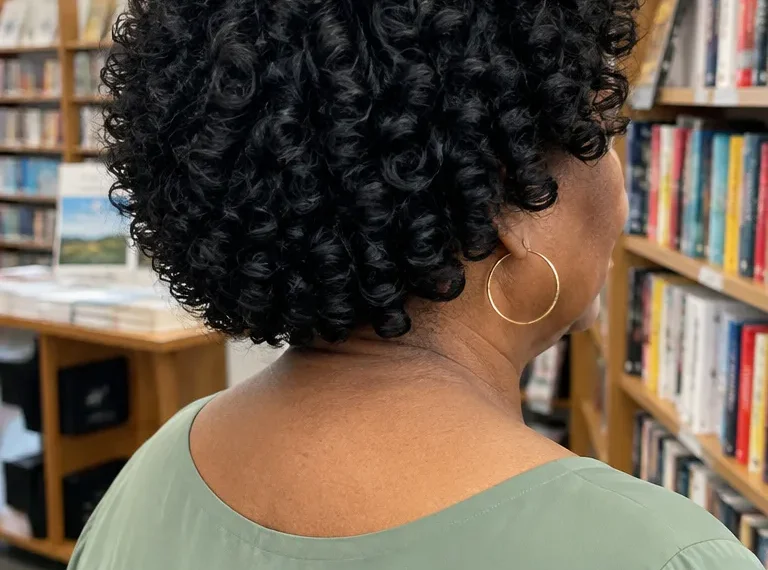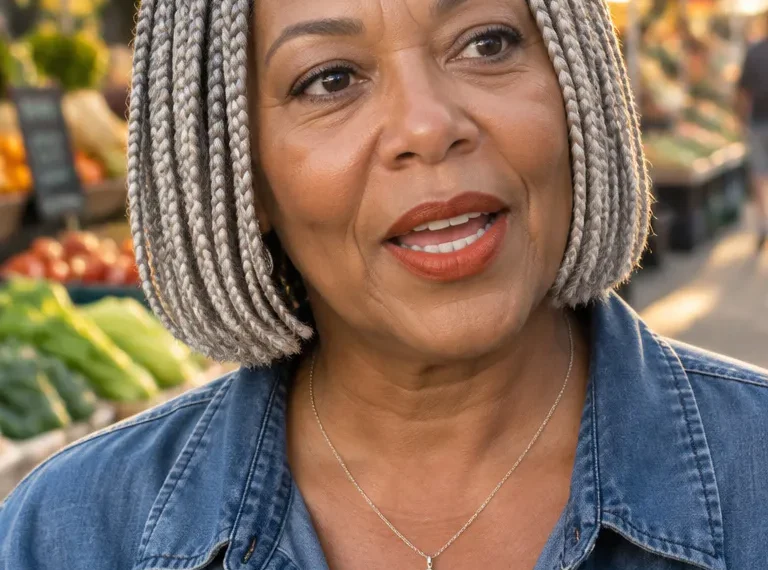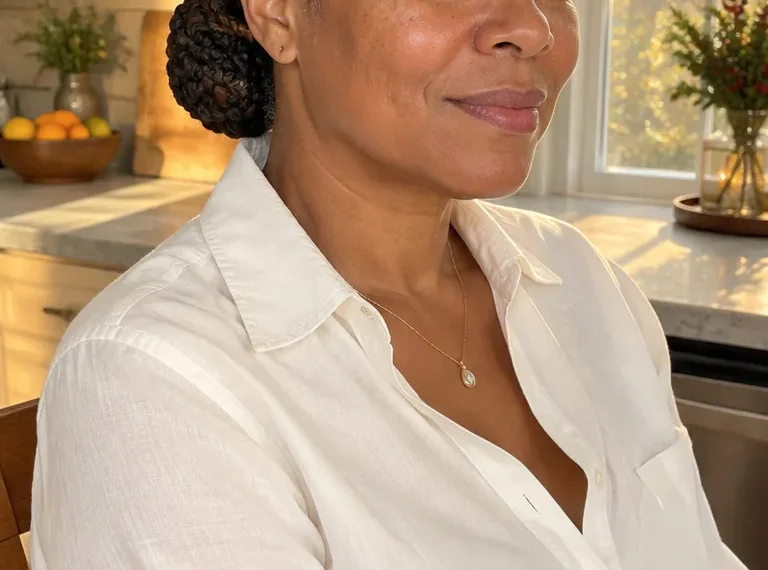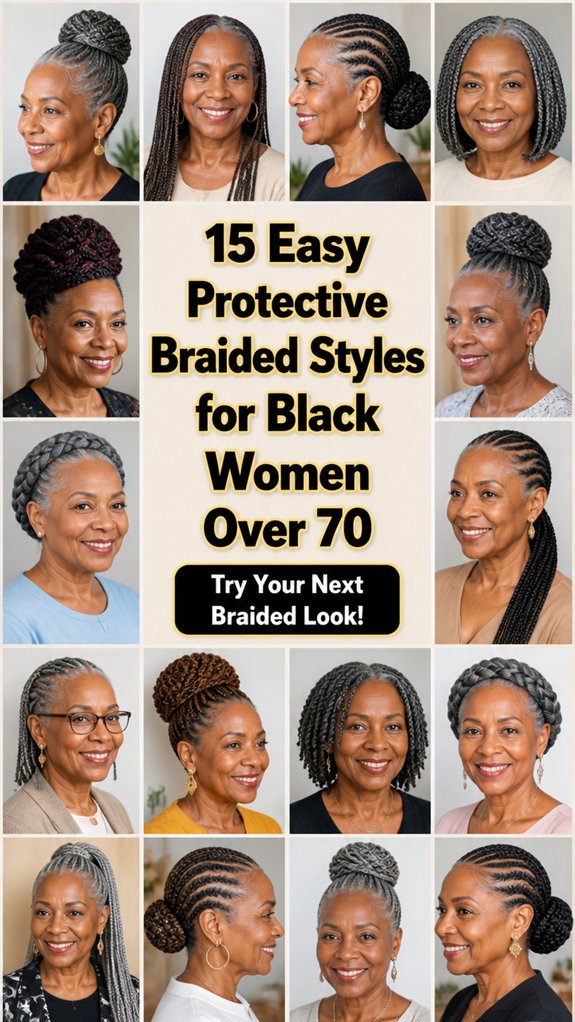
You can wear 15 easy protective braided styles after 70 by starting with scalp-friendly parts, knotless or feed-in installs, and satin night wraps. Choose quick cornrows, goddess braids for lightweight volume, or Marley and Senegalese twists for soft texture. Try braid-in ponytails for convenience, crochet braids for fast installs, and braided headbands to tame flyaways. Half-up styles balance volume and access, while short layered braids stay neat and comfortable. For care, wash gently, seal ends lightly, and refresh with soft fingertip touch—keep going to learn more.
How to Pick Protective Braided Styles After 70
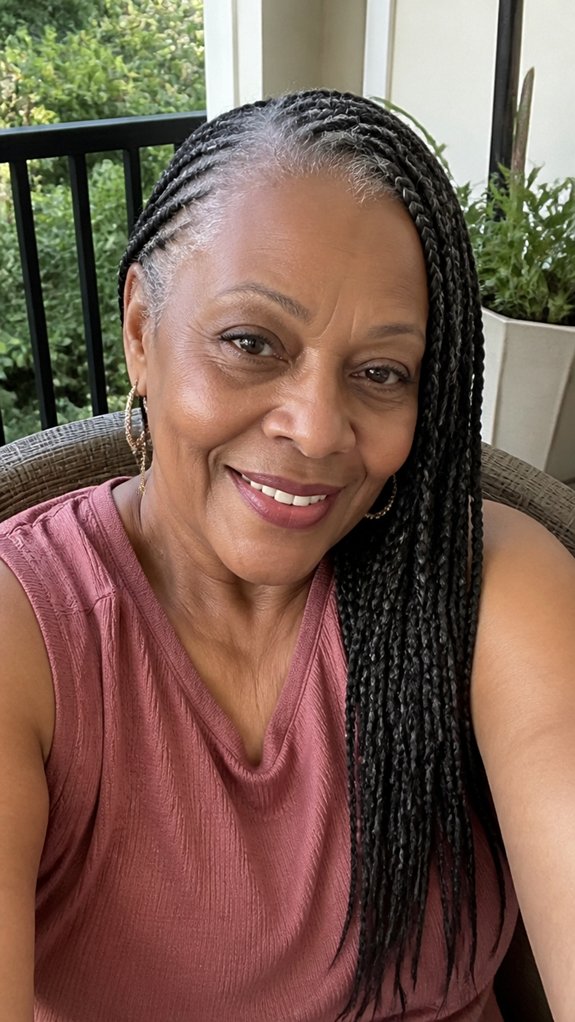
Once you’re over 70, choosing protective braided styles gets easier when you start with what your body needs, not just what looks good.
First, you listen to your scalp sensitivity, and you choose braids with a gentle tension, and breathable parts. You ask your stylist to avoid tight edges, and you keep your hairline comfortable from day one.
Next, you plan seasonal adjustments, because heat, humidity, and dry winter air change how your scalp feels. When you notice itching, soreness, or dryness, you switch products, add a light moisturizer, and consider looser patterns. You keep your style intimate, not painful, and that matters.
Best Low-Manipulation Braided Looks for Tight Schedules
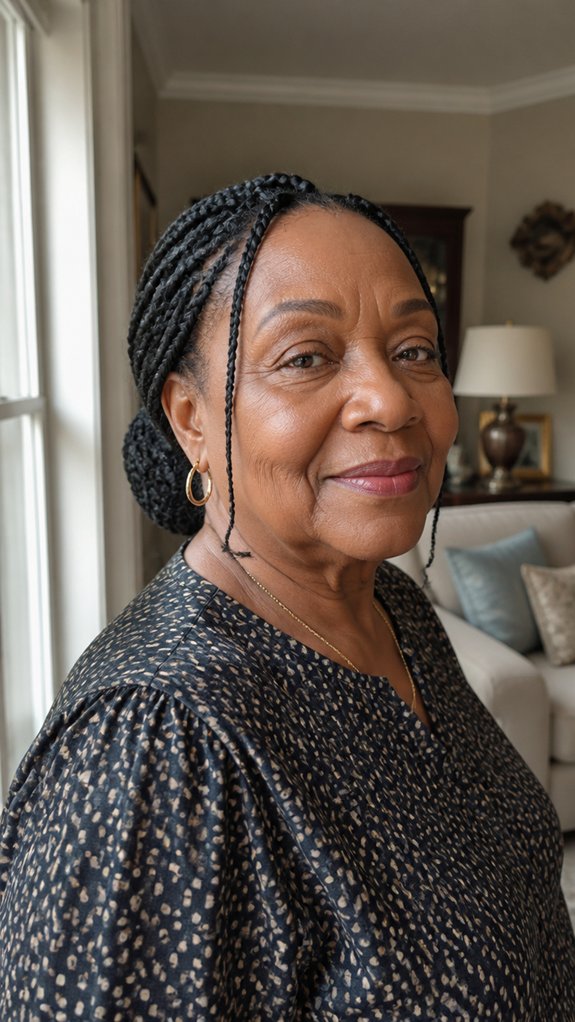
If you’re juggling a busy calendar, you still can wear protective braided styles that save you time, without sacrificing comfort.
Choose Minimal manipulation, low-tension parts like goddess braids, where you braid in a few larger sections, then stop touching your scalp. These Time saving braids look full, they hold their shape for weeks, and they feel secure.
For extra ease, try knotless box braids with a soft edge, you install them once, then simply moisturize lightly at the roots.
If you like a softer look, do braid-in ponytails, you tuck and go, and you keep your hands free for what you love.
Quick Cornrow Styles That Stay Neat Longer
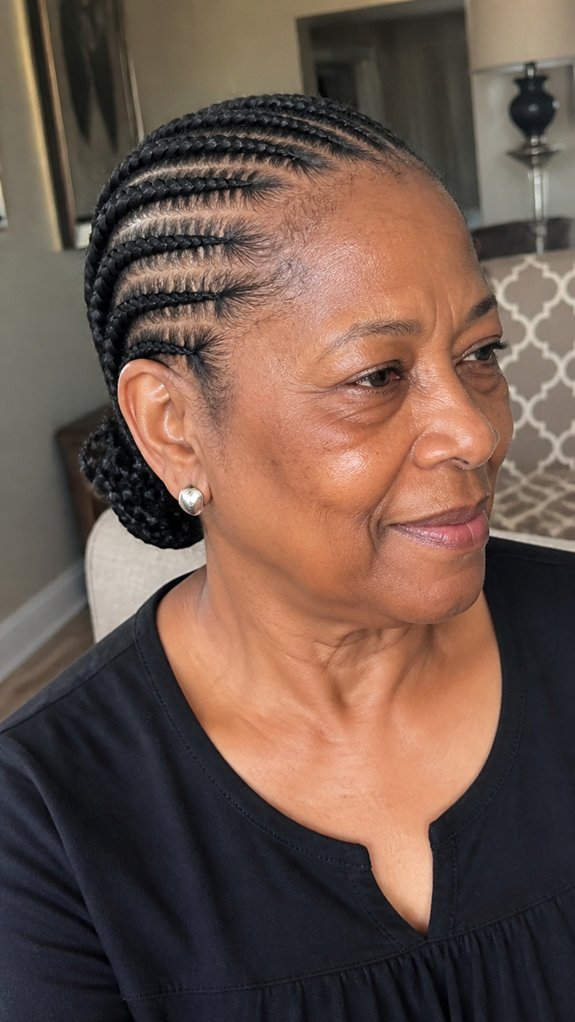
Quick cornrow styles can keep your look neat for weeks, and you’ll love how much time they save on busy days.
You start by washing, detangling, and doing a gentle scalp massage, this calms you and helps the braid sit flat.
Next, you section your hair into clean rows, then braid close to the scalp, keeping the tension even, so your parts stay crisp.
When you finish, you smooth the edges lightly, and you tuck away loose ends.
At night, you wrap with satin scarves, then you wake up looking fresh, like you just left your chair.
Goddess Braids for Easy Volume and Lightweight Comfort
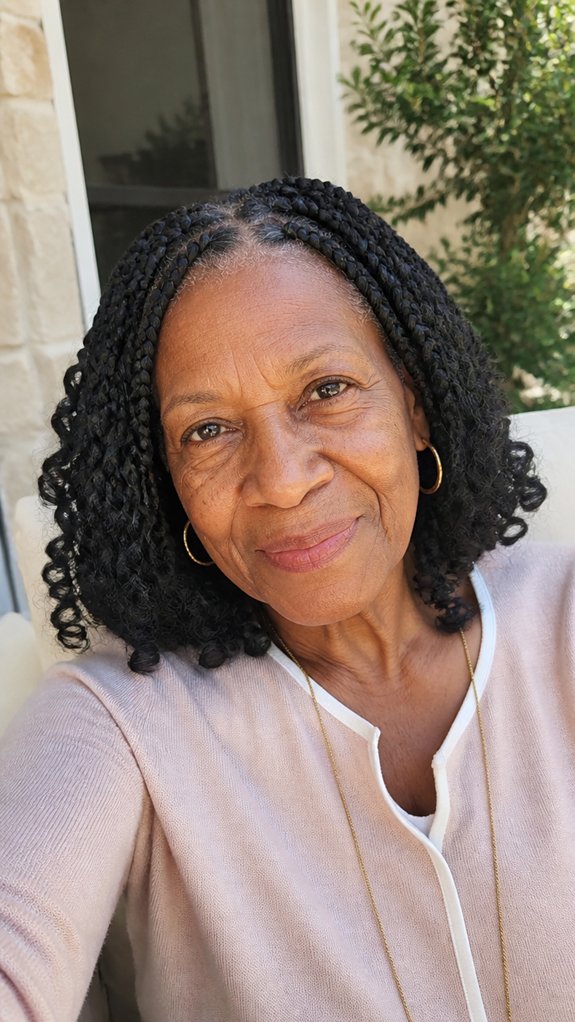
After you’ve mastered those neat, longer-lasting cornrows, you can level up with goddess braids, because they give you big, easy volume without feeling heavy.
You’ll start by parting your hair into clean sections, then braid in a soft pattern that lifts at the roots. Choose lightweight synthetic hair, and you’ll feel the difference right away, that’s your lightweight comfort.
For goddess volume that still looks natural, use medium braid sizes, and leave a little fullness around your crown. Add a gentle edge gel, set it, then mist lightly.
You’ll enjoy a secure, easy style that feels friendly.
Marley Twist Braids for Natural Texture Blending
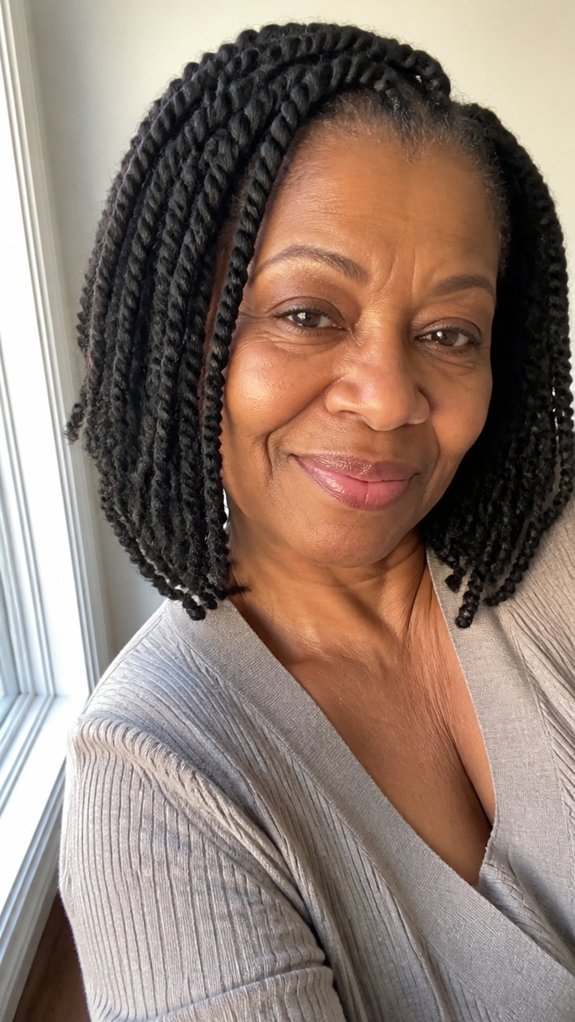
Marley twist braids help you blend textures effortlessly, so you get a natural look that still feels soft and manageable.
You start by choosing Marley hair that matches your curl pattern, then you section clean, small parts, so the twists sit evenly.
As you install, focus on Texture matching at the roots, you should avoid harsh jumps in thickness.
For Marley maintenance, keep your scalp lightly moisturized, use a spray with water and a little oil, and seal ends with a thin layer of conditioner.
At night, wrap in a satin scarf, you’ll wake up ready, and your style stays cozy.
Box Braids With Soft Parts for Scalp-Friendly Wear
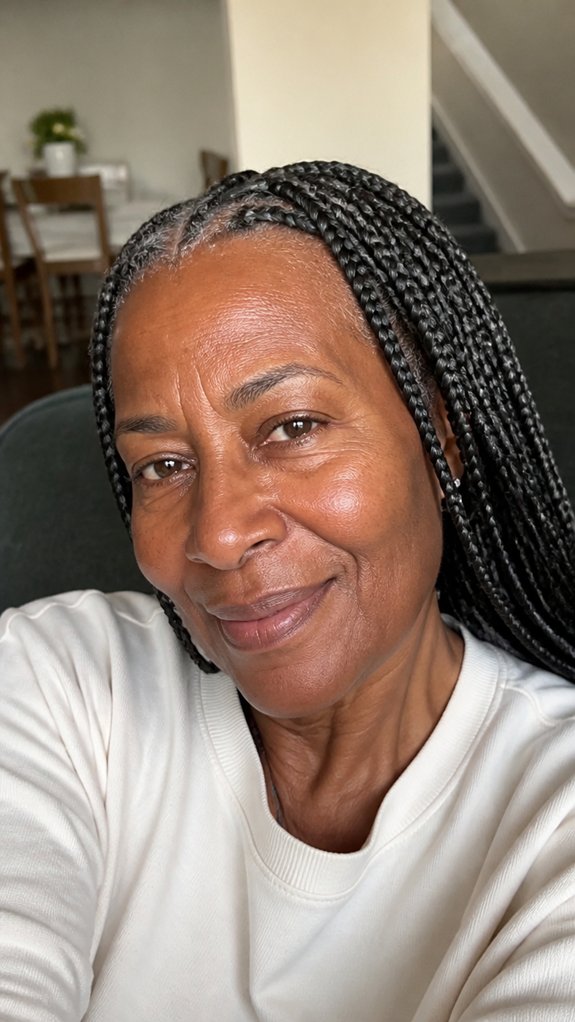
Choose box braids with soft parts when you want a protective style that feels kind to your scalp and still looks neat for weeks.
You’ll start with gentle scalp massage, using fingertips, not nails, and you’ll part cleanly so your roots feel supported.
Pick braids labeled “soft” or “lightweight,” and ask your stylist to use fewer, larger sections, so tension stays low.
For comfort at home, you’ll cover your hair each night with a satin wrap, it helps reduce friction while you sleep.
When you refresh, spritz lightly, and glide your fingers through the edges, slowly, lovingly.
Knotless Braids to Reduce Tension and Protect Hair
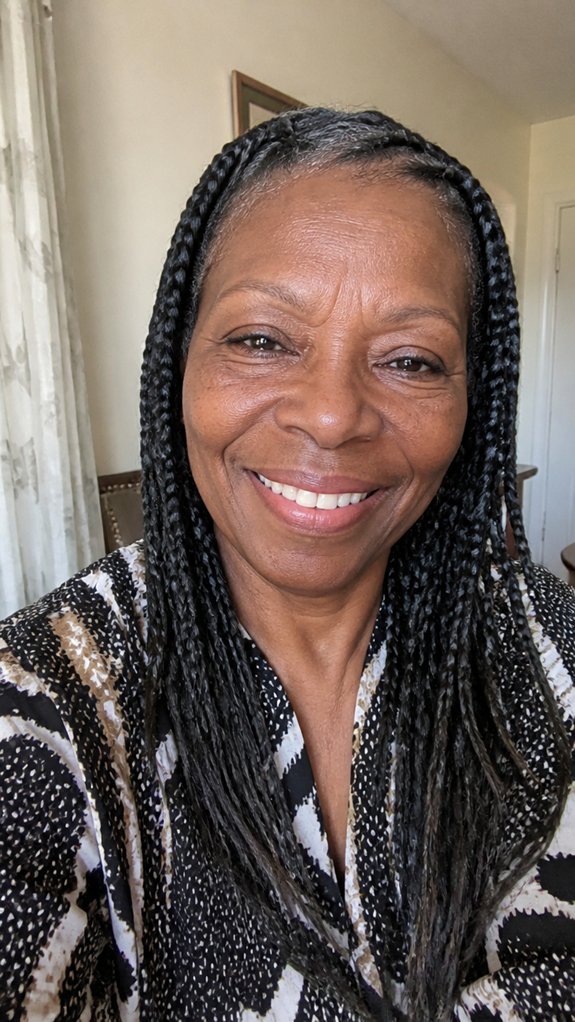
Knotless braids are a smart next step when you want protection that also helps you feel less tension at the scalp. You’ll start with small sections, then add hair gradually, so the braid base stays gentle, not tight.
That matters, because your scalp gets less pulling pressure, and you can breathe easy, literally. Before you sit down, do a quick scalp massage, it warms the area and makes the process feel kinder.
Choose lightweight extensions, so the style lays smoothly, and your neck won’t complain. After styling, keep edges moisturized, and you’ll love the easy, secure fit.
Feed-In Braids to Minimize Breakage and Re-Braiding
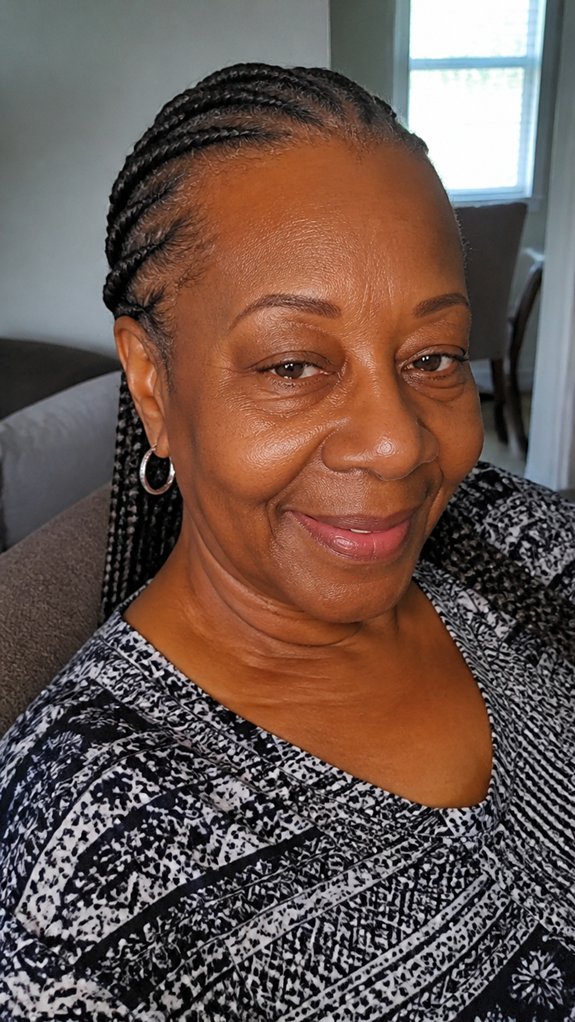
Feed-in braids let you refresh your look without constantly starting over, and they also help you protect your hair as you go.
Start with gentle scalp massage, loosen tension at your edges, and use elastic free bands where you can, so your roots stay comfy.
You’ll use careful parting techniques, sectioning small neat lines, then feed in new braid lengths gradually, instead of redoing everything.
When your braids sit flat, you reduce snagging, and your ends stay protected.
With consistent care, these styles support hair growth, keep your length intact longer, and make re-braiding feel less like a chore.
Senegalese Twists for Sleek, Low-Fuss Protection
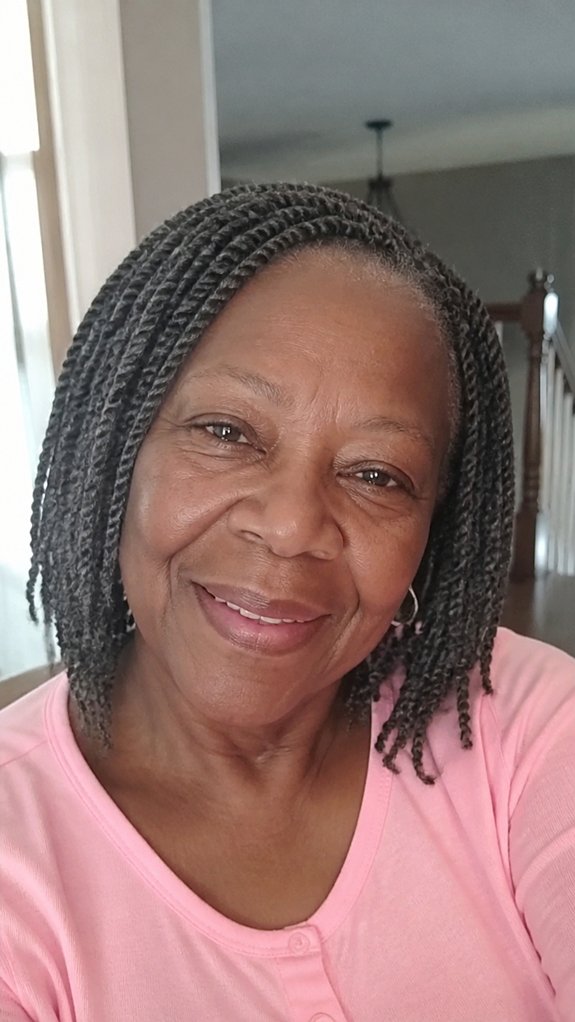
Senegalese twists slide into place with less fuss than many other protective styles, and they still look polished for weeks.
You start by parting your hair cleanly, then using gentle scalp massage techniques to wake up your roots, and to help you feel relaxed.
Next, you braid in medium, even twists, keeping tension soft, so your hair stays comfortable.
For fullness without bulk, choose satin covered extensions, they reduce snagging as you move.
When you cover your twists at night, you lock in shine, and you enjoy a smoother texture when you run your fingers through them.
Crochet Braids for Fast Installs and Gentle Styling
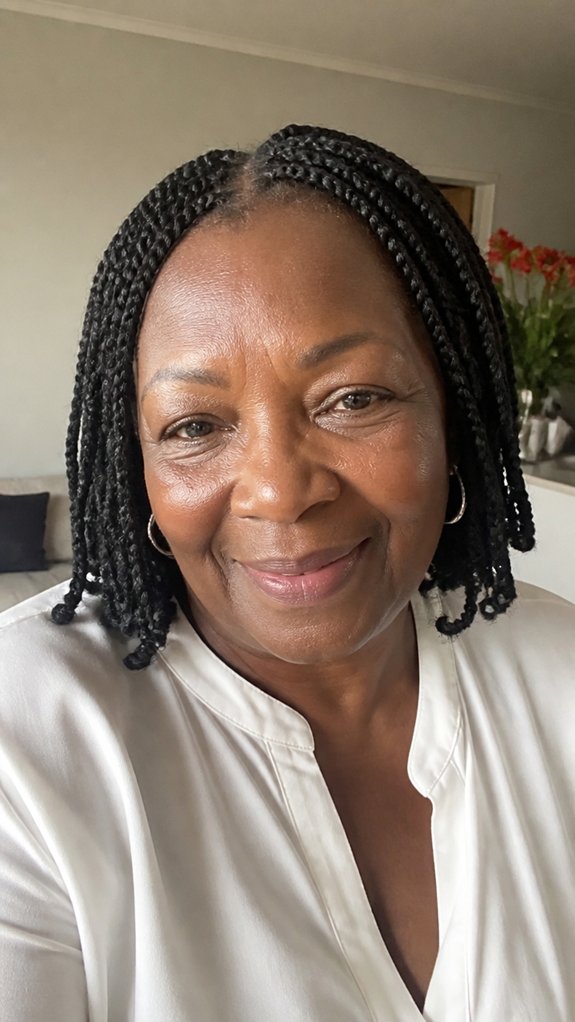
If you want a protective style that feels quick, still looks neat, and doesn’t demand constant upkeep, crochet braids are a smart choice.
You get quick installs because you attach pre-twisted hair to your braids, so you spend less time sitting.
You keep it gentle by using a soft, lightweight crochet braid, and by avoiding tight pulling at the edges.
After install, you do gentle maintenance, misting lightly, and covering your hair at night.
In your daily routine, you can part, tuck, or pin sections for a polished look, and still feel comfortable.
Protective Braided Buns and Updos for Everyday Elegance
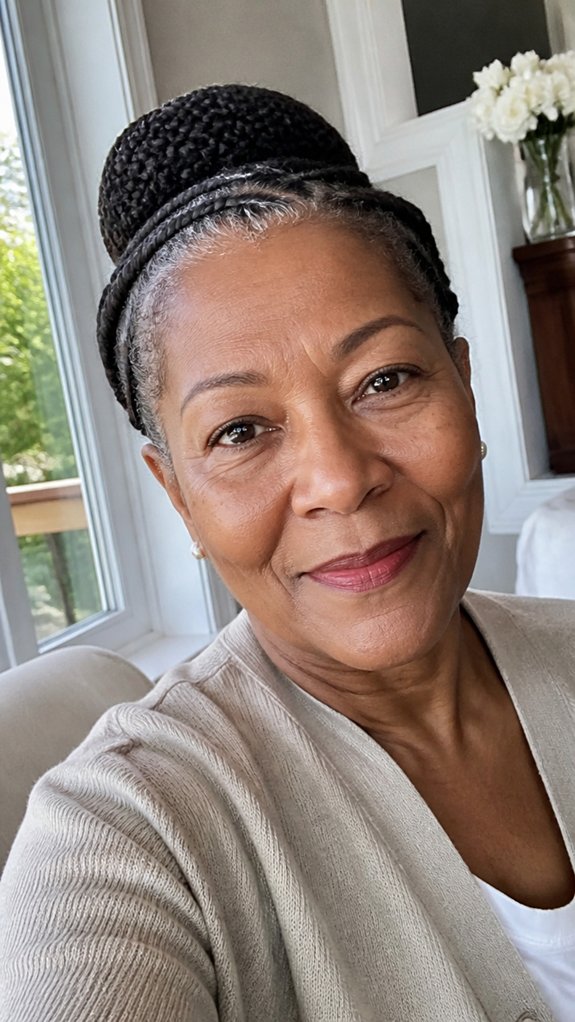
Protective braided buns and updos give you an elegant look, without dragging your routine into long daily prep.
You can create low maintenance buns by braiding your hair into neat sections, then pinning them close to your scalp. For extra comfort, keep the tension gentle, and seal the ends with a light bit of braid spray or oil.
When you need something polished, try a sleek chignon, twist your braids into a low roll, and secure with strong bobby pins.
In everyday errands or dinner dates, you’ll feel put together, and you’ll still enjoy your hair staying protected.
Braided Headband Styles That Control Hair Without Heaviness
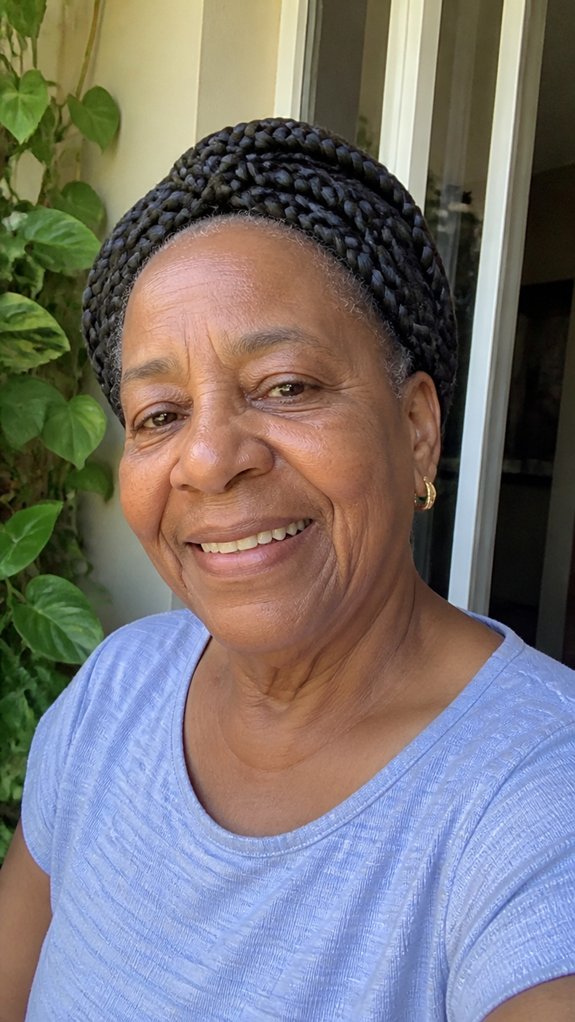
Why not control your hair with a style that feels light, secure, and easy to manage? Braided headband styles give you headband braids that smooth edges, without pulling, so you can move freely.
You start by parting your hair lightly, then you braid thin sections along your forehead, keeping tension gentle. Next, you lay the braids under a soft headband or wrap them so they meet at the crown. This creates lightweight comfort, keeps flyaways down, and reduces daily combing.
Finish with a light scarf at night, and refresh with a spritz of water and leave-in.
Half-Up Braided Styles for Balance and Easy Access
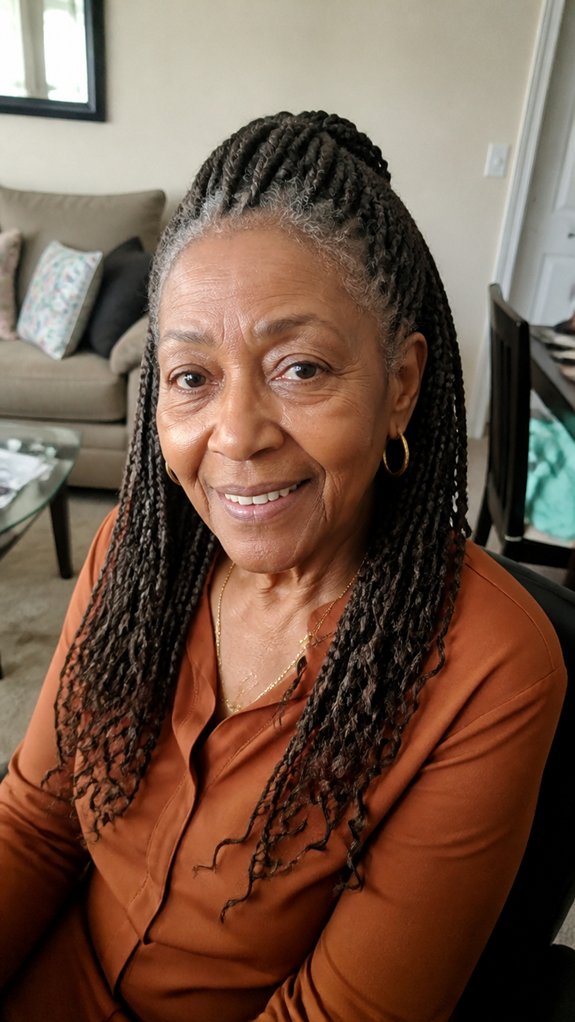
Half-up braided styles give you a great balance, because you keep some hair tucked away while you still show off your volume and length.
You create a clean side part, then braid the top sections forward or backward, leaving the rest to flow freely.
For easy access, you keep the middle pieces loose enough to shift when you want to refresh edges or mist your scalp, without fighting the whole style.
Add ribbon ties at the crown, so you can secure the half-up section comfortably, and adjust it like a soft hug.
Finish with a light oil on braid ends for shine.
Short Protective Braids That Flatter Mature Hairlines
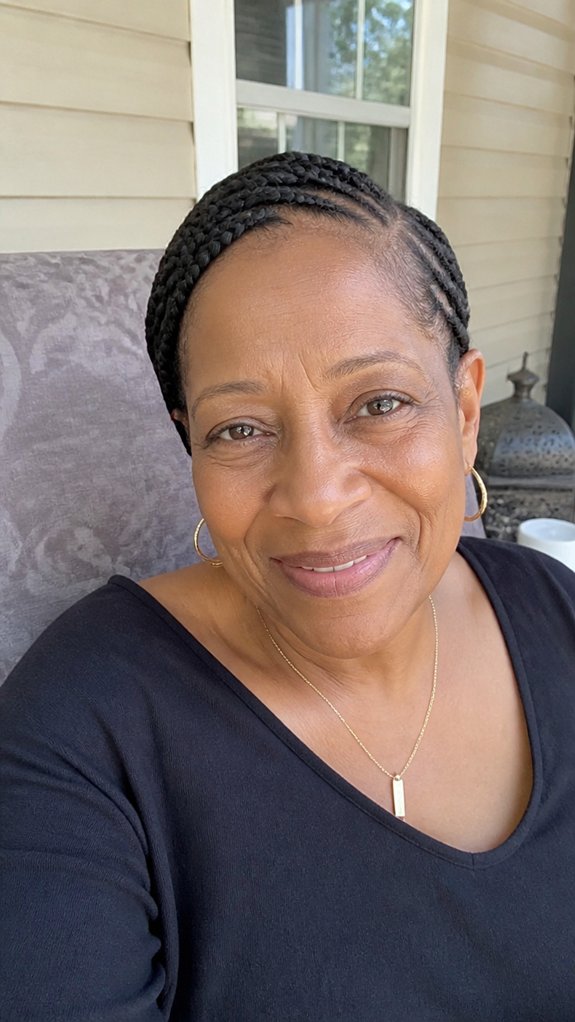
When you want your style to look youthful and feel comfortable, short protective braids can be a smart choice, especially if you’re working with a more mature hairline.
You can keep your scalp calm by choosing neat, smaller sections, and you can let your edges stay relaxed with scalp friendly edges.
Opt for a softly placed part, and pull a few braids forward, so your hairline looks fuller.
If you want extra lift, create a layered crown, letting the top braids sit slightly higher.
You’ll enjoy a secure fit, less weight, and a polished finish that feels good, every day.
How to Care for Protective Braids: Wash, Seal, and Refresh
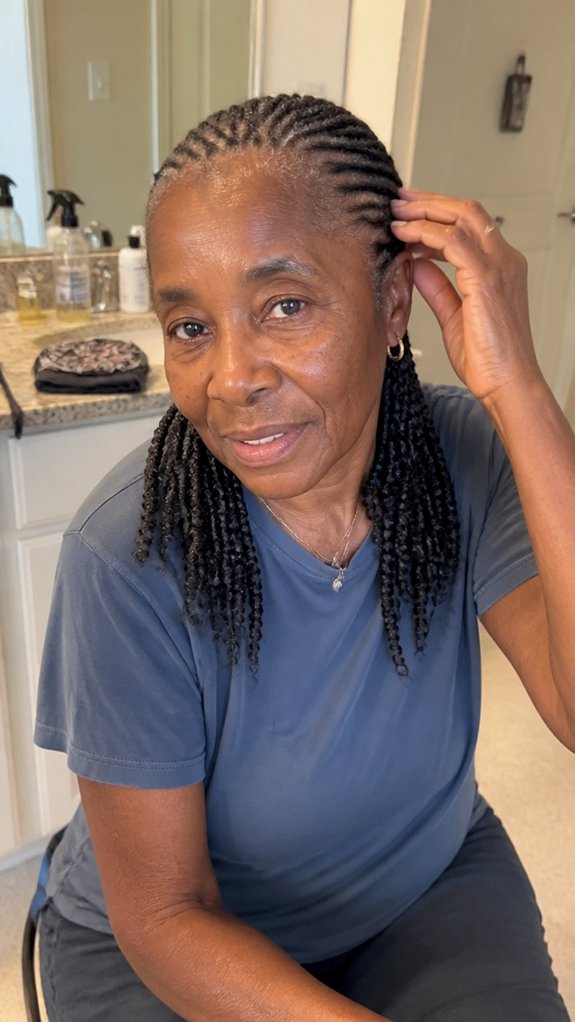
Once your short protective braids sit nicely and flatter your mature hairline, it’s time to keep them looking fresh and feeling comfortable.
Wash your scalp gently, use a diluted sulfate-free shampoo, and focus on your part lines, not the braids themselves. Let braids air-dry fully, then seal small areas with a light oil, so your roots stay moisturized.
Between washes, spritz dry shampoo at your scalp, massage softly with your fingertips, and enjoy that clean, light feel.
At night, wrap with satin scarves, tucking in ends to reduce frizz and keep your braids snug. Refresh every week with your fingertips, not rough brushing.