Winter asks a lot of gray textured hair at 70-plus. Cold wind, wool hats, and heated indoor air can leave strands dry and snag-prone, and a style that pulls at the hairline adds a second problem. The simplest rule is a tension check: if your scalp stings, feels tight, or your eyebrows lift after styling, ask to have it loosened, however neat it looks.
Each style below gets a rating for tension, weight, and upkeep, plus a label. Protective means the ends are tucked away or covered, and low-effort means the style cuts daily work but leaves the hair exposed. A few entries also say what to skip, so you can say no to a braid size or wig attachment before you sit in the chair.
1. Chunky Two-Strand Twists
Three checks sort the list faster than photos do.
- Tension: how hard each section pulls at the root. Bigger sections and a looser twist mean less pull.
- Weight: natural-hair styles add none, while extension hair adds weight at every root.
- Time in: how long a style can stay depends on your hair and scalp, so ask your stylist for a take-down date before you leave the chair.
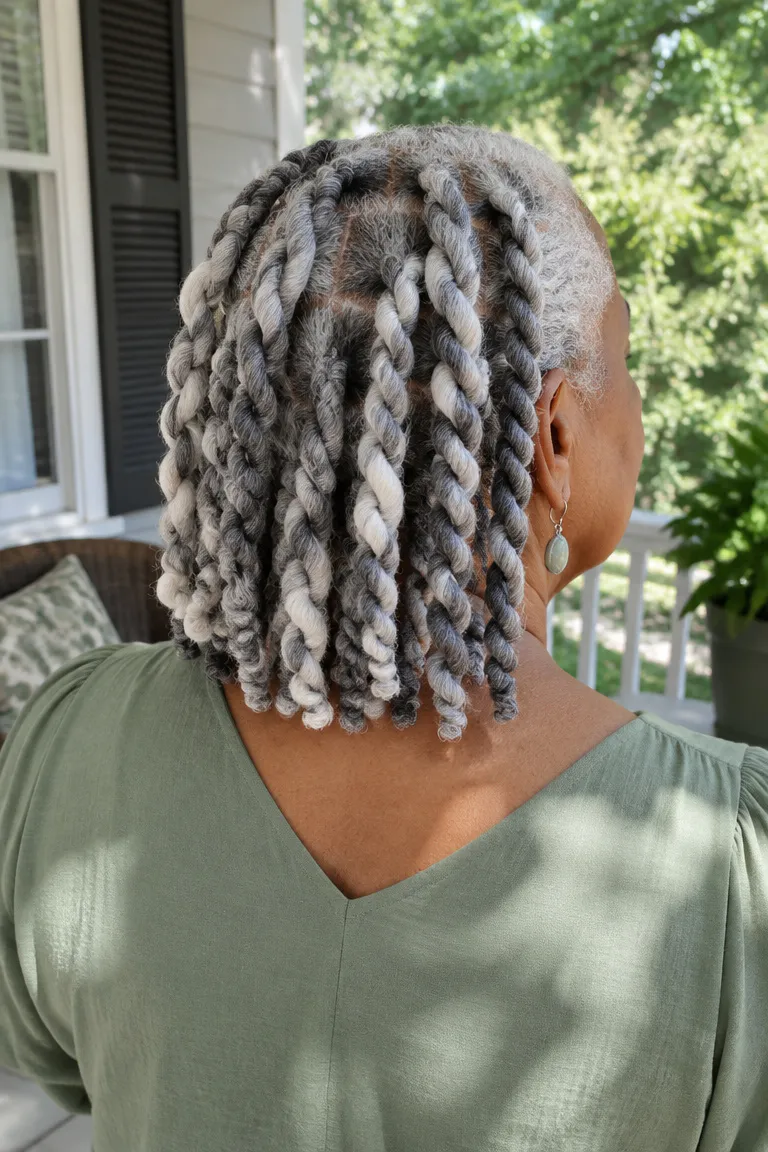
Chunky two-strand twists are the baseline for everything else here: large twists on natural hair, no extensions. They suit medium length and any density, and finer hair does best with bigger sections. Tension is low, and the style is protective because the ends are twisted inside.
Large sections put less pull on each root, and gray hair often reads as bright silver at the twist ends. Moisturize the ends before twisting so they don’t dry out inside the style, since heated rooms and cold wind both pull moisture from exposed hair.
Ask your stylist how long to keep them in. The answer depends on your hair and scalp, not on a standard number.
2. Flat-Twist Updo
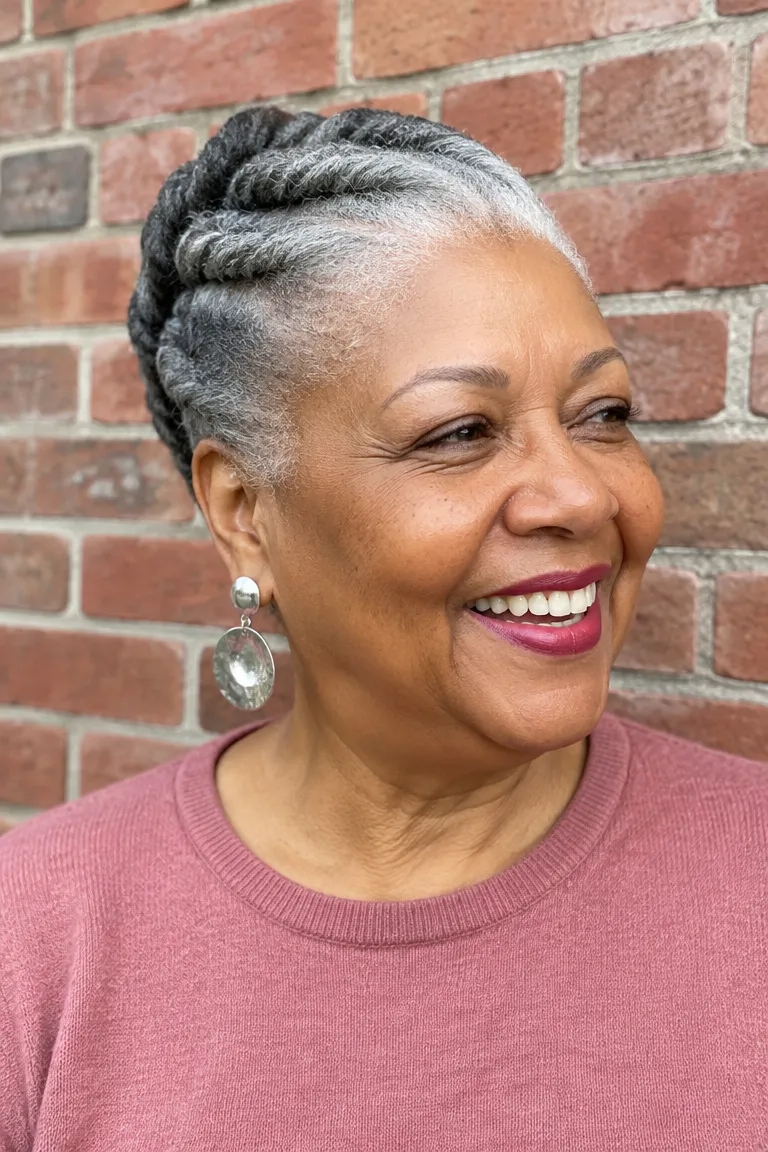
A few large flat twists run back from the hairline and get pinned up in one smooth swirl, with no extensions. The ends tuck under, so wind and coat collars don’t rough them up. Tension stays low as long as the twists lie flat without being pulled.
Fewer parts means less time with your arms raised, which helps if your shoulders or hands tire easily. A stylist can set the twists in the salon, and you can re-pin the swirl at home between visits instead of rebooking.
Ask the stylist to pin the twists flat against the scalp without pulling. Don’t stack pins tightly along the hairline, where the hair is usually finest and shows strain first. At night, a satin scarf keeps the shape and cuts down on frizz.
3. Low Twisted Bun
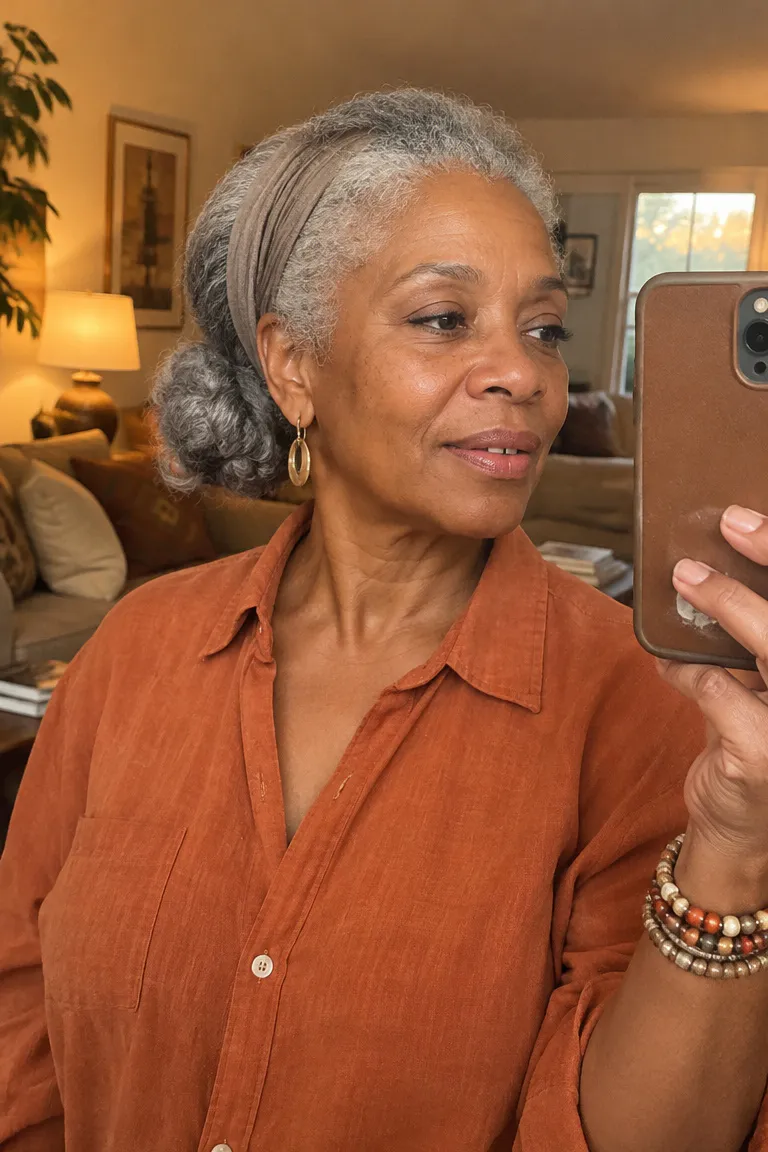
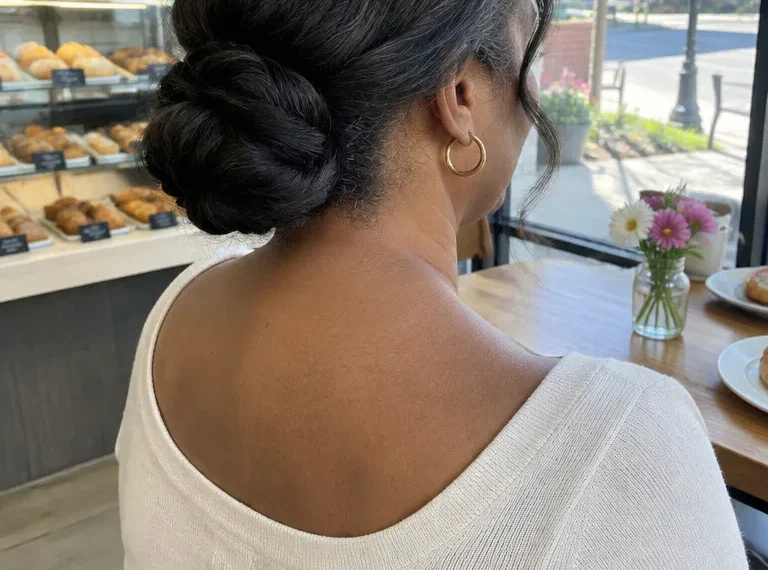
This is a loose bun twisted once or twice and set at neck level, not a tight top-knot. Low placement leaves the hairline and crown free of pull, and the bun sits flat under a hat brim and against a coat collar without making a bump. It suits shoulder length or longer, with enough hair to twist around itself.
Keep the shape soft and rounded, and leave the front hairline smooth and untouched. If the bun tugs when you turn your head, loosen it.
Use a snag-free elastic or a wide fabric tie, never a thin rubber band, which can catch and break strands. Tension is low, and the style counts as protective because the ends are tucked inside the bun.
4. Large Loose Braids
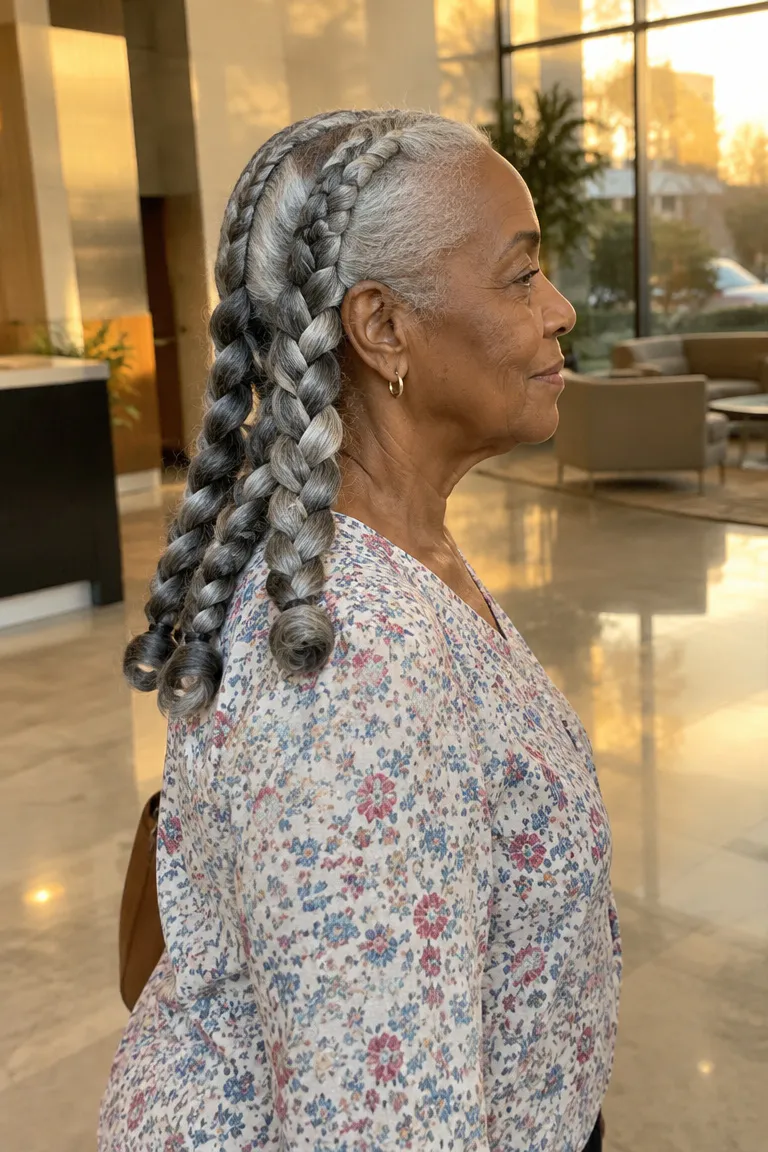
Two to four big braids on natural hair, with no extensions, suit gray hair that has turned wiry or coarse. The braids hold the strands together, which cuts tangling. Kept loose, this is a low-tension protective style.
Work a leave-in through the strands before braiding, then tuck the braid ends inward in winter so they aren’t whipping around in the wind. Wide parts are the point here, so don’t ask for them to be neatened into smaller ones. The style works best on hair long enough to hold a braid without the ends slipping out.
Comfort check: Your scalp shouldn’t sting or feel tight, and your eyebrows shouldn’t lift. If any of those happen, ask to have the braids loosened or redone.
5. Lightweight Knotless Braids
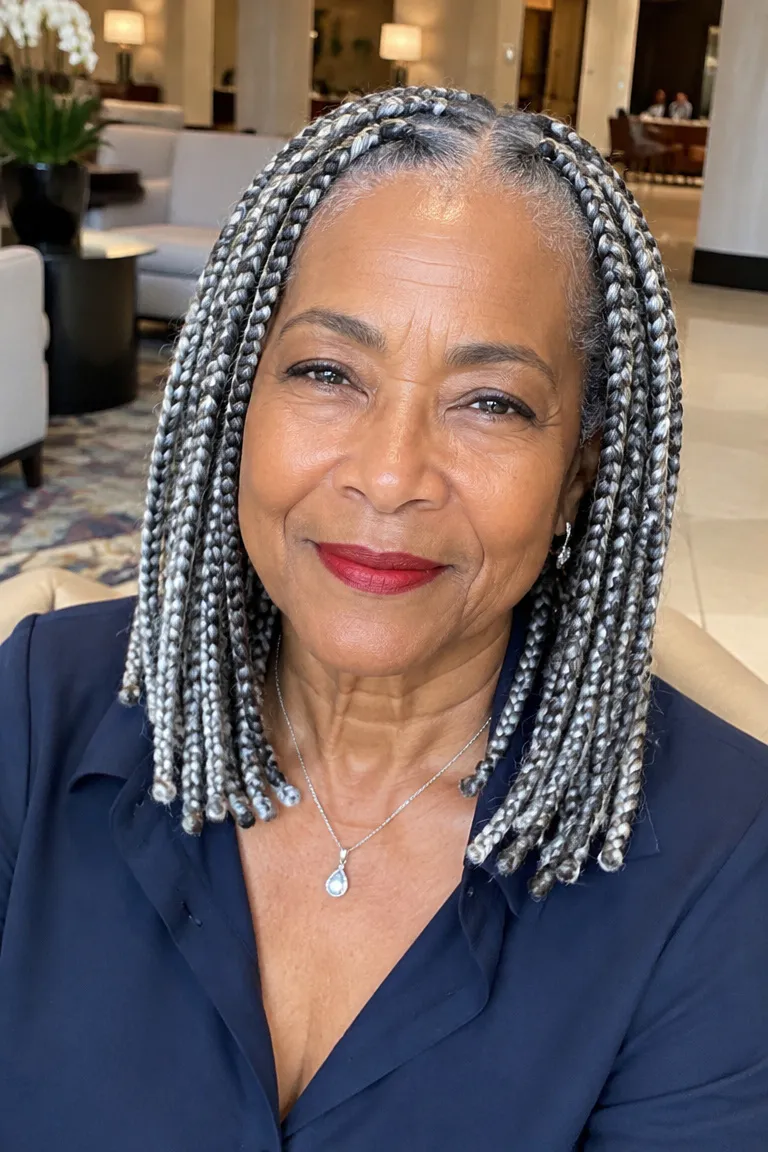
Knotless braids work best at shoulder length or shorter, because extension hair adds weight at every root. Silver-gray extension hair blends into natural gray, and medium-large parts keep each braid lighter on the scalp. Tension is moderate at best, so the install matters more than the style name.
Ask your stylist: Try these lines: ‘Can we use larger parts?’ ‘I’d like a lightweight install.’ ‘I want them to feel comfortable on day one.’
A tight feeling after the appointment is a reason to go back, not to wait it out, and you can ask to have braids redone. Agree on the take-down timing up front so it isn’t decided later by how the braids look.
Finer or thinning hair may need a different style, such as loose braids or large twists. For more on sizing and weight, see these lightweight braids that feel comfortable all day.
6. Half Wig With Breathable Cap
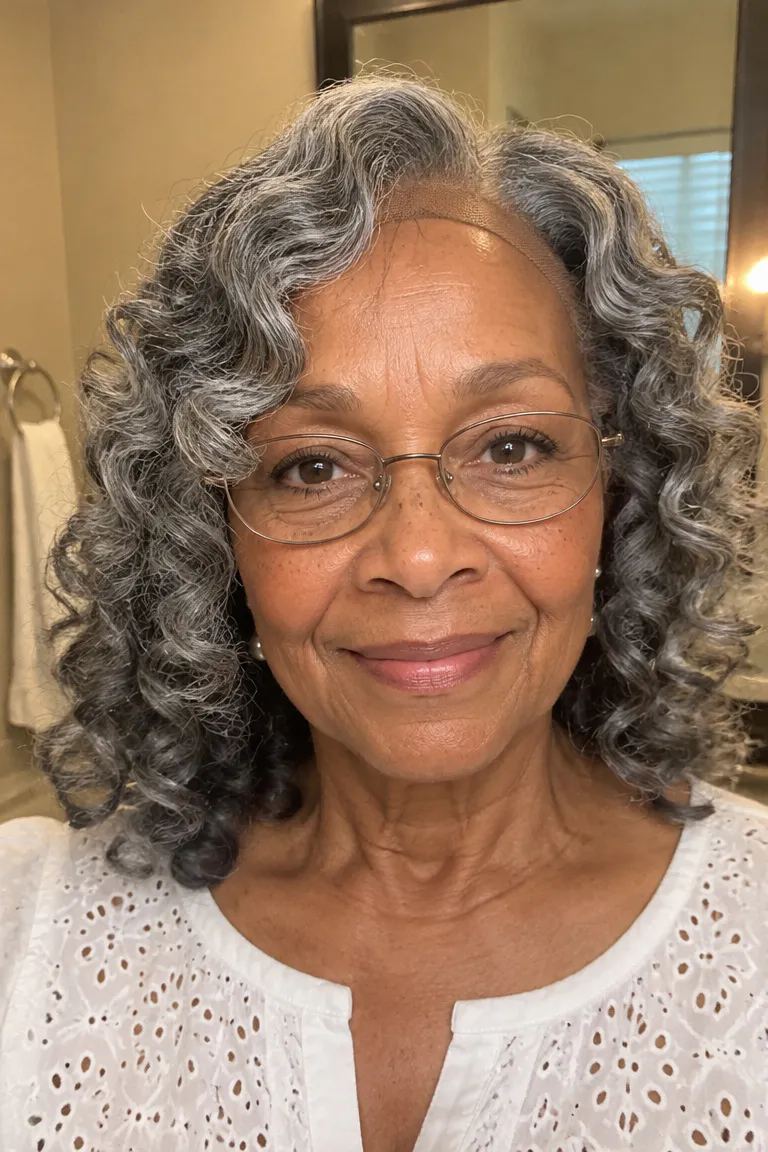
A half wig or full wig can cover natural hair for a season with no braiding tension, but only if the cap and band fit properly. It’s protective because your own hair stays covered, and weight is the main variable, so pick a lighter wig.
- Cap: breathable mesh, worn over a wig cap, with no rough seams at the part.
- Band: it shouldn’t squeeze the hairline or leave a deep line when you take it off.
- Color: match the gray tones at the part, where the blend shows. Check salt-and-pepper or silver against your natural hair in daylight.
Skip glue or adhesive at fragile edges. A half wig blends at the front with your own hair, so ask the stylist to trim the front so it sits naturally against yours.
If your hairline is thinning, check with a stylist or dermatologist before choosing any wig style.
7. Low Bun With Added Hair
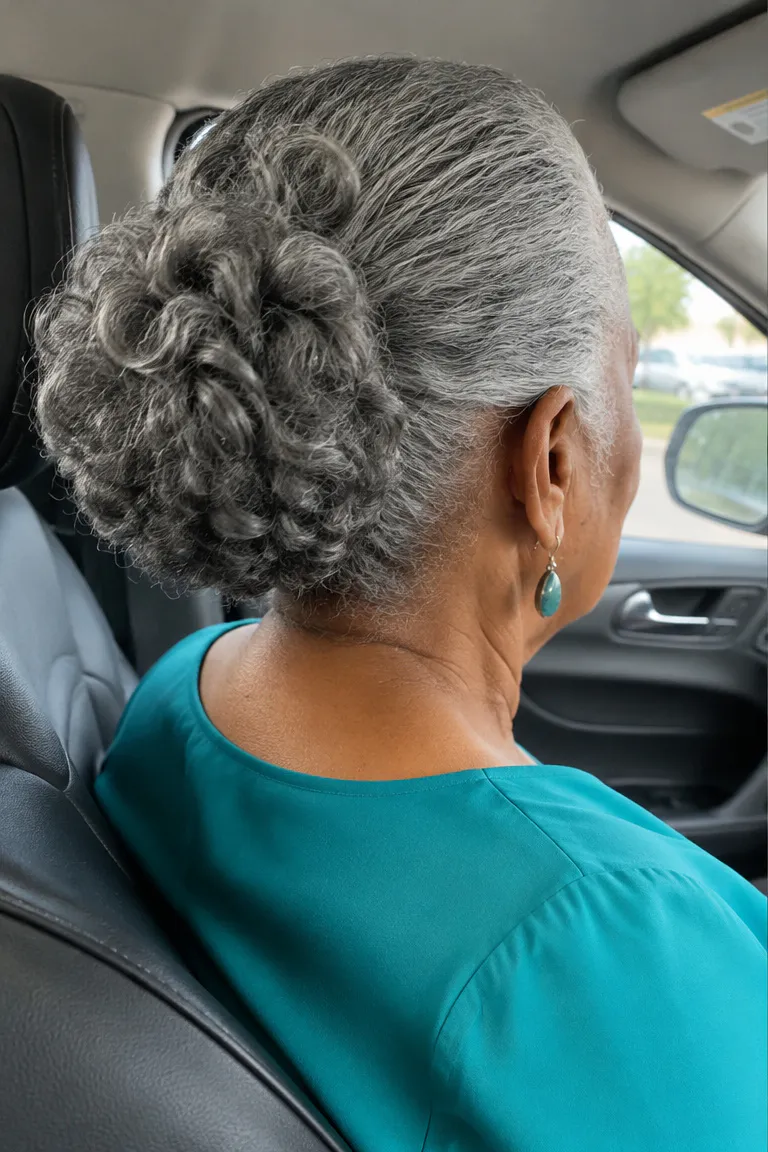
A clip-in or wrap-on bun piece in a matching gray or salt-and-pepper shade gives you a full low bun without heavy braids. It suits short to medium hair that can’t make a full bun on its own. Tension is low, and the style is protective when your own ends are tucked inside.
Clip the piece where your hair is strongest, never on fragile edges, and keep it low near the nape. A heavy piece set high pulls on the roots more than one resting low.
Maintenance tip: Take the piece off at night and store it loose in a bag or on a hook, so the fibers don’t tangle against each other.
8. Satin Scarf Wrap
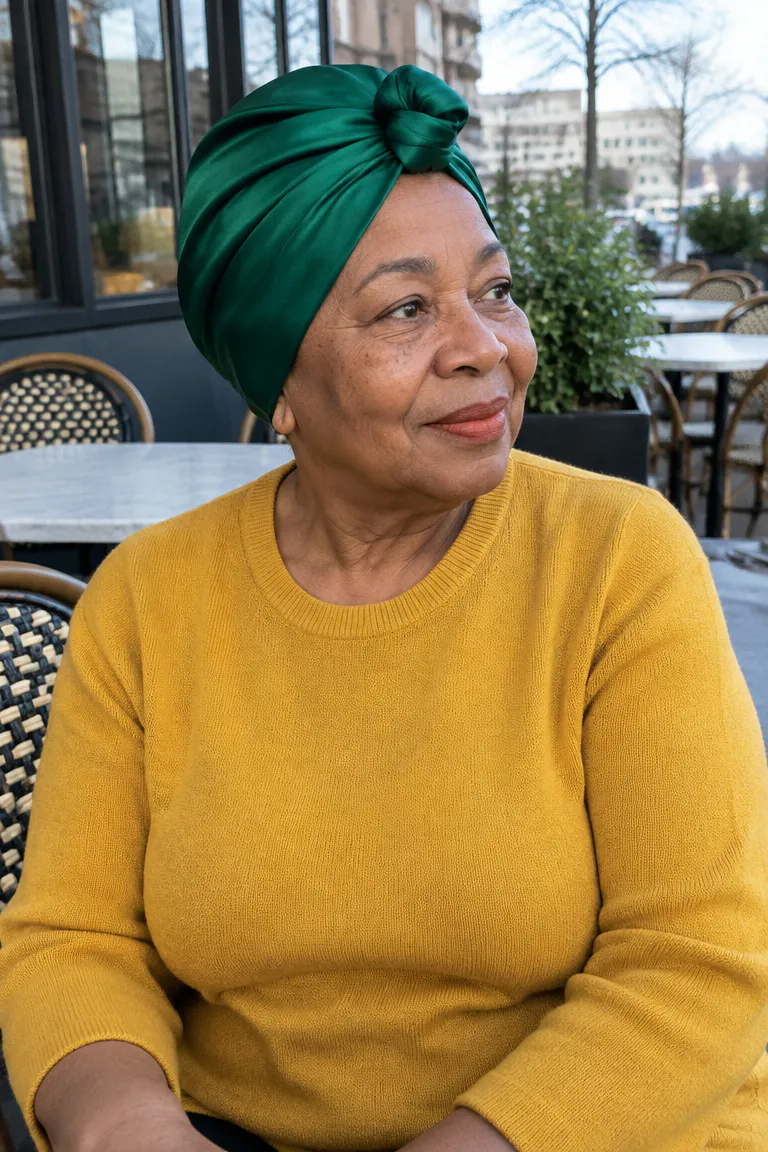
A tied satin wrap covers all of your hair, so there’s no daily restyling, and strands stay out of wind and dry indoor air. Treat it as a style on its own, not a cover-up. The fabric also works as a friction barrier against coat collars and car headrests.
Choose true satin or silk. Slippery polyester slides off and leaves you retying it all day.
Tie it snug enough to stay put but never pulling at the hairline. If you get a ridge or a headache, retie it looser. A hat can sit over the wrap, and the hair underneath stays smooth.
Wrap over moisturized ends so the fabric holds moisture in instead of just covering dry hair.
9. Satin-Lined Beanie Over Twists
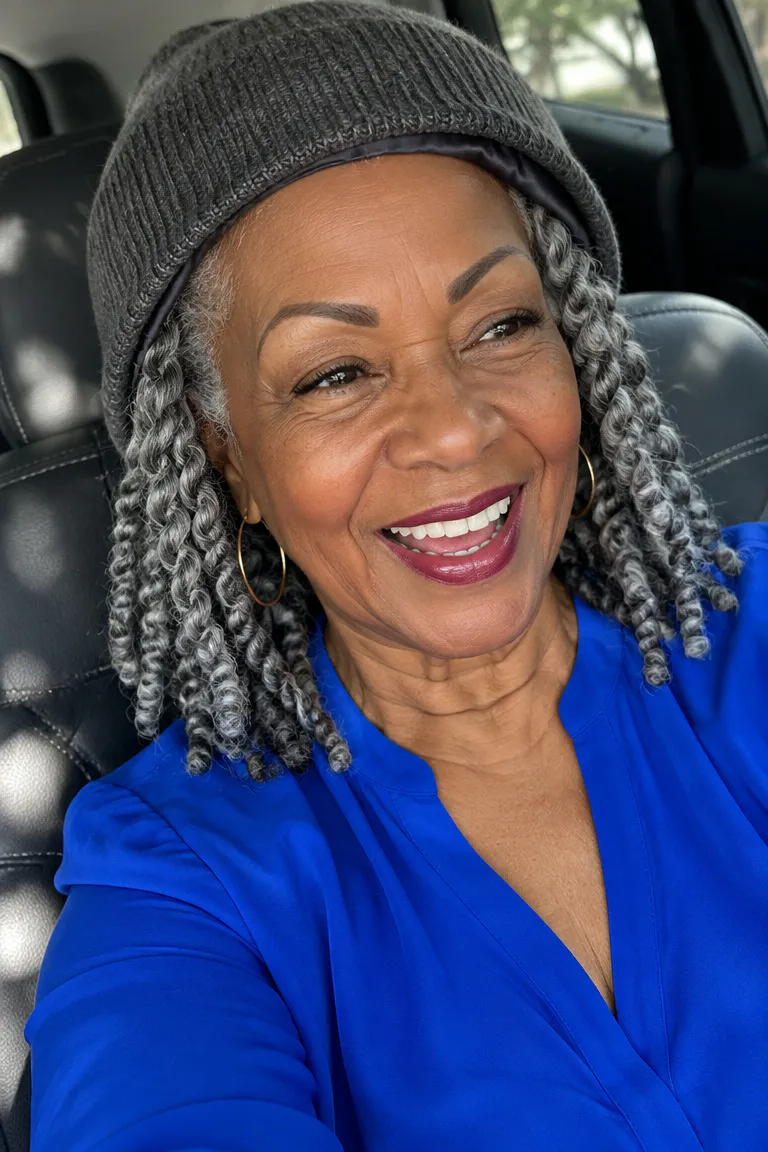
Wool touching hair causes friction and static, which roughs up dry gray strands. A satin-lined beanie keeps loose twists or a bun away from the knit. It pairs well with the chunky twists in style 1 or the low bun in style 3, and it doesn’t depend on hair length.
The beanie should sit comfortably without compressing the twists or pressing on the hairline. Before buying, check the lining:
- It should reach the full inside of the hat, not just a band at the edge.
- It should feel smooth when you run a hand across it, with no rough seams where twists will sit.
Skip this: don’t put wet hair under any hat. Let hair dry fully first.
10. Large Bantu Knots
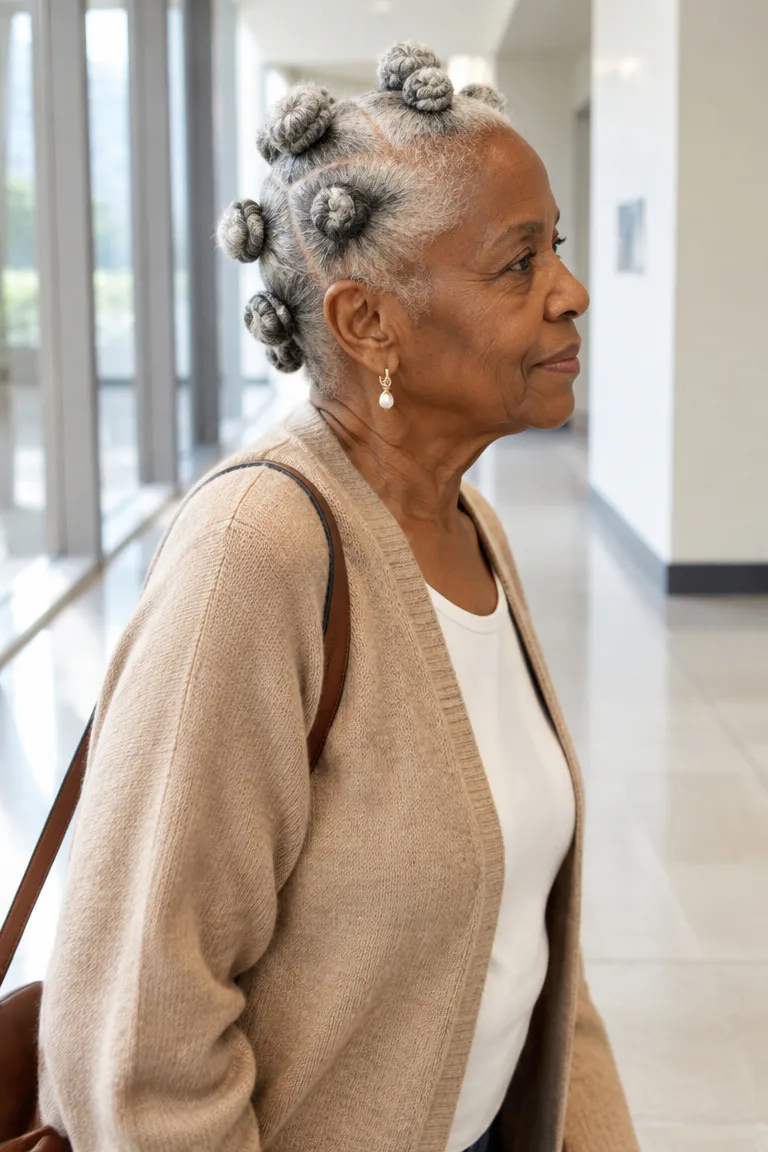
Bantu knots are coils of hair wrapped into knots that sit on the scalp. Keep them to a few large sections with a loose wrap. Parted small, they become higher-tension, because a smaller section means more pull.
Comfort check: The knots should feel light on the scalp, with no pulling at the edges. If you feel a tug at the hairline, ask to have the knots redone bigger.
The upside is the finish: loosened knots leave soft waves or curls after take-down, so you can skip heat entirely.
If your edges are fragile, choose another style. Chunky twists (style 1) or the flat-twist updo (style 2) give you a similar tucked-away look with less strain.
11. Few Straight-Back Cornrows
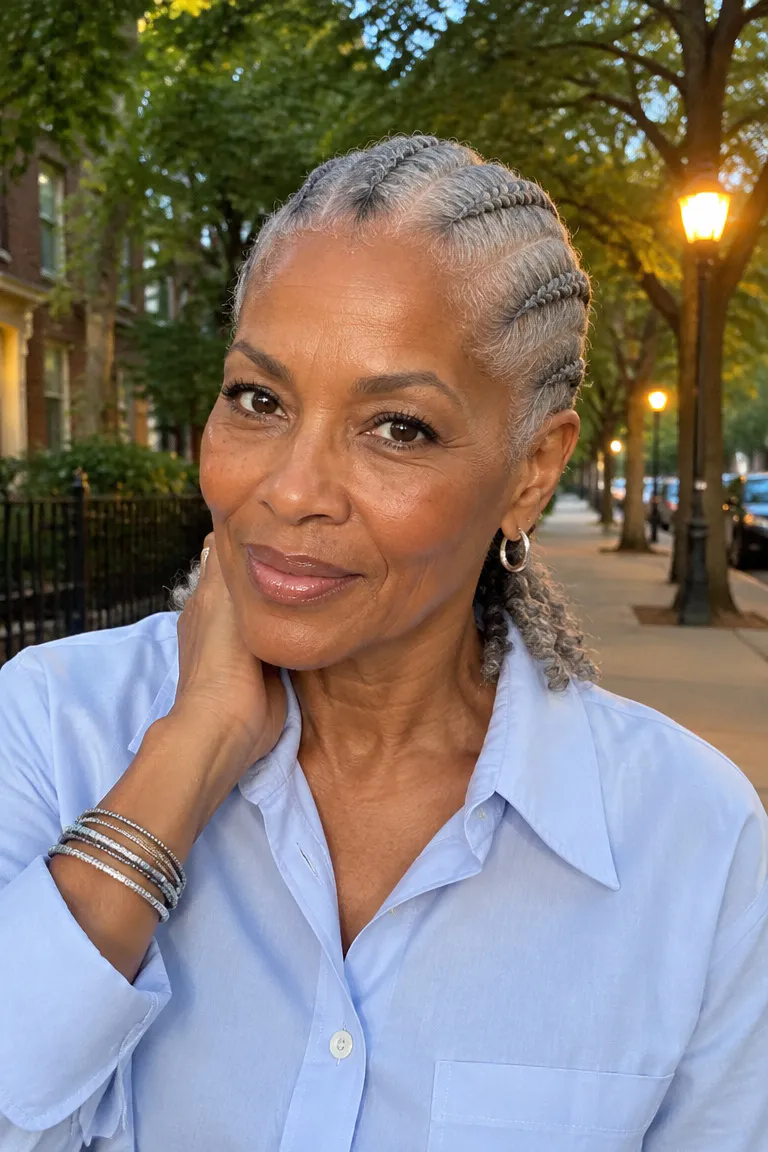
Three to five large cornrows running straight back from the hairline, with no extensions, are a conditional fit. They only suit a healthy hairline. Skip small tight cornrows and micro braids, which concentrate pull on small sections.
Run this tension test after the install:
- Feel along the parts for bumps.
- Notice any stinging at the scalp.
- Look in the mirror for eyebrow lift.
If any of those show up, ask to loosen or take the style out. Sustained pulling can lead to hair loss that is often painless, so don’t wait for pain as a warning. Take the style out if the scalp hurts, and see a dermatologist for thinning at the hairline, crown, or part.
If your edges are already thin, try these low-tension gray braids that protect thin edges instead.
12. Twist-Out After Twists
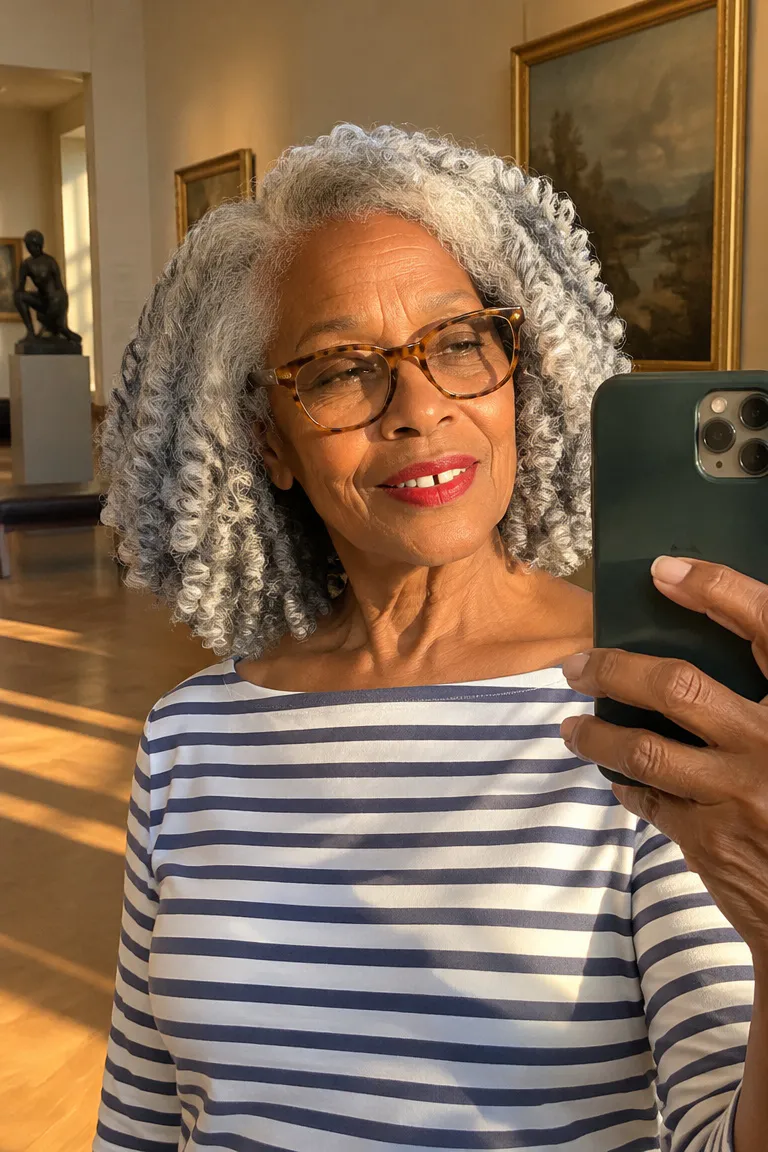
This one is low-effort, not strictly protective. Take out a set of twists and you get defined, stretched texture that can last several days, so daily restyling drops. The ends are loose once the twists are out, which is why it doesn’t count as a protective style.
Keep it no-heat. Apply a light leave-in on damp hair before twisting, and let the twists dry fully before you take them out. Gray hair can frizz and shrink more than expected, so plan for a shorter, fuller shape than the twists suggested.
For a realistic refresh, tie a satin scarf at night and smooth a light moisturizer onto dry ends. Skip rewetting the whole head.
13. Roller Set Under Satin
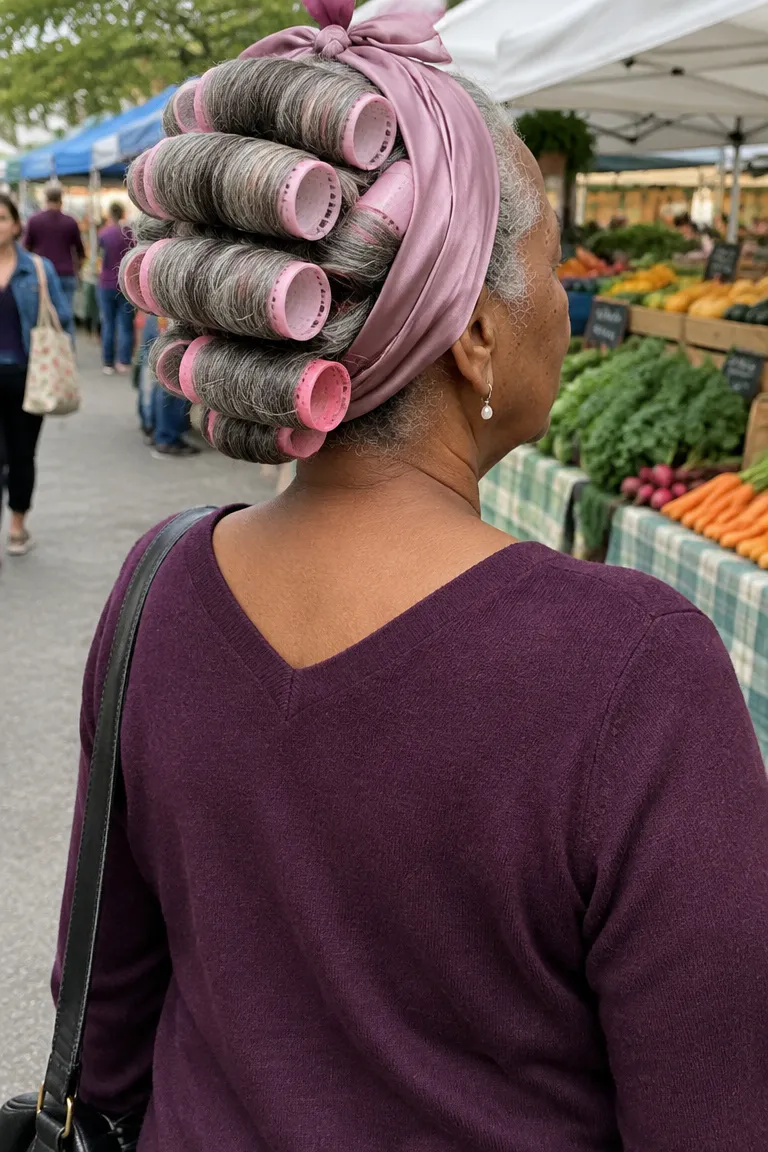
Large rollers on stretched or damp hair give a soft, rounded shape without a flat iron. Once the set is fully dry, keep it under a satin scarf at night. This is low-effort and not protective, because the hair is out and exposed.
In winter, never leave hair damp in cold air. Let the set dry completely before going out, whether that’s at the salon or at home.
It works either way, salon or home. If you go to a stylist, ask what roller size gives a rounded shape at your length, since bigger rollers give a softer set. After that, the set needs a quick weekly refresh, not daily work: re-wrap it under the scarf and smooth a little moisturizer on dry ends.
14. Short Natural Cut
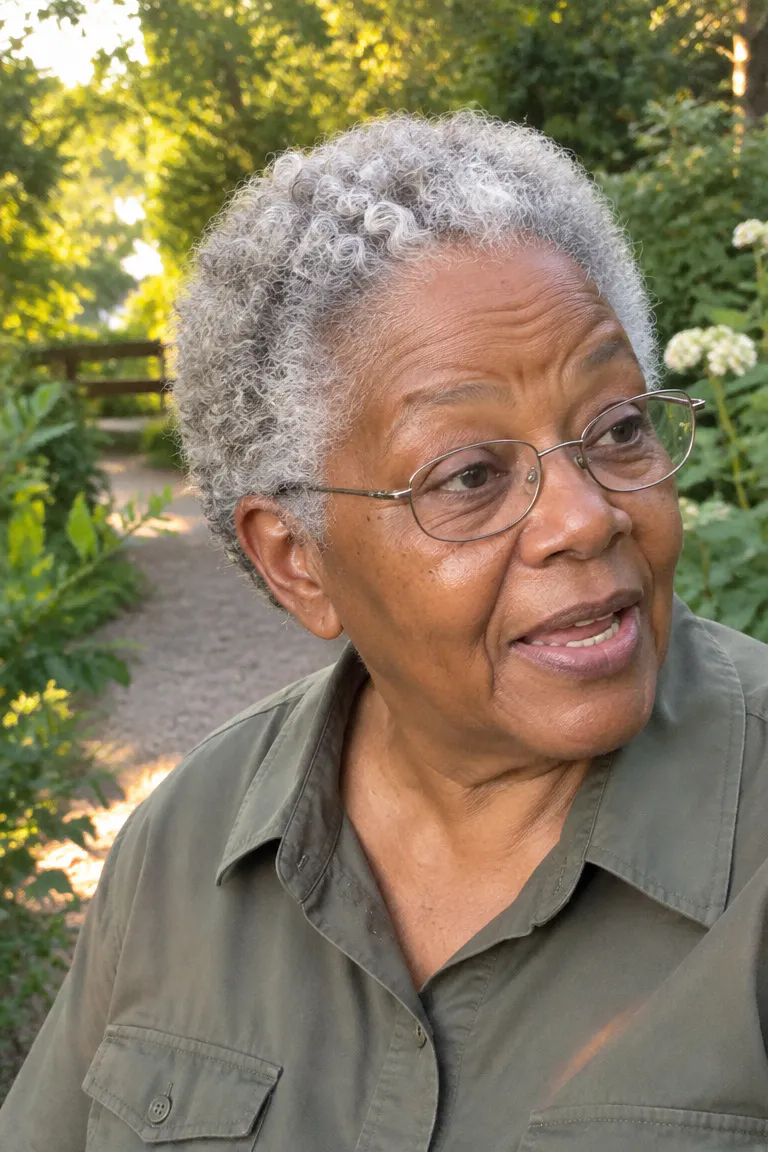
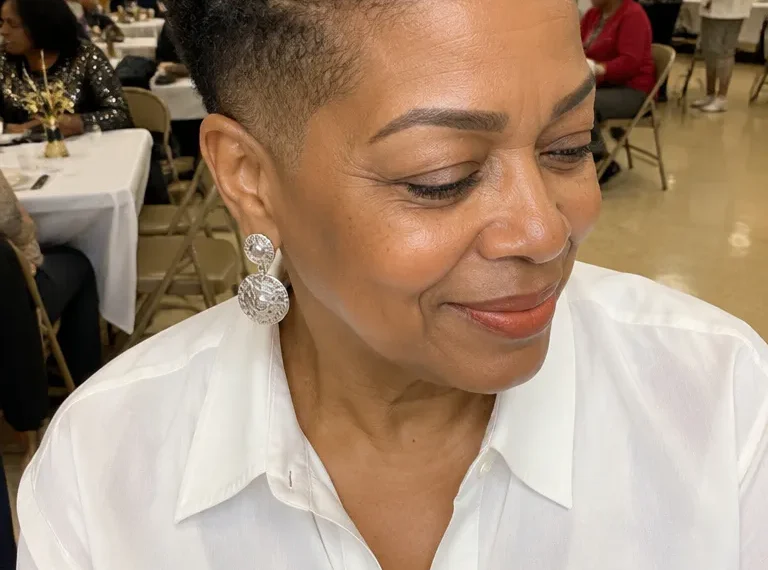
A short natural cut isn’t protective in the strict sense, but it’s a real low-maintenance option. There are no braids to take down, no tension, and the shape works under a hat. For ideas on cut shapes around thin edges, see these short natural hairstyles for thinning edges.
Ask the stylist for a rounded shape with even length, so the cut holds under a beanie instead of flattening on one side.
At home, a gentle shampoo, a conditioner, and a leave-in cover the basics. Many stylists suggest monthly clarifying if gray covers a large part of the scalp. Toning products, such as purple shampoo, can be drying, so follow the label.
Winter Care Between Style Changes
Between style changes, keep care simple: moisturize the ends, wrap or cover your hair at night, and don’t go out in the cold with damp hair. Treat any scalp soreness as a reason to loosen or remove a style.
Before your next appointment, write down the style name, the part size you want, and a take-down date to agree on with your stylist.