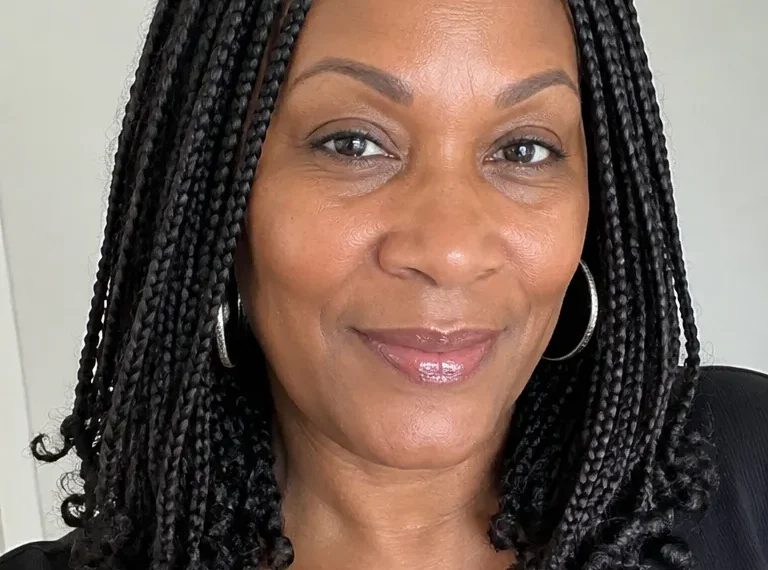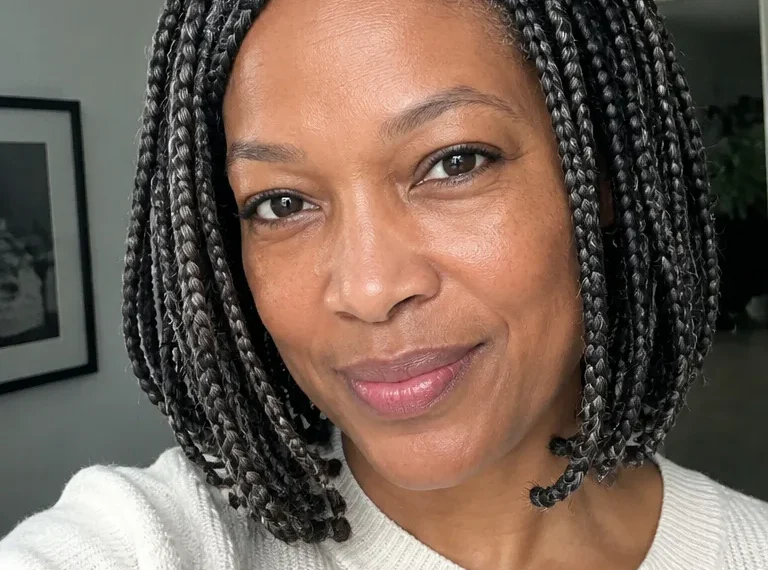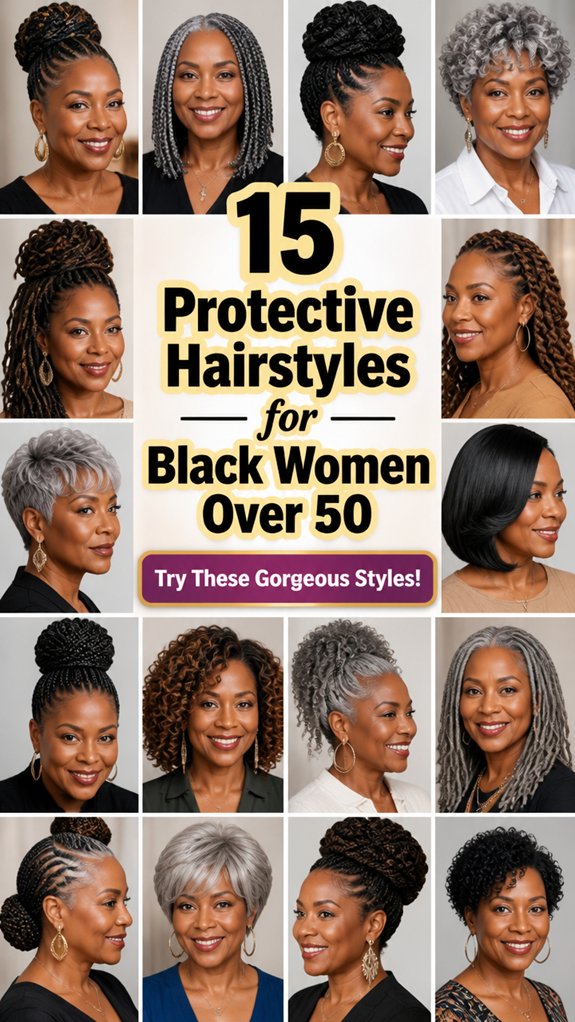
You can choose 15 protective hairstyles that suit you over 50, by following simple moisture-friendly rules, gentle cleansing, light oil or butter on ends, and satin wrap at night. Start with classic braids in medium sections, then try box braids with light tension, crochet for less daily styling, and faux locs or a neat bun for quick comfort. Rock Senegalese, Havana twists, or Bantu knots for stretch, and keep a wig in rotation with breathable cap fit. Use gentle detangling to prevent breakage, too, and you’ll see more tips ahead.
Start With Moisture-Friendly Protective Rules
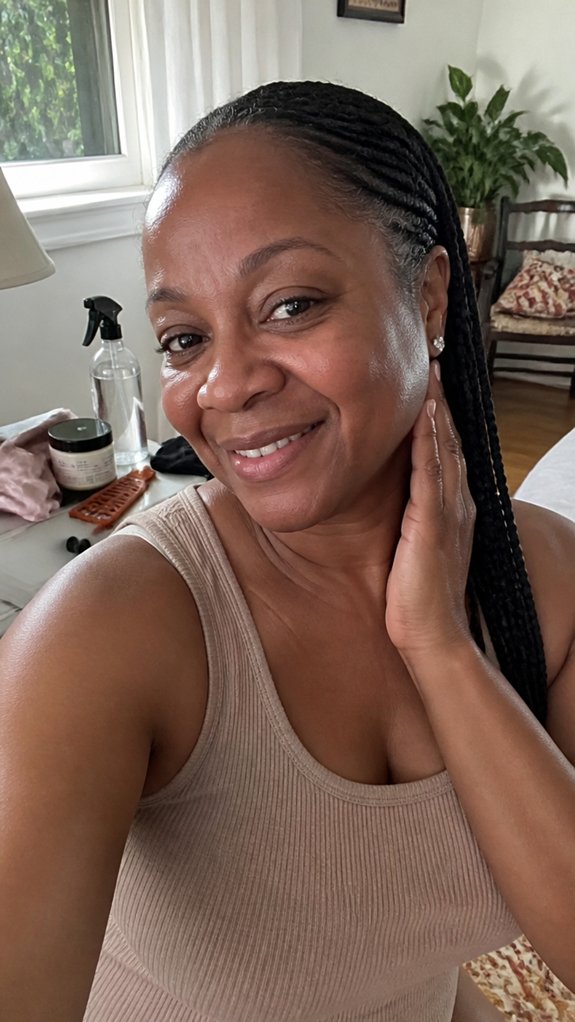
Start by setting moisture-friendly protective rules, because your protective style can only help if your hair stays hydrated underneath.
You should wash or cleanse gently, then seal with a light oil or butter, so your scalp feels cared for.
Follow a simple hydration schedule, spritzing with water and a moisturizing mist, then adding a little leave in. Don’t overload, you want softness, not heaviness.
Choose leave in choices that match your texture, like cream for dry strands, gel-cream for coarser hair.
At night, cover your ends, and refresh lightly in the morning, keeping everything intimate, comfy, and secure.
Choose Twists That Stretch Without Frizz

You can get beautiful stretch with twists, and you can do it without chasing frizz all week.
Start by creating sleek partings, so each twist sits cleanly, close to your scalp, and stays uniform.
Use dampened, well-conditioned hair, then section carefully, you’ll feel the difference right away.
Choose twist sizes you can comfortably hold, if they’re too tight, they snap back and tangle.
Before you sleep, wrap with silk lined wraps, this keeps friction low and shine high.
When you untwist, separate gently with your fingers, and let the stretch reveal itself.
Wear Classic Braids for Low-Maintenance Growth

Once your twists have stretched smoothly, classic braids give you a fresh way to protect your hair while you focus on growth, not constant styling.
You can install medium-sized sections, then keep your edges tucked with light gel, and your scalp stays happier.
Classic braids support scalp health by reducing daily tugging, and by letting your roots rest between washes.
Choose a braid length you can manage, because longer braids tempt you to overdo it, and that can pull.
At night, you cover with a satin scarf, and in the morning you spritz lightly, not soak.
Try Crochet Styles to Cut Styling Time
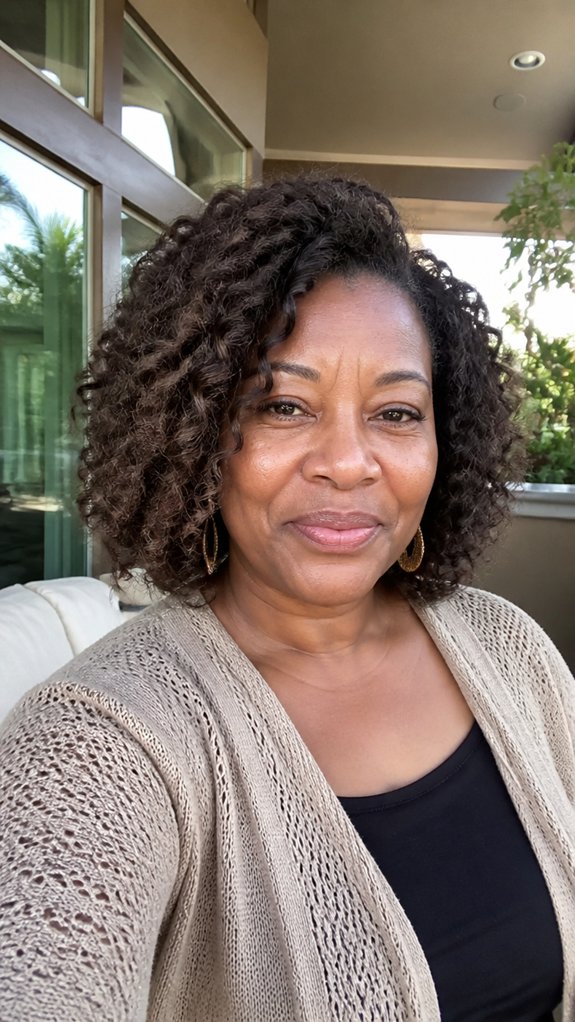
Crochet styles can save you time while still protecting your hair, especially when you want a neat look without daily styling. You can choose quick installations, then let your hair rest while the crochet hair stays secure.
Start with clean, detangled hair, then braid or twist small sections close to your scalp. Next, use a latch hook to pull in the hair gently, you’ll feel the satisfaction fast.
Try yarn variations, like soft textured strands for a natural finish, or thicker fibers for fuller, cozy movement. When you finish, seal your edges lightly, and enjoy touchable, low-effort style.
Rock Senegalese or Havana Twists for Fullness

Senegalese and Havana twists give you rich fullness, so your hair looks styled and polished without needing daily heat.
When you choose Senegalese twists, you can tap into Senegalese volume, with chunky, uniform twists that frame your face softly.
For Havana twists, aim for Havana fullness, with longer, slightly thicker strands that sway as you move.
You’ll get the best results if you part cleanly, use a light setting mousse, and twist with tension that feels secure but not tight.
Seal the ends, then wrap at night.
Enjoy compliments, because your hair looks lovingly cared for.
Use Bantu Knots for Natural Texture Protection
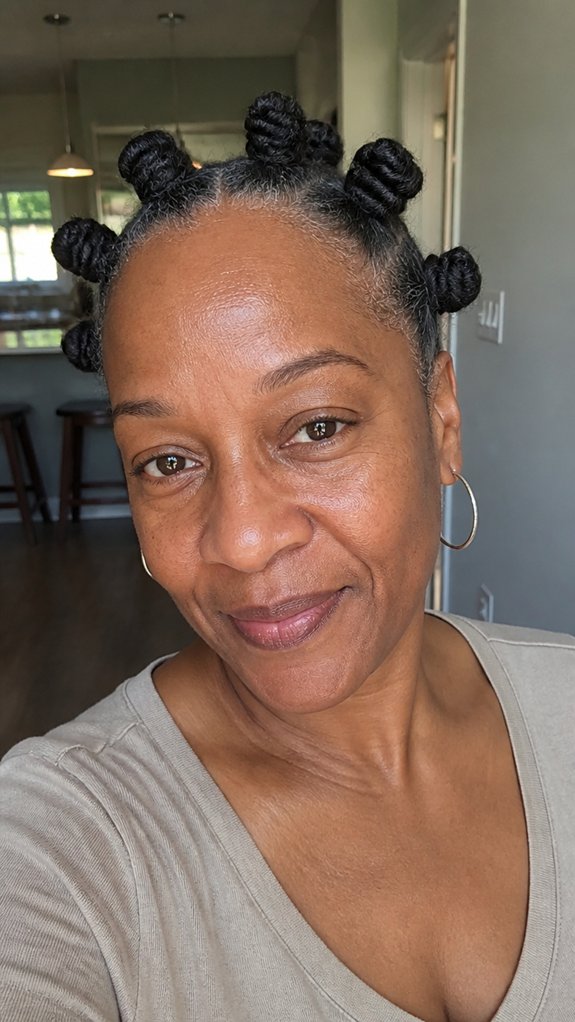
Bantu knots work beautifully for protecting your natural texture, especially when you want your coils or curls to stay defined.
Before you form them, prep your hair, detangle gently, and do a soft scalp massage with your fingertips to boost circulation.
Then section your hair, twist each part into a small knot, and secure it snugly but not tight, so you can breathe easy.
Keep moisture by lightly misting with water or a leave-in.
At night, cover everything with a satin bonnet, this helps reduce frizz and keeps your pattern looking freshly kissed when you unwind.
Opt for Box Braids That Protect Thin Edges

Box braids can be a simple, protective choice when you want your style to last, and you also need to care for thin or sensitive edges.
You’ll start with an edge friendly parting, keeping the sections neat but not too tight. When you braid, you keep tension light, so your hairline can breathe, and you won’t tug when you move close or turn your head.
Before install, you massage scalp safe oils along your part lines, then let them sink in. You sleep with a satin scarf, and you refresh moisturizers weekly, so your edges feel loved and stay strong.
Style Faux Locs for Soft, Scalp-Safe Coverage

Try faux locs when you want soft, scalp-safe coverage, without the heavy feel that some styles bring.
You start by parting your hair into neat sections, then you apply a light layer of gel or leave-in, so your scalp stays comfortable.
Choose lightweight extensions, and use a crochet hook to mimic natural loc patterns, from your roots down.
For a better fit, add scalp friendly accessories like breathable caps or soft clips, especially near the crown.
As you style, keep your tension gentle, you’ll reduce bumps, and your edges stay happy.
Finish with a moisturizing mist, and enjoy easy, protective volume.
Go With a Headscarf Set for Daily Comfort
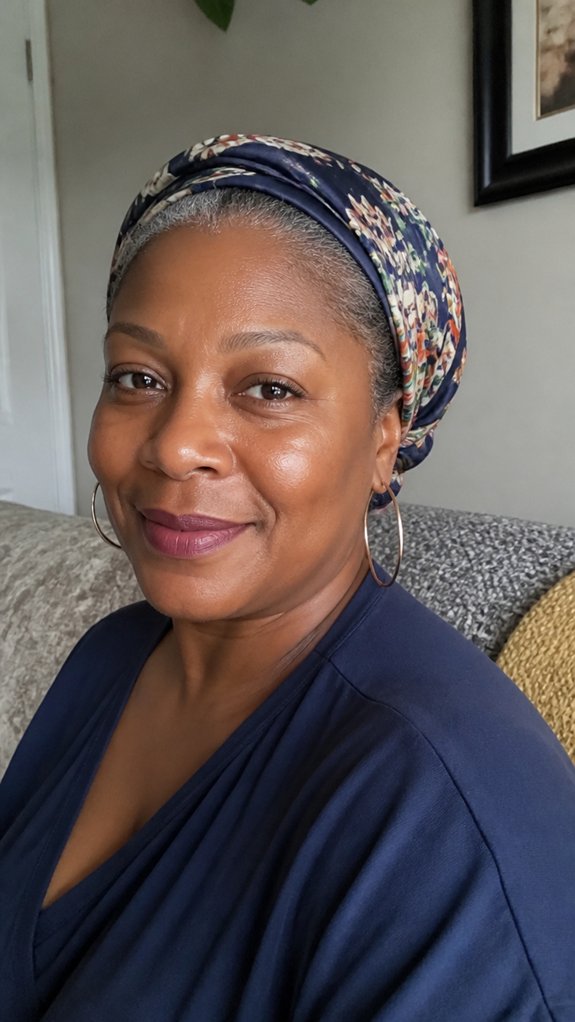
If you want daily comfort without messing with your hair all day, a headscarf set gives you an easy, gentle routine. You slip on silk scarves that feel smooth against your scalp, and you keep your style protected while you move.
Choose patterned wraps in breathable fabrics, because they help your hair stay cozy, not sweaty. In the morning, you tuck ends neatly, then adjust the fit so it sits snugly, without pulling.
At night, you wrap again, and you sleep softer. You’ll wake up with less frizz, and your hair still feels cared for.
Wear a Wrap Bun for Secure, Polished Length
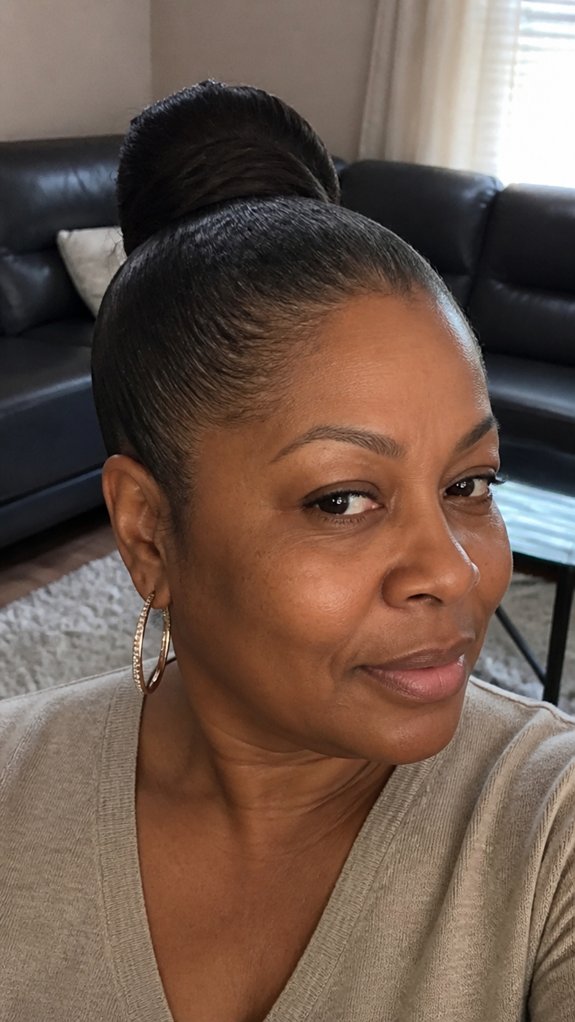
After you’ve prepped your hair with a gentle scarf routine, wear a wrap bun to keep your ends secure and your look polished all day. You’ll gather your hair at the crown, then smooth it with light oil, so your silk edges stay neat, not puffy.
Next, wrap the lengths around the base, tuck the ends inward, and use bun pins to lock everything in place, close and comfortable. If you want extra hold, lightly mist, then press down with your palms.
Finally, cover with a satin scarf at night, and in the morning, you’ll feel ready for anything, even close conversations.
Choose a Claw-Clip Updo for Quick Re-Tucks
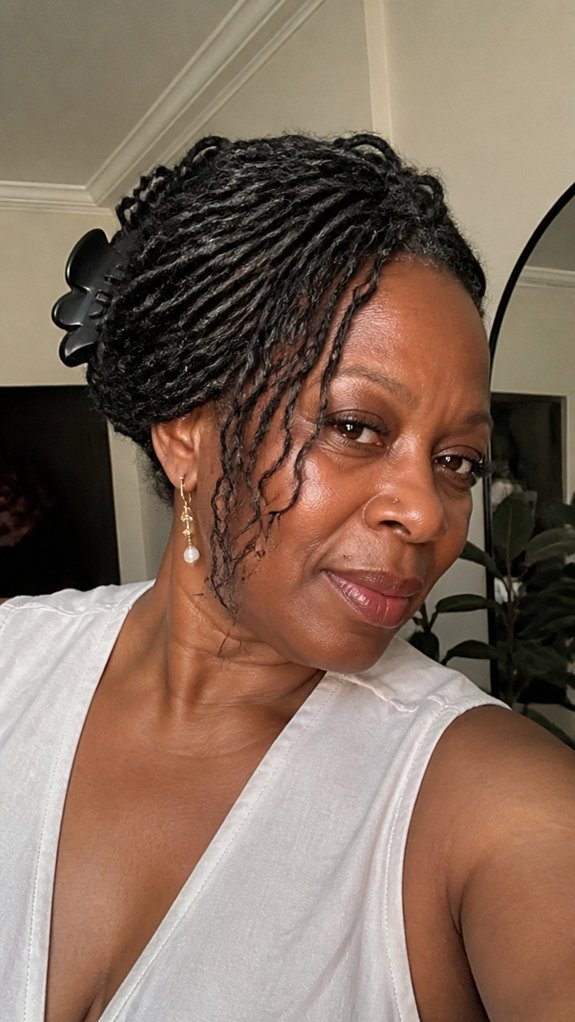
Choosing a claw-clip updo gives you a fast, reliable way to re-tuck your hair without starting over. You can keep your edges tucked, and still feel put together for the day.
After you step out, you gently gather small sections, smooth them with your fingers, then twist into a tidy roll. Slide the claw clip in at the crown, and press lightly so it grips.
When you need an updo refresh, lift the clip, mist lightly, retuck, and reclamp. With steady claw clipcare, wipe the teeth, store it dry, and replace it when it loosens.
Install a Wig for a True Break From Styling
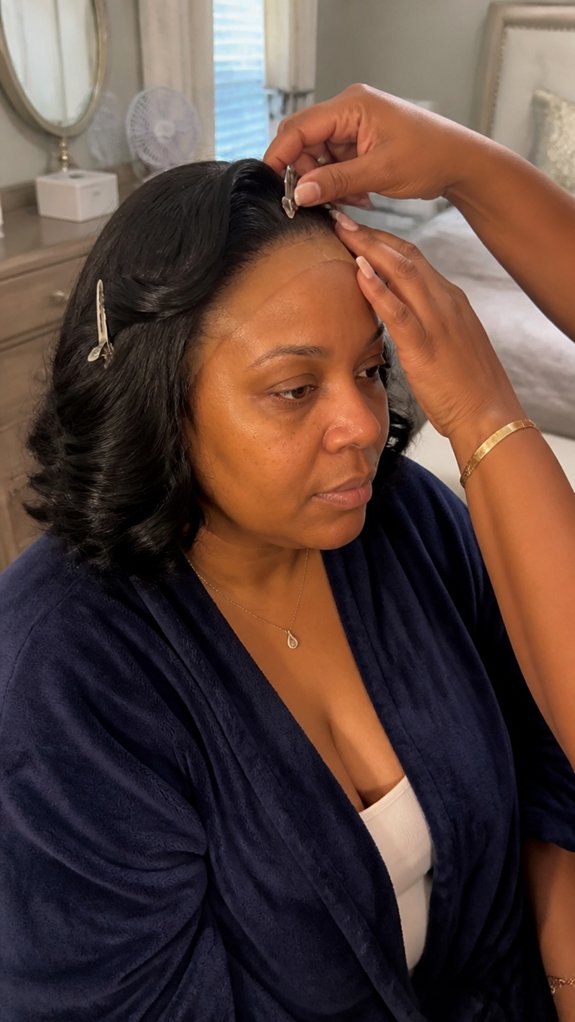
A wig gives you a real break from daily styling, and you still look polished in minutes.
You slip it on when you want your edges to rest, and you feel confident right away.
Start by cleansing your scalp gently, then detangle and pin your hair flat underneath.
Handle the wig with care, keep your fingers light, and practice good lace care by storing it on a clean stand.
Before you place it, check cap ventilation so heat escapes, and your scalp stays comfortable.
Once it’s on, adjust the fit, smooth the hairline, and take a moment to breathe.
Secure a Wig With a Breathable Cap Fit

Secure a wig with a breathable cap fit, and you’ll protect your scalp while still looking neat and put-together. Choose a cap with cap ventilation, so your scalp can breathe, even on warmer days.
You’ll feel more comfortable when you gently position the wig, then align it with your natural hairline. Make sure the breathable edges sit flat, not pinched, around your forehead and sides.
Adjust the straps until it feels snug, not tight, then use combs or clips to anchor at the nape and sides. When you press lightly, it should move with you, not slide.
Maintain Protective Hairstyles Past the 2-Week Mark
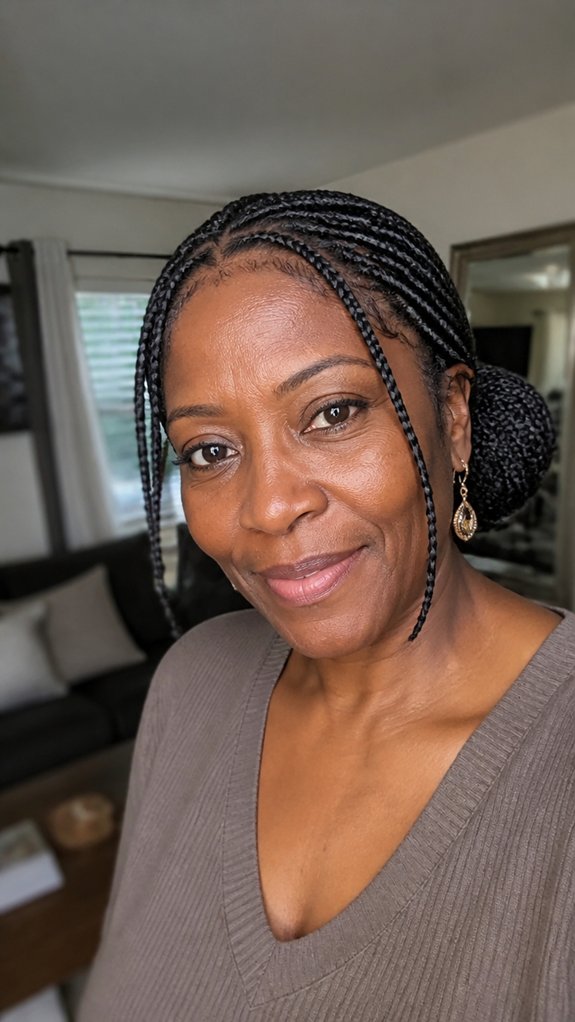
Once your wig or protective style has passed the first 2-week mark, your job becomes maintenance, not just styling. You’ll want to check edges and tracks every few days, because loosening happens slowly. Keep a silk scarf or bonnet ready, and lock in moisture with a light spray, then smooth it down gently.
At night, do night time maintenance by re-wrapping before sleep, so your hair stays aligned. Include scalp massage routines for circulation, use light pressure with your fingertips, and keep it soothing, not rough. In the morning, fluff the roots lightly, and you’ll feel fresh again.
Prevent Breakage With Gentle Detangling Steps
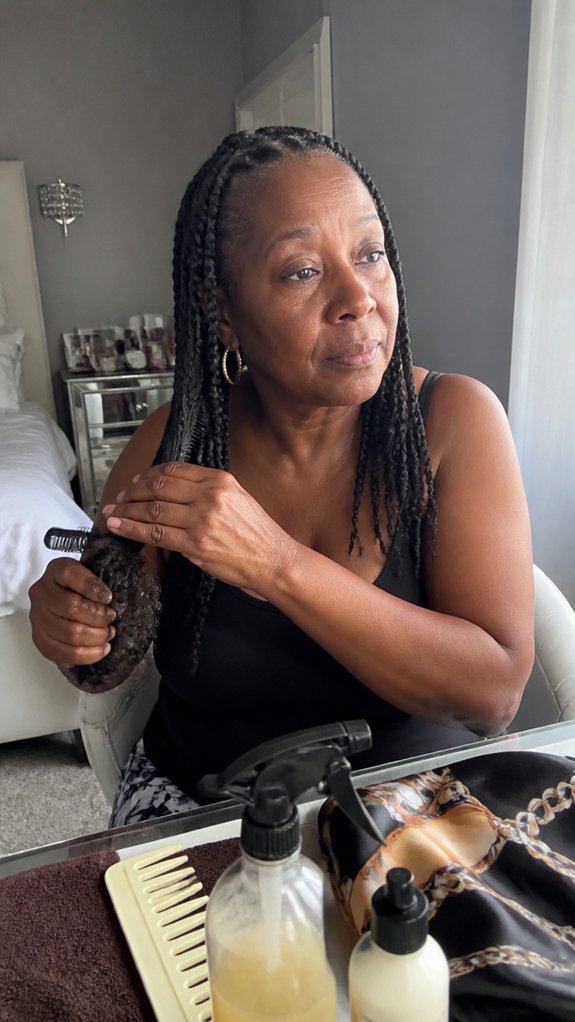
Prevent breakage by detangling gently, even if your protective style feels set and steady, because dried strands and product buildup can silently weaken hair over time.
Before you touch your hair, wet it with warm water, then do gentle cleansing with a light, slip-rich conditioner or co-wash.
You should never yank, so finger detangling is your best friend, start at the ends first. Use your fingers to separate small sections, then slowly work upward.
If you feel resistance, stop, add more conditioner, and try again.
Finally, rinse well, blot, and seal lightly, so your ends stay strong.