Faux locs that look weightless in a photo can still pull hard on a hairline that has thinned over the years. Length, loc type, and how the first row is installed matter more than the style name. A simple check before you commit: lift your eyebrows and smile in the mirror once the first row is in.
If the skin at your temples tugs, ask for that row to be redone.
The eleven styles below run from a 5-inch pixie to chest-length wrapped locs, and each one names what to ask for in the chair. You’ll see where soft locs make sense over wrapped ones, how to match silver or salt-and-pepper to your own gray, and which looks depend heavily on the stylist’s skill. A few styles also come with a stop sign, so you know when to hold off.
1. Chin-Length Soft Locs Bob
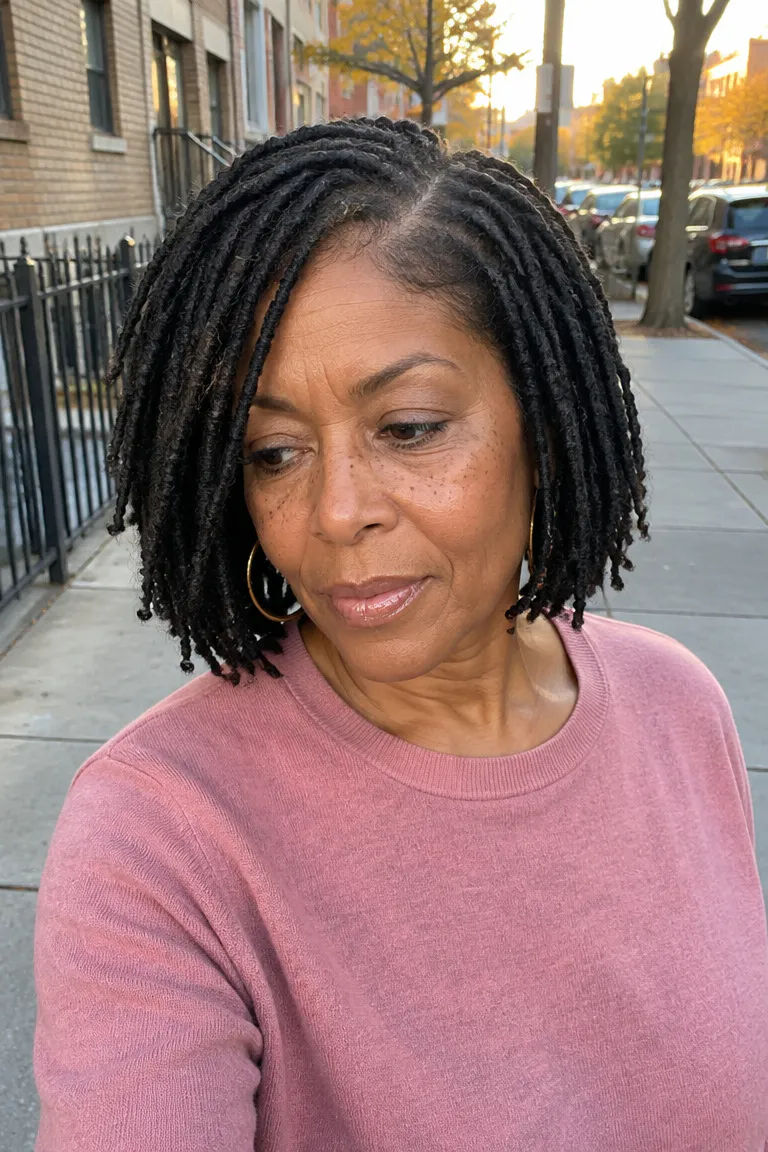
A soft locs bob at 10 to 12 inches, ending right at the jaw, is the lightest full-head option here that still reads as locs. Less length means less hair hanging off each root, so there’s simply less to pull on the hairline. Blunt ends with a slightly tapered tip keep the shape neat without needing a lot of styling.
Soft locs are also worth separating from stiffer wrapped faux locs. Many stylists say the wrapped kind, where hair is wound tightly around a base, can create more tension at the root. Soft locs are usually made with a looser, more flexible finish, so they tend to sit with less strain, though the installer’s sectioning still decides the result.
A bob also stays off your neck and shoulders, which is handy if collars, scarves, or a car headrest tend to push long locs around.
Ask your stylist: Can the first row at the temples be installed looser, with smaller sections than the rest of your head? Smaller sections spread the weight over more of your own hair.
2. Short Boho Locs, Few Distressed Pieces

Picture smooth locs at about 12 inches with only a handful of curly, wispy pieces left loose along the lengths. That gets you the boho texture without committing the whole head to it. A fully distressed install uses extra wrapped hair on every loc, and that added hair means more weight hanging from the same roots.
Pick the loose pieces on purpose. Four to eight accent locs, mostly around the face and crown, give the look its character while the rest stay smooth and lighter. Ask the stylist to keep the loose strands thin so they don’t make any one loc heavier than its neighbors.
Maintenance tip: Loose curly pieces tangle faster than smooth locs, especially at the nape and where they rub your collar. Finger-detangle them gently, working from the ends upward. Don’t run a brush through them, and never brush hard at the hairline.
3. Silver-Blend Soft Locs
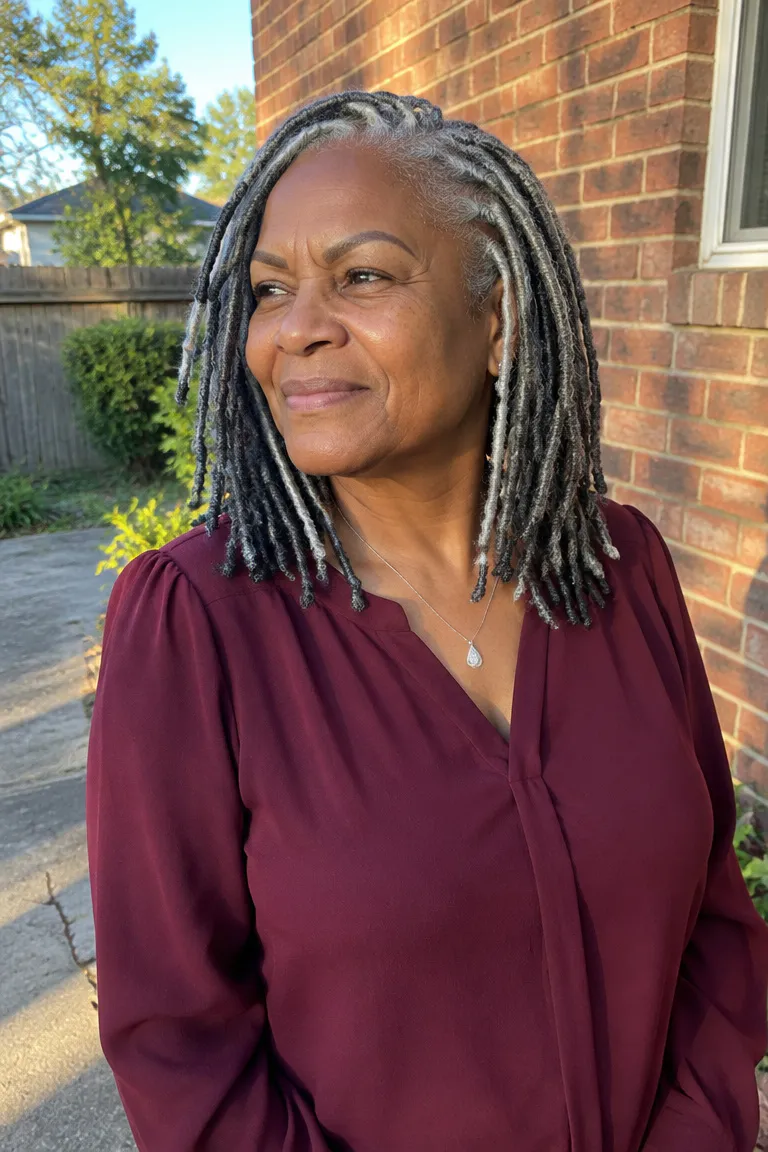
Soft locs in a silver and charcoal blend, ending around the collarbone, mix steel-gray strands with darker threads so the color looks lived-in rather than flat. Gray is simply one color option here, sold in packs alongside black and brown, including gray-to-white ombre.
To match your own gray, bring a photo of your natural hair taken in daylight, since salon lighting can make silver look warmer or bluer than it is. Then decide which direction you want:
- Steel: cooler, darker gray that sits close to charcoal
- Silver-white: brighter, with little dark showing
- Mixed with dark strands: softer contrast that reads less stark near the face
Gray growth under synthetic hair can show at the roots as your hair grows, so ask the stylist to plan the root shade. A slightly darker root blend often looks more natural against a light gray install.
4. Shoulder-Length Crochet Curly Ends
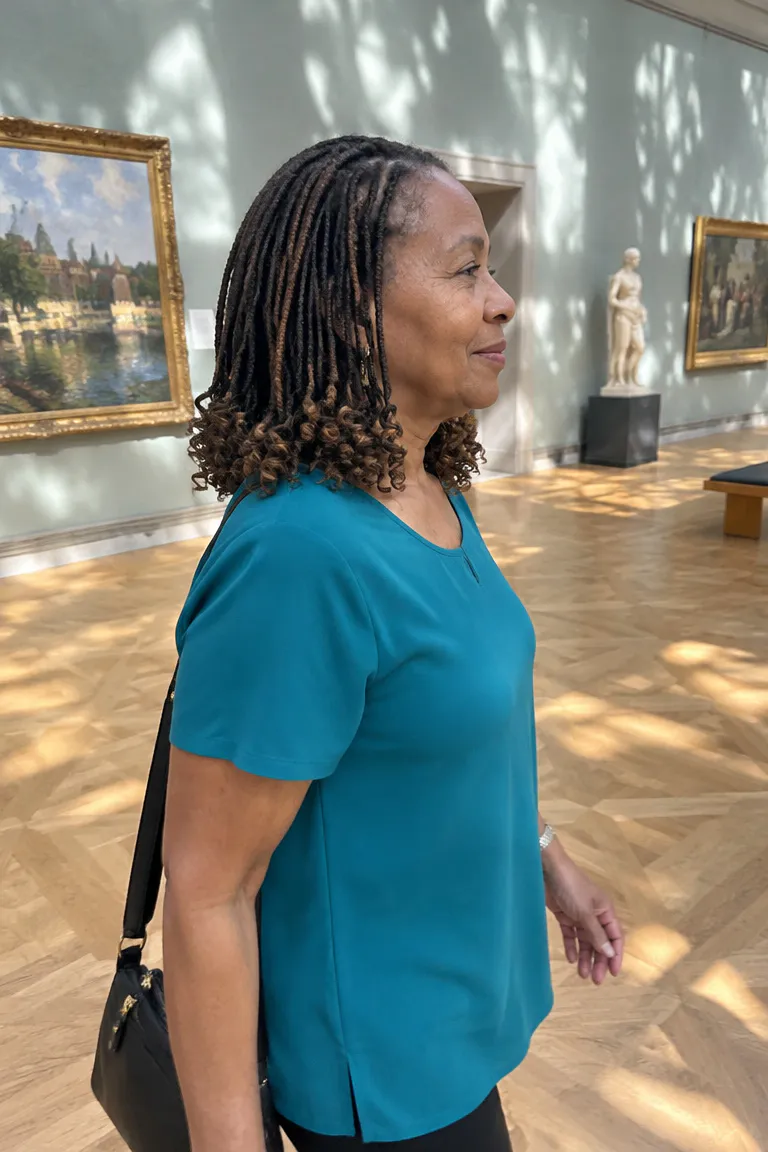
Pre-looped crochet faux locs at 14 to 16 inches, with smooth shafts and bouncy curly tips, can shorten chair time compared with wrapping every loc by hand. That matters if long appointments are hard on your back or hips. Curly ends are also easy to twist up and pin in warm weather.
Crochet can be gentler, but only when the stylist is careful about where the hook anchors. Ask how the loop is attached and whether the base braids or twists are loose. Crochet isn’t always lighter than wrapped locs, so compare the actual weight of the hair being used.
Comfort check: Ask about breaks before you sit down. Bring water and a snack, and a small cushion if the chair is hard.
For more crochet options by length, weight, and scalp comfort, see these low-maintenance crochet braids for Black women over 60.
5. Side-Parted Soft Locs
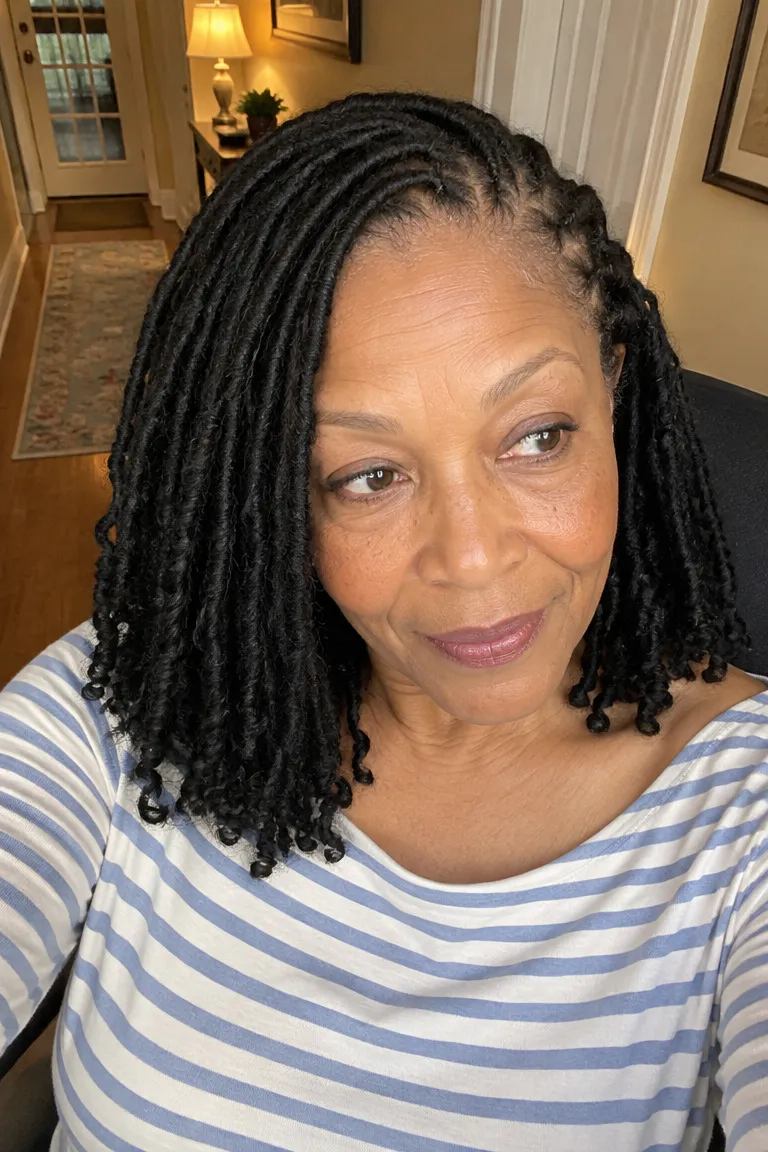
A deep side part lets soft locs fall across one side of the forehead and skips the hard center-part pull. Medium length works well because the sweep stays light. The part line itself is where the details count.
Ask for a wider, softer part, not a sharp, narrow line, and for locs along the part to be no thicker than the natural hair holding them. A heavy loc anchored to a thin section tugs on the same few strands all day.
Try a quick forehead test once the part is done: lift your eyebrows and smile. If the skin tugs, the part is too tight or the locs there are too heavy.
You can also choose how far to push the part. A slight side sweep suits a hairline that’s tender on both sides, while a deeper part works if one side is stronger and can carry more of the weight.
6. Medium Straight-Finish Faux Locs
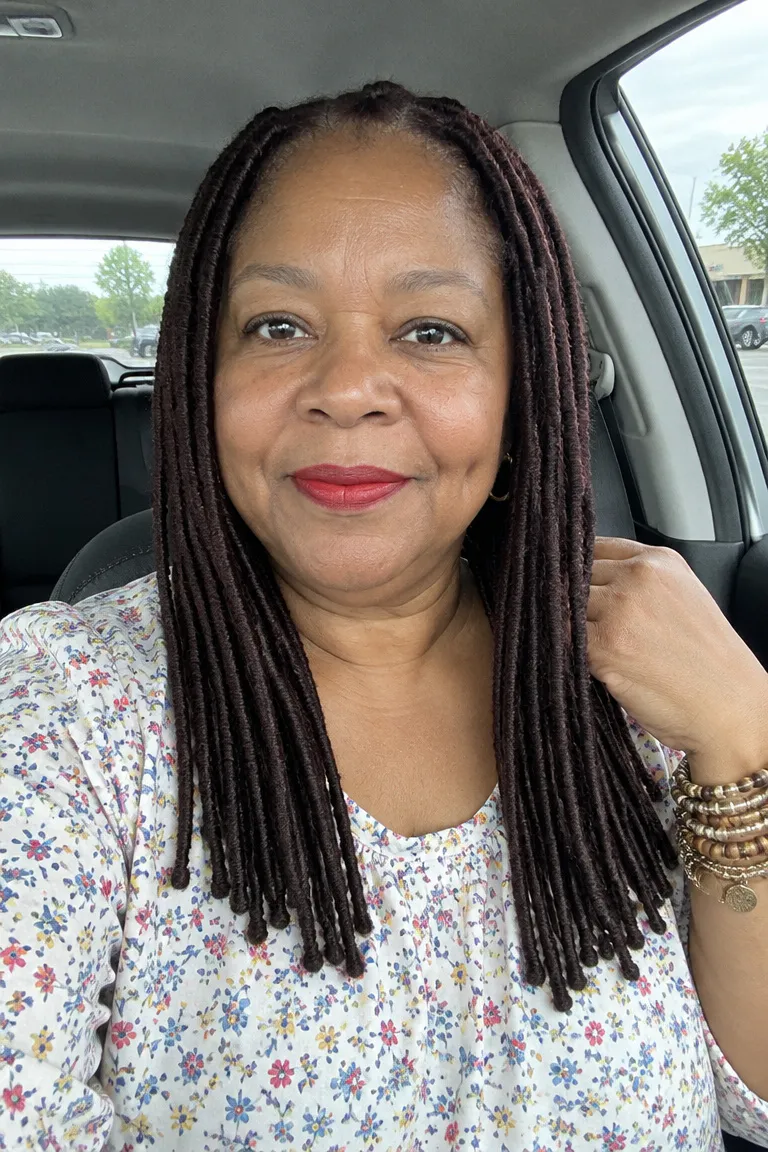
Classic wrapped faux locs in a smooth, straight finish, ending between shoulder and chest, look the most polished of the group. They’re also the heaviest option on this list, and waist length would be heavier still. Wrapped locs can feel stiffer than soft locs and carry more tension risk, so section size and hairline tension matter more here.
Request thin sections at the hairline and a loose first row, and keep thin sections throughout so no loc is carrying extra weight. Sealed, tapered ends keep the look tidy without needing heat.
For a low-pull way to wear them, gather the locs into a loose low ponytail at the nape. Skip rubber bands and any tight, slicked-back gathering, since either one puts the strain right back on the edges.
7. Soft Half-Up With Snag-Free Clip
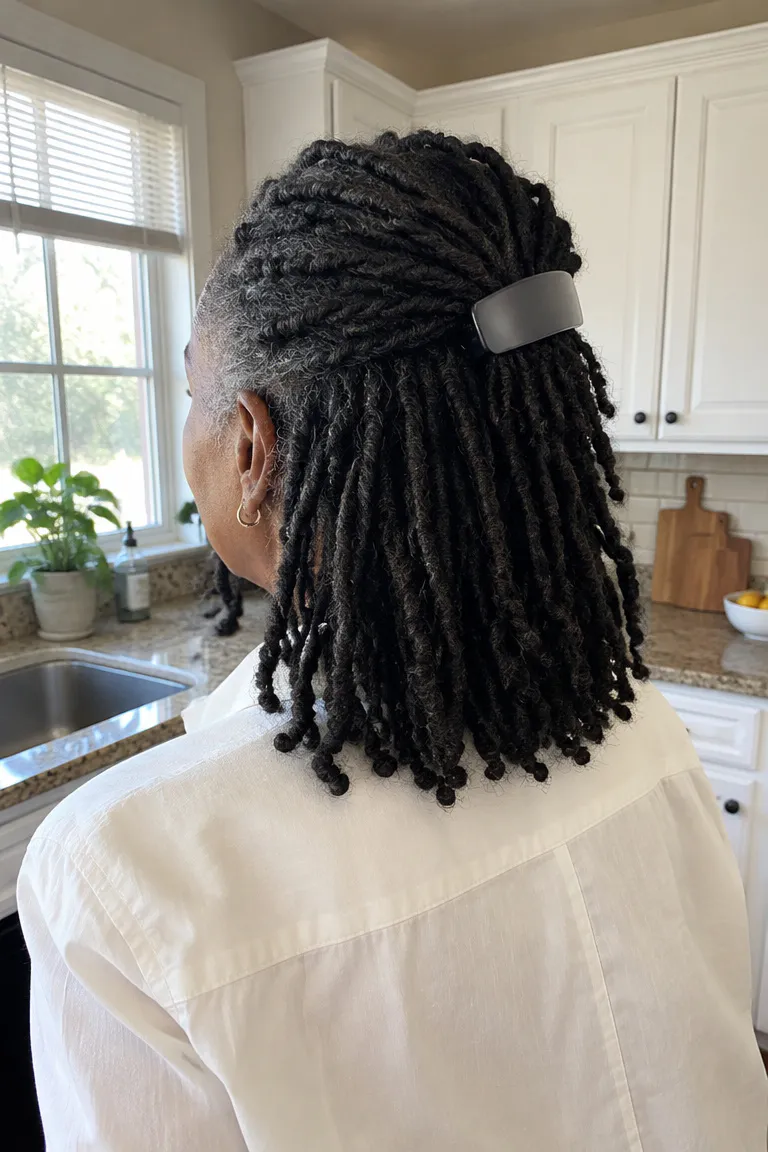
Gather the top half of shoulder-length soft locs loosely at the crown or the back of your head and hold it with a wide, smooth clip. Leave the front sections down. Half-up lifts weight away from the temples better than a tight gather, since the clip rests on the crown instead of pulling the hairline.
Avoid a few things that undo the benefit:
- Elastic bands pulled tight around the locs
- Clips with teeth that snag on loc surfaces or your own hair
- Clipping near the hairline, where the hair is most delicate
Maintenance tip: For sleep, use a loose satin bonnet or a satin pillowcase. Check that no tight elastic sits across your hairline.
8. Salt-and-Pepper Locs
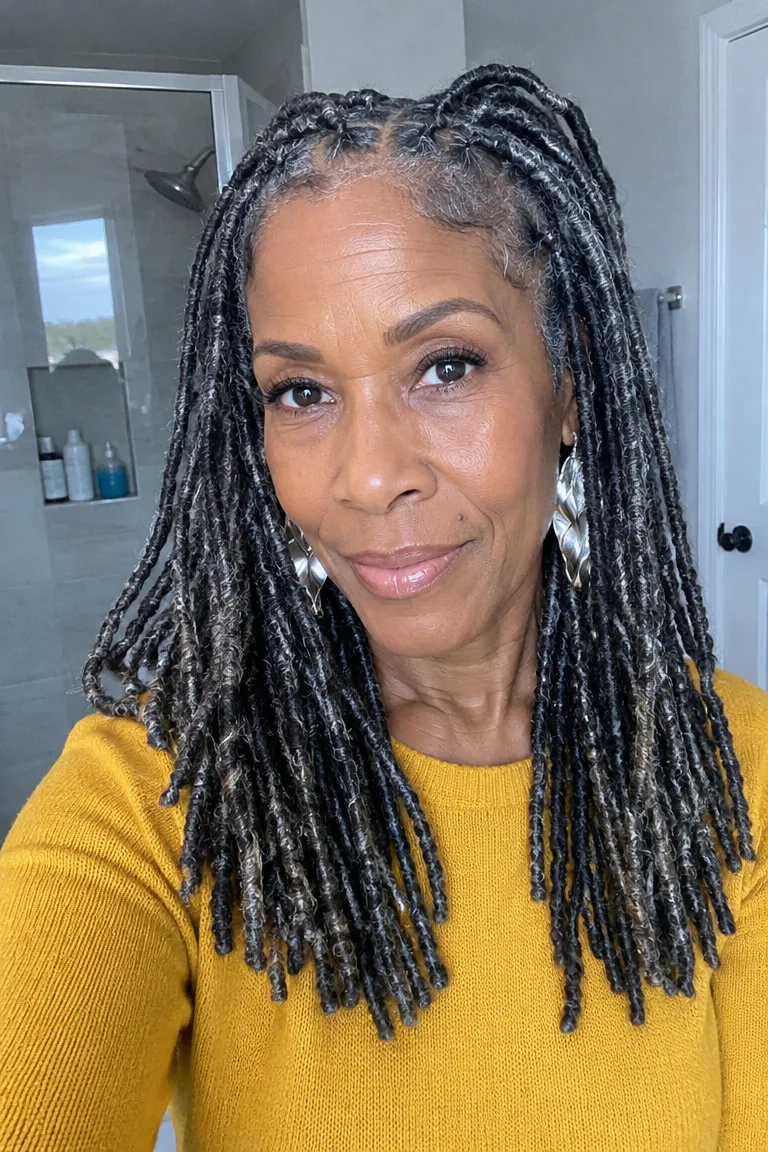
Salt-and-pepper locs twist black and gray strands together through every loc, so the mix is blended rather than split into separate dark and silver pieces. The practical payoff is at the roots: as your hair grows out, the blend helps hide the line between your natural gray and the synthetic hair.
Decide the ratio before you buy. Mostly dark with gray flecks gives a subtle effect, an even mix looks the most classic, and mostly gray reads closest to silver. Hold your photo against the color pack under daylight.
Ask your stylist: Can you blend the black and gray strands before installing, so the mix looks even at the roots and not clumped in a few spots?
If you want to see this blend in more lengths and shapes, look through these salt-and-pepper locs for women over 60.
9. Tapered Front Layers
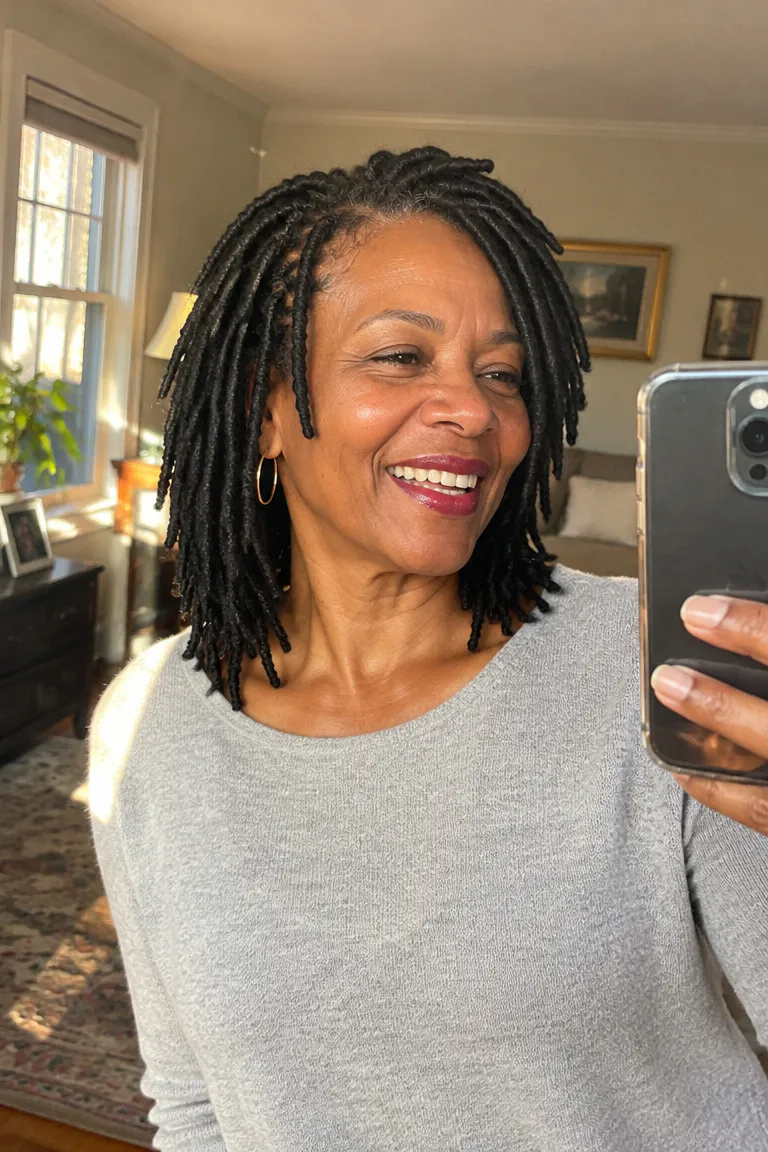
In this cut, the front locs sit around the jaw and collarbone while the back runs slightly longer. Shorter front locs mean less pull exactly where edges are most delicate. The shape also frames the cheeks without heavy locs hanging by the temples.
Face shape is a practical call here, not a slimming one. With a rounder face, front pieces that end at the jaw add width at the cheeks, so you may prefer them to land at the collarbone for a longer line. With a longer face, jaw-length front pieces add width at the sides.
Ask for the layers to be cut after the install, not before. Once the locs are in and hanging naturally, the stylist can judge how much weight is left near the front and trim accordingly.
10. Gray Streaks Near the Face
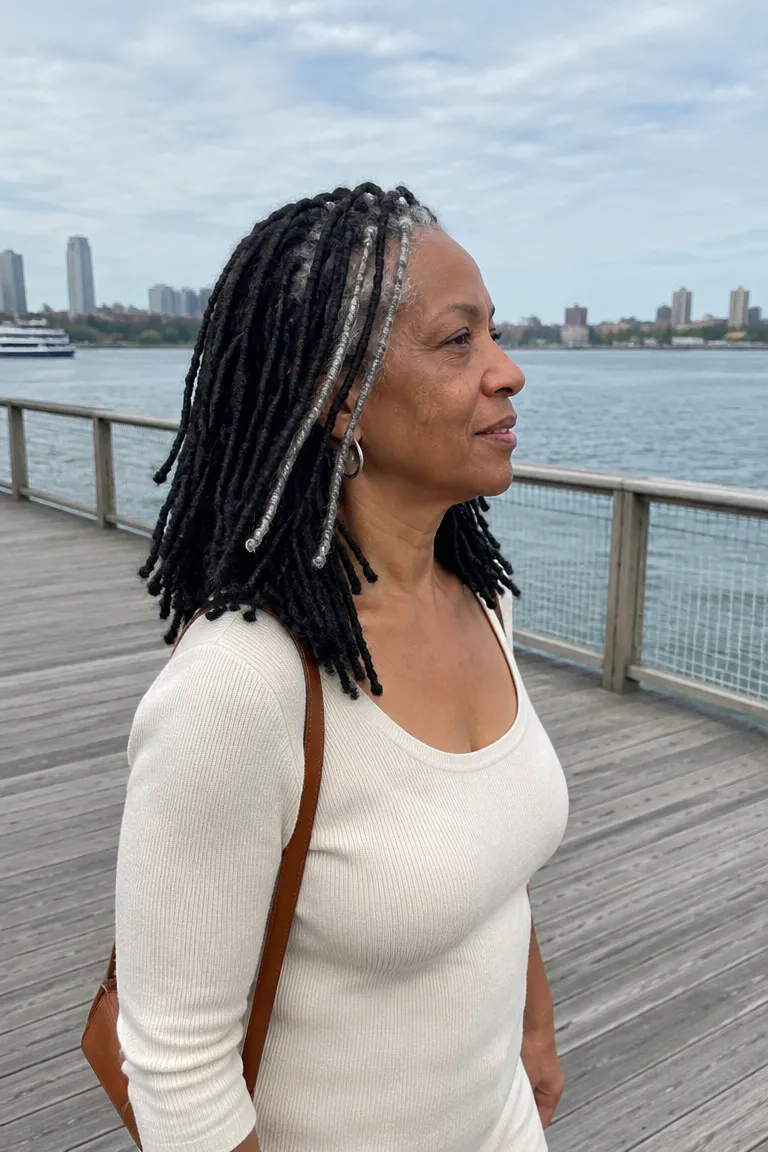
Dark locs with three to five thin gray or silver pieces woven into the front sections add brightness near the face. You don’t need to dye or replace the whole head to get that effect. The color is concentrated where people look first.
Keep the streaks thin and light. Bulky gray pieces at the hairline add weight to the most fragile part of the head, so the front sections should be small and the gray locs no heavier than the black ones.
You can choose between two or three single streaks and a full front panel of gray. Single streaks are subtler and easier to adjust later, while a panel gives a stronger contrast. Bring a photo of your own gray, taken in daylight, so the streaks echo it and don’t clash with it.
11. Pixie-Length Loc Style
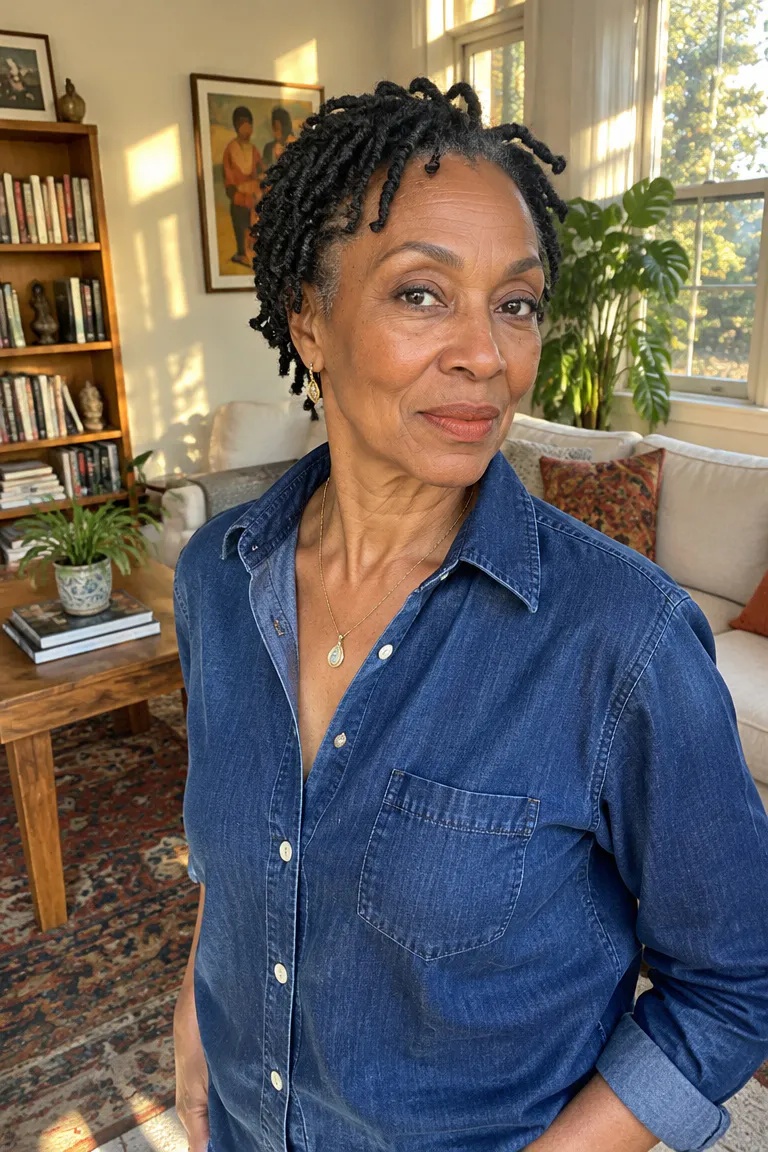
Pixie-length locs run about 4 to 6 inches, with tiny curly or textured tips that sit close to the head and taper shorter at the nape. They’re the lightest option on the list. They’re also the hardest to anchor without tension, because short pieces leave little hair to work with.
That makes this style depend on your stylist’s skill and on how fragile your hairline is. Ask directly how the short pieces will be secured. If you feel pulling or get a headache after the install, ask for it to be loosened right away and don’t wait for it to settle.
If your edges are already thin or tender, talk with a stylist before booking anything this short. A cut with no install can be the better starting point, like these low-maintenance pixie cuts for Black women over 50.
When to Skip Faux Locs for Now
Skip faux locs for now if your edges are thin, sore, or visibly patchy, if your scalp is tender to the touch, or if a recent style left you with headaches or lasting pulling. Hair that’s already stressed does better with a no-install cut or a rest period. If your scalp is painful, flaky, or showing new bare spots, get that checked before adding any extension hair.
For a style you do book, bring a daylight photo of your natural gray, a small cushion, water, and a satin bonnet. Pick the shortest length you’d happily wear, ask for a loose first row with thin hairline sections, and have it redone if you feel tugging.