Where your hair is thinnest should decide your bob, because a cut that covers a thin crown can leave a thin nape on display. Before you book, see a dermatologist if you notice thinning at the crown or center part, itching, burning or tenderness, patchy or sudden loss, or a receding hairline. A haircut doesn’t treat hair loss, and none of these styles will regrow anything, so use them to work with the hair you have now.
Match your thinnest spot to the numbers: for the crown, look at styles 5, 6, and 11; for temples and edges, 3, 7, and 8; for all-over thinning, 1, 2, 9, and 12; for the nape, 3, 4, and 10. If two areas are thin, choose the cut that covers the spot you notice first and ask your stylist to adjust for the other. Bring a photo and tell your stylist which spot you want covered.
1. Rounded Natural Coil Bob
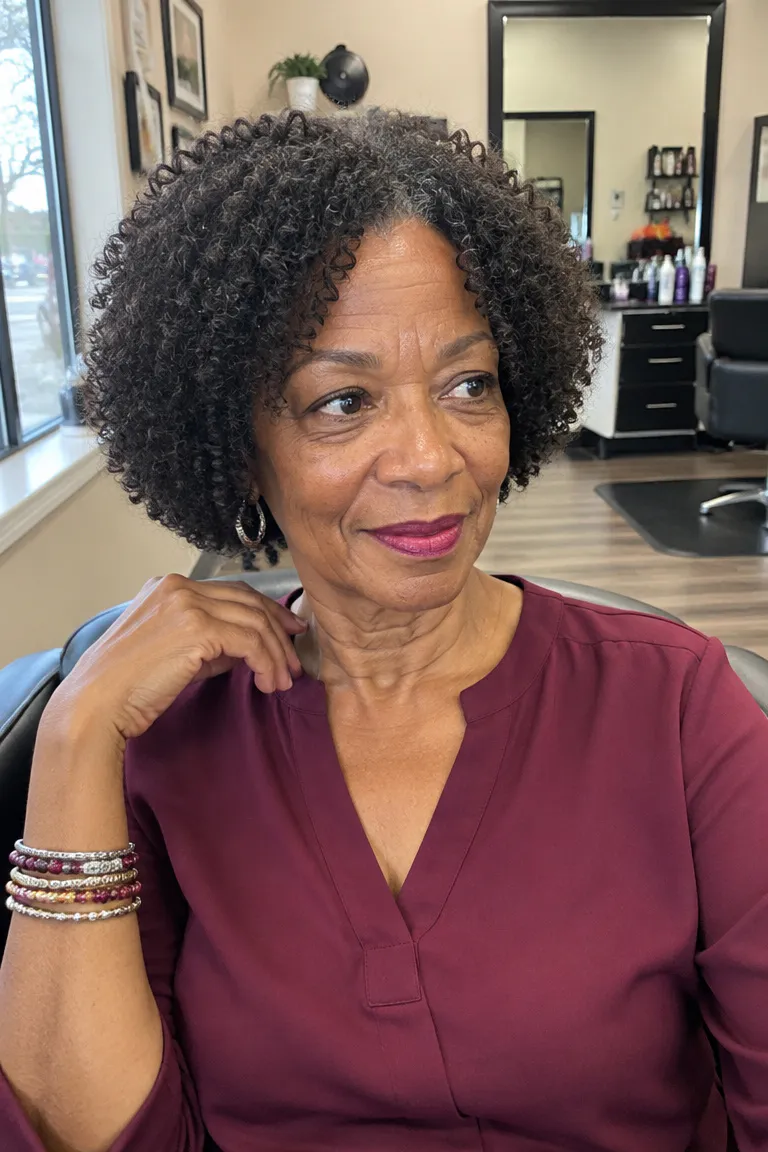
This bob sits between the chin and the jaw, and its shape comes from trimming rather than from heat or a relaxer. The fullness comes from the finish: coils are stretched in twists or picked out with a wide-tooth pick, then the stylist rounds the outline while the hair is in that stretched state.
Ask for a rounded perimeter, not a flat top. A flat top sits close to the scalp and lets thin spots show through, while a rounded shape keeps the crown hair standing slightly higher so it leans over sparse areas.
With no heat or chemical service involved, upkeep is mostly trims and moisturizer. When you pick it out, work from the ends toward the roots so you aren’t tugging on fragile strands.
Ask your stylist: Cut a rounded outline at chin-to-jaw length, check the shape from the back, and keep the top from being squared off or trimmed flat.
2. Blunt Chin-Length Silk Press
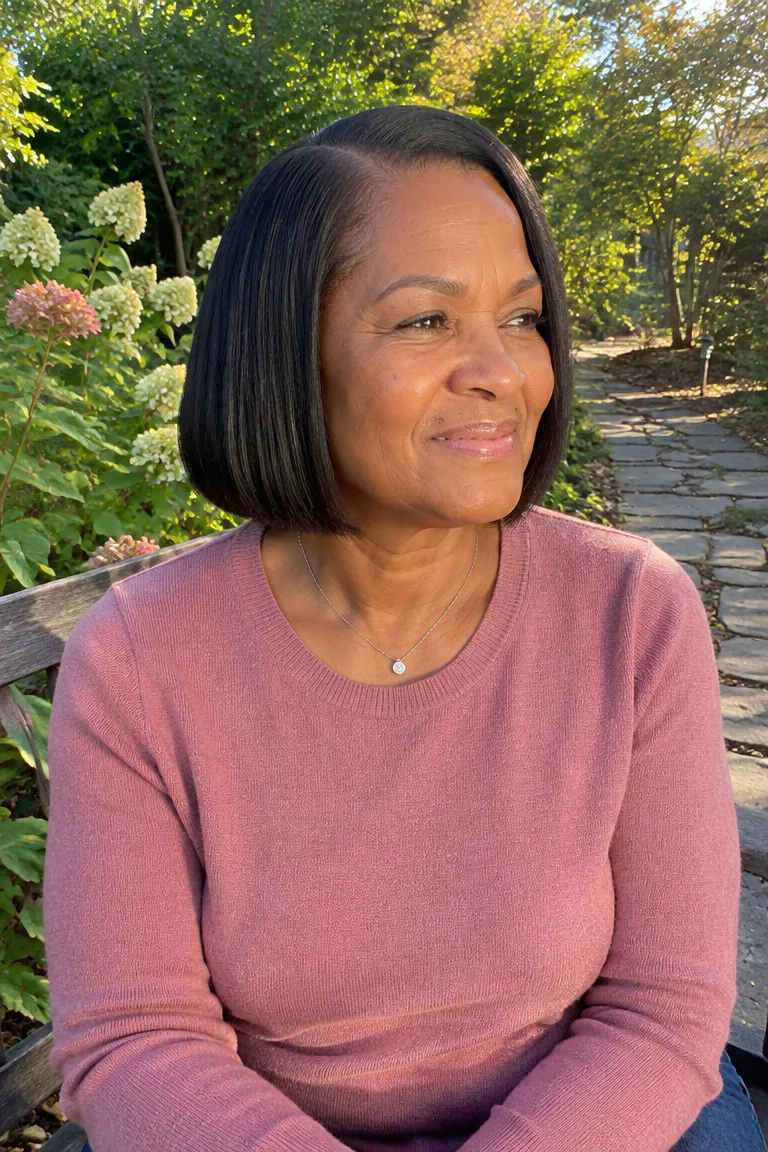
A blunt edge, where every strand ends on the same line, makes thin hair read as thicker because there are no wispy tips to show gaps. That idea comes from general thin-hair stylist advice, not from research on Black hair, so treat it as a cutting rule and not a guarantee.
The trade-off is heat. A press looks sleek on day one but doesn’t last as long in humidity, rain, or sweat, and each press adds heat to hair that’s already fine.
To decide how often to press, picture how many days you want it to hold. If you’d redo it weekly, style 1 or 8 will treat your hair more gently; if you’d press for events or every few weeks, this cut works. Ask for a low heat setting and a heat protectant, and wear a satin bonnet at night.
How much heat your hair gets is your call.
Maintenance tip: Stretch the time between presses by wrapping your hair at night and smoothing only the front and part line before a full redo. This style still adds recurring salon visits, so plan them into your schedule before you commit.
3. Tapered Nape Bob
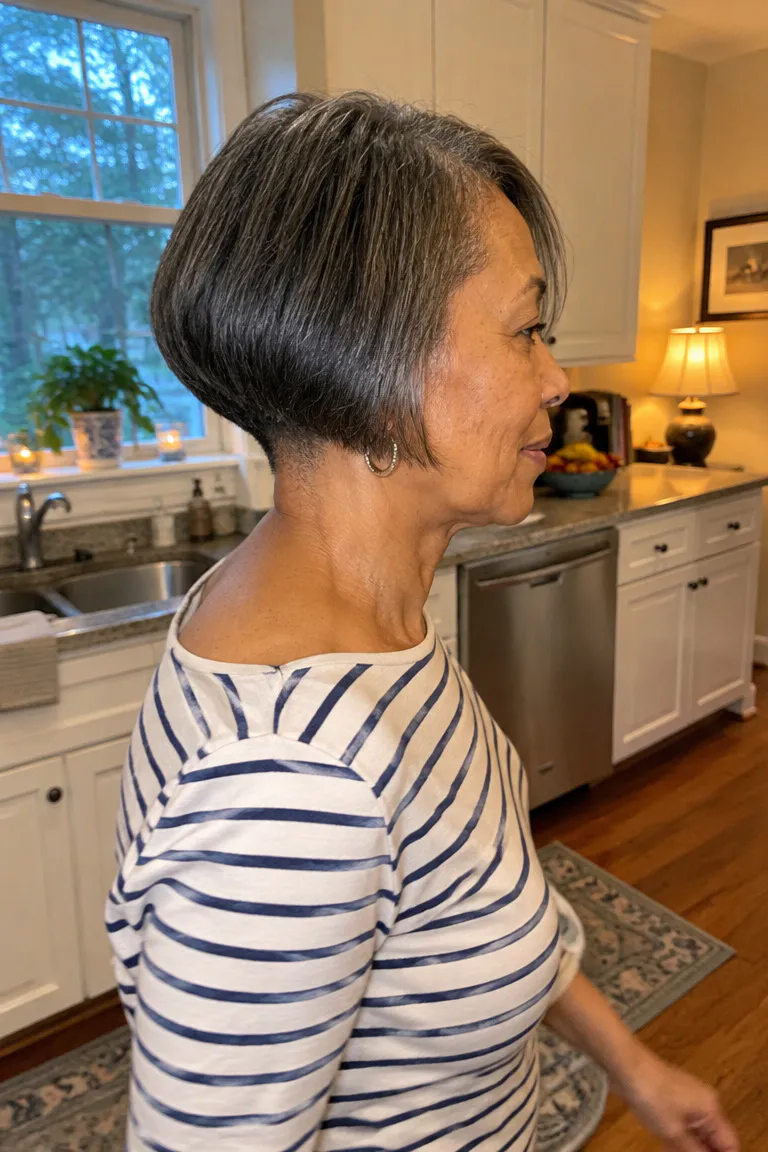
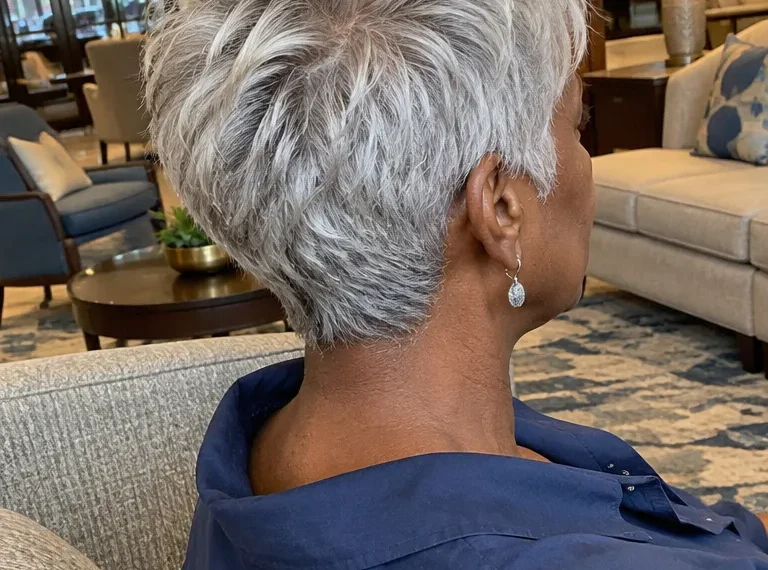
This bob is short at the back and longer at the sides, with the taper kept soft instead of buzzed. It suits women whose nape or temples are thinner than the crown, since the shorter hair in those spots removes the sparse, stringy look of longer strands.
Trim frequency is a question for your stylist, because no verified interval turned up for this cut. Ask how soon the nape will grow past its clean shape on your hair, and book accordingly.
Give your stylist three details: the nape length you want, how far up the back the taper climbs, and a softly blended finish with no hard line. For more taper ideas in gray, see these short tapered cuts for Black women with gray hair.
Comfort check: The cut should sit flat without pulling, pinning, or clipping to hold the shape. If you feel any tightness near the nape or temples, ask for it to be loosened.
4. Stacked Gray Bob
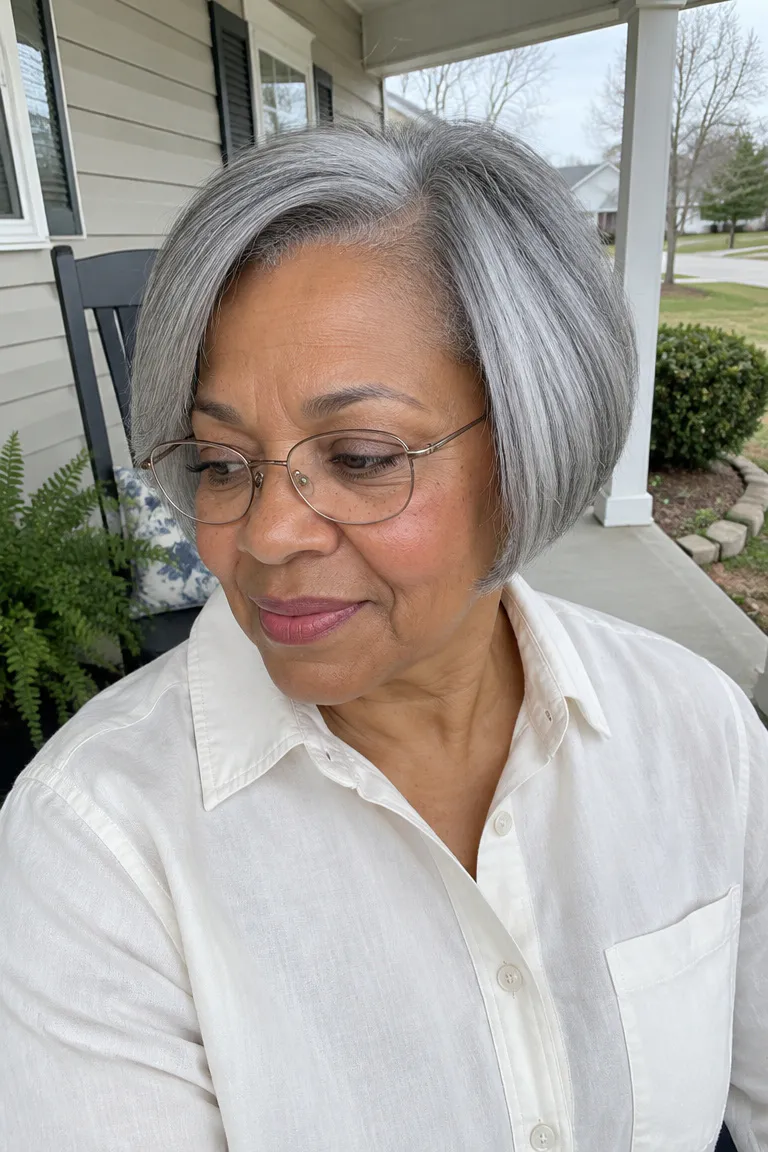
A stacked bob has a short, graduated back and a slightly longer front, and the stack adds build at the back without relying on root lift. That makes it a good pick if your crown hair can’t hold height through the day.
Leave your natural gray as is, and ask your stylist about moisture instead of assuming it needs extra product. Color and gloss are separate decisions:
- Ask for a gloss only if your stylist checks your scalp first and judges it healthy.
- Request a strand test before any color service, and wait for the result.
- Don’t assume lightening or bleaching is safe on thin hair; ask your stylist to explain the risk to your specific strands.
- Ask how steep the stack should be so the back looks full without showing the scalp.
5. Soft Graduated Bob
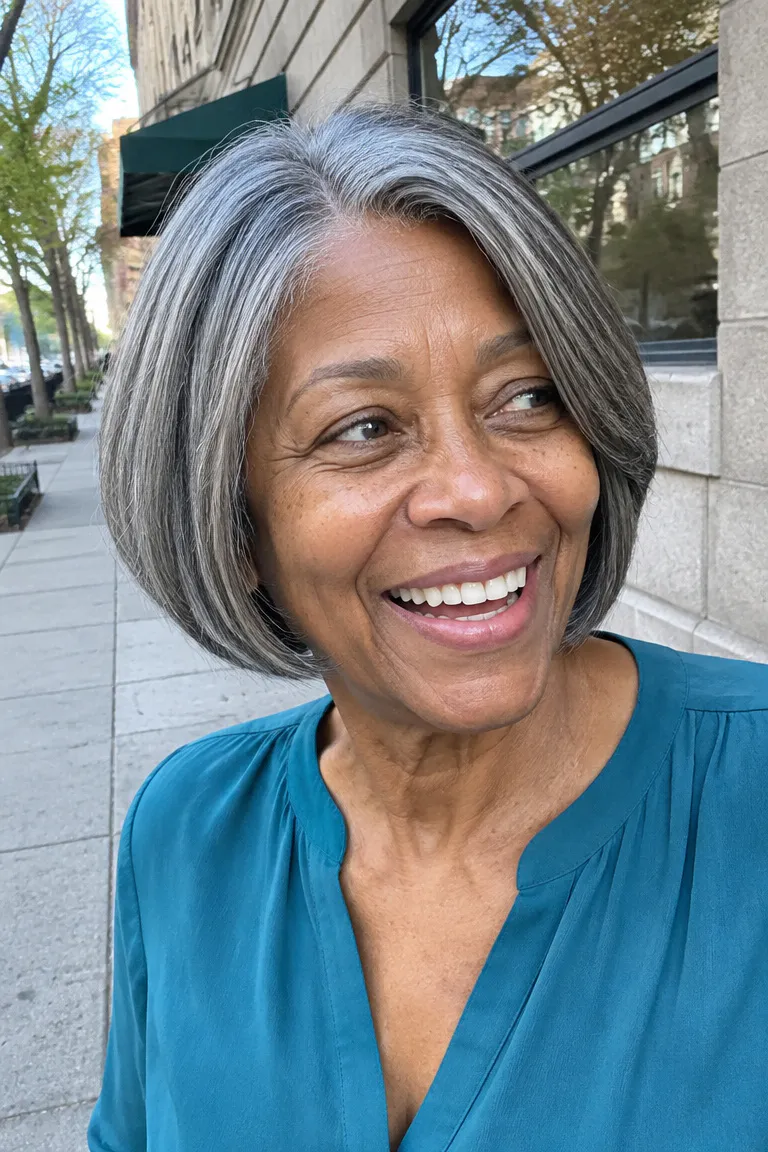
This bob has a solid outline at the bottom and only a few soft layers near the crown for lift. Heavy layering is the thing to avoid, since too many layers can make thin ends look sparse. That’s an editorial judgment, not a rule that applies to every head of hair.
Give your stylist a number: ‘two or three light layers, no thinning shears.’ Thinning shears remove strands from hair that has none to spare, and a weighted perimeter keeps the bottom looking dense.
It works on a blow-out, a roller-free set, or loose natural curls, so you can choose your finish by mood. For other cuts that build fullness, compare these short bob cuts that make thin hair look fuller.
6. Deep Side Part Bob

A deep side part lets the longer side of your hair cross the thin area at the crown. Start the part above the arch of your brow, so the sweep begins far enough from the center to cover the spot.
Make the part with the tail of a comb, not a tight pull, so the line is clean without stressing the roots. Switching sides every so often keeps a visible line from wearing in.
Crown thinning is a reason to see a dermatologist before you rely on any style to manage it. A part can cover the area, but it can’t tell you what’s happening underneath.
Ask your stylist: Which side should my part start on, given where my crown is thinnest? Then ask her to cut so the part still looks natural when you flip it.
7. Bob With Side-Swept Bangs
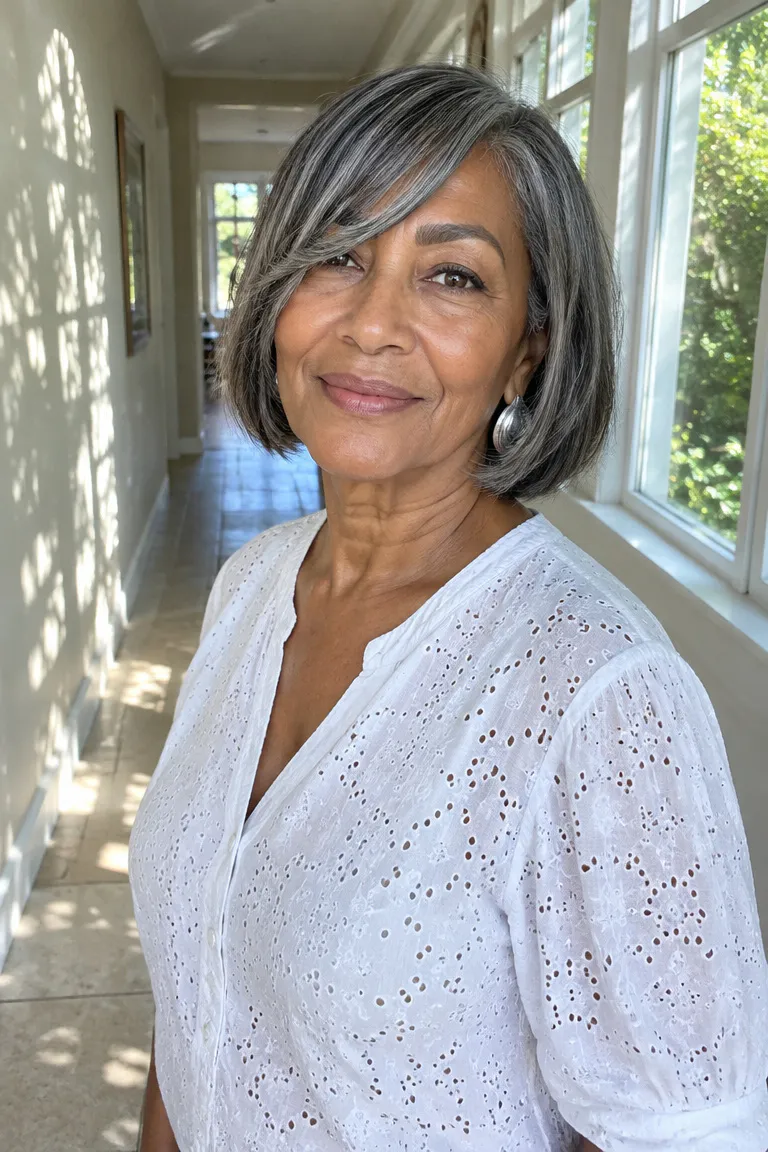
Long, side-swept bangs soften a thin front hairline by blending into the bob at cheekbone or jaw level. Keep them long: bangs cut too short stop at the thin zone and show it instead of covering it.
Avoid tight adhesives and heavy edge products near the hairline, since both can pull or weigh down fine hair. If your hairline looks like it’s receding, see a dermatologist before settling on this look. For a different approach to edges, browse these short natural styles for thinning edges.
Comfort check: The bangs should lie in place without gel or tension. If you need product to hold them down, they’re cut too short or too thick for your hairline.
8. Flexi-Rod Set Bob
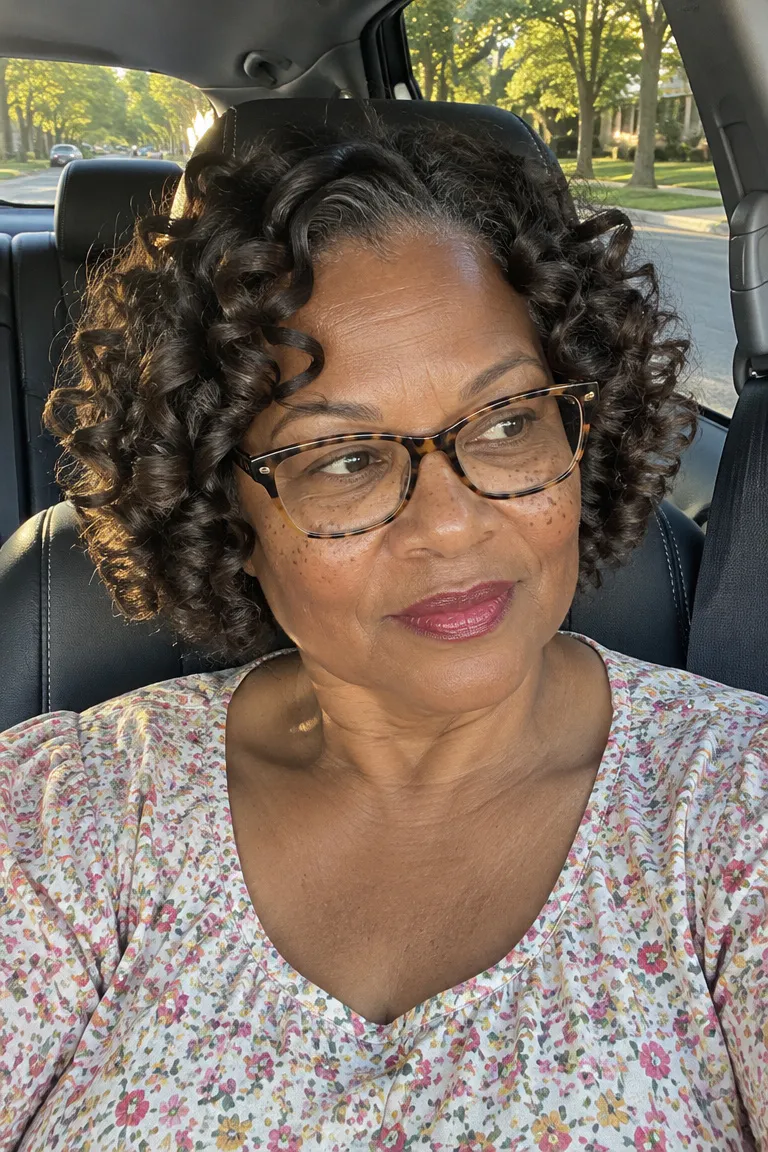
A bob set on loose flexi rods, or finished with a twist-out, adds width without any heat. It relies on moisture to define the curl, which makes it a good match if you’d rather skip the flat iron.
Loose is the rule. Rods and twists shouldn’t tug at your hairline or nape, so ask your stylist to leave extra slack there, and take them out if you feel pulling.
At night, a loose satin bonnet protects the set without squeezing the curls flat.
Maintenance tip: Refresh the set instead of redoing it: mist lightly, re-twist the flattened sections, and fluff the rest. This saves time and spares your hairline another round of setting.
9. Wash-and-Go Bob
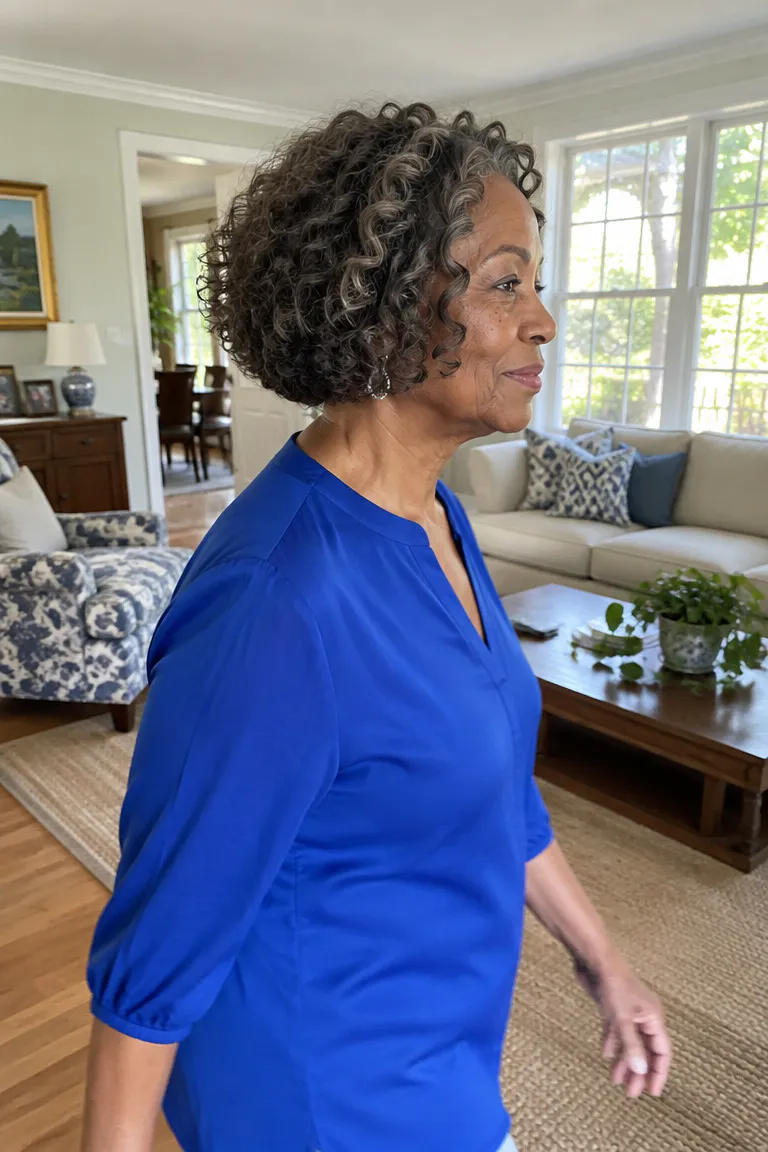
This bob has rounded layers that dry into defined curls, so the product matters as much as the cut. Choose a water-based leave-in and a light gel or cream, since those are less likely to weigh down fine strands.
Treat heavy butters as something to test, not a default, because they can flatten fine hair at the roots. Use a simple test before committing to a product:
- Apply a small amount to damp hair.
- Let it air-dry completely.
- Check whether the roots collapse or the curls separate and bounce.
- If the roots go flat, use less next time or switch to a lighter formula.
Air-drying or a diffuser on low both work, as long as you leave the curls alone until they’re fully dry.
10. Angled A-Line Bob
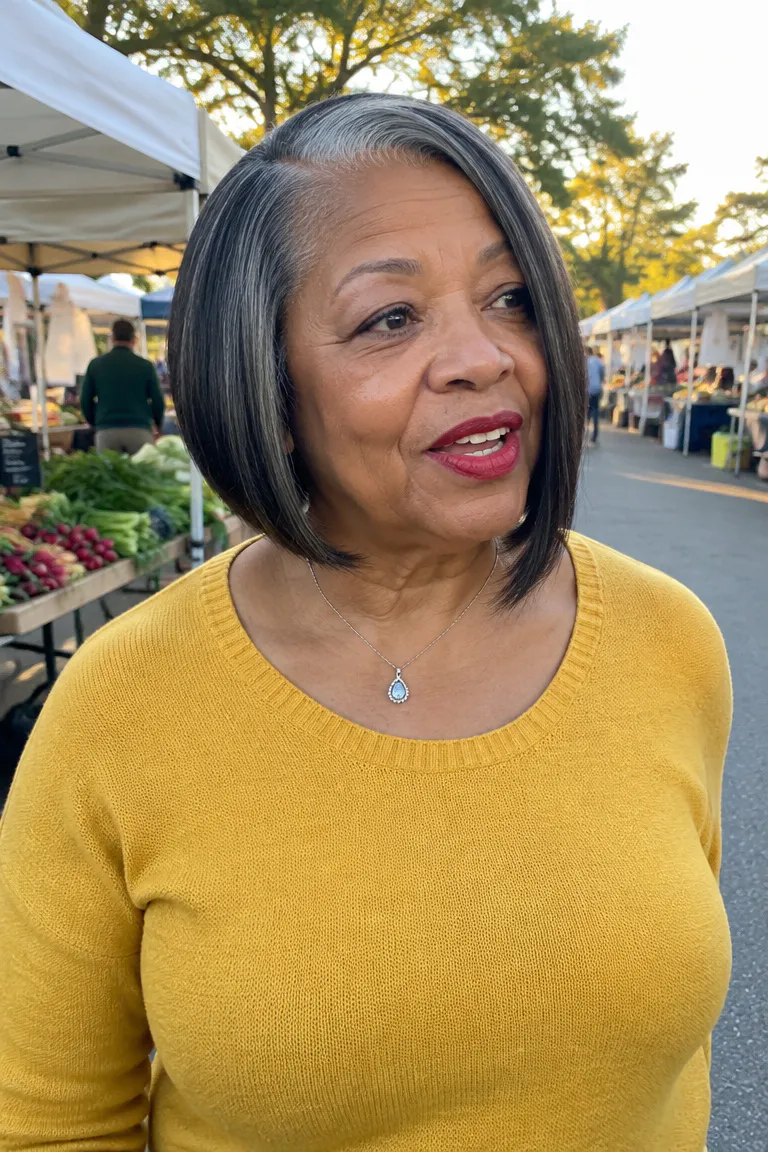
An A-line bob is longer in front than in back, with the length angled toward the jaw or collarbone. The front pieces cover the sides and nape, so the style doesn’t depend on root volume to look full.
It suits women whose thin spots sit at the sides or the back of the head. Choose a subtle slope if you want a softer look, or a stronger angle if you want more coverage in front.
Ask your stylist: How long should the front pieces be, jaw or collarbone? How much stacking should the back have: a little for a smooth line, or more for extra build?
11. Bob With Human-Hair Topper
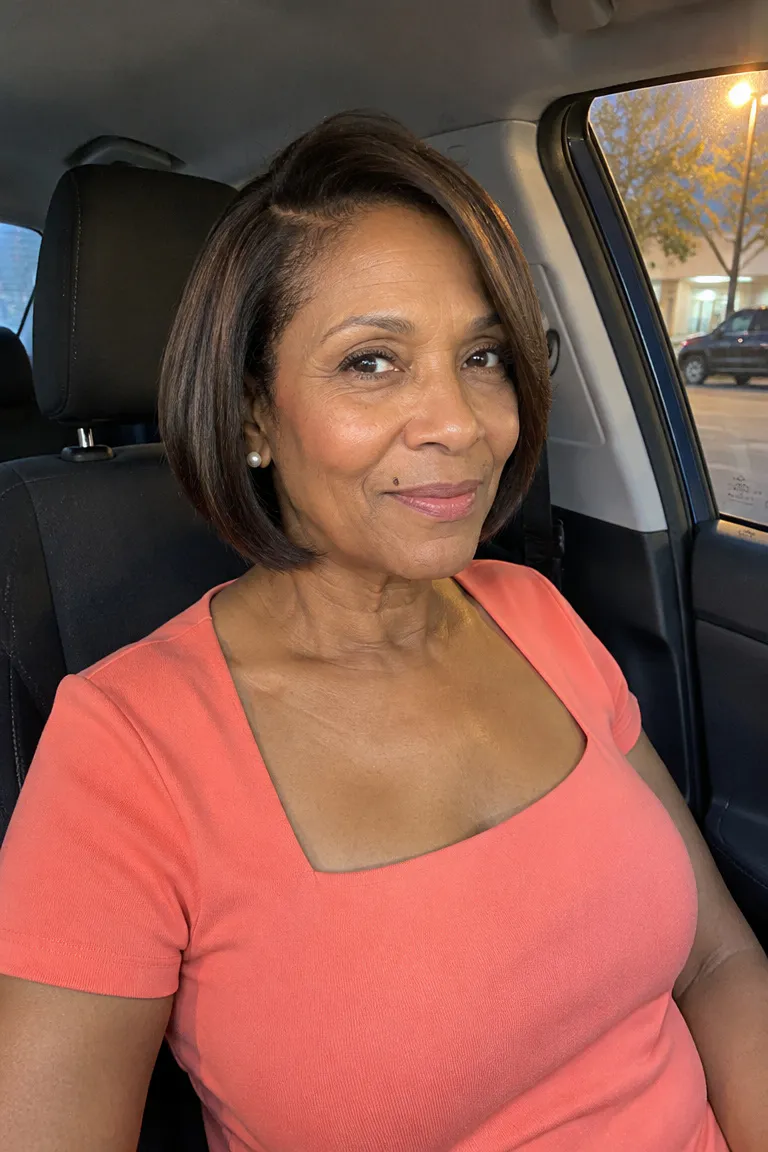
When thinning is concentrated at the crown, a human-hair topper blended into a bob can fill that area while the rest of your hair stays your own. Choose one that matches your cut and length, and ask the stylist to blend the topper’s edge into your natural hair so no line shows.
A topper only makes sense if the clips or cap aren’t tight. Book a fit consult first and tell the stylist to stop if anything pinches or pulls at your scalp.
It costs more than a cut and needs fitting, so factor that into your budget. Crown loss is a reason to see a dermatologist first, before a topper becomes your plan.
12. Choppy Textured Bob
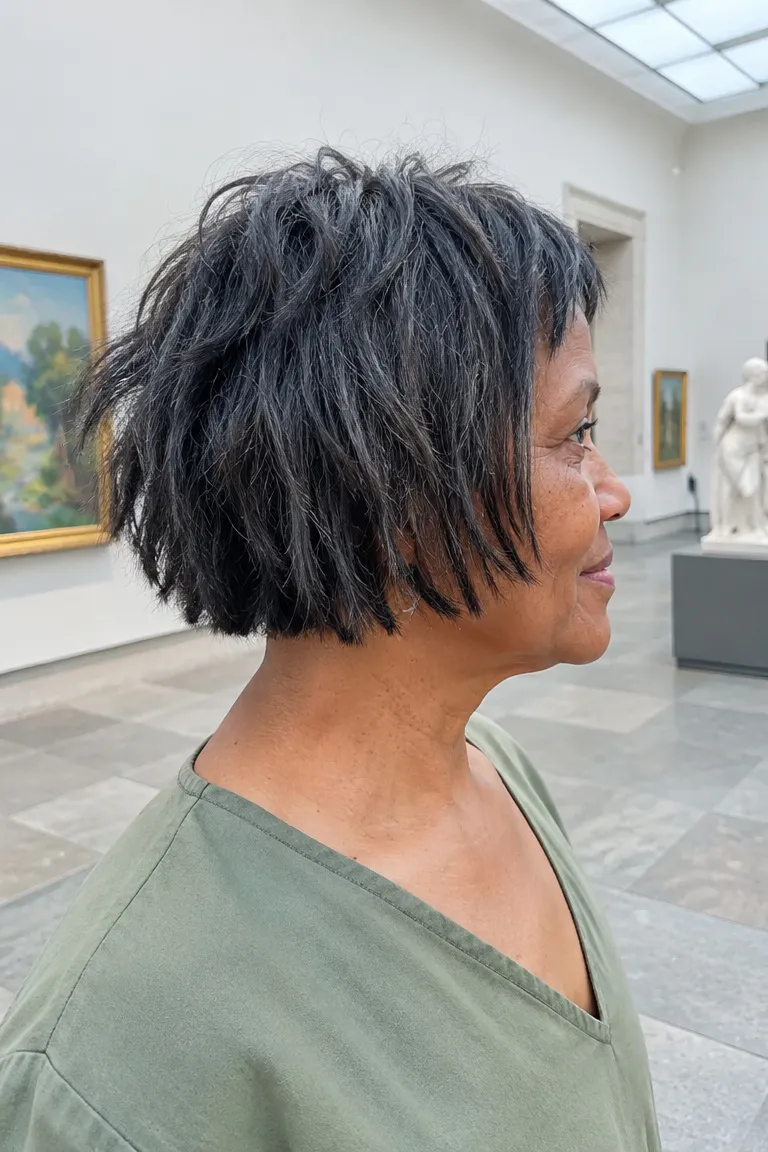
Fine strands and low density aren’t the same thing. Fine means each strand is thin, while low density means there are fewer strands per square inch of scalp, and many people have one or both.
When strands lie flat, blunt edges can look heavy against the scalp. A jaw-length bob with slightly uneven, point-cut ends and an undone finish adds visual body through texture instead.
Use a texturizing spray or a light styling cream, worked in by hand so the product doesn’t clump.
Ask your stylist: Can you point-cut the ends instead of cutting them straight across? And how often should I refresh the shape so it stays choppy but doesn’t look ragged?
What To Tell Your Stylist
Bring a photo, the spot you want covered, and your limit on heat or product. Then ask for the length, part side, and layer count out loud, so the bob you leave with matches the one you saved.